REVIEW · KRAKOW
Old Town Krakow & Wawel Castle Walking Tour
Book on Viator →Operated by Walkative! TOUR · Bookable on Viator
Medieval walls, grand squares, and Wawel up close. This Old Town Kraków and Wawel Castle walking tour strings together the sites you’ll keep seeing in photos—Bishop’s Palace, Planty Park, and the castle hill—in one smart route.
I love how the tour uses a professional guide to connect the streets to real Polish history, including the city’s ties to Copernicus. I also like that it’s a small-group walk with English guidance, so the pace stays human and you can actually ask questions.
One thing to consider: not every stop’s admission is included, and it’s still a solid walk in all-weather conditions. If you’re hoping for lots of indoor time, you’ll mostly be viewing courtyards and exteriors rather than touring every building.
In This Review
- Key things to know before you go
- Why This Walk Works for Your First Day in Kraków
- Meeting at the Kraków Barbican: Fortifications First
- Through St. Florian’s Gate on the Royal Road
- Rynek Główny Central Square: Legends You Can See
- Collegium Maius Courtyard at Jagiellonian University
- Bishop’s Palace, the Papal Window, and John Paul II
- Planty Park to Wawel Hill: A Walking Reset
- Wawel Royal Castle Courtyard and Wawel Cathedral Views
- Guide Style, Humor, and the Real Payoff of Small Groups
- Price and Value: $26.59 for a 2.5-Hour Old Town Story
- Practical Tips: Tickets, Weather, and How to Dress
- Who This Tour Suits Best
- Should You Book Old Town Kraków and Wawel Castle?
- FAQ
- How long is the Old Town Kraków & Wawel Castle walking tour?
- Is the tour in English?
- Do I need to buy tickets for every stop?
- What is the group size limit?
- Is the tour outdoors?
- Can I cancel for a full refund?
Key things to know before you go
- Small group, up to 35 people: easier to hear and keep together.
- English guide with local expertise: history talk that stays tied to what you’re standing in.
- Mostly exterior/courtyard sights: great orientation, less museum-hopping.
- A route that ends at Wawel: you can keep exploring right after.
- A couple stops require tickets not included: plan for St. Florian’s Gate and the Main Square stop.
- All-weather operation with safety cutoffs: come dressed for the day, not just the forecast.
Why This Walk Works for Your First Day in Kraków
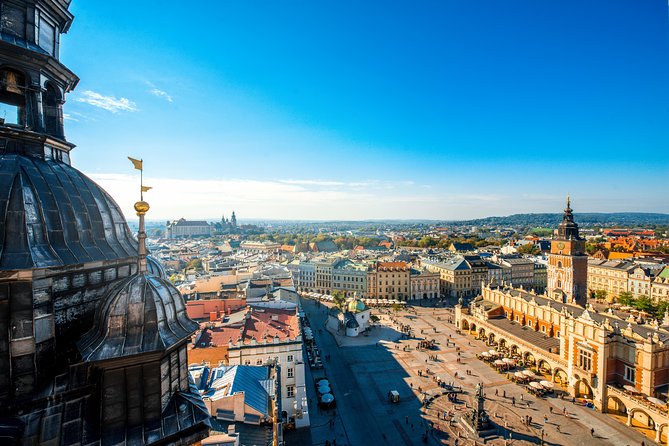
If Kraków is new to you, this is the kind of tour that makes the city click. In just about 2.5 hours, you get oriented on the Old Town layout: where the medieval defenses started, how people moved through the Royal Road, and how the city’s center feeds into the climb toward Wawel hill.
What I like is the balance between big-picture stories and concrete things you can point at. You’ll get names and context for landmarks like St. Florian’s Gate and Rynek Główny, then you’ll finish with Wawel Castle courtyards and Wawel Cathedral from the right angle.
This also helps you plan your remaining time. After a tour like this, you’re not wandering blindly—you know what to circle back to later, and what you can skip because you already got the overview.
You can also read our reviews of more walking tours in Krakow

Meeting at the Kraków Barbican: Fortifications First
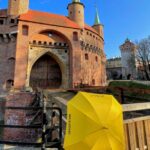
You start at Kraków’s Barbican on Basztowa. This is a strong opener because it gives you the “why” behind the layout: Kraków wasn’t always an open-city postcard. The Barbican and medieval walls/fortifications set the tone—defense, control, and the way power shaped street life.
Stop 1 includes the Barbican and Museum of Kraków area outside with free admission noted for this part. That matters because it keeps the tour moving without turning into a ticket-and-line marathon. You get the feel of the neighborhood and the defensive architecture right away, which makes the later walk through gates and squares land better.
The practical downside: since this part is mostly exterior, if you’re hoping for lots of museum time, you’ll want to add separate museum tickets later. Still, as an orientation start, it’s a smart choice.
Through St. Florian’s Gate on the Royal Road
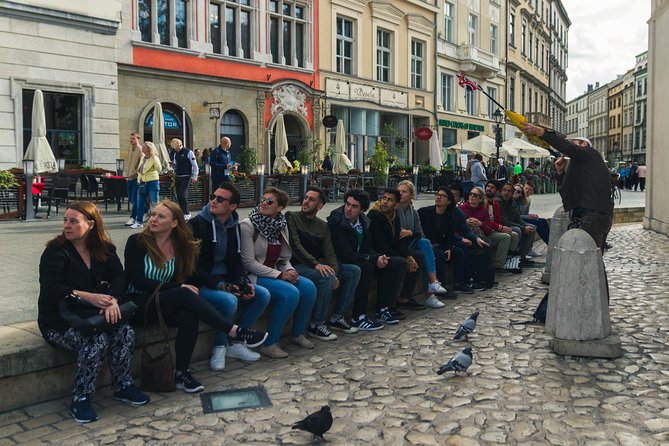
Next comes St. Florian’s Gate, a key entry point into Kraków’s Old Town flow. The tour has you step into the Royal Road and continue toward the Main Square, so you’re experiencing the city the way visitors historically would have: gate first, then the spine of the center.
Here’s the catch: admission ticket is not included for this stop. So if you’re planning to go inside or pay for specific access tied to St. Florian’s Gate, you’ll need to budget separately.
Even with that consideration, this is one of the best parts for first-time visitors. Gates in European cities aren’t just monuments—they’re movement, borders, and ceremony. When your guide ties the architecture to the political and social story of Kraków, the gate stops being “a photo spot” and becomes a turning point.
Rynek Główny Central Square: Legends You Can See
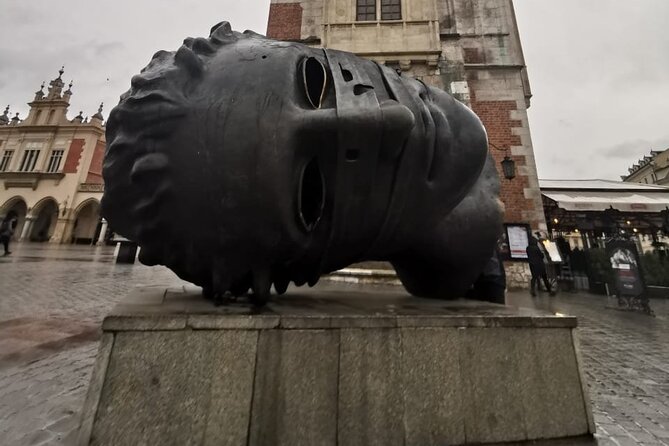
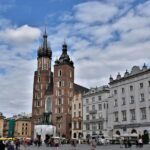
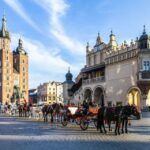
You reach Rynek Główny, Kraków’s Central Square. This is the heart of the Old Town, and the tour uses it to explain both history and the kind of stories cities grow around major civic spaces.
A practical note: admission ticket is not included for this stop, but the square itself is still the square. In plain terms, expect the value here to be your guide’s explanation—how the square functioned and why the legends matter.
What I think you’ll enjoy most is the way the guide helps you “read” the space. When you know what to look for—layout cues, symbolic connections, and what the square meant during different eras—you stop seeing it as one big open area and start seeing it as a stage.
If it’s your first time in Kraków, this is also where you’ll be best positioned to ask questions. Don’t wait until the end—Rynek is the easiest place to get answers because everything is right there.
Collegium Maius Courtyard at Jagiellonian University
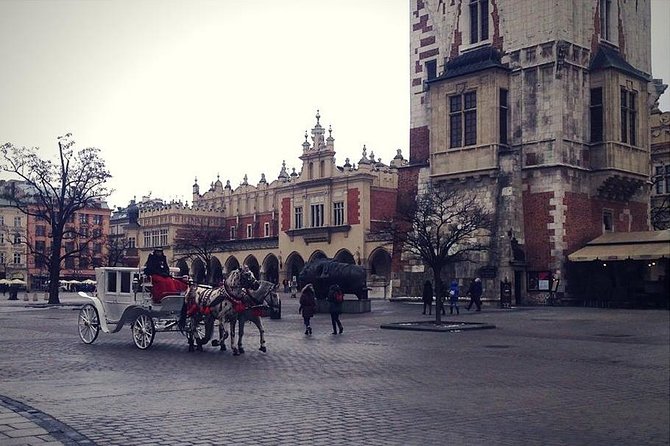
After the civic center, you shift to learning tied to Kraków’s academic identity. The tour visits the courtyard of Collegium Maius, part of the Jagiellonian University world.
This stop is listed with free admission, which is a quiet win. It gives you a change of pace without adding costs or turning the walk into a ticket-heavy sprint. You get a sense of the university setting and its role in shaping the city’s intellectual life, which is especially useful if you like explanations that go beyond politics alone.
Because this is a courtyard visit, you’re not looking at a full museum experience. Think of it as a history and architecture pause—good for photos, good for stretching your legs, and good for resetting your brain before the bigger final stretch.
Bishop’s Palace, the Papal Window, and John Paul II
Then you’re at the Bishop’s Palace, with two specific focal points: the Papal window and John Paul II.
This is the kind of stop that benefits from a strong guide, because it’s easy to walk past a building detail and miss why it matters. When your guide explains how that window connects to church life and public moments, the palace stops feeling like a “named building” and becomes a visible clue to how Kraków’s institutions intersected with major events.
The tour lists free admission for this stop, which helps keep the overall cost reasonable. Also, it’s a good moment to slow down and absorb—short stop, high meaning.
Planty Park to Wawel Hill: A Walking Reset
Now you move from monuments into green space with Planty Park, walking toward Wawel hill. This section matters more than you might think. After several older-city stops, a park segment acts like a buffer, letting your feet recover before the final attraction.
Planty is listed with free admission, and the stop time is about 10 minutes. That’s enough time to stretch your legs and get your bearings on the way up, not enough time to get lost in side paths—which is ideal when you have a scheduled tour.
If you’re visiting in cold or rainy weather, this is also where you’ll feel the day’s real conditions. The tour runs in all weather, so dress for wind and wet pavement. When the weather turns, your guide may adjust timing or where the group pauses for safety.
Wawel Royal Castle Courtyard and Wawel Cathedral Views
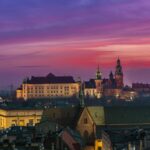
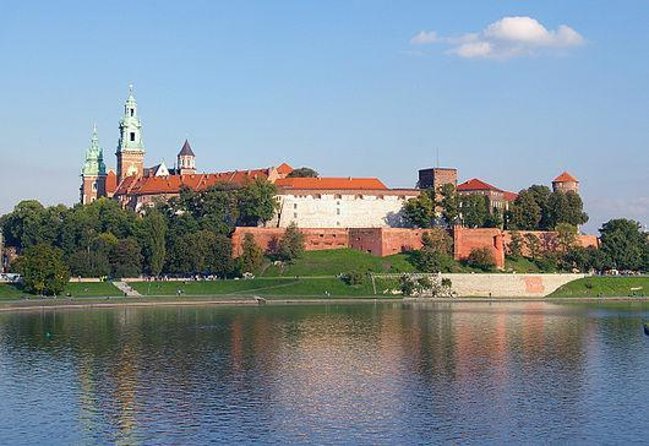
The tour finishes at Wawel Royal Castle, with time in the courtyard and a look at Wawel Cathedral. The big value here is the approach: you’re not just arriving at the top—you’ve built up the story as you climb toward the symbolic center of Poland’s past.
This stop is listed with free admission, which is great for value. You still get major visual impact: castle walls, courtyard views, and the cathedral presence that makes Wawel feel like more than a single building.
One practical consideration: you’re finishing there, not inside the castle experience in full depth (based on what’s described). If you want interior rooms and full cathedral access, plan to add those separately after the tour ends.
The upside is timing. With Wawel as your endpoint, you can stay on-site afterward without backtracking across Old Town.
Guide Style, Humor, and the Real Payoff of Small Groups
The strongest theme in the feedback is guide quality. Names that come up include Ania, Maciek, Damien, Lucy, Mitchell, Max, Chris, Jack, and Joanna, among others. Across those different guides, the common thread is that they keep the history tied to what you’re seeing and they tend to use humor without turning serious context into a joke.
A small-group setup (maximum 35 people) helps for two reasons. First, it’s easier to hear explanations on busy sidewalks. Second, guides can adjust the pace to the group—something you’ll notice if you’re not a fast walker or you need a short pause.
You should still be ready to walk and stand. One review-style note you should take seriously: this is a “get your bearings” tour, not a sit-in-a-café tour. If you want a slow, heavily seated day, you might prefer a shorter, single-sight experience.
Price and Value: $26.59 for a 2.5-Hour Old Town Story
At $26.59 per person for about 2 hours 30 minutes, this is priced like a practical orientation tour. The value comes from what’s included: a local guide, an English professional guide, and a small group format.
Also, many of the stops are listed as free admission (Barbican area outside, Collegium Maius courtyard, Bishop’s Palace, Planty Park, and Wawel courtyard/cathedral view). That matters because the tour can deliver big names without stacking on entrance costs for every minute.
What to remember is the trade-off: a couple elements are marked not included—notably St. Florian’s Gate and the Main Square stop. So your true “all-in” cost could be a bit higher if you decide to add ticketed access where applicable.
Still, for most first-time visitors, the math works. You pay for structure, context, and an efficient route. Then you spend your energy afterward on what you want to revisit.
Practical Tips: Tickets, Weather, and How to Dress
This tour uses a mobile ticket and runs in all weather conditions. The company notes the guide has the right to shorten or end the tour if conditions pose a threat to health or safety. So treat the forecast as real, not decorative.
Moderate physical fitness is recommended. That means you should expect a steady walk, some time standing at viewpoints, and sidewalks that aren’t always generous for strollers or slow mobility. Service animals are allowed, which is helpful for many visitors.
For tickets, the key practical takeaway is simple: plan for St. Florian’s Gate (ticket not included). Other stops are marked free, but don’t assume every landmark has the same setup once you arrive.
Also, because the tour starts near public transportation and ends at Wawel, it’s convenient for a full day. You’ll likely want to grab food before or after rather than counting on the tour to cover meals.
Who This Tour Suits Best
This walk is a strong fit if you:
- are visiting Kraków for the first time and want a clear overview quickly
- like history explained through places, not through abstract timelines
- prefer small-group pacing and a guide who can answer questions
- want Wawel at the end so you can keep exploring on your own
It’s also a good pick if you’re traveling with a friend and you want a shared narrative to carry with you while you wander. Many people choose a walking tour early in the trip because it helps you plan the rest of the week.
If you dislike walking, or if you’re only interested in long indoor museum visits, you might find this tour too “on your feet.” In that case, pair it with a dedicated museum or cathedral ticket for deeper time inside.
Should You Book Old Town Kraków and Wawel Castle?
I’d book this if you want the best use of a limited schedule. For $26.59, you get a guided route that links medieval fortifications, gate architecture, the central square, a major university courtyard, and Wawel Castle into one coherent story—then you finish where you’ll want to stay.
Book it especially if you enjoy smart orientation on Day 1. It helps you see Kraków instead of just passing through it.
Skip it if your top priority is multiple indoor entrances and long museum time, because this route focuses more on courtyards, exteriors, and guided viewing. Also, if St. Florian’s Gate ticketed access matters to you, be ready for that extra step.
If you fit the first group, this is a practical, efficient tour that sets you up for a confident Kraków day afterward.
FAQ
How long is the Old Town Kraków & Wawel Castle walking tour?
It runs about 2 hours 30 minutes (approx.). The exact pacing can vary a bit based on the group and weather conditions.
Is the tour in English?
Yes, the tour is offered in English.
Do I need to buy tickets for every stop?
No. Several stops are listed with free admission, but tickets are not included for St. Florian’s Gate and the Main Square stop.
What is the group size limit?
The tour has a maximum of 35 travelers.
Is the tour outdoors?
Yes, it’s a walking tour and operates in all weather conditions, so you should dress appropriately. The guide may shorten or end the tour for safety if conditions are threatening.
Can I cancel for a full refund?
Yes. Free cancellation is available if you cancel at least 24 hours before the experience’s start time. If you cancel less than 24 hours before, the amount you paid is not refunded.