REVIEW · KRAKOW
Krakow: Guided Tour of the Jewish Ghetto
Book on GetYourGuide →Operated by Hello Cracow · Bookable on GetYourGuide
This walk tells the truth fast. You’ll trace the former Kraków Ghetto in Podgórze through the streets, wall fragments, and memorial spaces that still hold the weight of WWII.
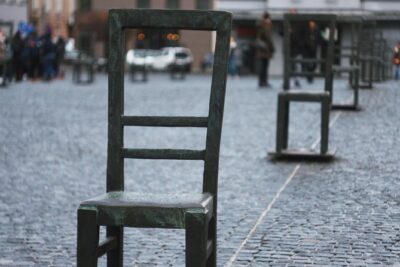
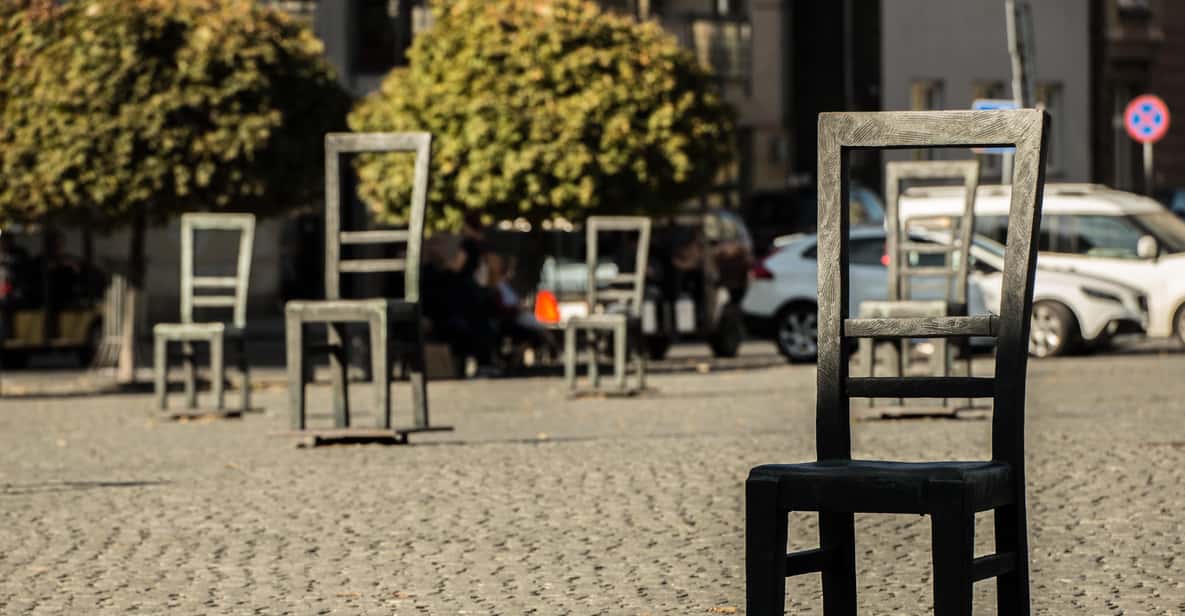
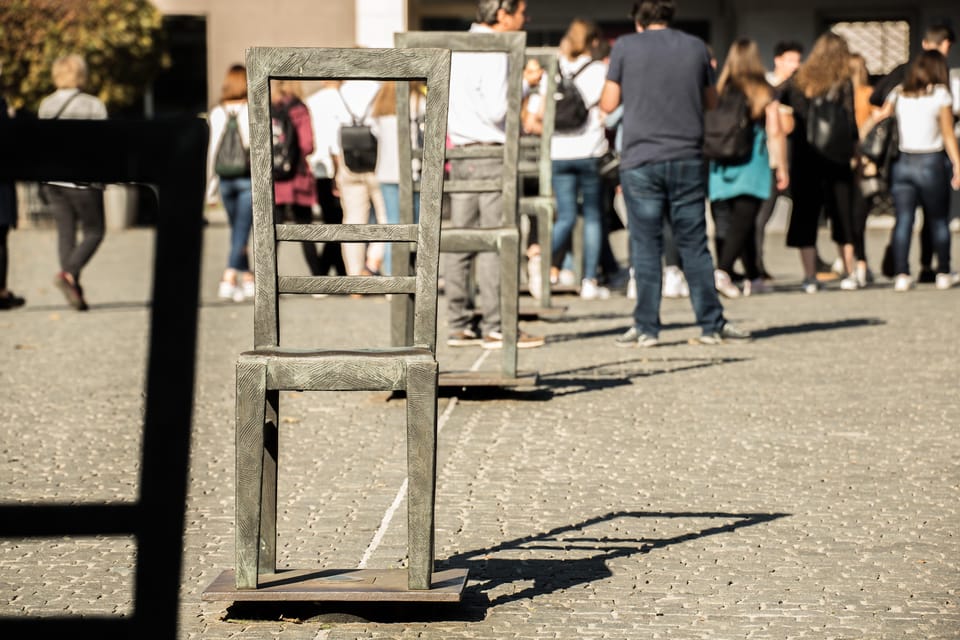
I love how the Ghetto Wall remains make the past feel concrete, not abstract. I also like the Chair Memorial at Ghetto Heroes Square, because it turns a huge tragedy into something you can face for a moment.
One possible drawback: this is heavy, serious history. If you want a light, casual sightseeing hour, you might find it emotionally intense.
In This Review
- Key Points You Should Know Before You Go
- Entering Podgórze: Where the Ghetto Became a Real Place
- Finding Your Guide Near the Schindler Factory Museum
- Podgórze Streets and the Ghetto Experience You Can Visualize
- The Original Ghetto Wall Remains: The Most Concrete Reminder
- Ghetto Heroes Square and the Chair Memorial’s Quiet Impact
- Under the Eagle Pharmacy: Bravery in Medicine and Shelter
- What Makes the Tour Feel Authentic: Buildings, Streets, and Everyday Realism
- The Pace, Group Feel, and How to Prepare for a Short Walk
- Price and Value: What $15 Buys You in Kraków
- Who This Tour Fits Best (and Who Might Want Another Option)
- What Recent Visitors Emphasize About the Guide Experience
- Should You Book the Kraków Jewish Ghetto Guided Tour?
- FAQ
- Where do I meet the guide for the Kraków Jewish Ghetto tour?
- How long is the guided tour?
- How much does the tour cost?
- What languages are available for the live tour?
- Is food and drink included?
- What’s included in the tour?
- Is free cancellation and reserve-and-pay-later available?
Key Points You Should Know Before You Go
- Ghetto Wall fragments are among the few surviving pieces of the original enclosure
- Ghetto Heroes Square centers on the chair memorial marking lives lost
- Under the Eagle Pharmacy highlights Tadeusz Pankiewicz’s rescue work with medicine and shelter
- Street layout and wartime buildings help you “see” what day-to-day life and deportations looked like
- 1 hour is tight, so it’s best if you’re okay moving at a guided pace
Entering Podgórze: Where the Ghetto Became a Real Place
Podgórze is where this story starts. It’s the Kraków district that became the location of the ghetto during WWII, and your guide sets the scene as you walk. The key is that you’re not just reading names on a sign; you’re following the city’s real lines—street by street—so the confinement becomes easier to understand.
You’ll hear about daily life behind the ghetto walls, including fear, struggle, and survival. That context matters because it keeps the tour from becoming only about suffering. You also get stories of solidarity and bravery, which is part of why the experience lands so powerfully.
Since the tour lasts just 1 hour, you’ll cover the highlights quickly. That’s good if you’re short on time, but it does mean you won’t get a full, lecture-length education. I treat this kind of tour like a strong first chapter—then I plan to keep reading afterward if the topic hooks me.
You can also read our reviews of more guided tours in Krakow
Finding Your Guide Near the Schindler Factory Museum
Your meeting point is straightforward. Look for a guide holding an excursions.city sign at the entrance to the Schindler Factory Museum.
This location is useful because it puts you in the same general historical zone of Kraków’s wartime story. Even if you don’t add another stop that day, the neighborhood context helps everything you see on the ghetto walk make sense faster.
The tour runs as a live guided experience, in multiple languages: German, Italian, English, French, and Spanish. So you can pick a language that keeps the details clear—especially important when the subject matter is precise and emotionally heavy.
Podgórze Streets and the Ghetto Experience You Can Visualize
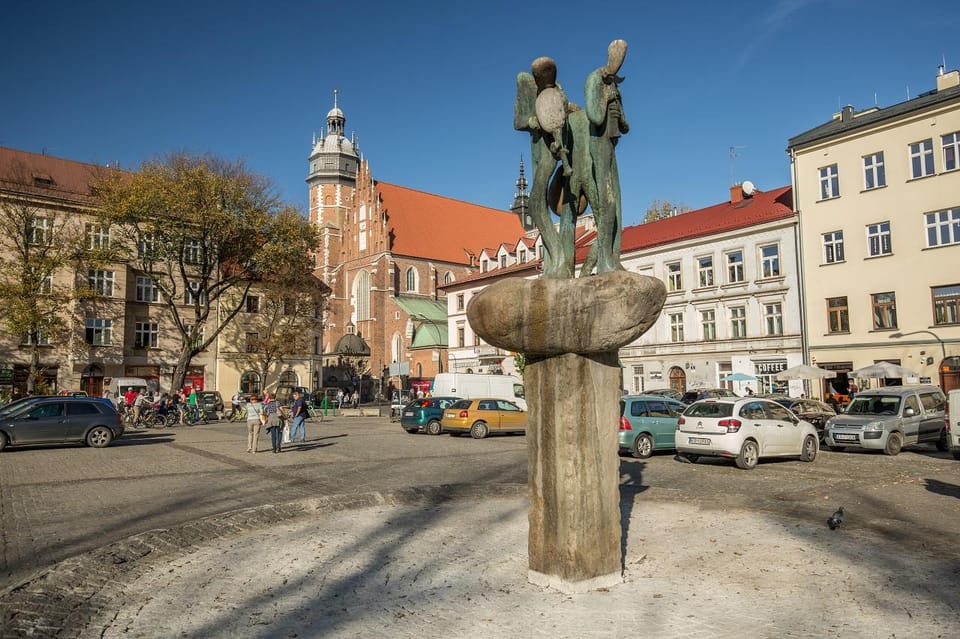
After you start walking, your guide helps you imagine what life looked like inside the ghetto’s boundaries. The experience is built around the idea that geography shapes everything. When you understand where people lived and moved, the stories about hardship and survival get sharper.
You’ll learn what it meant to be trapped inside a small area. The tour highlights that the original ghetto wall once enclosed more than 15,000 people within just a few city blocks. That fact is shocking, but it becomes more believable when you’re standing where the streets still reflect the urban scale of the place.
As you move, pay attention to the street layout itself. Even if you’re not an architecture person, the pattern of buildings and open space can help you understand how daily routines and restrictions would have felt. It’s not just background; it’s part of why the stories sound real.
The Original Ghetto Wall Remains: The Most Concrete Reminder
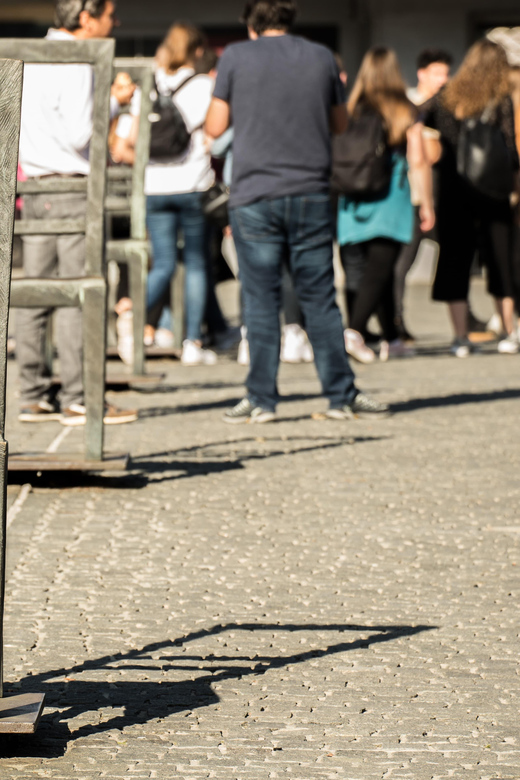
One of the most striking stops is the remains of the original ghetto wall. The tour frames these fragments as one of the few surviving sections from the enclosure that once enclosed the ghetto’s population.
This is where I like the tour’s approach most. Instead of treating the ghetto like a distant historical concept, the guide points out the physical evidence that still exists. Standing near remnants like this forces you to slow down in your own mind, even if you’re still moving with the group.
A practical note: the wall fragments aren’t huge like a movie set. That’s exactly why they hit. When the guide connects what you’re seeing to how people experienced confinement, a small surviving piece becomes a loud reminder.
Ghetto Heroes Square and the Chair Memorial’s Quiet Impact
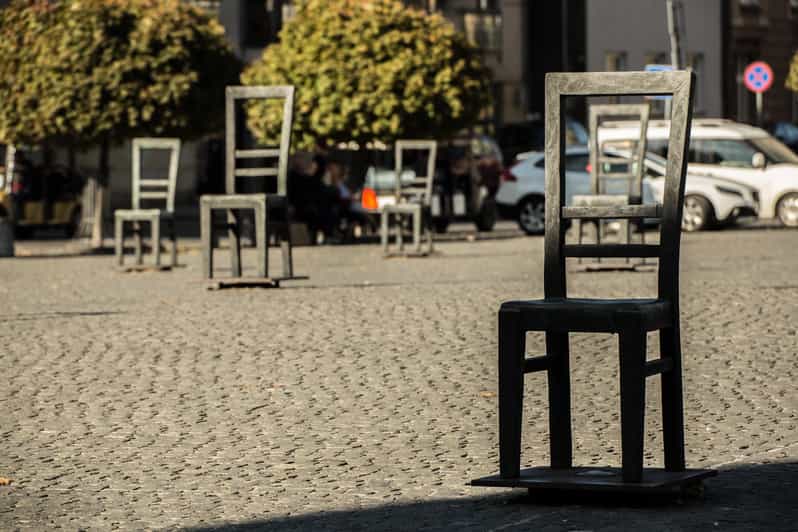
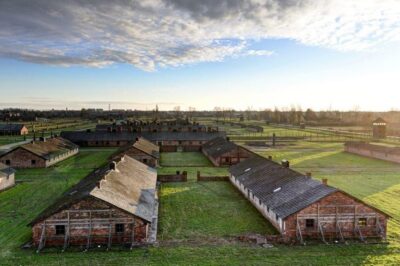
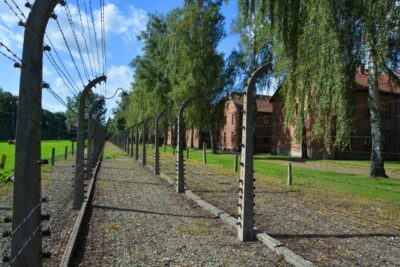
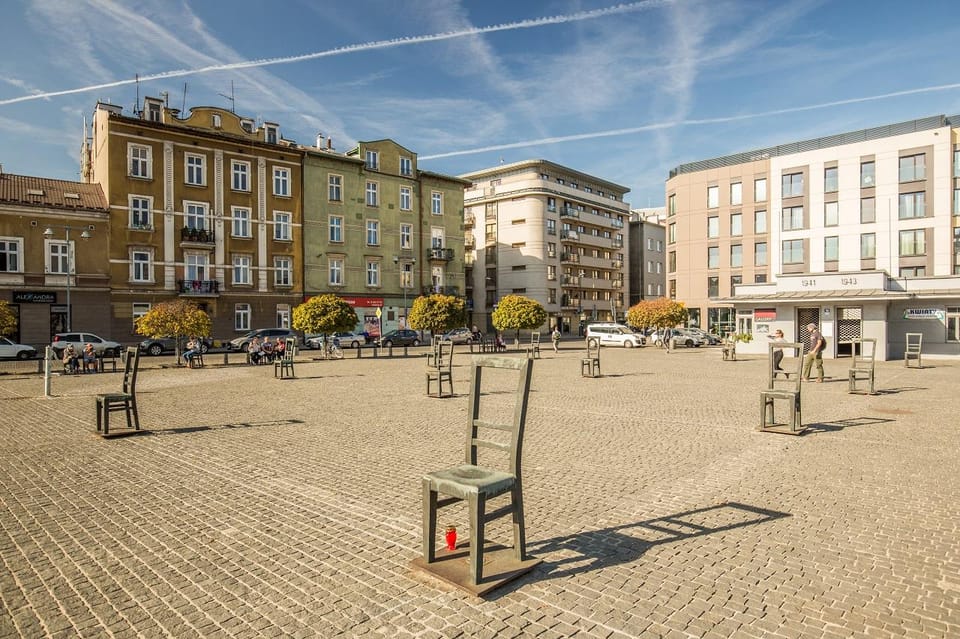
Then you’ll reach Ghetto Heroes Square, often described as the heart of the ghetto. Here, your guide explains how this space was once a gathering point for deportations to concentration camps.
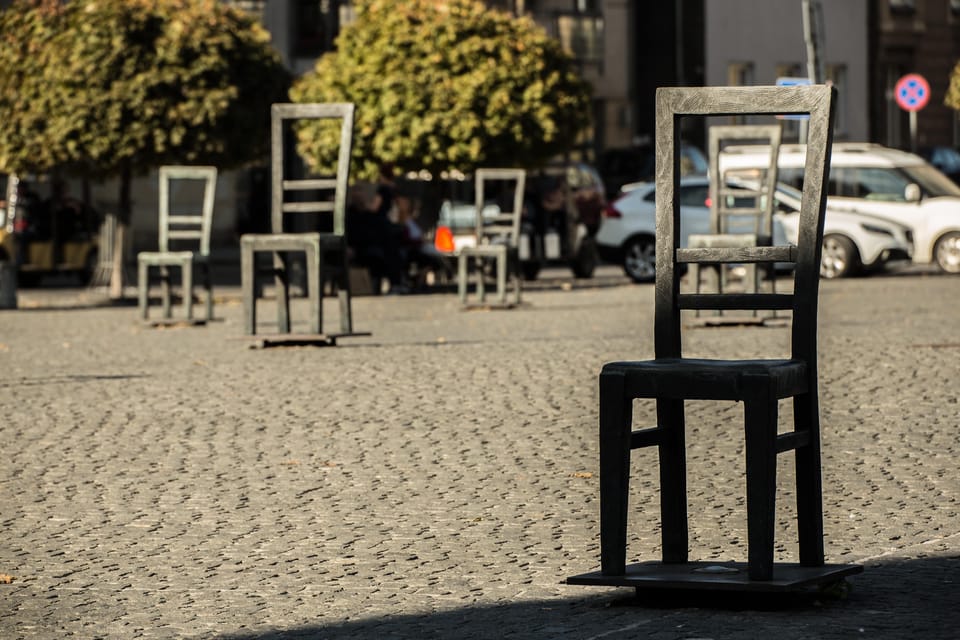
Today, the mood is completely different. The square is filled with dozens of empty metal chairs, and each one represents a life lost during the Holocaust. The chair format matters because it’s not just a generic monument. It makes you think about the absence of someone who should have been there to sit, speak, work, or simply live.
What I like about this part is the time for mental processing. Even within the tight one-hour schedule, the tour’s structure includes a moment that feels more like reflection than information dumping. That pause is valuable. It helps you absorb what the memorial is asking you to remember.
If you’re the type who reacts strongly to memorial spaces, plan for it. This stop is built for emotional clarity, not for cheering yourself up after.


Under the Eagle Pharmacy: Bravery in Medicine and Shelter
Across the square, you’ll see the historic Under the Eagle Pharmacy. This is the stop that shifts the story from “what was lost” toward “what some people risked to save others.”
Your guide tells the story of Tadeusz Pankiewicz and his staff, who risked their lives to help ghetto residents. The tour specifically highlights that they provided medicine and shelter, which is a detail that feels both practical and brave. Medicine wasn’t an abstract idea—it could be the difference between life and death.
It’s also one of the reasons I think this tour has good balance. Many tours in WWII sites can drift toward pure tragedy. Here, you get an example of human compassion happening right inside the same system that was destroying lives. That doesn’t erase the horror. It just adds another necessary layer: resistance that looked like care.
What Makes the Tour Feel Authentic: Buildings, Streets, and Everyday Realism
A big part of the experience is that you’re seeing authentic wartime buildings and street layouts. The guide doesn’t treat the ghetto like a museum display. You’re walking a real city space, which means the stories about daily life, deportations, and survival connect to the physical world around you.
This realism is useful for your understanding. When a guide helps you map narratives onto actual places, you’re more likely to remember details later. And because the tour is only 1 hour, those details need to land quickly. The tour’s focus on specific locations—the wall remnants, the square, and the pharmacy—helps keep the learning efficient.
If you’re planning other Kraków stops, this walking tour plays well with the rest of your day. It works as a concentrated emotional and historical foundation, so later museum visits can make more sense. If you’re newer to the subject, it’s a sharp, guided entry point.
The Pace, Group Feel, and How to Prepare for a Short Walk
This is a walking tour that runs for about 1 hour. That timeframe is one of its strengths. You get a lot of the most important sites without needing to commit to a half-day or full-day tour.
Because the tour is guide-led, you’ll want to stay present rather than multi-task. The stories about deportations, survival, and bravery depend on hearing the guide’s explanation in real time. If you’re trying to check your phone every few minutes, you’ll miss the connections that make the tour meaningful.
Preparation tip that fits this kind of experience: wear comfortable walking shoes and dress for Kraków weather. You’ll be outside, and you’ll likely want to stand still at memorial points long enough to take everything in.
Price and Value: What $15 Buys You in Kraków
At $15 per person for a 1-hour professional-guided walking tour, the value is tied to how much you benefit from a licensed guide. When a guide can point out surviving wall remnants, explain what Ghetto Heroes Square used to be, and connect those details to specific stories like Tadeusz Pankiewicz’s, you’re buying more than direction. You’re buying interpretation.
This isn’t an experience that replaces museum time. It’s a guided, site-based overview of key places that shaped the ghetto’s day-to-day reality. If you enjoy history told through exact locations, it’s a solid use of time.
One thing to plan around: food and drink are not included. That’s normal for a short walking tour, but it does affect your scheduling. If you’re planning to eat afterward, I’d time it so you can decompress with a meal nearby rather than rushing right into the next commitment.
Who This Tour Fits Best (and Who Might Want Another Option)
This tour fits best if you want:
- A site-focused overview of the Kraków ghetto in Podgórze
- A guide who explains both daily life and the mechanisms of deportation
- Memorial-focused stops where reflection is built in
It’s also a good match if your time in Kraków is limited. You get the highlights without needing a long itinerary.
If you’re someone who gets emotionally overwhelmed by Holocaust memorials, go in prepared. This tour doesn’t hide from the darkest parts of the story. But it does pair that weight with accounts of bravery and compassion, which many people find helps them process rather than just shock.
What Recent Visitors Emphasize About the Guide Experience
The strongest signals from recent bookings are about the guide quality and how personal the delivery feels. People highlight that the guided format is fantastic, and they mention a leader who brings the topic to life with clear storytelling.
One useful extra detail: a guide may also offer local recommendations alongside the tour, like a suggestion for where to watch rugby if your timing lines up. That kind of helpful, friendly practicality can make a short tour feel more connected to your real day in Kraków, not just a history stop.
With an overall rating around 4.5 from a small set of reviews, the experience looks consistently well-run and guide-driven. In other words, this tour doesn’t rely on hype. It relies on the guide at the center of it.
Should You Book the Kraków Jewish Ghetto Guided Tour?
I’d book this if you want a respectful, concentrated walk through the former ghetto’s most meaningful locations—especially if you like learning tied to real street corners, surviving wall fragments, and memorial spaces like the chair display.
I would not treat this as your only WWII education if you crave deeper background. Since it’s only 1 hour, it’s best as an essential first step. If the topic pulls you in, plan a follow-up reading session or another museum visit afterward.
One more decision filter: if you can handle serious history and you’re ready to slow down at memorial stops, this is a powerful use of time in Kraków. If you want “easy mode” sightseeing, you may feel the weight more than you expect.
If this tour matches your mood and your schedule, it’s an efficient, meaningful way to understand Podgórze—and to see how remembrance works in real public space.
FAQ
Where do I meet the guide for the Kraków Jewish Ghetto tour?
Meet a guide holding an excursions.city sign at the entrance to the Schindler Factory Museum.
How long is the guided tour?
The tour lasts about 1 hour.
How much does the tour cost?
The price is $15 per person.
What languages are available for the live tour?
The tour is offered in German, Italian, English, French, and Spanish.
Is food and drink included?
No. Food and drink are not included.
What’s included in the tour?
You’ll get a professional guide and a walking tour through the key ghetto-related sites described.
Is free cancellation and reserve-and-pay-later available?
Yes. You can cancel up to 24 hours in advance for a full refund, and you can reserve now and pay later.