REVIEW · KRAKOW
Krakow Old Town Guided Walking Tour
Book on Viator →Operated by SeeKrakow Day Tours · Bookable on Viator
This walk is a fast way to learn Krakow’s story. It strings together the Main Market Square sights and the Wawel complex so you get context, not just photos.
I like how efficiently it covers major landmarks without turning into a sprint. The guide-led format also keeps you from guessing your way through the Royal Route streets.
One thing to keep in mind: it’s time on your feet, and the tour can feel slow only if you stop often. If you’re sensitive to cold weather or prefer lots of sitting breaks, plan accordingly.
In This Review
- Key highlights at a glance
- Krakow Old Town on Foot: What a 3-Hour Loop Actually Delivers
- Meeting Point, Departure Time, and How You’ll Experience the Pace
- Main Market Square First: St. Mary’s Basilica and Cloth Hall
- The Royal Route Streets: Floriańska, Grodzka, and Kanonicza
- Wawel Hill and the Royal Castle Complex: Krakow’s “Why Here” Moment
- St. Peter and Paul, plus Other Church Stops You’ll Actually Remember
- Underground Under the Cloth Hall: The Museum Below the Square
- Town Hall Tower and the Stained-Glass Connection in Krakow
- Price and Ticket Strategy: Getting Full Value from $33.21
- Weather and Seasonal Timing: Cold, Rain, and After-Sundown Chances
- Who Should Book This Tour (and Who Might Want a Different One)
- Should You Book This Krakow Old Town Guided Walking Tour?
Key highlights at a glance
- UNESCO Old Town route that links Krakow’s top sights in a logical loop
- Licensed local guide who ties architecture to Polish history
- Wawel Castle and Cathedral stop, plus hilltop viewpoints over the Vistula
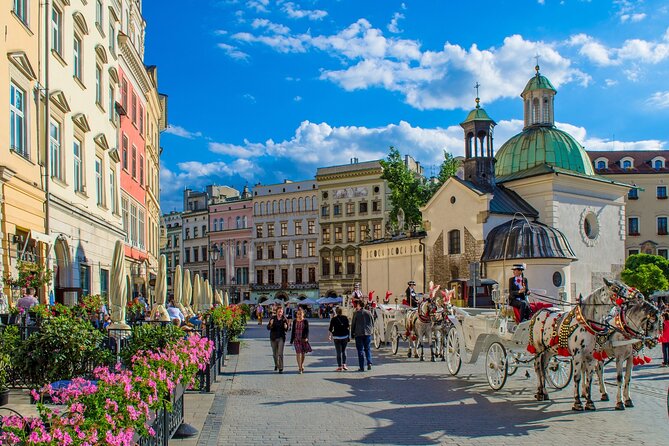
- St. Mary’s Basilica and Cloth Hall at the heart of Rynek Główny
- Underground Museum under the market area, worth seeing beyond the street-level views
- Small group size (up to 20 people), which usually helps you hear the guide better
Krakow Old Town on Foot: What a 3-Hour Loop Actually Delivers
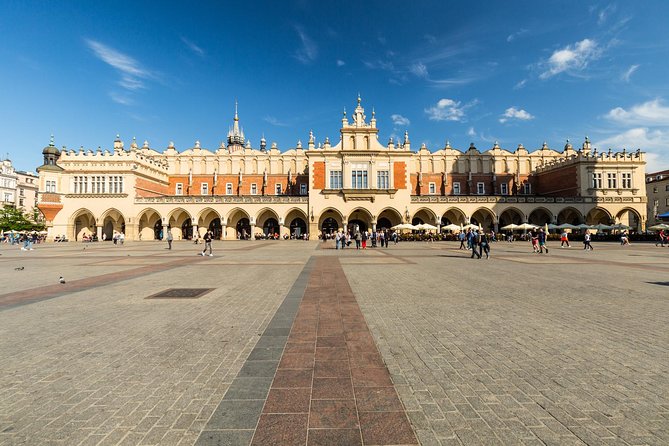
This tour is built for first-time orientation. In about 3 hours, you pass through Krakow’s center in a way that makes the city feel connected instead of random. You’re not just collecting landmarks; you’re getting the “why” behind them.
You’ll cover Rynek Główny (Main Market Square) and then follow the Royal Route-style streets toward Wawel. That matters because Krakow is compact, but the history is layered. A guided walk helps you notice details you’d likely miss if you wandered on your own.
The group stays small—maximum 20 people—which is a big deal for listening and for moving through crowded areas. And because the tour is offered in English, it’s straightforward for most visitors.
You can also read our reviews of more walking tours in Krakow


Meeting Point, Departure Time, and How You’ll Experience the Pace
You meet at KrakowTIP – Tourist Information Point, Grodzka 18 (near public transportation). The tour departs at 2pm, and you return around late afternoon.
Pace is the main variable. Many people love that the guide keeps things at an easy, workable speed, and some even mention comfy walking and plenty of stops. At the same time, at least one review flagged that the walking can feel quick and that seating opportunities may not be used for long.
So here’s my practical advice: wear comfy shoes and think like a pedestrian, not a museum visitor. If you want frequent breaks, show up with that expectation and don’t rely on being able to sit every time the group pauses.
Main Market Square First: St. Mary’s Basilica and Cloth Hall
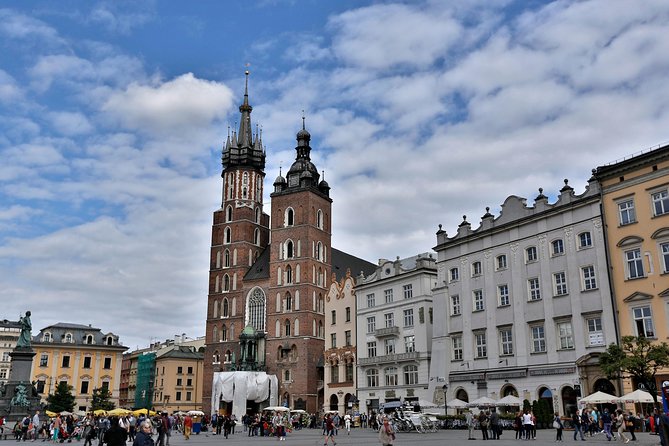
Your first major stop is St. Mary’s Basilica, right by the square. It’s a brick Gothic church tied to the Main Market area, with foundations going back to the early 1200s. Even if you’re not a church fanatic, Gothic details are much easier to appreciate when someone frames what you’re seeing.
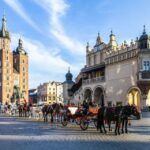
Next up is the Cloth Hall (Sukiennice), the square’s central feature. It’s free to enter in this tour context, and it’s the kind of place where you can quickly understand why this square became the commercial and social heart of Kraków. If you’ve ever wondered how a medieval city organized wealth and power, the Cloth Hall gives you a visible answer.
One practical thing: St. Mary’s Basilica has an admission ticket not included. Plan to spend a bit extra if you want to go inside rather than just view from outside.
The Royal Route Streets: Floriańska, Grodzka, and Kanonicza
After the square, you move into the street web that makes Old Town feel like a story in motion. You’ll walk Floriańska (a famous promenade), and it’s one of those streets where the “big street” energy helps you read the city at a glance.
You also pass Kanonicza Street, formerly tied to the cathedral canons. Today, it’s a long corridor of architectural leftovers—Baroque and Renaissance details that survived right in the street scene. It’s not flashy in a theme-park way, but it’s exactly the sort of place where guided commentary turns buildings into evidence.
Then comes Grodzka Street, another well-known Old Town lane. This is where you’ll likely start noticing patterns: certain blocks feel formal, others feel more intimate, and the street rhythm changes near major landmarks.
These street sections are mostly short stops, so the value is in the context you get while you’re walking. If you love architecture and city planning ideas, this part is especially useful.
Wawel Hill and the Royal Castle Complex: Krakow’s “Why Here” Moment
Wawel is where Krakow stops being a walk-through and becomes a sense of national identity. You’ll reach Wawel Castle and spend time in the castle complex, including the Cathedral, Royal Chambers, and Armory.
Wawel is also a visual lesson in architectural mixing. You’ll hear how Medieval, Romanesque, Renaissance, and Baroque elements show up together rather than in separate eras. That’s a key takeaway: in older cities, buildings often stack like time capsules.
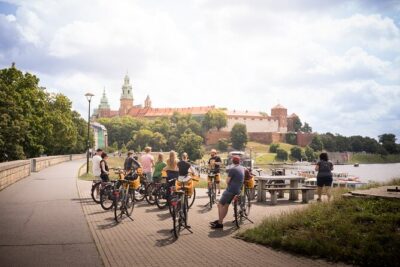
Another highlight is the viewpoint experience from Wawel Hill, with views out over the Vistula River. You’ll also get attention drawn to the gold-roofed Sigismund Chapel. If you’ve only ever seen chapel photos, it’s a different story when you’re looking up at real scale.
The castle complex has an admission ticket not included, so be ready to budget. Also note one review mentioned choosing to conclude near the base of Wawel rather than climbing farther—use that as a reminder to pace yourself if you have any limits.
You can also read our reviews of more guided tours in Krakow

St. Peter and Paul, plus Other Church Stops You’ll Actually Remember
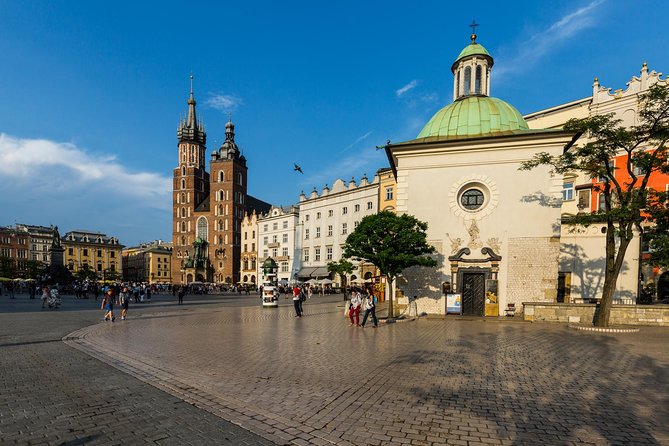
Wawel pulls a lot of the spotlight, but the church stops give the walk personality. One of the big ones is the Church of St. Peter and St. Paul, noted as a first-in-place example of Baroque style in the area. You’ll get a short stop, but the guide’s explanation helps you spot what makes the building feel different from Gothic structures nearby.
You’ll also pass St. Adalbert’s Church and Church of St. Andrew (Kosciol Swietogo Andrzeja). St. Andrew’s is described as Romanesque and built between 1079 and 1098, and it’s rare because it functioned as a defensive fortress church. That’s a fascinating concept: a place of worship that also had a protective purpose.
Admission tickets are not included for these churches (based on the tour’s stop details), so you’ll want to decide quickly whether you’ll go in during your allotted time.
If churches are your thing, you might feel a little rushed at the outside viewing points. If churches aren’t your thing, the guided storytelling usually makes it easier to care about what you’re seeing.
Underground Under the Cloth Hall: The Museum Below the Square
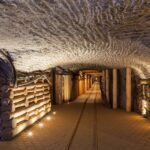
After the church-and-street stretch, you’ll reach one of Krakow’s most atmospheric stops: the museum space under the Cloth Hall area, often referred to as the Underground Museum.
This museum sits below the market square and covers over 6,000 square meters. Even without getting overly technical, that size matters. You’re not just popping into a small basement display; you’re entering an underground layer of the Old Town story.
This is also a smart break from standing in the open. If your feet are tired, the underground stop can feel like a reset—still history, but calmer.
Just remember: underground museum experiences are time-based. If you want to read every sign, you’ll need to move a bit slower and potentially shorten what you spend on later stops.
Town Hall Tower and the Stained-Glass Connection in Krakow
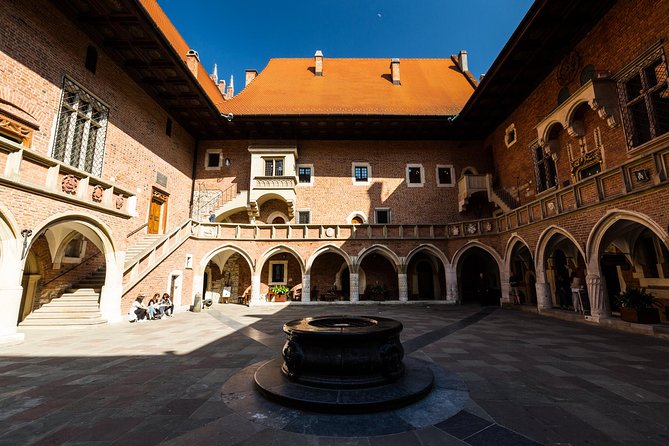
Toward the end, the tour circles back into the square area again and adds a few cultural landmarks that many people miss when they only focus on the famous postcard sights.
One is the Museum of Krakow Town Hall Tower. It’s described as the only remaining part of the old town hall that was demolished in 1820 during a city plan to open up the Main Square. The tower’s cellars are also described as having once included a city prison, including a medieval torture chamber. That’s heavy material, but it’s part of the city’s real civic history.
Another cultural note comes from a pavilion connected to Andrzej Wajda, with stained-glass windows made following Stanisław Wyspiański’s projects. This stop is brief, but it’s a great reminder that Krakow’s story isn’t only medieval—it also includes modern Polish arts shaping how the city remembers itself.
If you’re someone who likes connecting art, architecture, and politics, these finishing touches are where the walk stops feeling like a checklist.
Price and Ticket Strategy: Getting Full Value from $33.21
At about $33.21 per person, this tour is priced like a value-oriented guided walk. What you’re paying for is the practical sequencing and a local guide to interpret what you’re seeing. For many people, that’s the difference between a satisfying photo walk and an actually useful Old Town introduction.
What’s included:
- A local licensed Krakow guide
- A mobile ticket
- Group format (small size)
What’s not included:
- Food and drinks (you’ll take your coffee break on your own expense)
- Admission tickets for several major stops, including St. Mary’s Basilica and Wawel Castle, plus other churches and tower-related sites
So here’s the strategy that keeps costs reasonable: decide in advance what you’ll go inside. If you try to pay for every ticket on the fly, you may feel rushed and disappointed.
Also, because the tour includes a lot of “short stop” moments, having a plan helps. You don’t need to choose everything, but picking your top 2 or 3 entrances will make the rest of the walk feel effortless.
Weather and Seasonal Timing: Cold, Rain, and After-Sundown Chances
Krakow weather can be dramatic, and this tour reflects that reality. The experience requires good weather, and it can be canceled due to heavy rain and severe thunderstorm alerts, with refunds in those cases.
There’s also a seasonal twist: in December and January, the tour can continue after sundown so you can catch seasonal lights and decorations. If you like evening atmosphere, that’s a strong reason to book in winter rather than summer.
My advice is simple: check the forecast right before you go, and pack a layer. You’re outside through a lot of the route, and one cold-weather review described the tour feeling shorter than expected due to standing time.
Who Should Book This Tour (and Who Might Want a Different One)
This is a great fit if you want:
- A guided orientation to Krakow’s Old Town fast
- Clear explanations linking streets, churches, and Wawel
- An English-led walk that keeps you from getting lost
It’s also a good choice if you’re traveling with parents or anyone who wants structure. Several reviews praised how guides set a pace that works, with stops and time for questions. Names that came up included Joanna, Magda, Krzysztof, and Dorothy, with consistent praise for being easy to hear and staying engaging.
You might want to think twice if:
- You strongly prefer lots of sitting and long indoor time
- You’re very bothered by cold weather or limited bathroom options during long outdoor stretches
- You want a flexible self-paced route rather than a set sequence
Should You Book This Krakow Old Town Guided Walking Tour?
Book it if you want your first Krakow day to feel organized, meaningful, and efficient. At around $33.21, the guide support and the hit-list of major sites make it good value, especially if you’re the type who enjoys history as you walk.
Skip or switch to something else if you hate walking for extended stretches, or if you’re hoping for a slow-paced, mostly indoor experience. Also, consider timing: winter can add nice after-sundown atmosphere, while wet conditions can shorten or cancel the day.
Bottom line: this tour is one of the easiest ways to get your bearings fast and walk away understanding why Wawel and the Old Town square matter so much.