REVIEW · KRAKOW
Jewish Quarter, Oskar Schindler’s sites and Kraków under Nazi occupation
Book on Viator →Operated by Krakow private tours, transfers & apartments · Bookable on Viator
Street corners carry WWII stories. This private tour connects Kraków’s Kazimierz Jewish Quarter and Podgórze with the Fabryka Emalia Oskara Schindlera museum and the Płaszów camp area, so the city’s Nazi-occupation reality isn’t stuck in a book. I also like how it saves your time by focusing on the main squares and streets that matter most in Kazimierz. And I like the fact that you get to go inside Schindler’s Factory building itself, not just look at it from outside.
One possible drawback: this route includes concentration-camp remnants, so it’s emotionally heavy. If you prefer light sightseeing, this is not that kind of day.
You get a private setup (your group only) with a guide and private transportation, plus entry to the Schindler’s museum. Expect about 4.5 hours of walking and stops, with a moderate fitness level.
In This Review
- Key Points That Make This Tour Worth It
- Kazimierz and Podgórze: Why This WWII Route Hits Different
- Private Tour Flow: How the 4.5 Hours Actually Works
- From Plac Wolnica to the Market Area: Getting Oriented in Kazimierz
- Szeroka Street and the Largest Synagogue Sites: Community Life on a Walk
- Remuh Synagogue: The Only Active Synagogue in Kraków
- Plac Bohaterów Getta and Ghetto Wall Remains: Memory You Can Touch
- Fabryka Emalia Oskara Schindlera: Going Inside the Museum Building
- Płaszów Concentration Camp Area: What’s Left and What to Expect
- Price and Logistics: Is $65 Good Value for This Much Site Time?
- Who This Tour Suits Best (And Who Might Skip It)
- Should You Book This Kraków Nazi-Occupation Tour?
- FAQ
- How long is the tour?
- What does the ticket include at the main museum?
- Are synagogue tickets included?
- Is this a private tour?
- Is transportation included?
- Is snacks or bottled water provided?
- What should I know about cancellation?
Key Points That Make This Tour Worth It
- Private guide + private transport keeps the day smooth and focused
- Kazimierz highlights like Plac Wolnica, the market area, and Szeroka Street save planning time
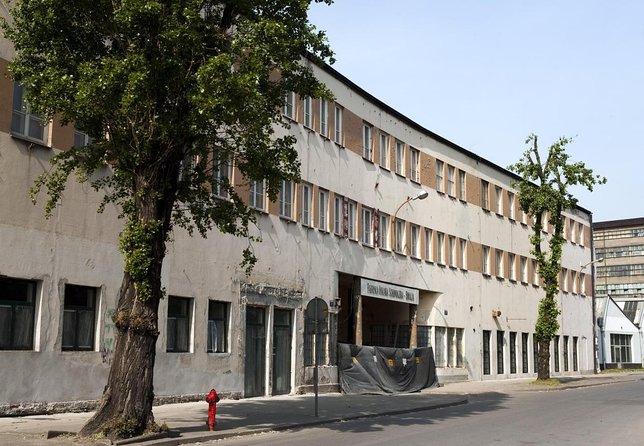
- Go inside Schindler’s Factory and spend about 2 hours with Kraków-under-occupation exhibits
- Remuh Synagogue is the only active synagogue in Kraków, but its ticket is not included
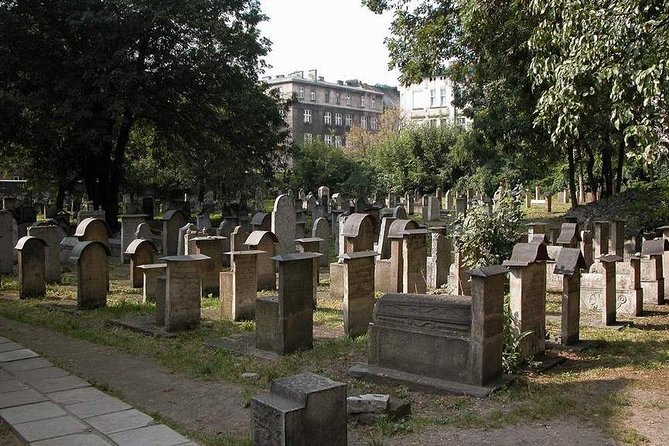
- Płaszów camp area includes leftovers of two Jewish cemeteries and camp buildings
- You’ll see ghetto memory points like the Ghetto Monument chairs and a remainder of the ghetto wall at Lwowska street
Kazimierz and Podgórze: Why This WWII Route Hits Different
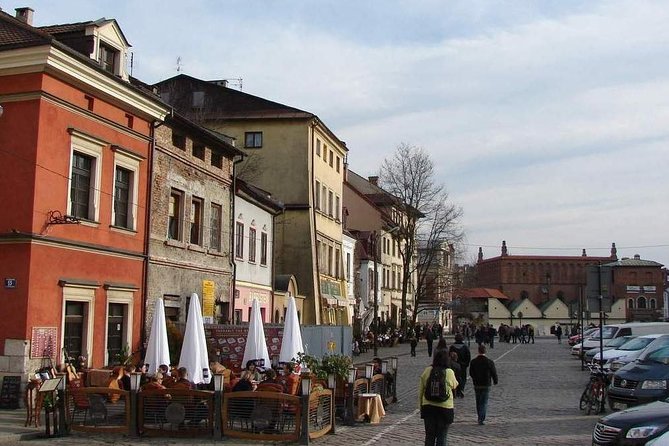
Kraków’s WWII story isn’t just a timeline. It’s streets, building locations, and the way entire neighborhoods were cut up and controlled. This tour’s big advantage is that it puts you in the right places to understand how Kazimierz and Podgórze changed under Nazi occupation.
In Kazimierz, you’ll move through places tied to Jewish community life—squares and key streets that were once central to daily rhythms. Then the tour shifts toward the ghetto-era memory points and the camp zone at Płaszów. That shift matters. It helps you connect the occupation story from “life under pressure” to “forced labor and confinement,” without relying on guesswork.
Because it’s a guided route, you’re not left to interpret what you see on your own. Your guide’s job is to turn the locations into meaning—what each site represents and why it’s placed where it is.
You can also read our reviews of more tours and experiences in Krakow.
Private Tour Flow: How the 4.5 Hours Actually Works
This experience is priced and structured as a private tour, so you’re not sharing your attention with a larger group. You’ll also have private transportation, which is a real value in Kraków. It reduces the amount of time you spend simply getting from one emotionally intense site to the next.
The time plan is built around multiple short stops—some around 10–20 minutes—and one longer museum visit. That makes the day feel manageable even though the subject matter isn’t. You should expect a mix of walking between stops and short “look, learn, move on” moments at each key location.
Fitness note: the tour asks for a moderate physical fitness level. If you’re comfortable with steady walking for several hours and short stops, you should be fine.
Practical note for comfort: snacks and bottled water aren’t included. On a day that runs about 4 hours 30 minutes, I’d plan to bring water or have a chance to buy it nearby, especially if you tend to get thirsty while walking.
From Plac Wolnica to the Market Area: Getting Oriented in Kazimierz
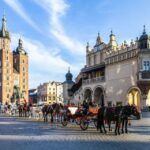
Your day starts in Kazimierz at Plac Wolnica, the main square area. This is a strong opening because the square setting helps you understand Kazimierz as a place with its own identity—before it was folded into a larger city map. The tour also keeps things practical here, with a short stop designed to get you oriented fast.
Next comes the Market Square, described as the former Jewish market place. This kind of location is useful because a market isn’t just about commerce. It’s where community networks show up in physical form—daily interactions, movement, and the social “gravity” of a neighborhood. Even if you don’t know details yet, seeing the market space gives context for what life was like before war reshaped everything.
These early stops are mostly about setting the stage. If you’ve ever felt museum content doesn’t connect to real places, this section helps fix that problem right away.
Szeroka Street and the Largest Synagogue Sites: Community Life on a Walk
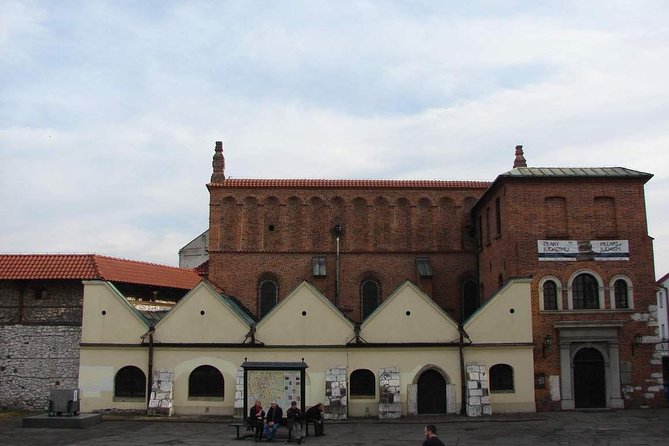
Then you’ll head along Szeroka Street, often described as the heart of the Jewish Quarter. The tour gives it about 20 minutes, which is enough time to notice street layout and building edges, and to understand why the “heart” label isn’t just marketing.
You’ll also encounter stops tied to the largest synagogue in Krakow. The exact synagogue name isn’t specified in the tour details you provided, but the tour is clearly highlighting the idea of scale—this wasn’t a tiny enclave. You’re meant to see what a major community institution looked like in the city.
A tip for getting the most out of these streets: take a moment to look up from street-level. When you’re guided through what you’re seeing, small architectural and street-pattern clues start making sense—why people moved the way they did, where key institutions were placed, and how community spaces shaped the walk.
Remuh Synagogue: The Only Active Synagogue in Kraków
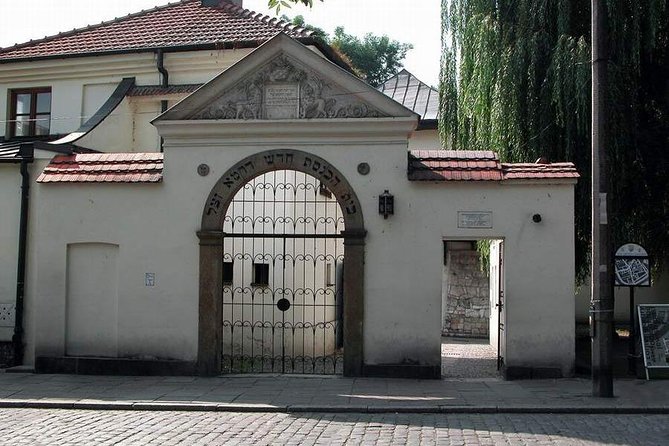
One of the most meaningful stops is Remuh Synagogue (Synagoga Remuh). The tour calls it the only active synagogue in Kraków, which changes the feel of the visit. This isn’t just history on a plaque. It’s a living religious site.
The schedule gives it about 20 minutes. That’s a good length because you can slow down, absorb what makes it different from a museum setting, and still keep the day moving.
Important practical detail: the admission ticket for Remuh Synagogue is not included. If you’re set on visiting, plan to pay for it separately.
Plac Bohaterów Getta and Ghetto Wall Remains: Memory You Can Touch
After Kazimierz streets and synagogue-related sites, the tour shifts toward ghetto-era memory points.
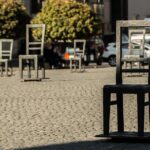
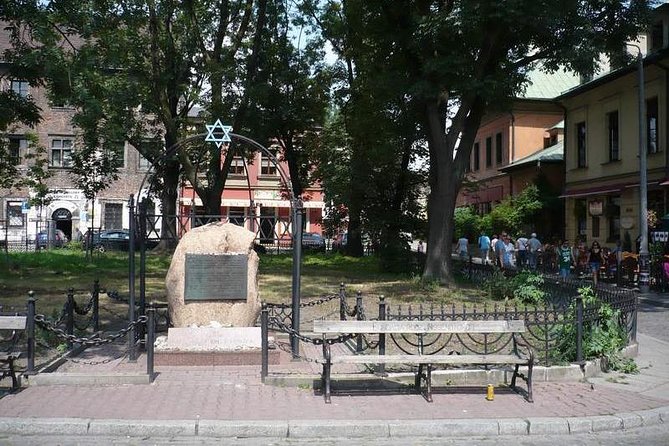
You’ll visit Plac Bohaterow Getta, including the Ghetto Monument chairs. It’s a short stop (about 10 minutes), but it’s the kind of place that resets your thinking—turning the scale of loss into something visible and immediate.
From there, the tour moves to two more location types:
- A place where Tadeusz Pankiewicz used to work
- A remainder of the ghetto wall at Lwowska street
Those are powerful in different ways. A work location ties people to jobs and daily effort under impossible conditions. A remaining section of wall is physical proof that borders and restrictions weren’t abstract—they were built into the streets.
Even if you know some WWII facts, these stops are where the story becomes grounded. You start seeing the neighborhood as a controlled space, not just a “then and now” comparison.
Fabryka Emalia Oskara Schindlera: Going Inside the Museum Building
Now for the anchor of the day: Fabryka Emalia Oskara Schindlera. You get about 2 hours here, and the admission is included.
This is the tour’s biggest value add because it’s not only a museum. It’s a specific site tied to Kraków’s Nazi-occupation reality. By walking through exhibits in the building itself, you’re connecting the idea of persecution and forced change to a real physical setting.
The museum is described as showing Kraków under Nazi occupation, which is exactly what you want in a tour like this. You’ll leave with a clearer sense of how occupation affected normal life, institutions, and people’s options.
If you like museums, this is where you’ll feel you’ve gotten your money’s worth. If you don’t love museums, 2 hours can still be manageable because the museum visit is the one “long stop” that gives you a structured understanding before the tour ends.
Płaszów Concentration Camp Area: What’s Left and What to Expect
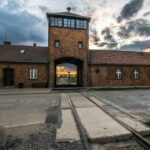
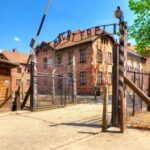
The final major site is Płaszów Concentration Camp—the area of the large labor and concentration camp Płaszów. The time is about 20 minutes.
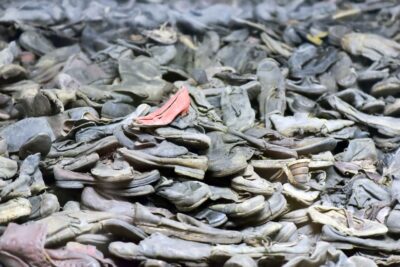
The tour notes that what you’ll see includes leftovers of two Jewish cemeteries and camp buildings. That detail matters because it clarifies what kind of remains you’re viewing. This isn’t a reconstructed attraction designed for photo angles. It’s a place where the present is shaped by what was destroyed or erased.
So how should you handle it?
- Keep your pace slower than usual
- Expect the emotion to hit in waves
- Don’t rush to “get through it”
This stop is likely the hardest part of the day. It’s also the one that most clearly explains why the earlier neighborhoods, synagogues, squares, and ghetto locations weren’t just locations. They were steps in a system.
Price and Logistics: Is $65 Good Value for This Much Site Time?
At $65 for about 4 hours 30 minutes, you’re paying for a few key things: a professional guide (private tour), private transportation, and all fees and taxes. You also get admission to the Schindler’s Factory museum.
When I compare that kind of structure to doing it on your own, the math often favors the guided version if you care about context and time. The tour takes you through multiple areas that would take effort to stitch together—especially when you want the meaning of each place, not just the location.
A smart budget point: Remuh Synagogue’s ticket is not included, and snacks and bottled water aren’t included either. So your total might be a little higher than $65, depending on what you choose to pay for on the day.
But even with those extras, you’re still getting a focused route and the museum access built in. The “included” Schindler’s Factory time is the big reason this price feels fair.
Who This Tour Suits Best (And Who Might Skip It)
This tour makes sense if you want a WWII-focused walk through Kraków’s Jewish Quarter and the Podgórze/Płaszów area, with a guide connecting locations to occupation-era changes.
It’s especially good for you if:
- you like guided interpretation that turns street-level sights into story
- you want Kazimierz highlights without spending hours planning
- you want to spend real time inside Schindler’s Factory museum rather than rushing past it
It may be less ideal if:
- you’re looking for a light or purely sightseeing day
- you struggle with emotionally intense sites
- you need frequent long breaks, because the schedule is built on several shorter stops plus the museum block
Should You Book This Kraków Nazi-Occupation Tour?
If you want WWII history tied to real locations—and you’re okay with a serious, emotionally heavy theme—this is a strong pick. The best reasons to book are the private guide, the Schindler’s Factory museum visit inside the building, and the way the route connects Kazimierz life, ghetto memory points, and the Płaszów camp area without leaving you to figure it out alone.
If Remuh Synagogue is important to you, budget for its ticket since it’s not included. And bring or plan for water and a snack, because the day runs long enough that you’ll feel it.
Overall: for a single focused outing in Kraków, this tour gives you a clear line through a complicated, painful period.
FAQ
How long is the tour?
The tour runs about 4 hours 30 minutes.
What does the ticket include at the main museum?
Admission to the Fabryka Emalia Oskara Schindlera exhibition is included.
Are synagogue tickets included?
Admission to Remuh Synagogue is not included. Other listed stops have free admission.
Is this a private tour?
Yes. It’s a private tour/activity, and only your group participates.
Is transportation included?
Yes. Private transportation is included.
Is snacks or bottled water provided?
No. Snacks and bottled water are not included.
What should I know about cancellation?
This experience is non-refundable and cannot be changed for any reason. If you cancel or request an amendment, the amount paid is not refunded.
If you want, tell me your travel dates and what you’re most interested in (Kazimierz streets vs. Schindler’s Factory vs. Płaszów), and I’ll help you plan what to do before and after the tour in a way that keeps the day from feeling rushed.