REVIEW · KRAKOW
Kraków: Old Town & Wawel Castle Walking Tour in English
Book on GetYourGuide →Operated by Walkative Tours · Bookable on GetYourGuide
Kraków feels like a history lesson on pavement. I love walking the UNESCO-protected core where the medieval city still reads clearly, and I love how Wawel turns legends into something you can actually picture. One catch: it’s a steady 150-minute walk, so you’ll want comfortable shoes and a bit of patience if the group moves quickly.
This tour is built around a clear story, not just a checklist. You’ll follow the Royal Route past the big-name sights, and you’ll also get access to courtyards that make the architecture feel lived-in rather than distant.
Guides like Big Tom (and others with that same energetic, joke-friendly style) help the complicated parts of Polish and Central-Eastern European history make sense. If you’re expecting a long sit-down museum visit, you might be disappointed—but if you want context while you’re standing right where the story happened, you’re in the right place.
In This Review
- Key things you’ll notice on this walk
- Why this Kraków walking tour feels different from sightseeing
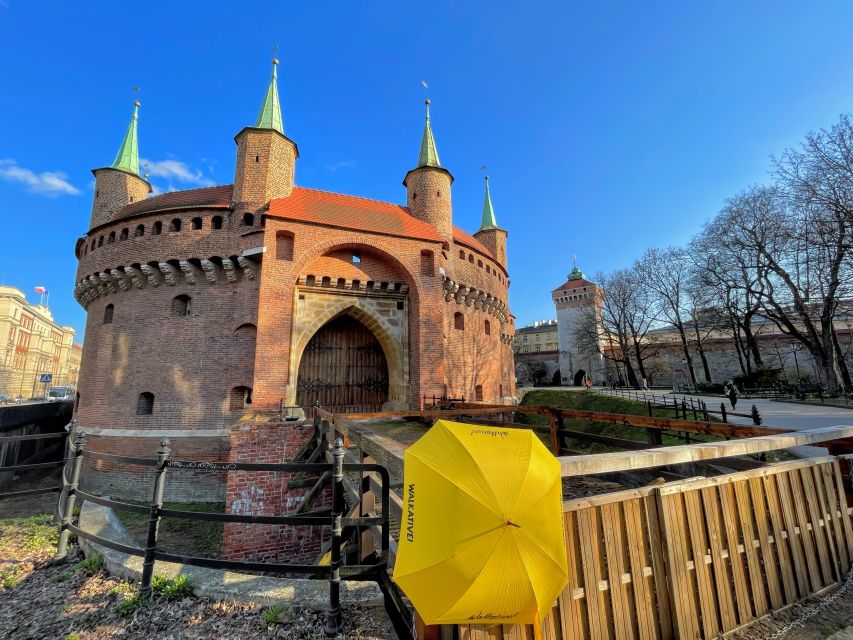
- Starting between the Barbican and St. Florian’s Gate
- The medieval walls and the Barbican: Kraków as fortress
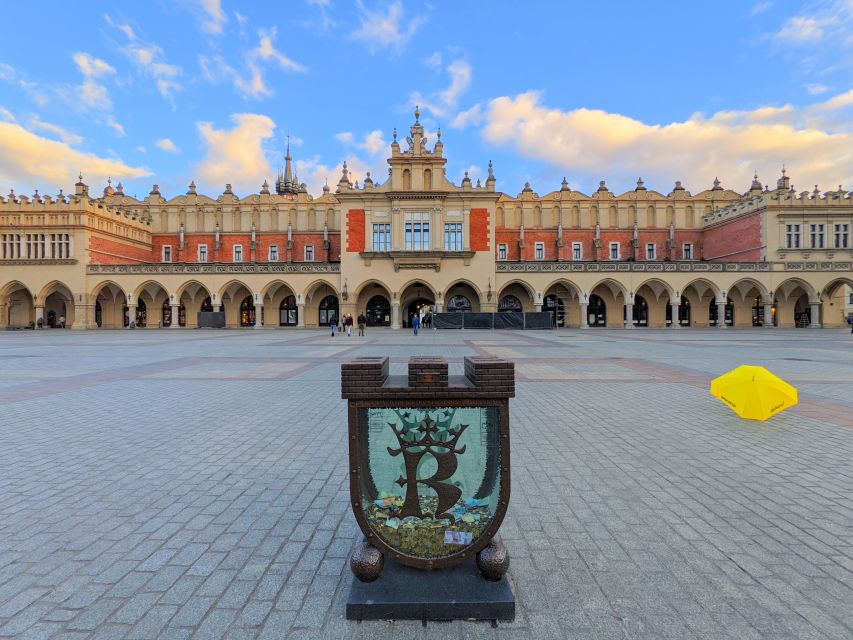
- Main Market Square and the Cloth Hall: where daily power played out
- St. Mary’s Basilica and the trumpeter: a church detail with personality
- Collegium Maius courtyard: seeing education as a city force
- Archbishop Palace and John Paul II’s papal window
- Wawel Hill: cathedral grounds, castle courtyard, and dragon lore
- The guides make or break it: Big Tom and the story-first style
- What you’re really paying for (at about $26)
- When to book and how to fit it into your Kraków days
- Who this tour suits best (and who should consider alternatives)
- Should you book this Kraków Old Town & Wawel walking tour?
- FAQ
- How long is the Kraków Old Town & Wawel Castle walking tour?
- How much does the tour cost?
- What is included in the price?
- What is not included?
- Where do we meet for the tour?
- Is the tour available in English?
- Is the tour wheelchair accessible?
- Is there a way to book without paying everything upfront?
- Can I cancel and get a full refund?
- What major sights does the tour cover?
Key things you’ll notice on this walk
- UNESCO Old Town core that still feels Middle Ages, not rebuilt-on-a-postcard
- Royal Route hits: Main Market Square, St. Mary’s Basilica, and the Wawel area
- Wawel Dragon and royal legends told in a way you can track on the ground
- Collegium Maius courtyard plus Wawel Royal Palace courtyard access for real atmosphere
- John Paul II’s papal window and palace details you might miss on your own
- A guide-led narrative that mixes serious history with humor, like Big Tom and Chris-style storytelling
Why this Kraków walking tour feels different from sightseeing
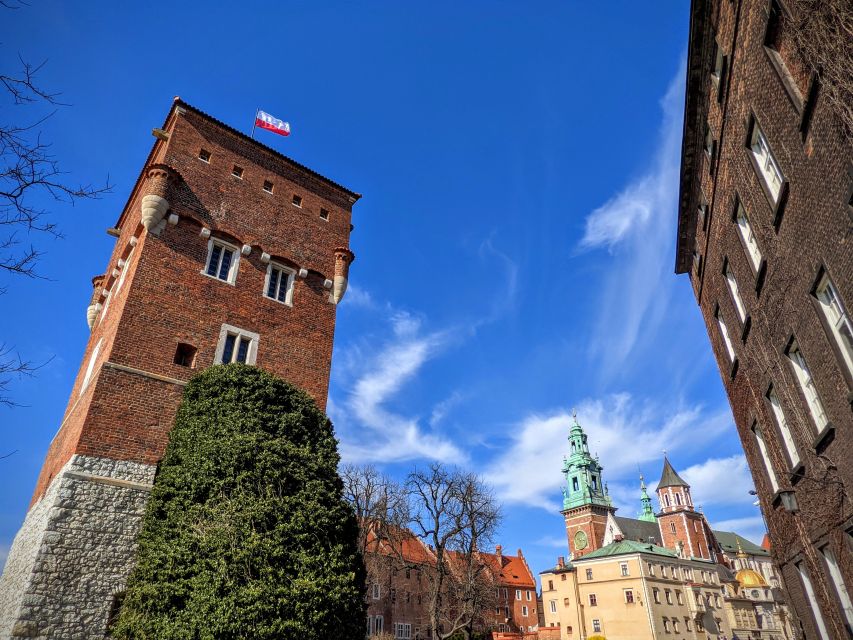
Kraków’s Old Town has a rare quality: it still looks like itself. The perfectly preserved core is a big reason it’s on UNESCO’s World Heritage list, and it’s also why the city feels so readable as you walk. You’re not just passing “pretty buildings.” You’re walking through the framework that shaped the way Kraków worked—its power, learning, religion, and stories.
I also like that the focus isn’t only on monuments. The tour keeps circling back to meaning. Why is this route considered royal? What do these spaces suggest about authority and culture? How did people in past centuries experience these places day to day? When Copernicus walked these streets in the 15th and 16th centuries, you’re meant to imagine the city as a living stage, not a frozen set.
And yes, you’ll hear about kings, palaces, and castles—but you’ll also hear about the dragon at Wawel Hill. That blend matters. It keeps the tour from turning into dates and titles only. You get a city that has myth alongside history, both tied to real stone.
You can also read our reviews of more walking tours in Krakow

Starting between the Barbican and St. Florian’s Gate
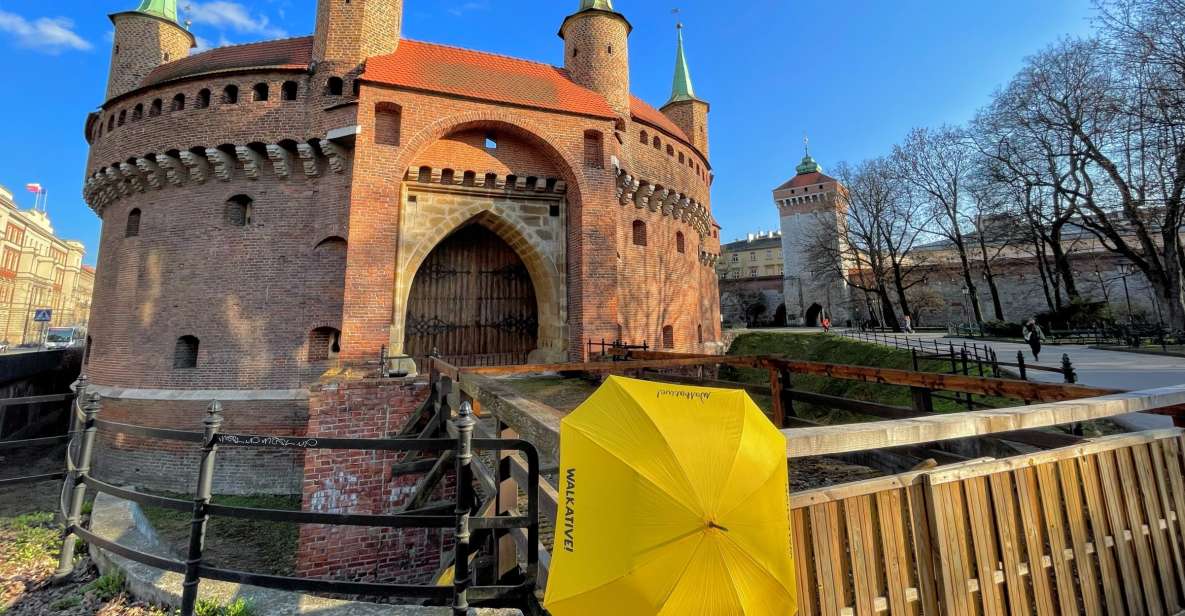
The meeting point is a small space between the Barbican and St. Florian’s Gate, the medieval entrance into the city. That’s a smart start because it immediately frames Kraków as a defended place, not just a pretty tourist center.
Timing-wise, you’re out for 150 minutes, so plan for a proper walking stint. I’d go with shoes you can handle on uneven old-stone surfaces. If you’re the kind of person who likes to stop and read every plaque, build in extra energy—you’ll have fewer chances to wander off for long than on a self-guided day.
Also, the tour uses a group rhythm. One reason people rave about the guides is that they keep everyone together while still answering questions. Still, if your pace is slower, you may miss some spoken details if the crowd moves fast. The good news: guides tend to build in small pauses so you can breathe and reset.
The medieval walls and the Barbican: Kraków as fortress
One of the best ways to understand Kraków is to start with its defensive thinking. As you pass the medieval city walls and the Barbican, the city stops being abstract. You can see what protection looked like and why it mattered.
This part of the walk is valuable even if you don’t care about military history. It gives you a mental map. Later, when you’re at the royal sites, you’ll understand how power sat inside a city that had to protect itself.
Look for how the architecture handles edges and corners. On your own, you might notice the Barbican as a landmark. On a guided walk, you’ll learn how that landmark connects to the city’s larger design logic.
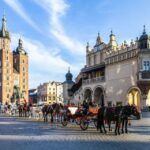
Main Market Square and the Cloth Hall: where daily power played out
Next you hit the heart of the old city: Main Market Square with the Cloth Hall. This is the kind of place where history shows up in the way people still gather.
The Royal Route angle makes this stop more than a photo moment. The tour frames the square and Cloth Hall as part of a route tied to authority. You’re learning why certain places keep showing up in the story of European capitals and why Kraków’s center mattered.
Practical tip: this area can be busy. Since the tour is guided, you’ll want to listen while you’re standing in the right spot. If you slip forward for pictures, you may end up looking at a facade while missing the explanation. Keep your position and take photos between points.
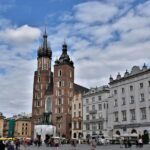
St. Mary’s Basilica and the trumpeter: a church detail with personality
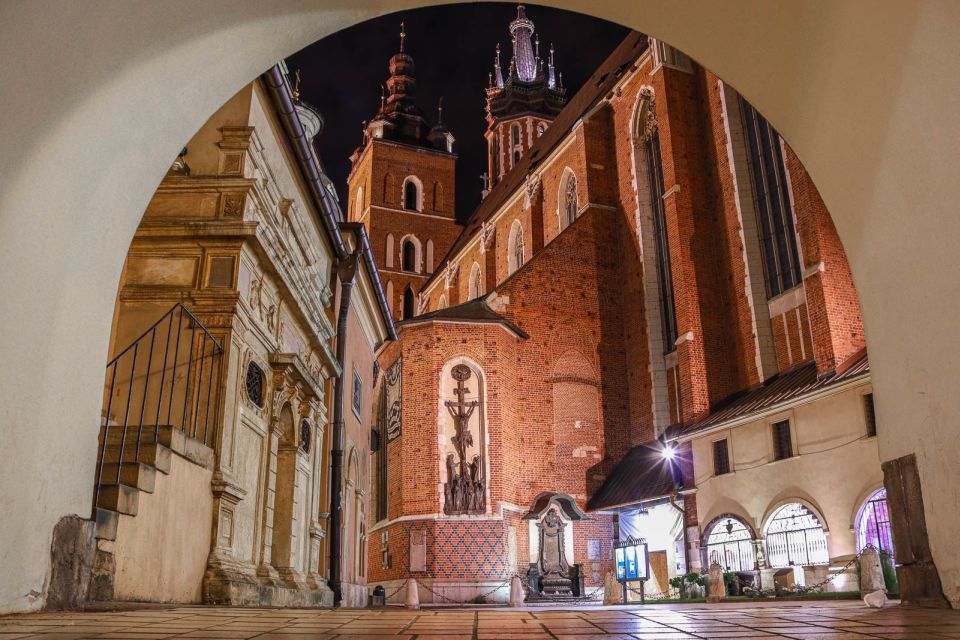
St. Mary’s church is one of Kraków’s big icons, and the tour calls out the famous trumpeter. Even if you know Kraków is full of religious art, this stop works because it’s specific. It’s not just, This is a church. It’s, Here’s a detail you can recognize and connect to the building’s identity.
This is also where the tour’s storytelling style helps. A guide can explain what you’re looking at without making it feel like homework. You’ll understand why people kept returning to this site and how it fits into the city’s bigger religious and cultural story.
If you’re the type who gets bored in churches, this stop is still a good sign. A trumpeter detail gives you something tangible to hold onto while you listen.
Collegium Maius courtyard: seeing education as a city force
One of the tour’s standout inclusions is a visit to the courtyards of the Collegium Maius, the oldest building of the oldest university in central-eastern Europe. That’s a mouthful, but the feeling matters: you’re stepping into a place where learning shaped how people looked at the world.
This is where you’ll also connect Kraków to famous intellectual life. The tour points you toward the traces of the city in its 15th- and 16th-century heyday, and it specifically nods to Copernicus walking these streets.
Courtyard access is a big deal. Courtyards are where buildings stop being walls and start being environments. You get angles, sightlines, and that sense of space that helps architecture actually make sense.
Archbishop Palace and John Paul II’s papal window
The tour then moves into the political-religious side of Kraków. You’ll see the Archbishop Palace and the John Paul II papal window.
This stop is valuable because it teaches you where to look when you stand in front of a building and think, I see a landmark, but I’m not sure what it meant. The papal window gives you a human anchor. It’s easier to picture public moments when a specific feature points you to them.
If you’re trying to understand how faith and public life intertwined in this region, this is one of your clearer explanations on the walk.
Wawel Hill: cathedral grounds, castle courtyard, and dragon lore
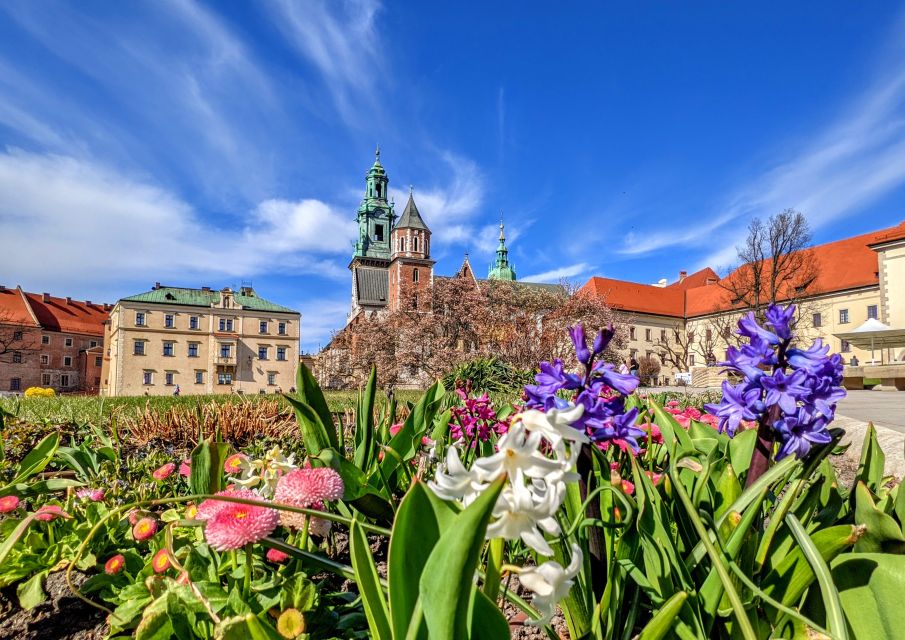
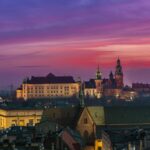
Then it’s up to Wawel Hill—cathedral and castle grounds included in the tour’s focus. This is where Kraków stops being a city you walk through and becomes a place that feels like the center of power.
You’ll spend time around the cathedral and the castle courtyard. The tour also includes access to the courtyards of the Wawel Royal Palace, which helps a lot. Courtyards again matter because they show how the building operates. You’re not just viewing from a distance; you’re inside the geometry that shaped movement, ceremony, and presence.
And then comes the part that makes the whole experience stick: the Wawel Dragon. Dragons can be tourist-y if handled lazily. Here, the guide uses the legend to give context to the place and to keep the story flowing between the royal architecture and the imaginative side of Kraków’s past.
If you only do one “myth + history” stop in Kraków, this is the one.
The guides make or break it: Big Tom and the story-first style
The tour’s big strength is how it’s structured as a narrative. It’s not wandering from one place to another hoping you can connect the dots. The guide does the connecting—kings to castles, squares to routes, palaces to legends.
You’ll often hear humor mixed into the facts, and that’s not a gimmick. It keeps the group engaged so you don’t tune out during the more complicated moments. Names that show up in guide praise include Big Tom, Mitchell (Magic), Chris, Maciek, and Mati, all described as lively storytellers who keep people laughing while explaining what you’re seeing.
One thing I really like about this approach: it helps you ask questions without feeling awkward. The best guides make room for curiosity, and you get a more personal understanding of the city.
What you’re really paying for (at about $26)
This tour is priced at $26 per person for about 150 minutes, which is usually the sweet spot: long enough to cover real distance, short enough to stay focused. The value isn’t only the walk. It’s the combination of:
- an expert local guide,
- a constructed narrative (so you don’t lose the thread),
- and courtyard access at Collegium Maius and Wawel Royal Palace.
Courtyards are exactly the kind of thing that can be hard to access on your own at the right moment. They give you texture and atmosphere without turning the day into museum logistics.
There’s also a pay-what-you-wish element to note: the booking joins a general pay-what-you-wish format, where your payment covers a reservation fee and the guide’s payment. In practice, that means you should think of the guide as part of the product, not an optional extra.
When to book and how to fit it into your Kraków days
I’d book this tour early in your trip if you can. It’s a fast way to learn the city’s “shape,” so the rest of your time feels more intentional. One of the clearest benefits is orientation: once you’ve walked the Royal Route and seen where key sites cluster, you’ll make better decisions on where to spend your remaining hours.
If you arrive with a short list of must-sees, you’ll also feel calmer. The tour helps you understand what matters most so you don’t waste energy chasing every single building in the center.
This is also a good choice on a day when you want culture but don’t want to manage tickets and entry decisions between stops. You’ll see a tight, high-impact route with the major landmarks kept in view.
Who this tour suits best (and who should consider alternatives)
This walking tour suits you if:
- you want a guided overview of Kraków’s Old Town core and Wawel,
- you enjoy stories that connect architecture to culture,
- you don’t mind walking for around 2.5 hours.
It may be less ideal if:
- you need a very slow pace,
- you struggle to keep up with a moving group (you might miss some spoken details if you fall behind),
- you prefer long indoor time over outdoor walking.
Wheelchair accessibility is listed, which is a big plus. Still, a walk like this is still a walking experience. If mobility is a concern, I’d plan to ask the guide about pacing right at the start.
Should you book this Kraków Old Town & Wawel walking tour?
If you like the idea of seeing UNESCO Old Town and Wawel with clear context—and you want courtyards rather than just standing outside gates—this is a strong pick. It’s also good value for time because the narrative keeps pulling your attention back to meaning, not just monuments.
One more practical nudge: bring your walking stamina, because this is a true city-walk. If you can handle that, you’ll finish with a better grasp of Kraków’s central story: royal power, religious landmarks, learning, and the legends tied to Wawel Hill.
You can also keep it flexible: it’s in English, wheelchair accessible, and it offers reserve now & pay later plus free cancellation up to 24 hours in advance.
FAQ
How long is the Kraków Old Town & Wawel Castle walking tour?
The tour lasts 150 minutes (about 2 hours 30 minutes).
How much does the tour cost?
It costs $26 per person.
What is included in the price?
You get an expert local guide, a thoroughly constructed narrative, and visits to the courtyards of the Collegium Maius and the Wawel Royal Palace.
What is not included?
Hotel pickup and drop-off are not included, and snacks are not included.
Where do we meet for the tour?
You meet in a small space between the Barbican and St. Florian’s Gate.
Is the tour available in English?
Yes, the live tour guide speaks English.
Is the tour wheelchair accessible?
Yes, wheelchair accessibility is listed for this activity.
Is there a way to book without paying everything upfront?
Yes. There is a reserve now & pay later option.
Can I cancel and get a full refund?
Yes. Free cancellation is available up to 24 hours in advance for a full refund.
What major sights does the tour cover?
You’ll see the medieval city walls and Barbican, Main Market Square and the Cloth Hall, St. Mary’s church with its famous trumpeter, Collegium Maius, the Archbishop Palace and the John Paul II papal window, Wawel Hill with the cathedral and castle courtyard, and the Wawel Dragon.