REVIEW · KRAKOW
From Krakow: Auschwitz-Birkenau Guided Tour & Hotel Pickup
Book on GetYourGuide →Operated by Royal Cracow · Bookable on GetYourGuide
Dark history has a way of slowing you down. This Krakow-to-Auschwitz-Birkenau day trip uses hotel pickup and a licensed guide to help you see what happened with clarity, context, and proper pacing. You’ll travel to Oświęcim, enter the memorial grounds, and follow a guided route that focuses on the site’s most important evidence.
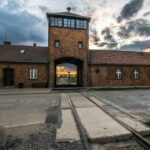
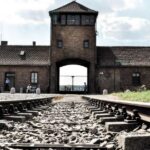
Two things I really like: the professional licensed guide (the commentary matters here), and the fact that you’re taken to the sites people come for, including the infamous gate and the preserved areas tied to Nazi operations. A thoughtful touch is how the tour moves from museum material to the physical spaces, so it’s not just facts on paper.
One possible drawback to consider: this is heavy, long, and walk-heavy. Even with a smooth bus ride, you should expect an emotionally draining day and plenty of time outdoors on memorial ground.
In This Review
- Key highlights worth your attention
- Krakow to Oświęcim: How the day trip starts smoothly
- Entering Auschwitz-Birkenau with a guide, not just tickets
- Auschwitz I experience: Museum evidence and the meaning of preserved spaces
- A short break that matters more than you think
- Auschwitz II-Birkenau: Gas chambers, barracks, and the scale shock
- Guides and group handling: what to look for on the bus
- Price and value: what $21 buys you (and what it doesn’t)
- What to bring, and what to avoid at the memorial
- Who this tour is best for (and who should skip it)
- Should you book the Krakow Auschwitz-Birkenau guided tour with pickup?
Key highlights worth your attention
- Pickup from many Krakow locations so you’re not scrambling across town.
- Licensed guide at Auschwitz-Birkenau to make sense of what you’re seeing.
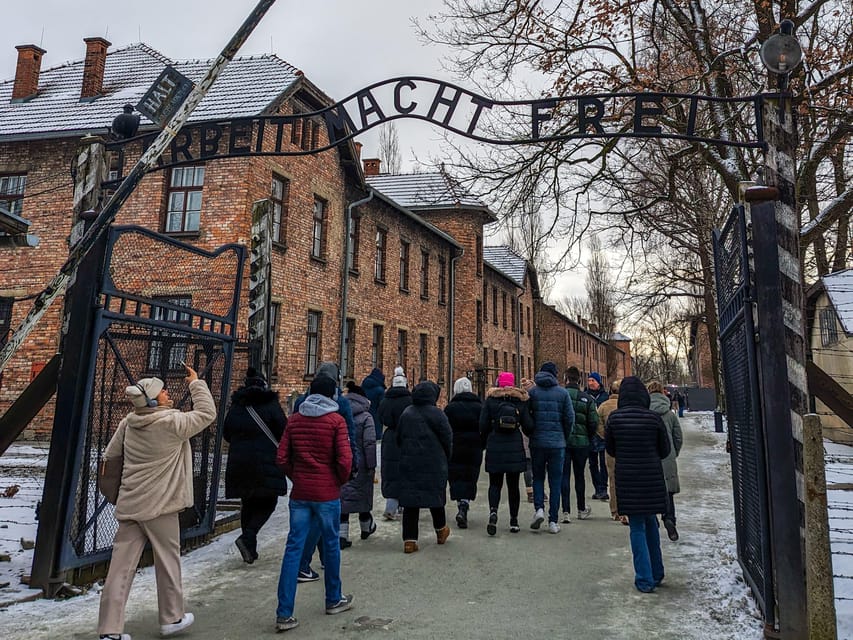
- Arbeit Macht Frei gate and camp symbolism that hit hard because they’re real.
- Original barracks and gas chamber areas included in the guided route.
- Artifacts and period photos that put names and belongings to the tragedy.
- Guide styles that stay respectful; some departures have featured guides named Nicholas and Ziggy who are described as patient and careful.
Krakow to Oświęcim: How the day trip starts smoothly
The best part of this tour is how the logistics try to remove friction. You’re not left to figure out trains, transfers, and the timing puzzle. Instead, you get hotel pickup in Krakow and ride out to Oświęcim in an air-conditioned coach.
That coach time is not wasted. I like that the ride gives you a chance to settle in before the memorial, especially when your guide uses the journey to provide background. If you’re the type who likes to arrive with a mental frame already in place, this structure helps.
Timing is something to take seriously. Start times can fall between 5:00 AM and 1:30 PM, and the exact pickup time is shared the day before (so don’t assume your chosen time is guaranteed). If you pick an early slot, be ready for a long morning. If you pick later, you still get a full day because the memorial itself sets the pace once you arrive.
The tour duration is listed as 7 to 10 hours, and that range is practical. You’re dealing with travel time plus time on site, and the memorial’s visitor service also affects timing once you’re there. Plan for a day where dinner runs late, not early.
One more practical note: the drop-off list covers a lot of Krakow hotels and central points. So once you’re done, you should be able to get back near where you’re staying without a long scramble.
You can also read our reviews of more guided tours in Krakow
Entering Auschwitz-Birkenau with a guide, not just tickets
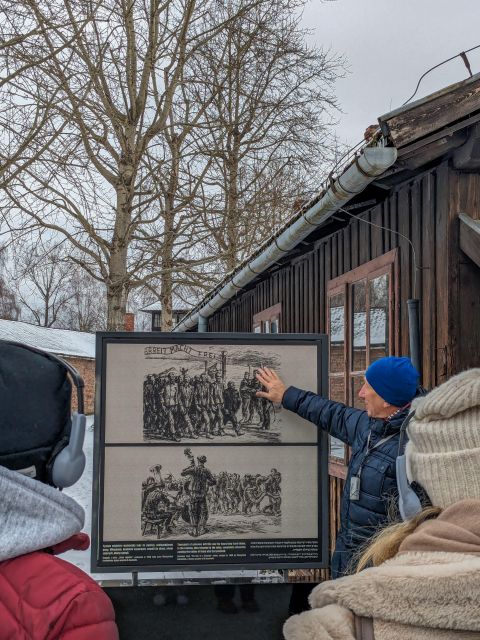
Let’s be honest: seeing Auschwitz without guidance can feel confusing. The grounds are large, the history is complex, and the site is emotionally overwhelming. This is where the value shows. You get skip-the-line entry to the Auschwitz-Birkenau Memorial and Museum (with the note that certain special tour options may differ), plus a professional licensed guide.
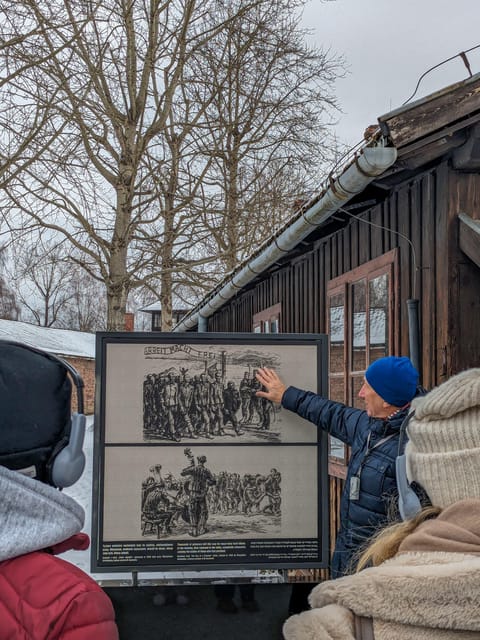
You’re paying not only for access, but for interpretation. At Auschwitz, the difference between seeing something and understanding it is huge. A good guide helps you connect details—like camp purpose, prisoner experience, and how the system worked—to what’s physically in front of you.
Also, the tour is set up to be respectful with pace. You’re not rushed through the most important areas as if it’s a checklist. The guided time is described as about 3.5 hours at the memorial complex, which is long enough for meaning without turning it into an endurance test.
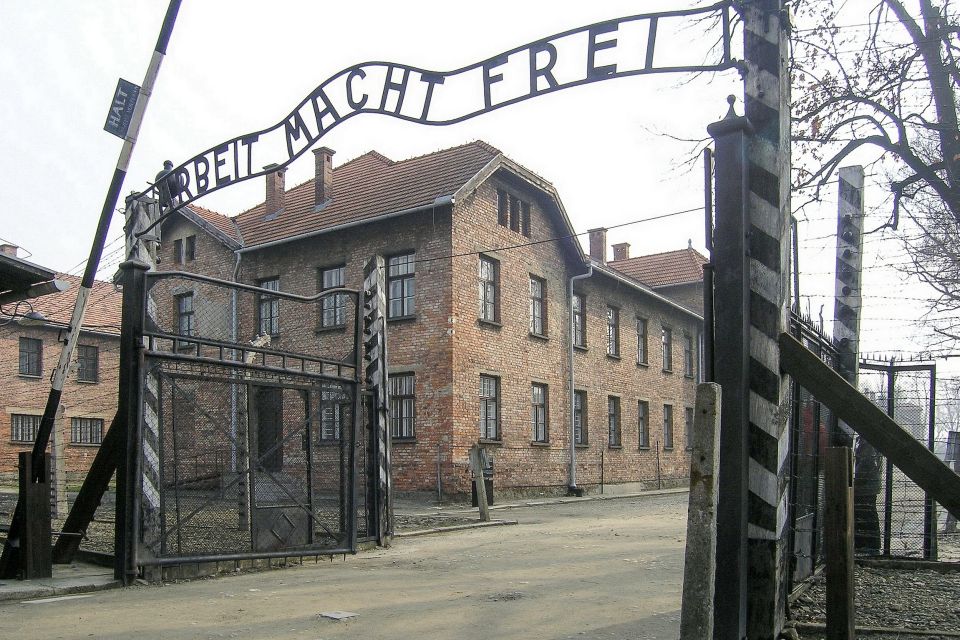
What you’ll see in this first guided phase includes the camp’s key symbolism—most famously the gate with Arbeit Macht Frei—and explanations about why and how the camp system operated. The tour also addresses the scale of murder at the camp, including that about 1.3 million Jews were murdered there during World War II, along with prisoners from Poland, France, and Italy. That number can feel unreal until it’s connected to what’s preserved and documented.
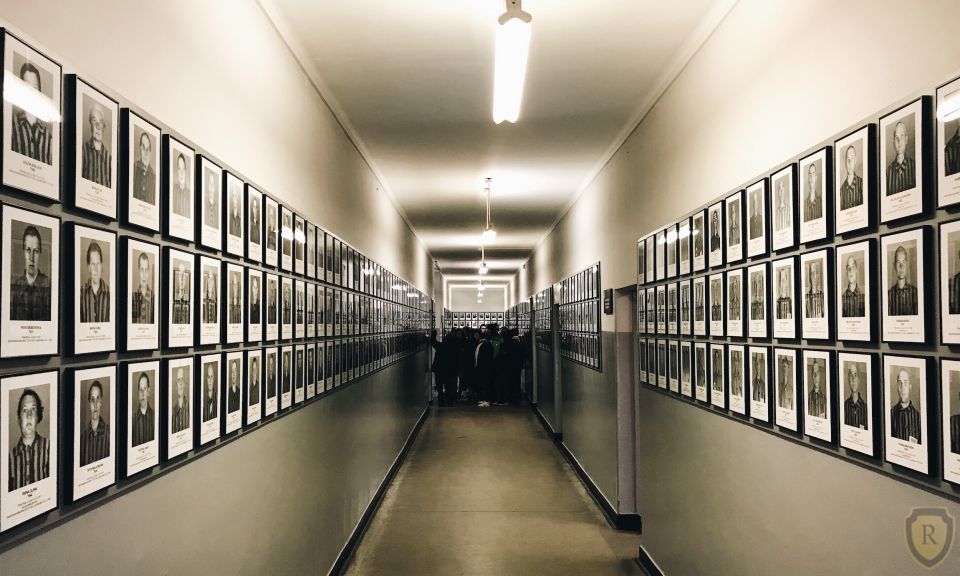
And yes, you’ll encounter museum material that gives you more than generic tragedy. You’re guided through period photos and personal artifacts, which is where the site can feel most chilling. It’s one thing to read that people were deported; it’s another to see belongings and understand that these objects belonged to real individuals.
Auschwitz I experience: Museum evidence and the meaning of preserved spaces
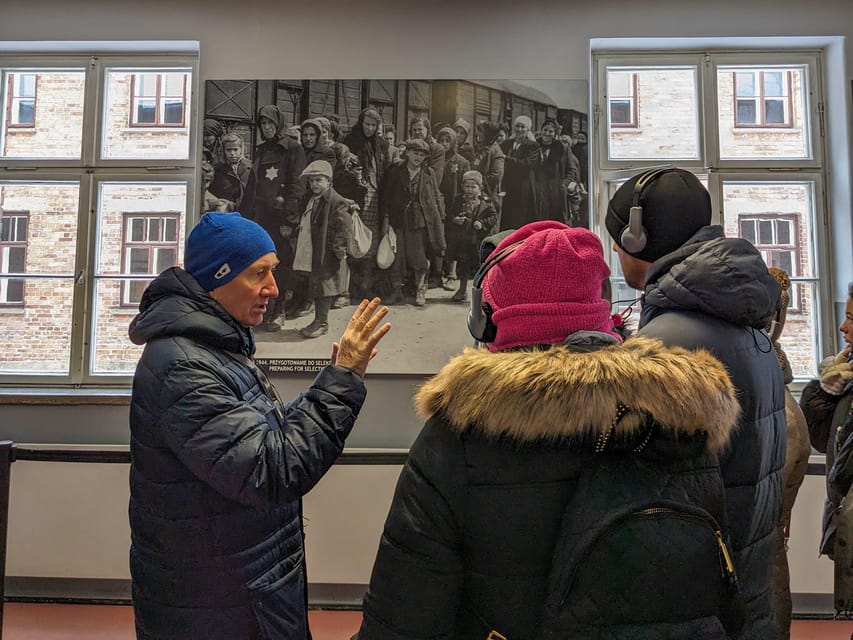
The memorial visit is not just a tour of buildings. It’s a guided interpretation of evidence: what was built, what was used, what was recorded, and what remained.
During the Auschwitz I portion, you’ll typically have around two hours of guided time at the Auschwitz-Birkenau Memorial and Museum area before moving on to Auschwitz II-Birkenau. That first stretch is valuable because it sets the foundation. If you’re trying to answer questions in your head—How did the camp function? Who was targeted? What was life like for prisoners?—this part is where you’ll get the structure.
The museum approach also matters. There’s a strong focus on learning how the camps were operated and the inhuman conditions prisoners endured. This isn’t just about daily suffering in general terms. The guide’s job is to connect the conditions to the system: why people were processed in certain ways, what the buildings were for, and how Nazi cruelty was made efficient.
One thing I appreciate for first-timers is that you see the difference between the exterior message of terror and the interior reality. The gate symbolism looks almost theatrical from a distance, but the guided explanations bring it down to earth: this wasn’t theater. It was a machine.
Practical note: the content can be intense, and the museum’s timing can influence how the day flows. So if you’re the kind of person who needs a lot of emotional space, sit with that before you start. Don’t schedule anything tight right after.
A short break that matters more than you think
Midday, you get a break (listed as about 10 minutes). It sounds short because it is short. But in this kind of day, a quick pause can help you reset before the second site.
Use it for basics: water, a bathroom stop, and a brief moment to ground yourself. The second half of the day includes spaces that can feel much more physically immediate, including preserved areas tied to Nazi violence.
Don’t treat the break as time to check your phone for distractions. You’ll get better use from it as a short breathing window so you can stay present.
Auschwitz II-Birkenau: Gas chambers, barracks, and the scale shock
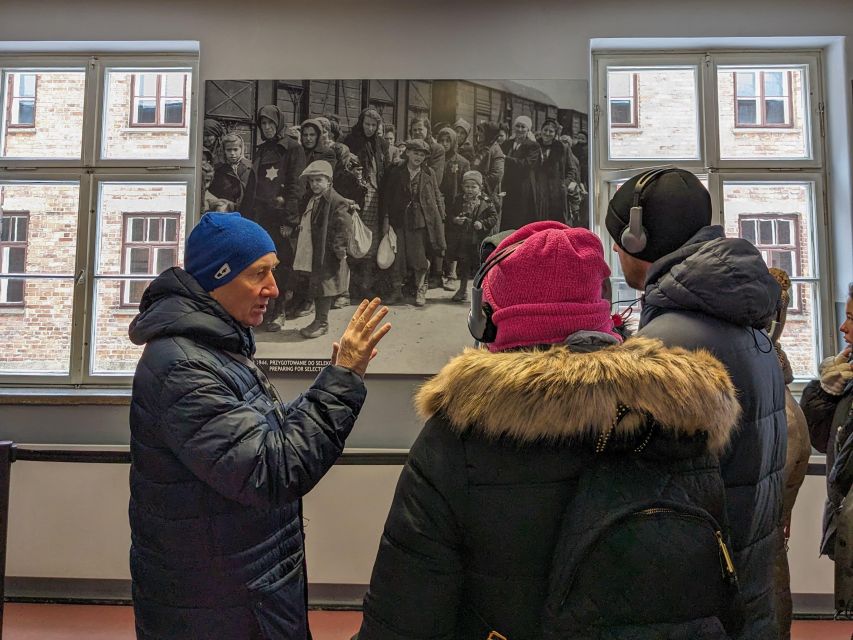
If Auschwitz I sets the framework, Auschwitz II-Birkenau is where scale hits. This is the section with around 75 minutes of guided touring of Auschwitz II-Birkenau, and it’s the part many people think about before they even book.
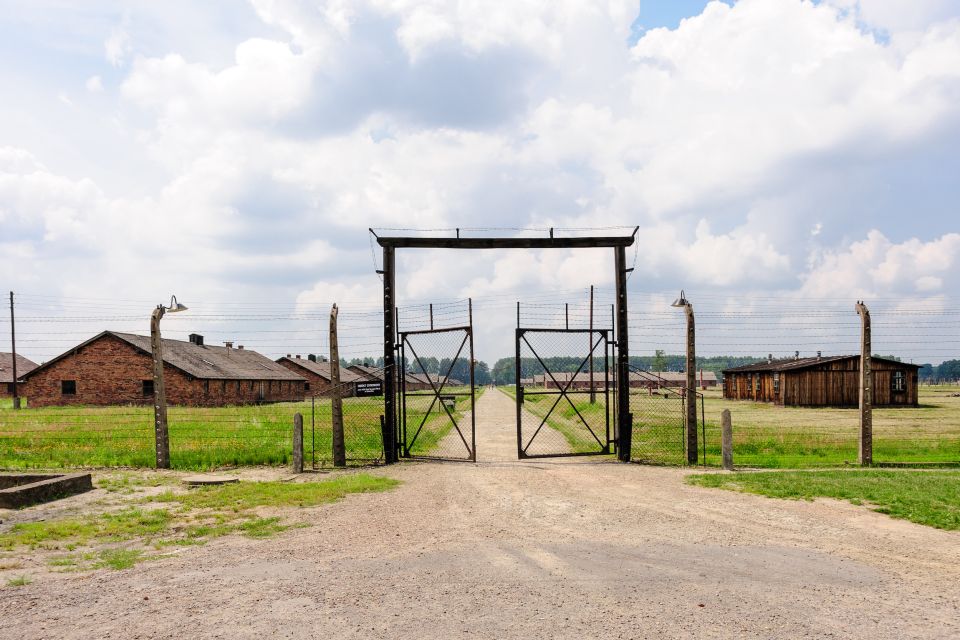
The highlights here are blunt and real: you’ll visit areas including original barracks, gas chambers, platforms, and other sites connected to the camps. These aren’t reenactments. They’re preserved remains. That’s exactly why they can feel harder to absorb, but it’s also why the site has such educational weight.
The guide’s explanations are what help you make sense of what you’re walking through. Without the story, the preserved spaces can blur into a list of ruins. With the story, you start to see how the camp was built for mass processing and how cruelty was systematized.
This is also where the personal artifacts and photos (from earlier museum phases) start to land differently. Earlier, you may have learned facts. Here, your brain connects those facts to geography. That connection can be uncomfortable in the best way—uncomfortable because it becomes real.
One consideration: you should expect your body to feel it. This is memorial walking, not a sit-down museum day. Wear comfortable shoes and plan to move slowly. You’ll likely spend more energy than you think.
Guides and group handling: what to look for on the bus
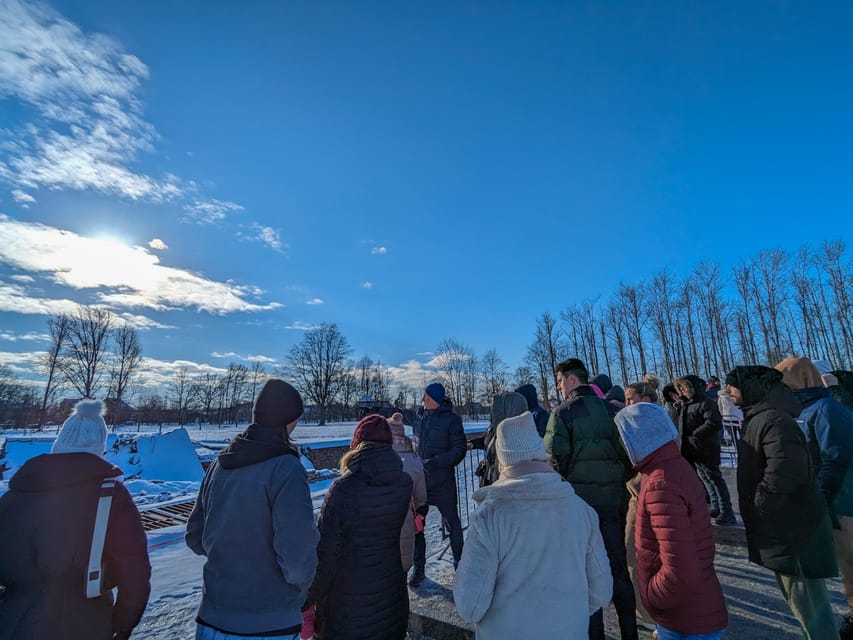
The tour experience hinges on the guide. The data you provided includes lots of praise for guides being patient, respectful, and careful with emotion. Names mentioned include Nicholas and Ziggy, with comments describing them as informative, friendly, witty at appropriate moments, and supportive when questions came up.
Here’s what to use that information for as a decision-maker: if your priority is understanding, don’t just shop by price. Shop by the fact you’re getting a licensed guide and guided time at both parts of the memorial.
The group format can be private or small groups available, and that can matter if you want more room to process and ask questions. That said, even in larger groups, a strong guide can keep the pacing respectful and help you avoid confusion about what you’re looking at.
Bus comfort also shows up in the feedback pattern: people describe the ride as smooth, with clear instructions and an organized feel. If you’re coming from Krakow and you’d rather focus on the day instead of logistics, that’s a real benefit.
Price and value: what $21 buys you (and what it doesn’t)
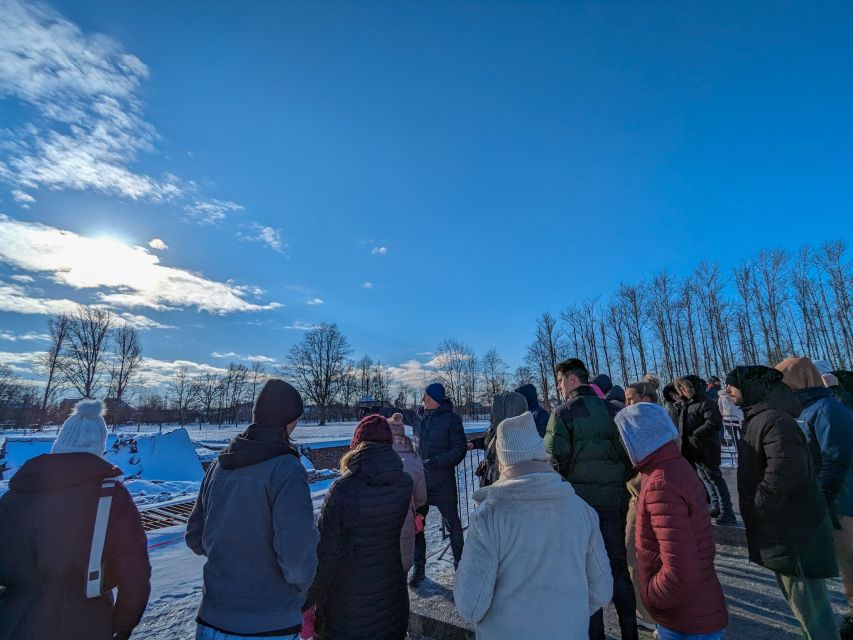
The price listed is $21 per person, and for Krakow this is a strong value—mainly because of what’s bundled.
Inclusions you should care about:
- Hotel pickup from Krakow (depending on option)
- Air-conditioned transportation
- Professional licensed guide at Auschwitz-Birkenau
- Skip-the-line entry ticket for the Auschwitz-Birkenau Memorial and Museum (with noted exceptions for certain options)
- A guided experience across the memorial complex and Auschwitz II
There’s also an optional add-on mentioned: a lunchbox if selected at checkout.
What the price doesn’t do:
- It doesn’t make the day easier emotionally.
- It doesn’t eliminate memorial timing rules. Even if the tour is well run, the memorial’s visitor service can determine the real pace once you arrive.
- If online reservation isn’t available for your departure, you might have to wait for tickets. The note is that waiting time depends on visitor numbers, and the tour operator can’t control it. For last-minute options, waiting time may last up to a few hours.
So the “value” here is less about saving money and more about buying structure: pickup, transport, guide-led interpretation, and access that keeps your day from collapsing into ticket lines.
What to bring, and what to avoid at the memorial
This tour is very clear on what you need for entry and comfort.
Bring:
- Passport or ID card
- Comfortable shoes
Avoid:
- Flash photography
- Intoxication
- Luggage or large bags
Entry can also be refused if the name on your booking doesn’t match the name on your ID. That’s an easy mistake to avoid, so double-check your spelling.
Also, start thinking about what you won’t be carrying. The restrictions on bags mean you’ll want a simple day setup. Keep essentials easy to access, and leave bulky items behind.
Who this tour is best for (and who should skip it)
This experience is intense. It’s also historic in a way that requires maturity and patience.
Best fit:
- Adults and teens 12+ who want guided context and a structured visit
- Travelers who prefer interpretation over self-studying
- People who can walk and stand for multiple segments
Not suitable (based on the provided info):
- Children under 12
- Wheelchair users and people with mobility impairments
- Hearing-impaired people
- Babies under 1 year
If you fall into one of the restricted groups, it’s worth looking for alternate options that match your needs and the site’s constraints.
Should you book the Krakow Auschwitz-Birkenau guided tour with pickup?
I’d book this if your goal is a guided, organized day where you get both Auschwitz I context and Auschwitz II’s preserved areas with a licensed interpreter. The skip-the-line access and hotel pickup reduce stress, and the guided time is long enough to understand what you’re looking at, not just take photos and move on.
I wouldn’t book it if you’re hoping for an easy, light day. This is heavy content, long hours, and memorial walking. If you want a calmer pace, pick a day you can emotionally handle and avoid stacking other major activities afterward.
If you’re ready for the truth, handled carefully, this is a strong way to do Auschwitz from Krakow.