REVIEW · KRAKOW
The Jewish Quarter – Walking Tour
Book on GetYourGuide →Operated by ZeeTour · Bookable on GetYourGuide
Krakow has a second city, on foot. This Jewish Quarter walking tour ties together centuries of Jewish life in Kazimierz with the hard turn of WW2, so you actually understand what you’re seeing. I like that it’s led by licensed guides, which keeps the story grounded and clear, not just a list of plaques.
Two things I’d especially bet on: you’ll hit Schindler’s List filming locations while the guide explains the real people behind the movie-era details, and you’ll see major synagogue landmarks plus quieter everyday sites like the mikveh. One consideration: admission tickets aren’t included, so if you want to go inside specific buildings, budget a bit extra.
In This Review
- Key highlights worth your time
- Why Kazimierz tells the real story of Jewish Poland
- The route and pace: a focused 2-hour walk through Kazimierz
- Kazimierz Main Square and Miodowa Street walls: where the neighborhood shape begins
- Inside the synagogue world: Tempel, Kupa, Izaak and more
- Mikveh and Szeroka Street: religion and daily life side by side
- Monuments and remembrance: Helena aside, then WW2 reality hits
- Remuh, Popper, and the Old Synagogue: the route ends where the past feels close
- Schindler’s List filming locations: why you shouldn’t treat them like set photos
- Price and value: how $33 buys more than walking time
- Who this tour suits best (and who may want a different start)
- Practical ways to get more out of the walk
- Should you book the Jewish Quarter walking tour in Krakow?
- FAQ
- How long is the Jewish Quarter walking tour?
- What does it cost?
- Is the tour guided, and what language is offered?
- Are admission tickets included?
- Where do I meet the tour?
- Is the tour wheelchair accessible?
- Can I get a refund if my plans change?
Key highlights worth your time
- Licensed English guiding that makes the history feel organized, not overwhelming
- Schindler’s List filming locations tied to the WW2 story in Krakow
- Kazimierz route through synagogues and street life, not just big monuments
- Mikveh from the 1500s for ritual life, including a female cleansing/bath house focus
- Holocaust remembrance stops, including a statue of a man who tried to stop the Holocaust
- A 2-hour walk that’s long enough to connect the dots without turning into an all-day grind
Why Kazimierz tells the real story of Jewish Poland
Kazimierz is the heart of the matter. Today it’s often labeled as the Jewish District, but the point of this walk is to show how that wasn’t always the case. For centuries, Jews and Christians lived side by side here, shaping streets, commerce, worship, and daily rhythm together.
I find that shift matters, because it changes how you read the streets. If you only think in terms of separate communities, you miss the interwoven history that made Krakow what it was. And if you jump straight to WW2, you lose the longer arc that explains why Jewish settlement in Poland became such an important part of European life.
The tour also pushes one useful historical fact into focus: by the 16th century, around 75% of the world’s Jewish population lived in Poland. That’s not trivia. It’s the reason the country becomes so central in Jewish history, and why the Krakow story feels bigger than one neighborhood.
You can also read our reviews of more walking tours in Krakow

The route and pace: a focused 2-hour walk through Kazimierz
This is a 2-hour walking tour, so you should treat it like a guided “guided map in motion.” You won’t have time to wander on your own for long breaks, but you’ll cover a lot of ground and still get explanations at the stops.
The stops are arranged so you move from broad neighborhood structure into specific sites: main squares and street walls, then synagogues, then ritual-life places, then WW2-era memory points. That order helps your brain. You start with the layout, then you learn what each building and street meant.
One practical note: it’s a walking tour, so wear shoes you trust. Also, admission tickets aren’t included, so keep your expectations flexible if you’re hoping for inside access at every stop.
Kazimierz Main Square and Miodowa Street walls: where the neighborhood shape begins
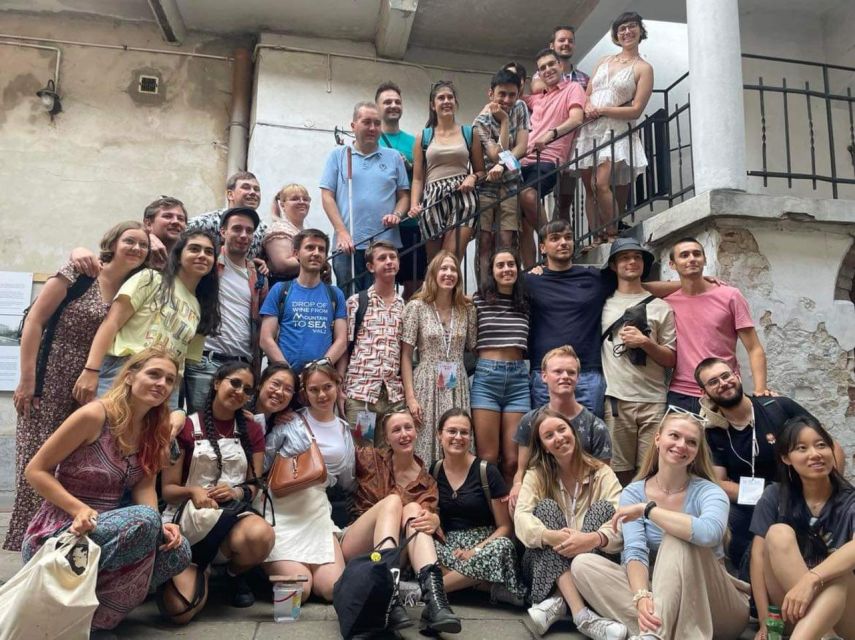
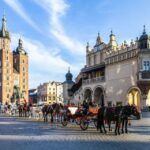
You start in Kazimierz’s Main Square, the kind of place where a neighborhood’s identity shows up fast. Squares are how communities meet, organize, and display power. In Kazimierz, it’s the starting point for understanding how the district developed and why it became a hub.
From there you move to Miodowa Street, where you’ll see the city walls connected to the structure of Kazimierz. Street walls sound like background details, but they’re not. Walls tell you how boundaries worked, how people moved, and how the district protected its identity. Even if you’re not a history nerd, you can feel it when the guide connects the walls to how the neighborhood functioned.
Inside the synagogue world: Tempel, Kupa, Izaak and more
One of the best reasons to do a guided route here is that the names of the synagogues can blur together unless someone gives you a sense of what each one represents. This tour walks you through Tempel Synagogue, Kupa Synagogue, and Izaak’s Synagogue in sequence, so the buildings start to feel like a timeline instead of a scatter of pretty facades.
Then you’ll reach the oldest building inside the Jewish Quarter from the 1400s. That stop is a turning point because it pushes you away from the idea that history starts in WW2. You’re looking at structures tied to earlier centuries, long before the twentieth century made everything collapse and then remake itself.
As you move through these sites, listen for how the guide links the synagogues to Jewish life in Poland across time. The tour’s goal isn’t just to show religious architecture. It’s to show what Jewish institutions meant in everyday community life—how people worshipped, gathered, and organized.
Mikveh and Szeroka Street: religion and daily life side by side
A key moment comes at the mikveh, described as a ritual Jewish cleansing/bath house for females from the 16th century. This isn’t the kind of stop people always expect on a city tour, and that’s why it works.
Why? Because it reminds you that history isn’t only buildings and wars. It’s also practices, routines, and community standards that shaped lives every week and every month. The mikveh stop helps you understand lived culture rather than only major events.
From there you head to Szeroka Street, another important street for getting the sense of how the district functioned as a place for community life. Streets like this often hold the “glue” of history—where people moved between institutions, commerce, and neighbors.
You also visit Helena Rubinstein’s birthplace. That’s a smart detour because it interrupts the idea that Jewish history is only religious or only tragic. People built careers and changed broader culture too, and the district carries that memory in physical form.
Monuments and remembrance: Helena aside, then WW2 reality hits
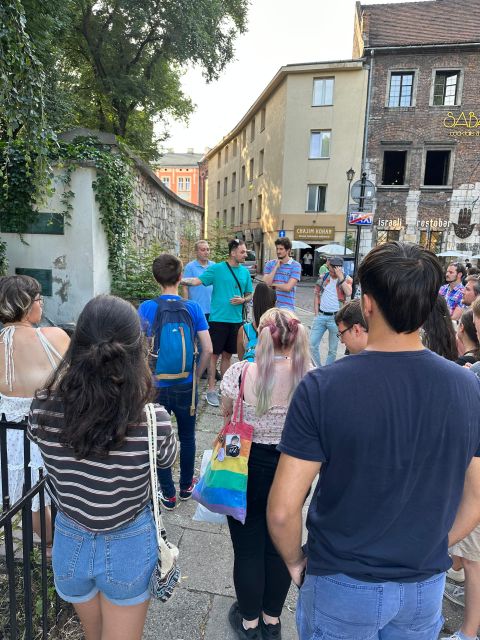
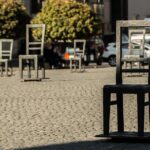
This walk doesn’t try to soften the hardest parts of the story. It includes the Nissenbaum Family Foundation monument and a statue of a man who tried to stop the Holocaust. These stops give you a chance to process the idea that individuals mattered, not just governments and armies.
It’s also a reminder of how the Holocaust still sits inside the city. In many European cities, WW2 history can feel like a distant chapter you read about. Here, the tour keeps bringing you back to the fact that this was a real place where communities lived—and where they were destroyed.
I like that the tour doesn’t treat remembrance as a single stop and then move on. The guide’s structure keeps the WW2 story connected to the longer history you’ve already learned.
Remuh, Popper, and the Old Synagogue: the route ends where the past feels close
Next you reach Remuh Synagogue and the Jewish Cemetery. A cemetery stop can make tours feel heavy, but this one fits the tour’s pacing. You’re not thrown into it cold. You’ve already seen the community institutions and street life, so when you land at Remuh, you understand what those sites meant over generations.
After Remuh, the route continues to Popper’s Synagogue and the Old Synagogue. With these, the tour gives you a set of landmarks that help you see the district’s religious life as layered. If you’re comparing synagogues in your head, don’t worry about turning it into a trivia contest. The point is to notice how each name and building contributes to a sense of continuity and change.
By the end, Kazimierz often feels less like an “old neighborhood” and more like a living archive you can walk through—one with painful chapters included.
Schindler’s List filming locations: why you shouldn’t treat them like set photos
This tour includes numerous Schindler’s List filming locations. For some people, that’s the hook. They know the movie and want to see the streets behind it.
For the rest of us, the better takeaway is how the guide connects film locations to the real history of Krakow and the WW2 period. Film can compress time and simplify context, so a licensed guide’s job is to expand what you’re seeing. Instead of looking at a corner and thinking, That looks like the movie, you learn what was happening to real people in Krakow during that era.
If you’re a movie fan, you’ll enjoy the recognition. If you’re not, you’ll still benefit, because the filming stops become a tool for understanding how the story of persecution and survival played out in specific places.
Price and value: how $33 buys more than walking time
At $33 per person for two hours, the price lands in the “good value” zone for Krakow city experiences, mainly because of one thing: licensed guiding. That’s the part that changes the whole experience. When you have a guide who can connect the neighborhood layout, the synagogues, and the WW2 turning points, you get a coherent narrative instead of a checklist.
Also, the schedule is efficient. In two hours you cover multiple landmarks: squares, streets, synagogues, a mikveh, cemetery-related sites, monuments, and Schindler’s List locations. If you tried to build this route on your own, you’d likely miss key context, and you’d spend time figuring out what order to see things in.
One small budgeting reality: admission tickets aren’t included. So if any stop you care about requires entry and you want to go inside, plan for that extra cost.
Who this tour suits best (and who may want a different start)
This tour fits you if:
- You want a history-first walk through Krakow that connects Jewish life and WW2 events.
- You like learning with structure, street by street, building by building.
- You want a route that mixes major synagogue landmarks with everyday-life sites like the mikveh.
It may not be ideal if:
- You’re not interested in WW2 history at all.
- You’re hoping for a mostly casual, photo-only stroll with lots of free wandering time.
- You want lots of museum-style interior time at every stop, since admission tickets aren’t included.
If you like your tours to be informative but still grounded in what you can see with your eyes, this is a strong match.
Practical ways to get more out of the walk
Bring a curious mindset and one key habit: ask yourself what the place was for. A synagogue is more than architecture. A cemetery is more than a sad sight. A mikveh is more than a building. If you let the guide’s story answer those questions for you, the stops start clicking into place.
Also, dress for walking. You’re moving through Kazimierz across streets and between landmark points, so good shoes matter more than you think.
If you’re doing this as your first step into Krakow’s Jewish history, it’s a smart way to get your bearings fast. The tour’s mix of institutions, streets, and WW2 memory makes it easier to understand the district afterward.
Should you book the Jewish Quarter walking tour in Krakow?
Yes, if you want a guided route that connects centuries of Jewish life in Kazimierz to what happened in Poland during WW2, with licensed English guiding and plenty of meaningful stops. The blend of synagogue landmarks, the mikveh, cemetery-related sites, and Schindler’s List filming locations gives you both context and location-based understanding.
Book it especially if you’re the type who likes to leave a tour feeling that the streets make sense now. Just remember the one tradeoff: admission tickets are not included, so you may need a little extra budget if you want inside access where required.
FAQ
How long is the Jewish Quarter walking tour?
The tour lasts 2 hours.
What does it cost?
It’s $33 per person.
Is the tour guided, and what language is offered?
Yes. It includes a live tour guide in English, with licensed guides.
Are admission tickets included?
No. Admission tickets are not included.
Where do I meet the tour?
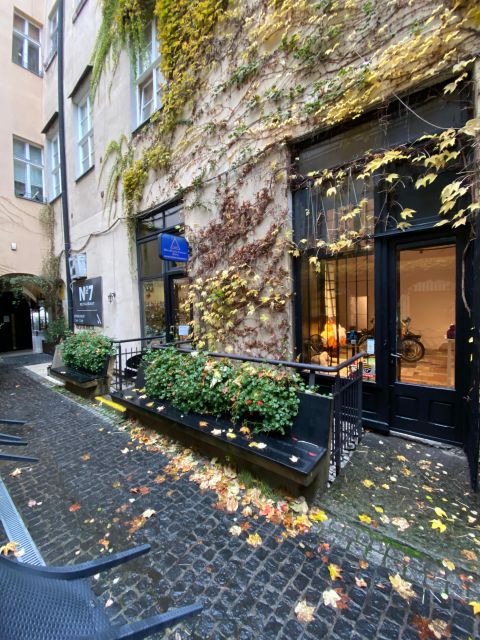
Meet at Restaurant No7. Go into the building. ZeeTour’s office is in the courtyard of the building where Restaurant No7 is, and it’s the second shop on the left in the courtyard.
Is the tour wheelchair accessible?
Yes, it’s listed as wheelchair accessible.
Can I get a refund if my plans change?
You can cancel up to 24 hours in advance for a full refund.