REVIEW · KRAKOW
Schindler’s Factory and Jewish Ghetto Walking Tour in Kraków
Book on Viator →Operated by Intercrac Sp. z o.o. · Bookable on Viator
Schindler’s Factory hits hard, and fast. This 3-hour Kraków tour pairs prebooked museum entry with a guided walk through the most meaningful leftover traces of the Jewish ghetto, plus the places tied to rescue efforts. You get the story in the order it matters: what Nazi occupation did to Kraków, how people survived day by day, and how small acts of defiance could still change outcomes.
I really like how the museum portion is guided. You spend about 1 hour 30 minutes inside the exhibition and you’re not left alone in a wall of information; the guide points out the key objects and explains what they meant, including the human stakes behind the visuals. I also like the walking segment because it makes the history physical: you’re at spots tied to confinement, round-ups, and deportations, not just reading names on a page.
One possible drawback: the museum can feel crowded, and the experience is shaped around the broader exhibition on Kraków under Nazi Occupation 1939–1945, not a full walkthrough of the factory floor. If you expect a quiet, slow, Schindler-only story, you may need to manage expectations before you go.
In This Review
- Key points before you go
- Prebooked entry to Schindler’s Factory: what “speed up” really means
- Inside the museum: the 1939–1945 story you’ll remember
- Józefińska 41 and the remaining ghetto wall fragment
- Ghetto Heroes Square and the chair memorial: how open space tells a hard story
- Eagle Pharmacy (Under the Eagle): a rescue story close by, with extra cost
- Pace, group size, and hearing your guide without losing the thread
- How much you’re paying, and what that covers in real terms
- Who should book this Kraków tour (and who might not)
- Should you book Schindler’s Factory and the Jewish Ghetto walking tour?
- FAQ
- How long is the tour?
- What does the ticket price include?
- Is the tour offered in English?
- Where do I meet the tour, and where does it end?
- How early should I arrive?
- Do I need to provide names for the tickets?
- Is the tour limited to a small group?
- Can I cancel for a refund?
- Does weather affect the tour?
Key points before you go
- Prebooked entry helps you get into Schindler’s Factory Museum without wasting time in line
- Licensed expert guide turns photos and artifacts into clear, chronological context
- Real ghetto street stops include Józefińska 41 and the wall fragment that remains
- Ghetto Heroes Square connects the open space to deportations tied to the chair memorial
- Under the Eagle Pharmacy is nearby for a powerful add-on, but it’s not included
Prebooked entry to Schindler’s Factory: what “speed up” really means
This tour is built around one smart idea: don’t waste your Kraków time fighting lines at one of the city’s most visited museums. You start at Lipowa 4, and the whole first step is about getting inside smoothly with tickets already arranged for your group.
Once you’re in, you’ll see why timing matters. The exhibition is designed with narrow passageways and small spaces, and it can feel tightly packed—especially when multiple groups are moving through at once. The tour runs about 3 hours total (approx.), so you’re not wandering for a long time without guidance. You’re getting a guided route that keeps you moving through the story while other visitors come and go.
Quick practical tip: pick a place where you can actually see the guide. In tight rooms, that’s often the difference between catching the point and getting separated from the explanation.
You can also read our reviews of more walking tours in Krakow

Inside the museum: the 1939–1945 story you’ll remember
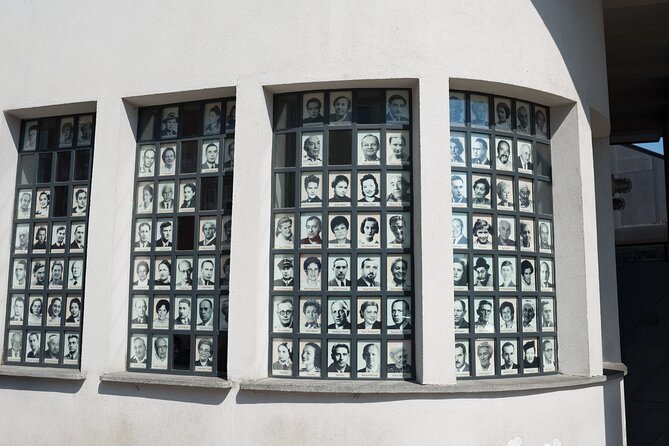
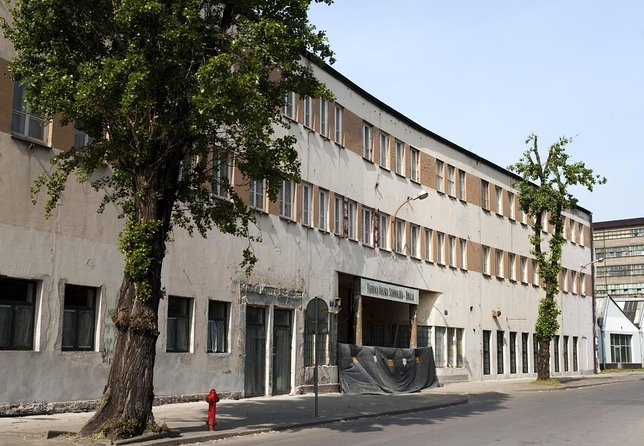
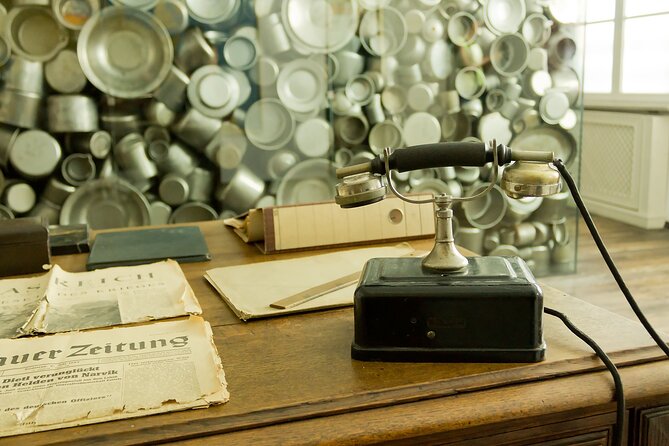
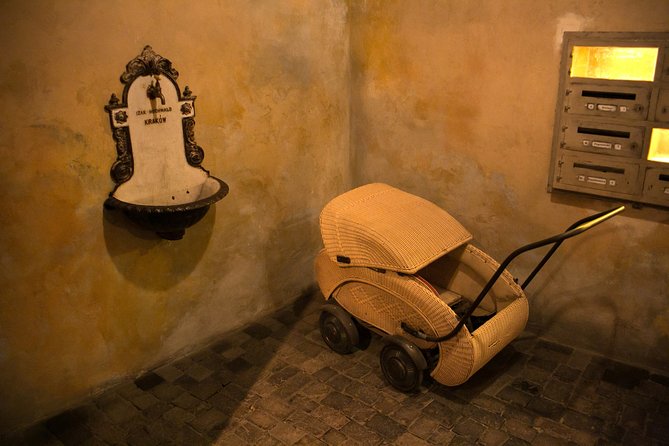
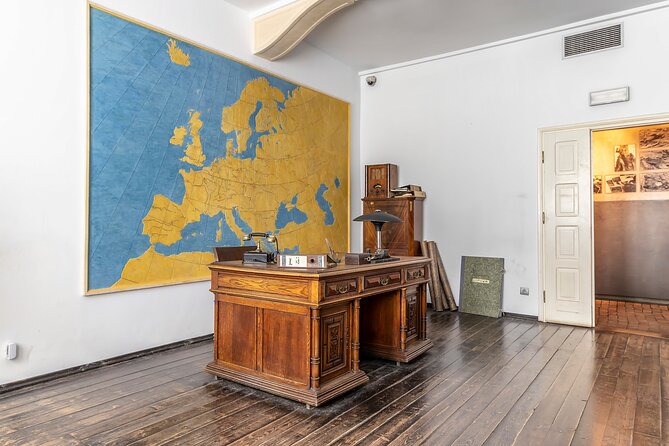
Schindler’s Factory Museum is not a factory workshop you can roam. Even though the building originally functioned as Schindler’s enamel factory, today it operates as a museum and doesn’t have the original production equipment. What you get instead is a carefully arranged exhibition—called Kraków under Nazi Occupation 1939–1945—that uses photographs, personal objects, and reconstructed street scenes to show how life changed after 1939.
Here’s what I like about the way the guide frames the museum. Yes, Oskar Schindler is central, but the exhibition context is bigger: it explains the Nazi occupation of Kraków and how Jewish residents were pushed toward isolation, deprivation, and eventual deportation. Then the guide brings Schindler’s role into that wider system—especially how he employed Jewish workers and leveraged his position to help protect people from deportation. That human layer is what makes the story stick.
You’ll spend about 1 hour 30 minutes in this first stop. The guide helps you connect what you see to what it meant: fear and uncertainty in daily life, the tight grip of oppression, and the specific hope attached to the idea of people surviving because someone used influence when it mattered.
One heads-up from the overall tour design: the route is structured, not free-form. The guide is moving you along through a museum that’s built to feel like wartime Kraków. If you’re the type who likes to stand and stare at one display for 20 minutes, you’ll need to accept that this is a guided “big picture with key moments” experience.
Józefińska 41 and the remaining ghetto wall fragment
After the museum, the tour shifts into a walking mode that feels more like “reading the city” than sightseeing. The preserved remnants of the Kraków ghetto are limited, so the power comes from standing in the right spots and understanding what they used to be.
The walking portion starts at a ghetto wall fragment, and then you move deeper into the district history. One of the most specific stops is at Józefińska 41. This location wasn’t just a random address in the ghetto—it’s tied to institutions that kept some people alive: an orphanage, welfare offices, and a hospital.
That matters because the ghetto story isn’t only suffering in the abstract. It’s also the daily, practical struggle to keep going while freedom was being stripped away. When you stand near the remaining wall material, separation stops being a concept and becomes a physical reality: you’re surrounded by the boundaries that defined who could move, who couldn’t, and who was erased from normal life.
This stop runs about 30 minutes. It’s long enough to absorb context, but not so long that you feel lost if you’re new to Kraków’s WWII story. Wear shoes that can handle uneven pavement and weather, because you’ll spend real time outdoors.
Ghetto Heroes Square and the chair memorial: how open space tells a hard story
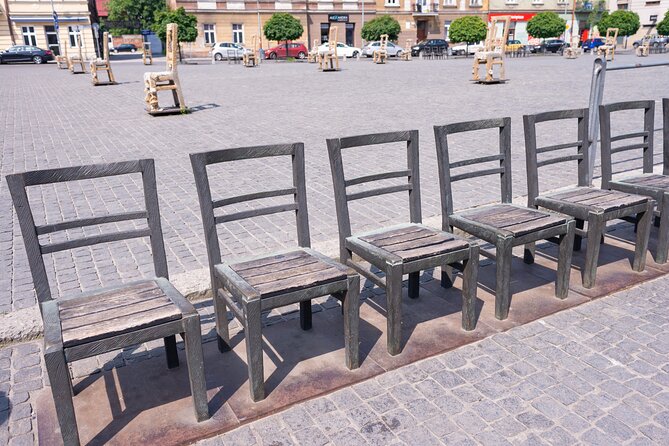
Next comes Ghetto Heroes Square, where the tone shifts again. Open spaces feel peaceful today, but this one has history written into the ground. The key feature is the Chair Memorial, and the guide explains how this area became connected to round-ups and deportations to concentration camps.
The smart thing the tour does here is connect the symbolic site to the real process. A memorial chair could easily become a photo stop. Instead, you get the explanation for what happened here—why people were gathered, what deportation meant, and how swiftly normal life could be crushed.
This portion is about 20 minutes and includes time for you to look around. Even if the remaining structures are not dramatic, the guide makes you think in terms of movement and decisions: the routes people were forced to take, the moments where survival depended on someone else’s power, and how terror worked through both policy and everyday presence.
If you’re sensitive to Holocaust-related sites (and you should be), this stop can feel emotionally heavy. That’s not the tour being vague or sensational—it’s the subject.
Eagle Pharmacy (Under the Eagle): a rescue story close by, with extra cost
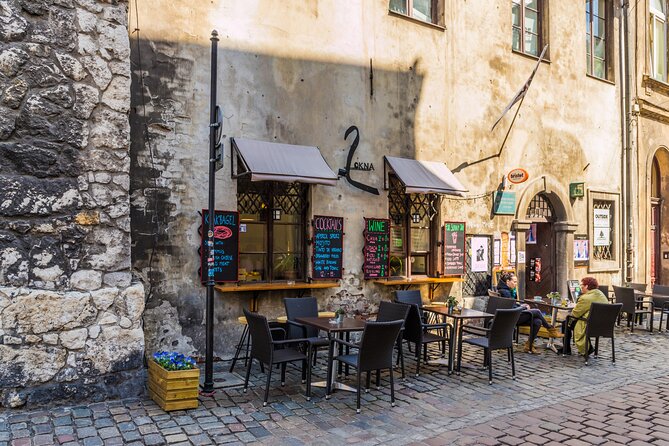
Across the square is a place you can visit if you choose: Under the Eagle Pharmacy (Eagle Pharmacy). The tour’s walk ends near Plac Bohaterów Getta, and this stop is set up as an option.
What you’ll learn here is tied to rescue efforts by Tadeusz Pankiewicz and his staff. The story centers on how they risked everything to help Jewish residents with medicine, shelter, and support—things people need when the system is designed to deny them.
Important for planning: entry to the pharmacy museum is not included in the tour price. Still, it’s right there, and the way it complements the tour is strong. The ghetto wall and memorial sites show confinement and deportation; the pharmacy story shows resistance in action at a human scale.
This part is about 20 minutes in the overall flow (for the stop time you spend on-site during the tour), but if you plan to go inside the museum, factor in extra time and cost.

Pace, group size, and hearing your guide without losing the thread
This is a small-group tour on paper: maximum 25 participants. That cap is helpful, especially in a museum with narrow passageways. It also makes it more likely your guide can keep everyone together.
Still, crowding can affect how smoothly things feel. The museum is one of the most visited in Kraków, and your group may share rooms with other groups. That’s why prebooked entry is a big deal; it reduces the most chaotic part of the experience (the line), but it can’t eliminate museum crowds entirely.
Also watch for pace. Some guests have flagged that the guide can speak quickly or that walking segments can feel fast. You can help yourself here by staying close to the front of the group when possible and by asking questions when you have a chance. In cramped spaces, if you’re a few steps back, it can be tough to see what the guide is referencing—photos, objects, and reconstructed scenes.
One comfort detail from the experience: some groups were provided with headphones. That’s great if it’s offered on your departure, because it makes the guide easier to follow even when rooms get noisy.
How much you’re paying, and what that covers in real terms
The price is $58.81 per person for about 3 hours. That sounds like a lot until you break down what you’re actually getting.
You’re paying for:
- a guided walkthrough with a licensed expert
- prebooked tickets for Schindler’s Factory Museum (included)
- the guided walking route through the ghetto remnants and memorial sites
On top of that, part of the value is time. Kraków has plenty to see, and WWII sites are the kind of places where a guide really changes the experience. You’re not just moving between locations—you’re being taught what those locations meant and how the story connects stop to stop.
You’ll also notice what’s not bundled. The pharmacy museum ticket is not included, and that’s common for add-on attractions near a tour route. So if you want the full rescue story side, budget extra time and money for it.
Who should book this Kraków tour (and who might not)
This tour is a strong fit if you:
- want a guided start to Kraków’s Jewish history during WWII
- are short on time and want a focused route (museum plus ghetto walk)
- prefer context over reading alone, especially in emotional historical spaces
- like tours that connect major themes with specific street-level locations
It may be less ideal if you:
- want a quiet, self-paced museum visit
- expect a slow, factory-only tour with lots of industrial machinery to see
- need extra control over pacing, because the layout and the guided route shape your movement
If you’re planning a broader WWII itinerary in Kraków, this tour works as a core foundation. The museum gives you the 1939–1945 occupation framework, and then the walk anchors it with the remaining physical traces.
Should you book Schindler’s Factory and the Jewish Ghetto walking tour?
I’d book it if you want one well-structured way to understand Kraków under Nazi occupation and how the ghetto experience played out in specific places. The prebooked entry is a practical win, and the guide-led museum portion is where you get the “why” behind what you’re looking at.
Just go in with the right expectation: it’s a museum exhibition and a guided walk through ghetto remnants, not a full factory walkthrough with original machinery. If you can accept that and lean into the human stories and the context, you’ll come away with a clearer picture than you’d get from wandering on your own.
FAQ
How long is the tour?
It runs about 3 hours (approx.).
What does the ticket price include?
The Schindler’s Factory Museum admission ticket is included. The ghetto wall fragment stop and Ghetto Heroes Square stops are admission free. The Eagle Pharmacy museum (Under the Eagle) is not included.
Is the tour offered in English?
Yes. Group tours are conducted in a single language, and you select English at booking.
Where do I meet the tour, and where does it end?
The start is at Lipowa 4, 32-051 Kraków. The tour ends at Apteka pod Orłem, Plac Bohaterów Getta 18, 33-332 Kraków.
How early should I arrive?
Arrive at least 10 minutes prior to the start time. Late arrivals cannot be accommodated, and tickets are non-refundable.
Do I need to provide names for the tickets?
Yes. Schindler’s Factory Museum issues personalized tickets, so you must provide the full names of all participants at booking.
Is the tour limited to a small group?
Yes. The maximum group size is 25 travelers.
Can I cancel for a refund?
Yes. Free cancellation is available up to 24 hours before the experience starts for a full refund.
Does weather affect the tour?
The tour takes place as planned in all weather conditions. You should dress for the forecast and wear suitable footwear.