REVIEW · KRAKOW
Krakow: Plaszow Concentration Camp Walking Tour
Book on GetYourGuide →Operated by excursions.city · Bookable on GetYourGuide
Plaszow hits hard, and that’s the point. This 2-hour concentration camp walk turns scattered outdoor remnants into a clear story, with a live licensed guide talking you through forced labor, deportations, and the camp’s role in the Holocaust. I especially like how the guide keeps the timeline grounded, so you don’t feel lost.
I also like the human-scale details. You’ll hear about Oskar Schindler’s connection and how Spielberg’s 1993 film, Schindler’s List, ties back to Krakow—and you’ll have real time at multiple memorials to pause instead of just snapping photos.
The main drawback is weather and visibility. The site is mostly outdoors, and some of what used to be here is hard to spot on your own, so bring layers, good shoes, and count on the guide to point out what matters.
In This Review
- Key things I’d circle before you go
- Walking Plaszow with a licensed guide
- How Plaszow changed from forced labor to a concentration camp (1940 to 1941)
- Deportations and the Krakow ghetto: what begins in 1942
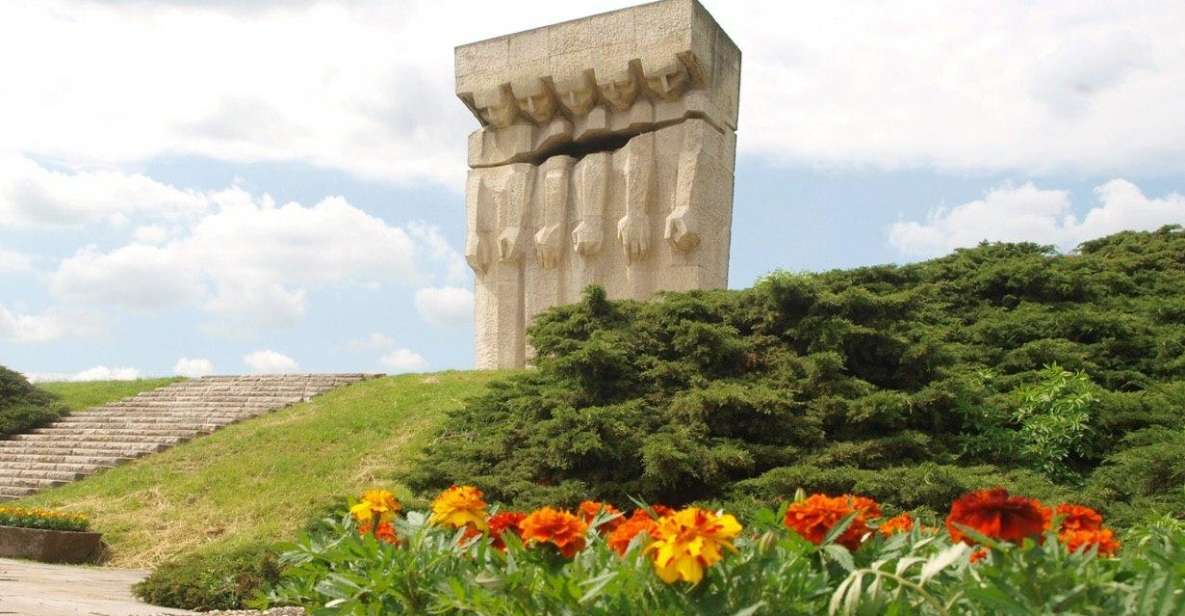
- Memorial stops at Plaszow: where remembrance is part of the route
- Quarry and military factories: what intensive camp labor looked like
- Oskar Schindler and Schindler’s List: real history meets the movie
- The Liban Quarry replica: seeing Spielberg’s influence a few hundred meters away
- Price, timing, and logistics for a smooth 2-hour visit
- Who should book this Plaszow tour in Krakow
- Should you book this Plaszow tour?
- FAQ
- How long is the Krakow: Plaszow Concentration Camp Walking Tour?
- Where do I meet the guide?
- Is transportation included?
- What’s included in the tour price?
- What languages are offered?
- Is the tour wheelchair accessible?
- What if I need to change plans?
Key things I’d circle before you go
- A licensed guide makes the site make sense fast so you’re not guessing what each stretch of ground is showing
- Memorial stops are built for reflection, not a hurry-to-the-next-spot routine
- Clear context for 1940–1942: forced labor first, then a concentration camp, then deportations from the Krakow ghetto
- Quarry and military factory labor explained in plain terms so you understand what work meant there
- Schindler and Schindler’s List connections help you see the real-life thread behind the movie
- A short hop to the Liban Quarry replica adds an extra layer, with the camp imagery a few hundred meters away
Walking Plaszow with a licensed guide
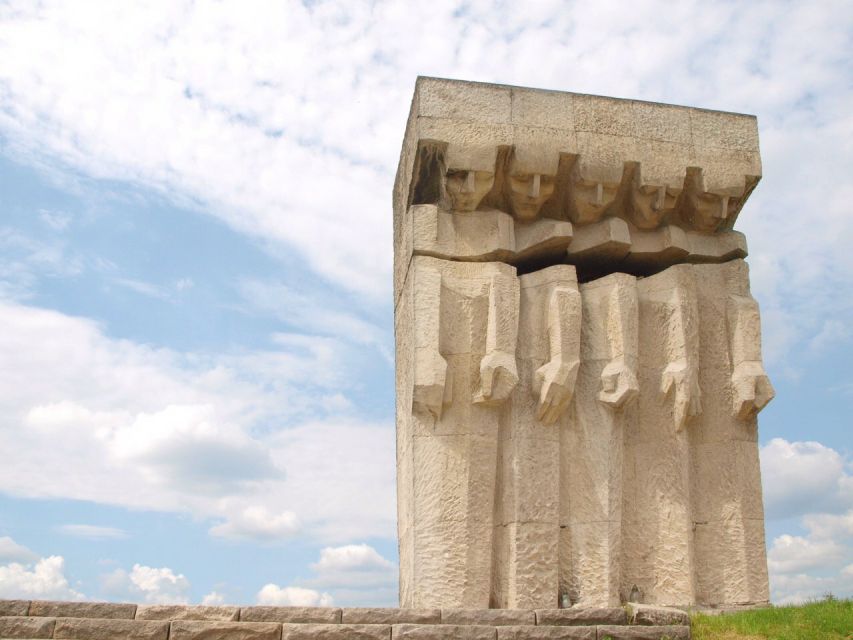
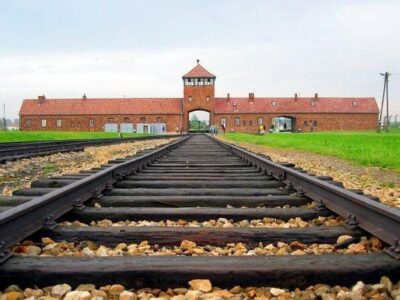
This is not the kind of tour where you wander and hope things click. You walk the Plaszow site with a licensed guide, and that changes everything. On your own, it’s easy to miss what’s relevant because much of the camp is no longer intact or obvious.
With a guide, the outdoor setting becomes legible. You get a human timeline, a map in your head, and a way to connect the memorials to what happened in that exact area. That’s why people consistently praise guides by name—Krysztof, Phil, Anna, and Barbara show up in the history-explaining role the most.
The pacing also matters. A good guide doesn’t just recite dates; they help you understand what the Nazi system did to people’s lives day to day. You’ll feel that especially when you get to the places designed for remembrance.
You can also read our reviews of more walking tours in Krakow

How Plaszow changed from forced labor to a concentration camp (1940 to 1941)
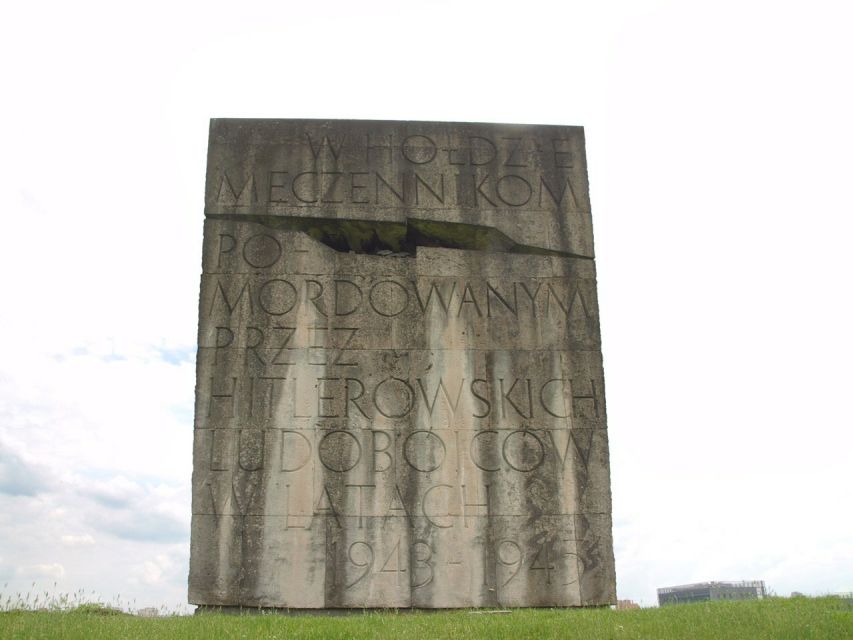
The tour starts with the big picture: Plaszow opened in 1940 as a forced labor camp. Then, in 1941, it was converted into a concentration camp. That short stretch of time is one of the most important takeaways, because it shows how quickly repression and mass imprisonment could escalate.
I like that the guide frames this as a process, not a switch flipped overnight. You’re not just hearing what happened; you’re seeing how the camp’s purpose tightened, with growing control over prisoners and harsher conditions.
Once you have that 1940-to-1941 context, the later parts of the walk land harder. The memorials don’t sit in the abstract, and the labor stories don’t feel like general wartime background. They feel like outcomes of a system that kept tightening its grip.
Deportations and the Krakow ghetto: what begins in 1942
Another key moment you’ll cover is the deportation of Jews from the Krakow ghetto, beginning in 1942. This matters because Plaszow wasn’t just a remote prison camp. It was tied to the forced displacement happening in Krakow itself.
As you move through the site, you can start connecting the dots: the ghetto, the deportations, the arrival of people into the camp system, and the role of forced labor. Your guide’s job is to keep those links clear, so you don’t end up with separate facts that never connect.
This is also where the tour’s tone becomes important. It’s educational, but it’s not clinical. You’re meant to understand impact, not just memorize a sequence.
Memorial stops at Plaszow: where remembrance is part of the route
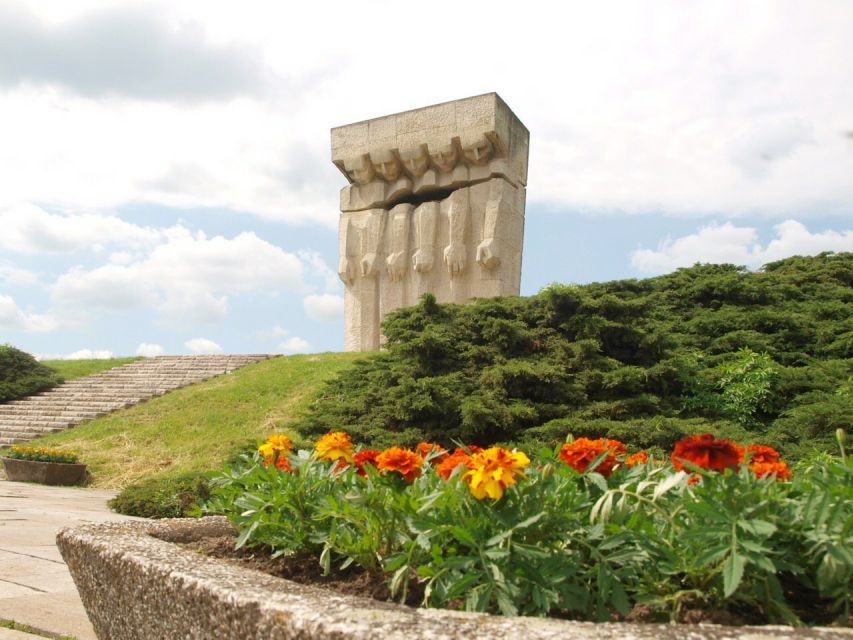
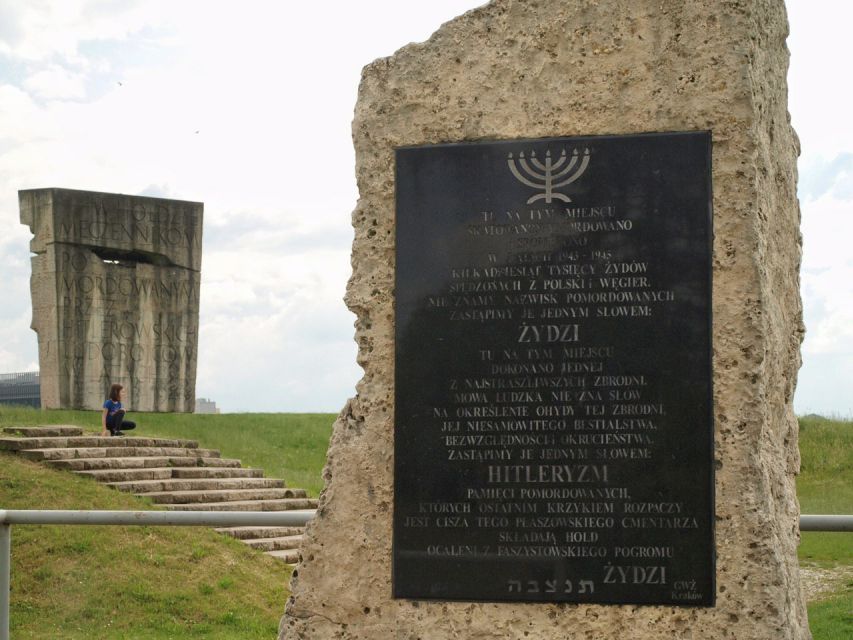
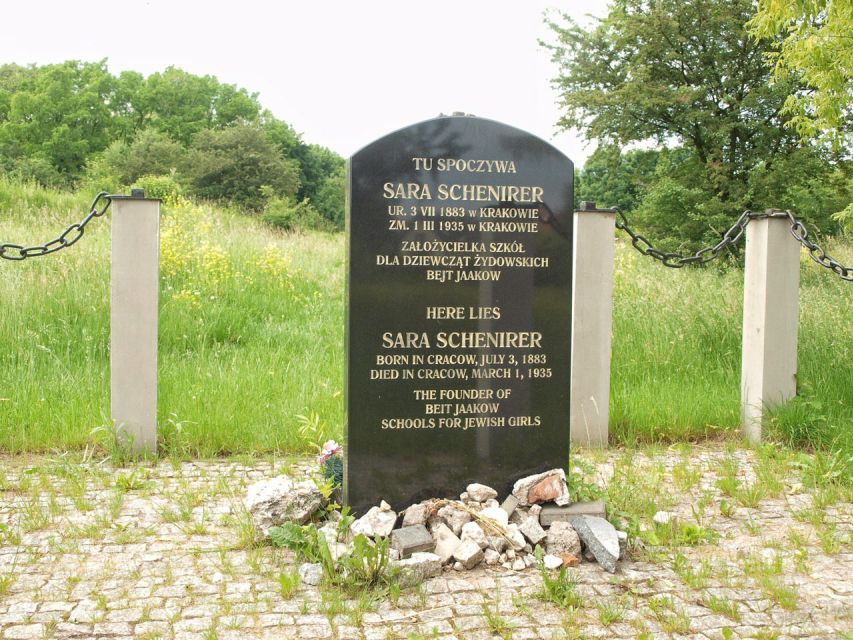
There are several memorial areas on the grounds, and you’ll visit them during the tour. These stops are the emotional center of the walk. They’re designed for remembering the victims of the Holocaust, and your guide gives context so each memorial feels connected to the larger story—not like a random plaque.
I appreciate tours that leave room for your own thoughts. The route isn’t built to pull you along like you’re on a sightseeing checklist. You can pause, look, and let the meaning land.
One practical point: plan for stillness. Even if you’re comfortable reading history, these memorials are a different kind of experience. If you tend to rush, set your pace slower than you normally would. You’ll get more from the tour that way.
Quarry and military factories: what intensive camp labor looked like
Plaszow wasn’t just about confinement. You’ll also learn about the intensive labor carried out at the quarry and in military factories. Those details help you understand the camp as an engine—forced work under Nazi control, powered by deprivation and violence.
The guide walks you through different parts of the camp so you can see how the labor system shaped daily life. It’s not only where people worked, but what the work was used for and why the system valued productivity so brutally.
This part of the tour is worth your focus. It’s the difference between thinking of a camp as only a place people stayed, versus understanding it as a system designed to extract labor. When you connect the quarry and factory work back to the 1940–1942 timeline, the overall picture gets more coherent.
Oskar Schindler and Schindler’s List: real history meets the movie
If Schindler’s List is part of why you’re here, you’ll be glad the tour doesn’t treat it like pure movie trivia. You’ll discuss Oskar Schindler and hear how the camp was portrayed in the 1993 film.
What I like about this approach is that it gives you a way to watch the movie with new context later. You’re not relying on cinematic memory; you’re learning about the real setting the story ties to.
The guide also helps connect Schindler’s presence to the broader camp story. That keeps the focus from turning into “movie places” only. The camp history stays central, and the film connection becomes a tool for understanding why certain stories became widely known.
The Liban Quarry replica: seeing Spielberg’s influence a few hundred meters away
One standout element of this tour is the visit to a replica built under the direction of Steven Spielberg in the Liban Quarry. It’s not far—just about a few hundred meters away—so it feels like a quick continuation rather than a separate excursion.
I find this stop useful even if you’re cautious about movie-related tourism. The replica is a reminder of how the film project translated real historical settings into something a modern audience could recognize. Seeing it after the camp walk helps you compare: what’s interpretive, what’s symbolic, and what points back toward the real-world locations.
You’ll likely come away thinking about the ethics of representation as much as the facts of history. A movie can widen awareness, but it can’t carry the full weight of the real events. The tour’s structure nudges you to keep the real history in front.
Price, timing, and logistics for a smooth 2-hour visit
At about $23 per person for a 2-hour experience, this is strong value for what you’re getting. You’re paying for a licensed guide, focused time at memorials, and a curated link between the historical camp site and the Schindler’s List connection. If you’ve ever tried to self-navigate Holocaust sites in limited time, you’ll understand why the guide is worth it.
Duration is listed as 2 hours, and starting times vary, so check availability for the slot that matches your day. The tour is also wheelchair accessible, which is a helpful detail if you need it.
Logistics are simple. You start by looking for the guide with the excursions.city sign, and you end back at the meeting point. One thing to plan: a tram ticket isn’t included, so you’ll want that figured out separately if you’re using public transit.
Also keep in mind the language options. The live guide is available in English, German, French, Russian, Italian, and Spanish. If you’re deciding based on language comfort, pick the departure that matches you.
Who should book this Plaszow tour in Krakow
Book this if you want an organized way to learn the Plaszow camp story without getting lost in vague explanations. It works best if you care about understanding context—forced labor becoming a concentration camp, deportations from the Krakow ghetto, and the quarry and factory labor system.
It’s also a smart pick if Schindler’s List is part of your interest. The Schindler and Spielberg replica elements aren’t tacked on. They’re woven into the walk so you don’t just collect movie references.
You might want to consider a different format if you need a fully indoor experience. This is mostly outdoors, so your comfort will depend on weather. A lot of the value comes from seeing where things were and what the memorials represent in place.
Should you book this Plaszow tour?
Yes—if you’re looking for a clear, guided way to understand Plaszow and its connections to Krakow and Schindler’s List. The price-to-time ratio is solid, and the licensed guide makes a real difference when the site isn’t easy to read on your own.
Go in with the right expectations: bring layers, plan for a serious tone, and let the memorials slow you down. If you do that, this 2-hour walk will feel less like a stop on your list and more like a meaningful historical lesson you can actually understand.
FAQ
How long is the Krakow: Plaszow Concentration Camp Walking Tour?
It lasts about 2 hours. Starting times depend on availability.
Where do I meet the guide?
Meet at the start location by looking for the guide holding the excursions.city sign.
Is transportation included?
A tram ticket is not included. You may need to arrange transit separately.
What’s included in the tour price?
The tour includes a licensed guide.
What languages are offered?
The live guide is available in English, German, French, Russian, Italian, and Spanish.
Is the tour wheelchair accessible?
Yes, it’s listed as wheelchair accessible.
What if I need to change plans?
You can cancel up to 24 hours in advance for a full refund. The tour also offers a reserve now & pay later option.