REVIEW · KRAKOW
Krakow Jewish Quarter and Ghetto Tour by Electric Golf Cart
Book on Viator →Operated by Cracow Boat · Bookable on Viator
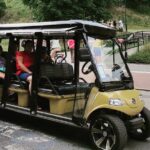
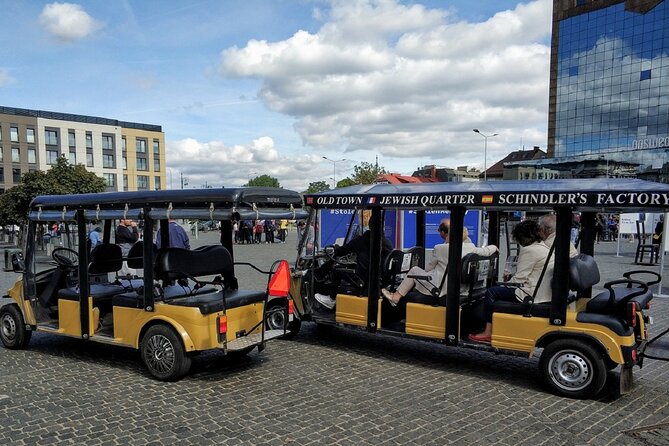
Krakow hits fast in just 90 minutes. This electric golf cart tour is a smart way to see the Kazimierz Jewish Quarter and major ghetto-era locations without burning time walking between sites. I like that you pass and stop at over 20 important cultural monuments while staying comfortable.
I really value the pacing and the way the story is explained. You get an English-speaking driver and an audio guide, which helps you keep up with the mix of centuries-old Jewish life, wartime tragedy, and what survived into today.
One thing to consider: some stops include quick interior time, and you may spend time in Christian churches too. If you’re hoping for a longer, Jewish-building-only experience, a short hop-in approach may feel a bit uneven.
In This Review
- Key things I’d bookmark before you go
- 90 minutes, a lot of meaning: how the cart tour really works
- Where you meet and how the route flows through Krakow
- Kazimierz as your starting lens: Jewish Kraków, past and present
- Szeroka Street and the four-synagogue idea: why this street matters
- Old synagogue time plus St Joseph church: what you gain and what you might question
- Ghetto wall fragment: the survival detail that changes the tone
- Plac Zgody to Umschlagplatz: understanding deportation as a named place
- The pharmacy story: a small bright spot with real-world stakes
- What’s included (and why the audio matters)
- How much value you’re getting from $34.75
- Who this tour is best for
- Should you book the Krakow Jewish Quarter and Ghetto Tour by Electric Golf Cart?
- FAQ
- How long is the Krakow Jewish Quarter and Ghetto Tour?
- Is the tour offered in English?
- What’s included in the price?
- Where do I meet, and where does the tour end?
- What’s the maximum group size?
- Can I cancel and get a full refund?
Key things I’d bookmark before you go
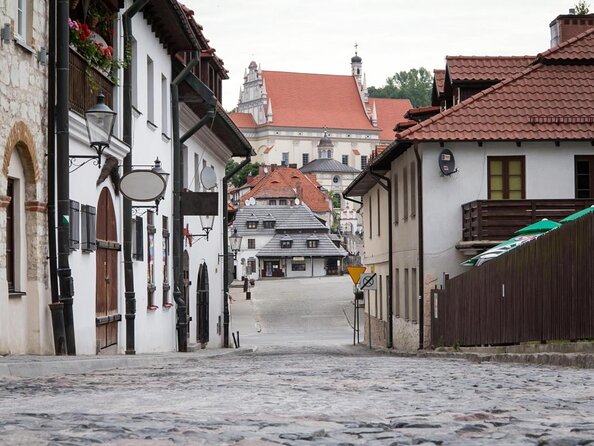
- Electric golf cart comfort for heat or cold, plus easy “see a lot, learn a lot” pacing
- Szeroka Street as the Jewish Kazimierz center, where four synagogues once stood side by side
- A surviving fragment of ghetto wall with a plaque to anchor what happened there
- Plac Zgody and Umschlagplatz as the Nazi occupation point for deportation gatherings
- The Podgórze pharmacy story: a “small bright spot” of shelter, messages, and help during deportations
- Small-group feel with a maximum of 50 people
90 minutes, a lot of meaning: how the cart tour really works
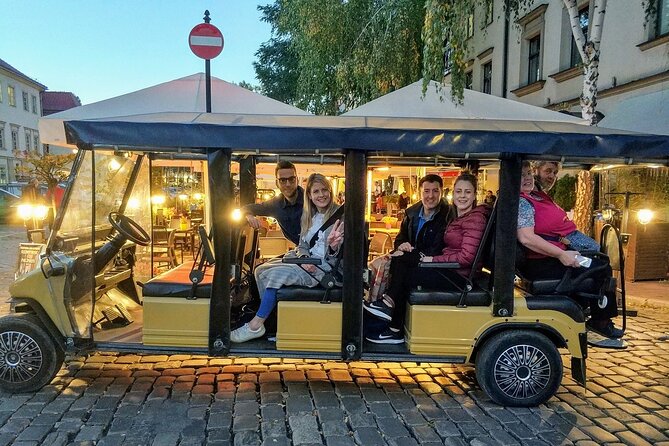
This is a short tour by design: about 1 hour 30 minutes. That matters in Krakow, because Kazimierz and the ghetto-area sites are spread out enough that walking can turn into stop-start energy management. The electric golf cart solves that. You can focus on listening, looking, and remembering instead of negotiating hills, crowds, and the clock.
You’ll also see why the route is built around both geography and story. The tour connects places tied to daily Jewish life in Kazimierz, then moves toward the wartime transformation in the Podgórze district. The result feels like a guided timeline you can physically follow.
The tour is limited in size too—up to 50 people. That keeps things moving. Just remember: with a group that size, interior access at any single site may be brief and scheduled.
You can also read our reviews of more tours and experiences in Krakow.
Where you meet and how the route flows through Krakow
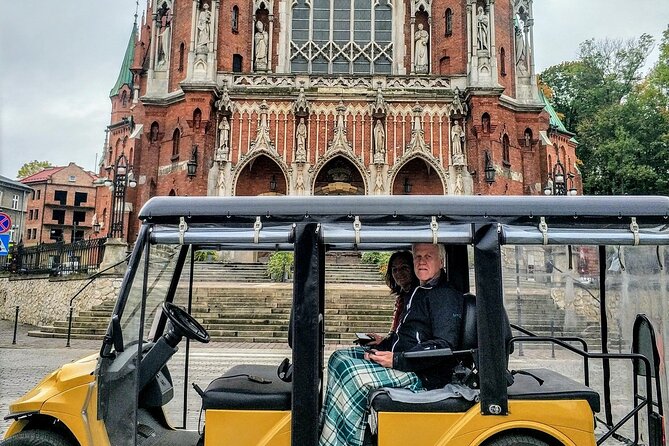
You’ll start at Mikołaja Zyblikiewicza 2, 31-029 Kraków and finish at Mikołaja Kopernika 3, 31-034 Kraków. There’s no hotel pickup/drop-off, so plan to get to the meeting point on your own.
The day-of feel is simple: meet, get your audio set up, then roll. The cart lets your guide hit several major points without losing momentum. You’ll pass major sites in Kazimierz, then shift toward the Podgórze district for the ghetto connection.
One practical tip: bring a light layer. Even though the cart helps, you’ll still be in open areas during short stops. A pocket-sized umbrella can also be a lifesaver if your timing overlaps with sudden Krakow rain.
Kazimierz as your starting lens: Jewish Kraków, past and present
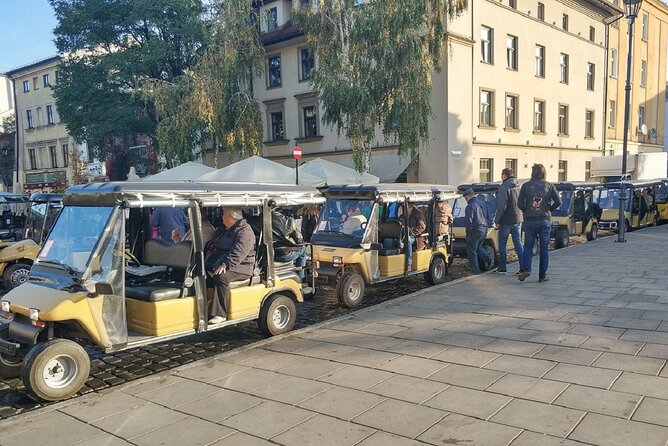
The tour frames Kazimierz as the hub of Jewish life in Kraków for centuries, and then shows how that heritage became a key tourist draw today. Starting here is smart. It prevents the ghetto sites from feeling like isolated shock moments. Instead, you get context for what was lost and what still shapes the neighborhood.
This is also where you learn a key theme: the same streets can hold layers of everyday life, community identity, and later occupation-era violence. That makes the later stops hit harder, but in a clear, human way.
Szeroka Street and the four-synagogue idea: why this street matters
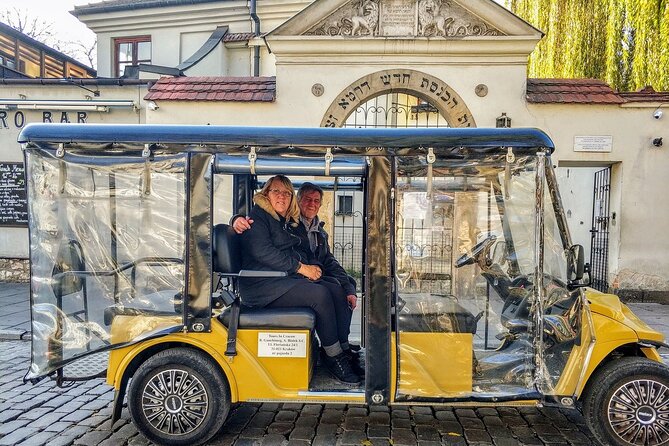
If you want one place that explains the whole neighborhood, it’s Szeroka Street. The tour treats it as the Jewish Kazimierz heart. The standout detail here is the idea that four synagogues once stood on that street, something described as unheard of elsewhere in Europe.
What’s valuable for you: this isn’t just architecture trivia. It’s a clue to how concentrated community life was in a small area. When later parts of the tour shift toward wartime displacement and deportation, you’ll already understand that these weren’t abstract concepts—there was a built world around faith, gatherings, and routine.
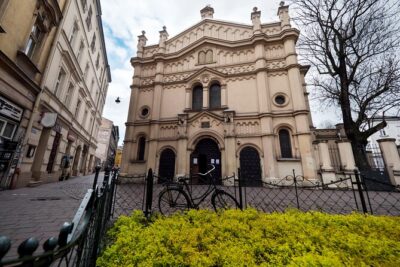
At the end of the Szeroka Street segment, you also visit an old synagogue that’s preserved in very good condition. That preservation angle matters. It gives you a chance to see history that wasn’t completely erased.
Old synagogue time plus St Joseph church: what you gain and what you might question
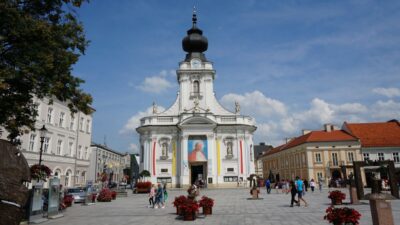
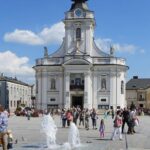
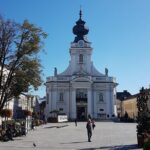
The itinerary includes a distinctive highlight in Podgórze: the parish church of St Joseph. It dominates over the surface of the Podgórze Market Square, which only in the 20th century was incorporated into Cracow.
Why this helps you understand the area: the tour isn’t only about Jewish sites. It shows how different communities and eras overlap in the same city blocks. You’re not just driving through a museum map—you’re seeing how present-day Krakow still looks like itself.
That said, one drawback shows up in real-world expectations. Some people finish and wish they’d had more time inside Jewish structures rather than spending the interior minutes in Christian churches. If your priority is Jewish architecture and Jewish religious spaces only, keep that in mind when you plan your pace.
Ghetto wall fragment: the survival detail that changes the tone
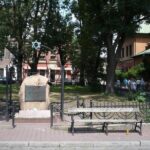
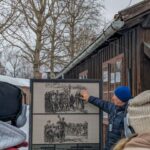
One of the most emotional anchors on the route is a small fragment of the original wall around the former ghetto, preserved and marked with a plaque commemorating the fate of the inhabitants.
This kind of stop is powerful because it’s physical and specific. It’s not just a story you hear through narration; it’s evidence that something from the period remains visible in the urban fabric. For many people, this is where the tour’s tone shifts from learning to remembering.
If you’re sensitive to heavy material, go slowly here. You don’t need to rush photos or readings. Take a moment. Let the plaque and wall do their work.
Plac Zgody to Umschlagplatz: understanding deportation as a named place
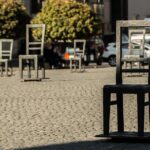
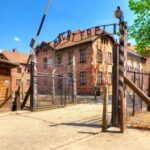
The tour then moves to Plac Zgody (Concord Square), in the Podgórze district. In 1941, this area was turned into the Krakow Ghetto. Under Nazi occupation, Plac Zgody was designated Umschlagplatz—the place where Jews had to congregate to be deported.
The way this is explained helps you avoid confusion. When you see how the square was used as a gathering point, the phrase deportation stops being abstract. It becomes a location-based reality: people were collected, and the process had a place and a sequence.
For your planning: this is one of those stops where listening time matters more than sightseeing time. If you’re trying to get the most out of the tour, keep your phone away for a minute and focus on the spoken and audio explanation.
The pharmacy story: a small bright spot with real-world stakes
One stop is described as a symbolic bright spot in a tragic map. It’s the role of the then Polish pharmacy, acting like an asylum or an embassy by providing shelter and helping with messages or packages inside and outside the ghetto.
Why I think this matters for you: history like this can feel entirely hopeless. A detail about help and communication doesn’t erase what happened, but it shows human agency existed alongside suffering. That balance is part of what makes the tour more than a list of sites.
Look at this stop as a reminder that WWII experiences weren’t just one-direction tragedy. There were networks of assistance, and the city’s fabric held moments where people tried to protect each other.
What’s included (and why the audio matters)
You get three core things:
- Audio guide
- Transport by golf cart during the tour
- An English-speaking driver
The audio guide is a key part of how you handle a tight route. With many sites in 90 minutes, you can’t rely only on spoken commentary. The audio helps you catch details even if you’re a bit distracted by the change of streets, the cart ride, or the brief entries.
One practical note from how people talk about this style of tour: audio can come via headsets, which means group chat may be harder. If you want a lot of back-and-forth during the ride, bring your questions to the driver at the stops instead of trying to talk the whole time.
How much value you’re getting from $34.75
At $34.75 per person for about 1.5 hours, the value is mostly in the combo: transport + guide + audio + multiple stops. You’re not just paying for a lecture. You’re paying for the ability to cover a wide area quickly while still visiting and entering some buildings.
Is it “cheap”? Not always. But it’s easy to see the math for time-starved trips. If you only have a short window in Krakow, this cart format can save you the scramble of piecing together multiple stops on your own.
Also, the tour is generally easy to join—most people can participate—and it keeps the pacing under control, which helps when the weather turns.
Who this tour is best for
This is a great fit if:
- You want a fast, structured introduction to Kazimierz and ghetto-era sites
- You prefer not to walk long distances during heat or cold
- You like learning with a mix of spoken commentary and audio guide
It might be less ideal if:
- Your top priority is Jewish buildings only, and you strongly want more time inside Jewish structures
- You dislike audio-headset-style narration because you want to talk nonstop as a group
Should you book the Krakow Jewish Quarter and Ghetto Tour by Electric Golf Cart?
I’d book it if you want a clear, guided route that links Kazimierz Jewish life to the ghetto sites without wasting your day. The cart makes the schedule realistic, and the stops are chosen to give you both context and consequence: Szeroka Street, the ghetto wall fragment, and Plac Zgody/Umschlagplatz.
If you’re booking because you only want Jewish interiors, pause and set expectations. This route can include Christian churches, and some visits may be brief. That’s not automatically bad—it can help you read the neighborhood as it is now—but it can feel mismatched if your mental checklist is strict.
If you can, choose a time slot when you’ll have the energy to sit with the heavier stops. This isn’t a casual sightseeing loop. It’s short, yes, but it carries real weight—so plan to arrive ready to listen.
FAQ
How long is the Krakow Jewish Quarter and Ghetto Tour?
The tour runs about 1 hour 30 minutes (approx.).
Is the tour offered in English?
Yes. It’s offered in English.
What’s included in the price?
The price includes an audio guide, transport by electric golf cart during the tour, and an English-speaking driver.
Where do I meet, and where does the tour end?
You start at Mikołaja Zyblikiewicza 2, 31-029 Kraków, Poland, and the tour ends at Mikołaja Kopernika 3, 31-034 Kraków, Poland.
What’s the maximum group size?
The tour has a maximum of 50 travelers.
Can I cancel and get a full refund?
Yes. You can cancel for a full refund up to 24 hours before the experience’s start time.