REVIEW · KRAKOW
Krakow Old Town and Jewish Quarter in one guided walk
Book on GetYourGuide →Operated by BestKrakowWalks · Bookable on GetYourGuide
Old Town plus Kazimierz in one walk saves time. You get two of Krakow’s most important districts in the same 3 hours, with a local licensed guide stitching the story together as you move through the city. I especially like the way the route connects the Royal Route landmarks to the Jewish Quarter without feeling like two separate tours.
I also love the Main Market Square stop—this is where the postcard monuments actually make sense in context, not just as scenery. The one possible drawback: the exact route and which sights get the most time can vary a bit by guide and group pace, and if your group is slower on foot, you might not reach every location.
In This Review
- Quick hits before you go
- Starting at Plac Jana Matejki: the walk begins where history is staged
- Kraków Barbican and Florianska: the city edges that set the mood
- Main Market Square: St. Mary’s, the Cloth Hall, and the Town Hall Tower story
- Jagiellonian University Quarter and Pope’s Window: academic Krakow with a human detail
- St. Francis of Assisi photo stop and visit: a quick pause with a clear direction
- Wawel Hill: the hill you keep seeing, explained so it clicks
- Kazimierz and the Jewish Quarter: stories of culture and loss in one neighborhood
- Wolnica Square finish: a clean ending point in Kazimierz’s Christian center
- Price and value: $209 per group for a tight, story-driven route
- Pacing and expectations: what can change with your guide and your feet
- Weather, timing, and what to bring for a 3-hour city walk
- Should you book this Krakow Old Town + Jewish Quarter walk?
- FAQ
- Where does the tour start?
- How long is the walk?
- Is the tour private?
- What language is the guide available in?
- Is the tour wheelchair accessible?
- Are entrance fees included?
- What should I wear or bring?
- FAQ
- Does it run in rain?
- Is there free cancellation?
- Can I reserve now and pay later?
Quick hits before you go
- One guide, two districts: Old Town + the former independent Jewish city of Kazimierz
- Main Market Square focus: St. Mary’s Basilica, the Cloth Hall, and the Town Hall Tower area
- University Quarter storytelling: including the Pope’s Window linked to John Paul II
- Wawel Hill context: why this hill mattered to Poland, not just that it’s there
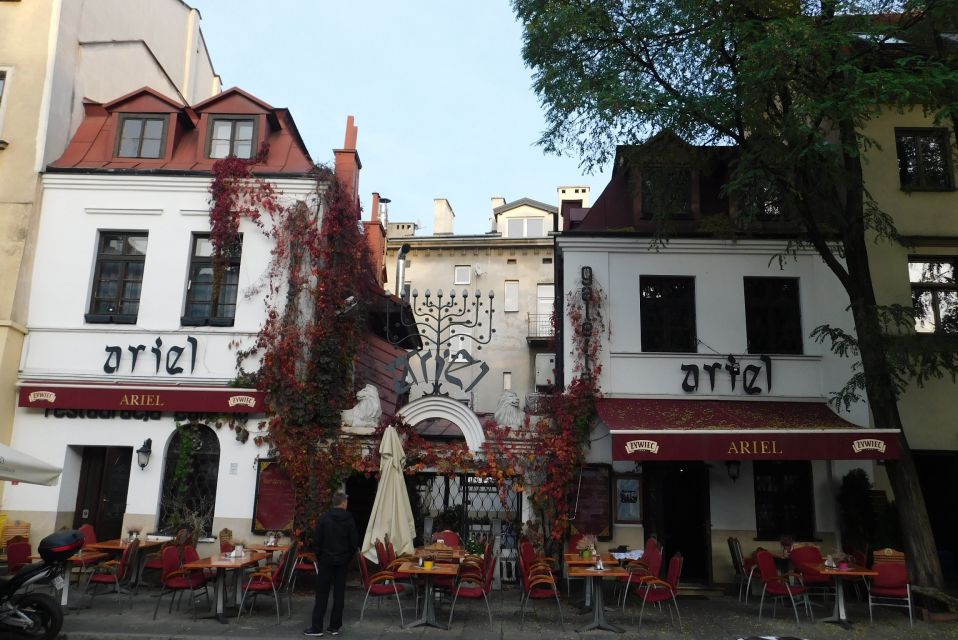
- Kazimierz + WWII memory: synagogue area sights and the Schindler’s List filming location
- Finish in plac Wolnica: a strong closing point in Christian Kazimierz
Starting at Plac Jana Matejki: the walk begins where history is staged
Your tour starts at Plac Jana Matejki, right in front of the Grunwald Battle statue. It’s a good starting point because you’re already surrounded by the kind of big, public-history energy Krakow loves: commemorations, monuments, and the idea that the city remembers.
From here, you work your way toward the old fortifications and follow the famous Royal Route style of walking. That matters more than it sounds. In Krakow, the layout isn’t random—major streets and squares were built to showcase power, commerce, and civic life. Walking it with a guide helps you spot why certain streets feel like they’re pointing you toward the next “chapter.”
You’ll want comfortable shoes. The tour is only 3 hours, but it’s still a proper walking experience, and you’ll be on your feet in the squares and streets.
You can also read our reviews of more walking tours in Krakow

Kraków Barbican and Florianska: the city edges that set the mood
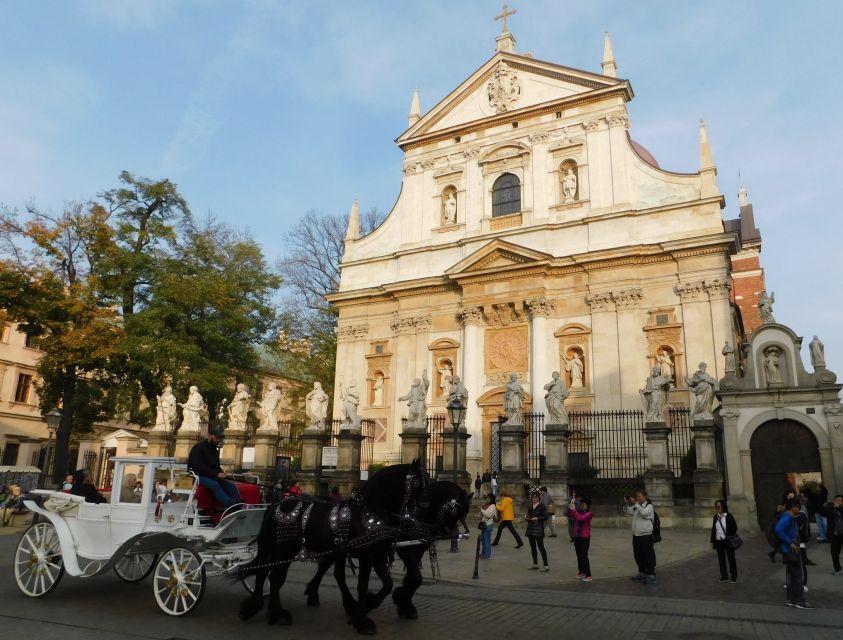
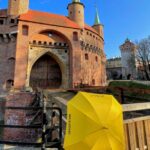
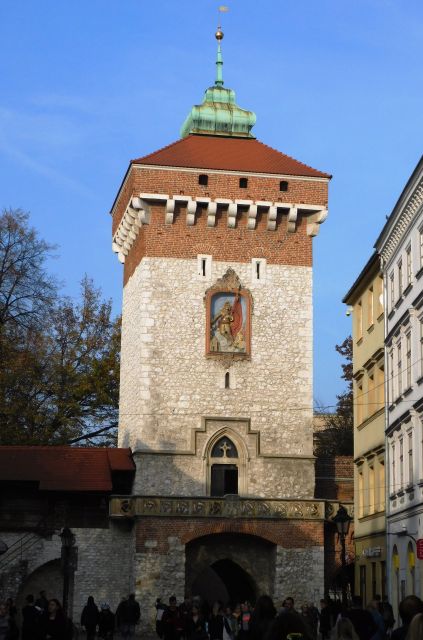
The first named stop is the Kraków Barbican, a defensive structure that helps you picture Krakow before it was all plazas and cafes. In just a short segment, the guide usually explains how these fortification pieces worked and how they shaped movement into the older parts of town.
Then comes Florianska—an easy photo stop, but also a chance to get your bearings. This is where you’ll start noticing the “corridor” effect: streets funneling you toward the biggest gathering places. If you’ve only seen Krakow in quick snapshots, this is the moment when it starts feeling like a real city, not a postcard.
Tip: if you’re the type who likes good angles, Florianska is a nice spot to pause and take a few photos before you hit the crush of Main Square.
Main Market Square: St. Mary’s, the Cloth Hall, and the Town Hall Tower story
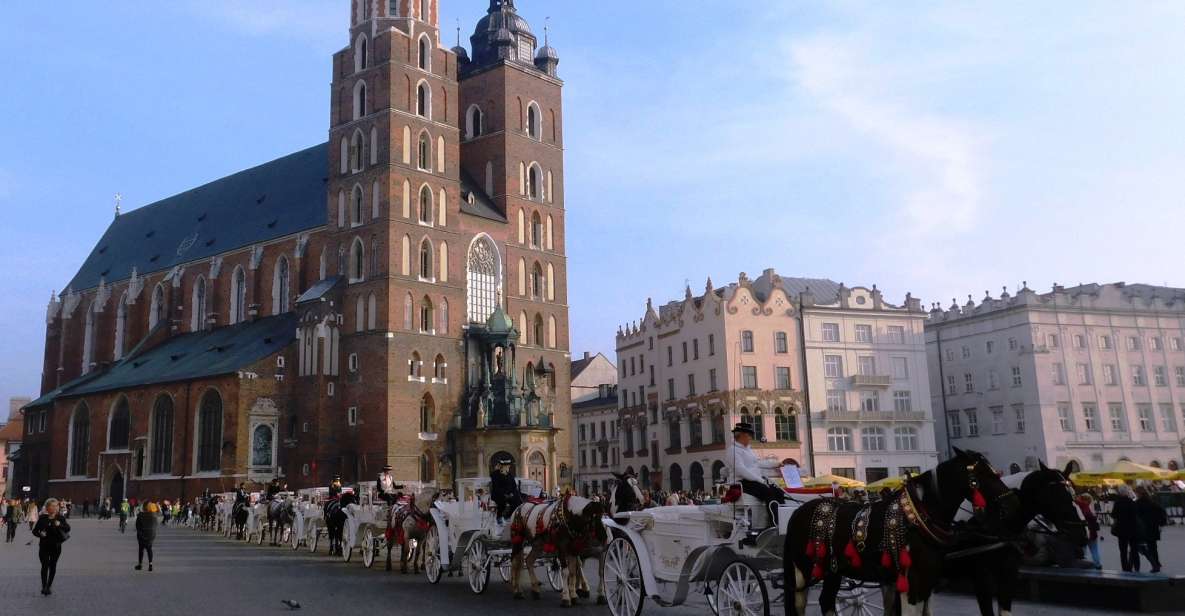
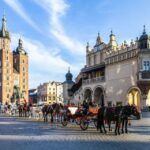
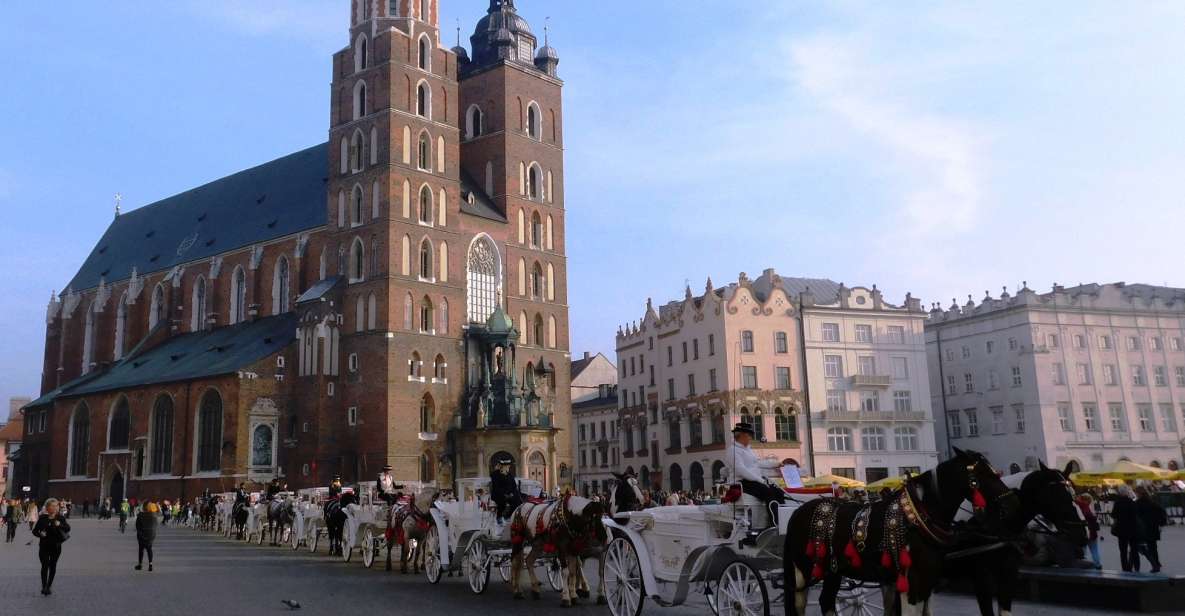
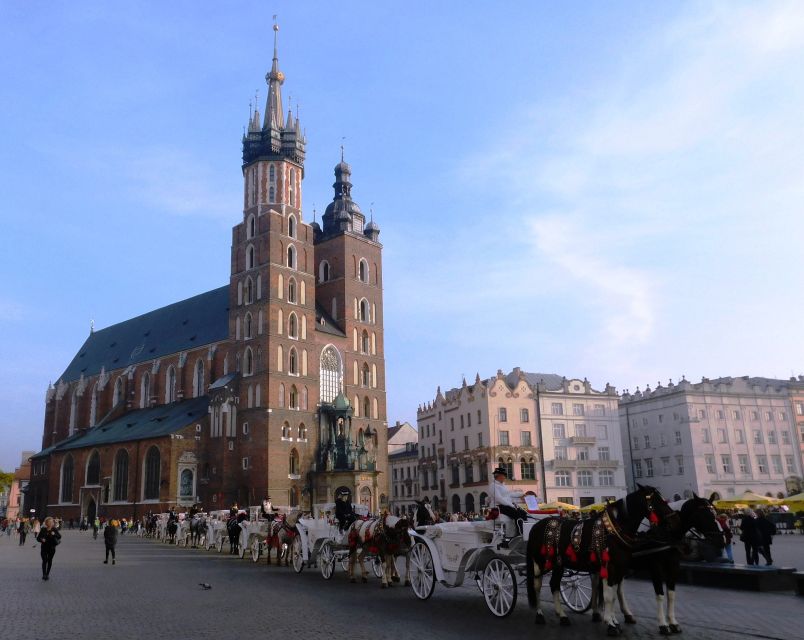
Main Market Square is one of the biggest medieval town squares in Europe, and the guide’s job is to make it understandable fast. You’ll stop for photos and also get time to take in the buildings up close—this is where you’ll see:
- St. Mary’s Basilica (Kościół Mariacki)
- Kraków Cloth Hall (Sukiennice)
- The area around the Town Hall Tower
What I like about this kind of guided approach is that you’re not just looking at impressive facades. You’re learning what they meant: commerce, religion, civic authority, and the rhythm of daily life in medieval Krakow.
This stop is also why the tour works as a “two-district” plan. The guide can point out transitions—how a city center can feel unified, while the neighborhoods just beyond it carry very different histories.
Practical note: Main Square is open and exposed. It’s also an obvious place for crowds and noise. If it’s raining, you’ll still keep moving, but you may want a hat or compact umbrella.
Jagiellonian University Quarter and Pope’s Window: academic Krakow with a human detail
Next you head into the University Quarter, anchored by the Jagiellonian University area. This is tied to the oldest Polish academic building mentioned in the tour description, and it’s one of those stops that changes your perspective on what “important” means in a city.
Instead of only kings, battles, and churches, you’re also looking at learning as power. You’re walking through spaces where ideas and reputations mattered, and where the city’s influence wasn’t only built by politics.
You’ll also hear about the Pope’s Window, connected to Pope John Paul II. Even if you don’t know the story already, this is one of those specific details that makes Krakow feel personal. It’s a reminder that famous events and remembered moments weren’t always “far away.” They played out here, in windows, streets, and public appearances.
If you care about how modern history touches older places, this is a strong moment of payoff.
St. Francis of Assisi photo stop and visit: a quick pause with a clear direction
You’ll have time for a photo stop and guided visit at the Church of St. Francis of Assisi in Krakow. The guide usually uses this break to keep the narrative moving, not to rush you through religious architecture as if it’s only decoration.
Even when you’re not a deep church-history person, it helps to understand what religious buildings represented in Krakow’s public life. They were centers of community, art, and identity—especially during periods when political control wasn’t always in local hands.
One consideration: if your group mainly wants stories about politics and daily life, you might find some focus lands on faith and churches. A past low-rating experience I saw included the feeling that the guide emphasized religion more than expected. So it’s smart to go in knowing that Krakow’s core story includes religious landmarks.
You can also read our reviews of more guided tours in Krakow
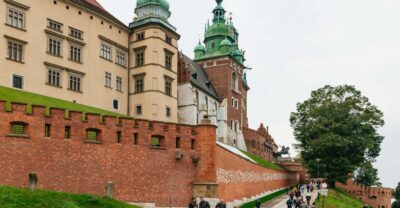
Wawel Hill: the hill you keep seeing, explained so it clicks
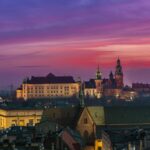
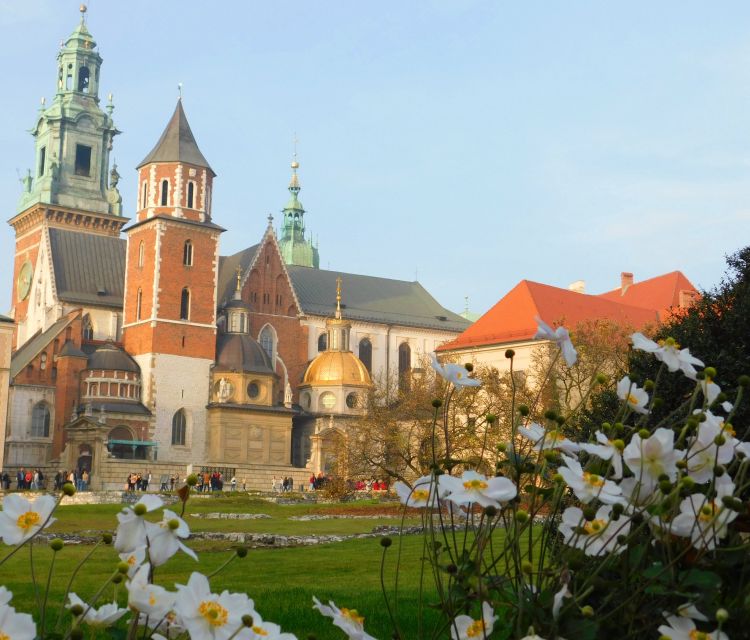
After the Franciscan stop, you’ll reach Wawel Hill. You get both a photo stop and a visit segment, with time set aside to look around and understand why it’s such a big deal for the Polish nation.
Wawel Hill is one of those places that can feel like a view point until someone explains what’s tied to it: national identity, historical authority, and why this location mattered over generations. With the guide, you’re less likely to treat it as scenery and more likely to understand it as a “center of gravity” for Polish history.
You’ll likely spend around half an hour here. That’s enough time to take photos, listen, and look without feeling totally rushed, but it’s still part of a tight 3-hour plan.
If you’re worried about not seeing Wawel enough, keep your group moving at a steady pace. The tour can shift slightly depending on group preferences, so your attention to timing matters.
Kazimierz and the Jewish Quarter: stories of culture and loss in one neighborhood
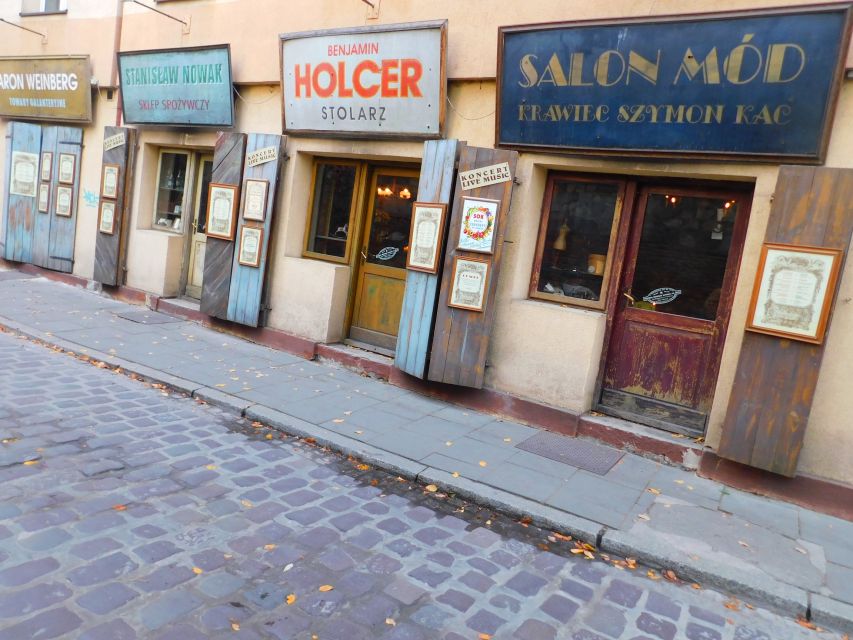
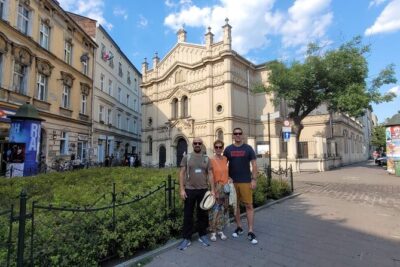
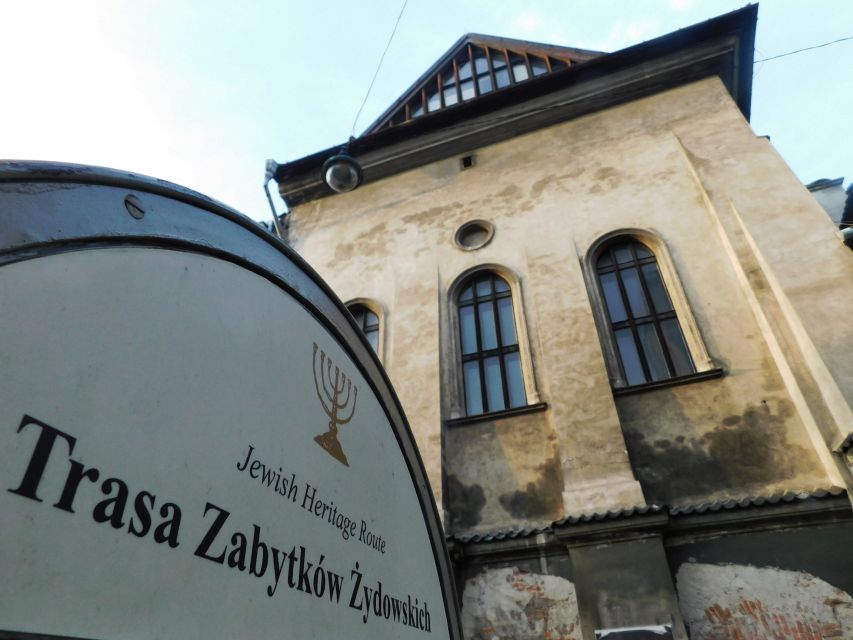
Then the walk turns into something heavier—Kazimierz. This district has its own identity. Historically, it was founded by King Casimir the Great as an independent city from Krakow and incorporated a Jewish Quarter with a specific, distinct character within Europe.
This is where the tour becomes more than “pretty old streets.” You’ll focus on synagogues and Jewish culture and learn about Krakow’s Jewish community during World War II. The guide also takes you to a filming location tied to Schindler’s List, connecting a global movie memory to the real places where tragedy happened.
Important mindset: this is not a history lesson delivered from a distance. It’s tied to the streets you’re walking on. You’ll feel the difference between a neighborhood that developed as a cultural hub and the way it was affected by violence and deportations.
If you’re the type who likes factual, respectful explanations, this is one of the strongest reasons to choose a guided format. Jewish history in Krakow can be hard to connect on your own unless you know the names, locations, and the why behind the buildings.
Wolnica Square finish: a clean ending point in Kazimierz’s Christian center
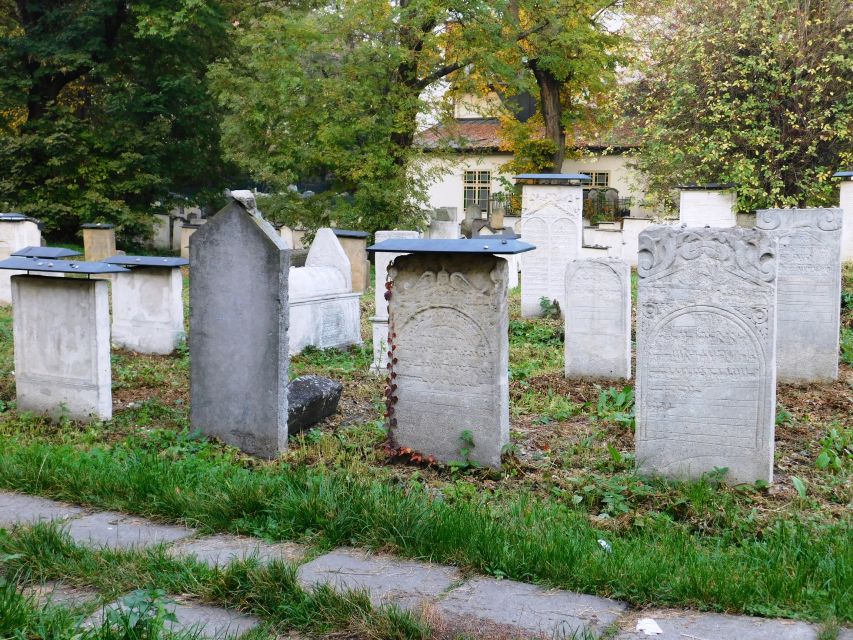
Your tour ends at plac Wolnica, described as the center of the Christian part of former city of Kazimierz. Ending here is actually a smart design, because you get a sense of “after the stories” without ending back in the busiest tourist core.
It gives you a place to pause, orient yourself, and decide what to do next—cafes, additional walking, or simply soaking in the atmosphere after the heavier Jewish Quarter narrative.
Also, if you want to keep exploring after the guide leaves, having a clear end point helps. Wolnica Square is a natural pivot point for more wandering through Kazimierz.
Price and value: $209 per group for a tight, story-driven route
The price is listed as $209 per group up to 15, for a 3-hour private guided walk. That pricing can be a good deal, but it depends on how many people you bring.
Here’s the practical way I’d think about it:
- If you’re traveling in a small group (say 2–6 people), you’ll likely feel the per-person cost more than in a group setting.
- If you can fill a larger private group, the value improves fast because you’re essentially renting a licensed guide for the time and route.
The real “value” here is the concentration. Many separate tours would force you to spend time commuting, re-entering squares, and re-orienting yourself for a second district. This one-walk plan compresses the logic of Krakow into a single flow—Old Town civic identity and Kazimierz cultural identity—without making you restart your bearings.
One more value point: it’s explicitly described as private with a local licensed guide and wheelchair accessible. Even if your group isn’t using mobility support, that usually means a smoother experience than a very rigid large-group bus tour.
Pacing and expectations: what can change with your guide and your feet
The tour notes that specific routes and highlights may vary slightly depending on guide and group preferences. That flexibility is helpful—good guides can adjust to what your group wants to emphasize—but it also means you shouldn’t assume every single stop will be treated exactly the same for every group.
A caution from a less-satisfied experience I saw: Wawel Hill and the Schindler’s List filming location, plus Wolnica Square and WWII history, were described as not fully covered. The reason given involved slower walking and time running out, and the guide’s focus landing more on church/religion than expected.
So here’s how to protect yourself:
- Decide early whether your priority is Wawel Hill and the Schindler’s List stop. If yes, keep the pace steady.
- If your group wants more WWII and history depth, communicate that tone at the start.
- If walking is a concern, tell the guide up front so time can be managed.
In a private group, communication helps a lot.
Weather, timing, and what to bring for a 3-hour city walk
This tour runs rain or shine. That’s normal for Krakow, but it matters. You’ll be outside through most of the route, including open squares like Main Market Square.
Bring:
- Comfortable shoes with grip
- A light layer and rain cover if the forecast looks iffy
You’ll be moving from district to district, pausing for photos and guided visits, so packing for comfort is more important than packing for sightseeing. The best views in Krakow are mostly accessed by foot and patience.
Should you book this Krakow Old Town + Jewish Quarter walk?
If your goal is to understand Krakow as a place with layers—royal civic center in one direction, Kazimierz’s cultural and tragic history in the other—this tour is a strong choice. It’s short enough to fit easily into a busy itinerary, but structured enough that you don’t miss the meaning behind the landmarks.
I’d especially recommend it if:
- You want Old Town landmarks like Main Market Square, St. Mary’s Basilica, and the Cloth Hall
- You care about Jewish Quarter context in Kazimierz, including synagogues and WWII history
- You like a guide who can connect specific sites to larger stories, not just point and shoot
Skip or rethink it if:
- Your group has very limited mobility and you’re worried you won’t cover every major stop
- You strongly prefer a politics-only tour and would rather not spend time on church-focused explanations
Overall: this is a practical, efficient way to see two sides of Krakow in one go—especially if you keep your pace steady and let the guide know what you want emphasized.
FAQ
Where does the tour start?
It starts at Plac Jana Matejki, in front of the Grunwald Battle statue.
How long is the walk?
The duration is 3 hours.
Is the tour private?
Yes. It’s a private group tour, with pricing listed for a group up to 15.
What language is the guide available in?
English, Spanish, German, French, Polish.
Is the tour wheelchair accessible?
Yes, the tour is wheelchair accessible.
Are entrance fees included?
No. Any entrance fees are not included.
What should I wear or bring?
Wear comfortable shoes, since it’s a walking tour.
FAQ
Does it run in rain?
Yes. The tour will take place rain or shine.
Is there free cancellation?
Yes. You can cancel up to 24 hours in advance for a full refund.
Can I reserve now and pay later?
Yes. Reserve now and pay later is offered.