REVIEW · KRAKOW
Krakow Morning Walking Tour with Traditional Polish Breakfast
Book on Viator →Operated by Krakow Urban Tours · Bookable on Viator
You’ll get Krakow before it gets loud. This early-morning walking tour pairs major sights with a calm pace and a traditional breakfast so you don’t have to plan anything. I especially like the crowd-free timing and the way the guide explains what you’re actually looking at, from royal life at Wawel to the meaning behind the trumpet call at St. Mary’s.
A standout is how the morning stays guided end to end—so you’re not just taking photos, you’re learning how Krakow grew into the city it is today. Tomasz, one guide Krakow Urban Tours has used, is called out for mixing big history with practical city context, including communist-era stories and where John Paul II lived and worked.
One consideration: you’re walking for a couple of hours, so comfortable shoes matter, and the early start may feel too early if you want a long sleep-in.
In This Review
- Key things to know before you go
- Why an early Krakow start feels like a cheat code
- Wawel Royal Castle grounds: views without the crush
- St. Mary’s Basilica: the twin towers and the trumpet
- Sukiennice (Cloth Hall): the medieval trade machine
- Rynek Główny Central Square: UNESCO in soft morning light
- Traditional Polish breakfast: scrambled eggs, sandwiches, and coffee
- Price and value: what you’re really paying for
- Logistics that actually matter (meeting point, ticket, and timing)
- Who this Krakow morning walk suits best
- Should you book this tour?
- FAQ
- How long is the Krakow morning walking tour?
- What language is the guide?
- What’s included with the tour price?
- Where does the tour start and end?
- Are vegetarians able to join?
- Can I cancel for a refund if my plans change?
Key things to know before you go
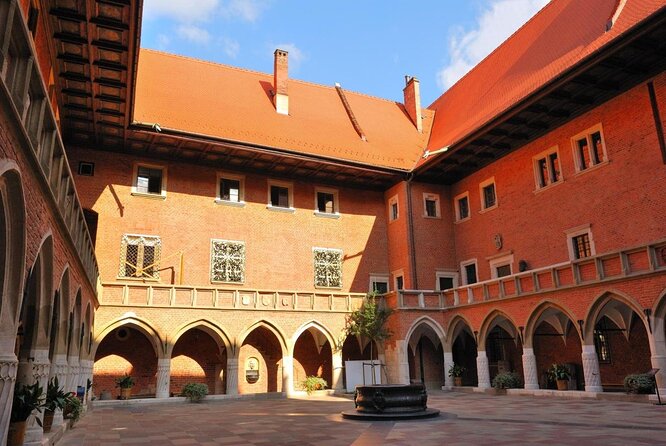
- Go early for breathing room: you’ll hit Wawel and the Old Town before the worst of the crowds.
- Breakfast is part of the plan: scrambled eggs, sandwiches, vegetables, plus coffee/tea and water.
- Your guide ties monuments to real life: you’ll connect royal power, trade, and daily rhythms, not just dates.
- Iconic stops are close together: Wawel, St. Mary’s Basilica, the Cloth Hall, and Rynek Główny in one flowing walk.
- Small group pace: maximum 12 travelers, which helps the guide keep things moving without feeling rushed.
Why an early Krakow start feels like a cheat code
Krakow has big “must-see” energy, which can turn the Old Town into a push-and-scan game by mid-morning. The smart move here is simple: you start early enough that the city still feels human-sized. When the day is already bright, you get that strange (and satisfying) feeling that the city saved its best views for early risers.
This tour is built around a clear idea: see the heavy hitters while the streets are calmer, then slow down with breakfast. You’re not stuck trying to squeeze Wawel, the central square, and church details into separate tickets and separate schedules. Even if you’ve planned your own route before, I like how this one gives you a structure—so your time in Krakow isn’t just walking, it’s purposeful walking.
And with a maximum of 12 people, the pace stays conversational instead of march-like. Your guide is there to help you get bearings fast and keep you oriented as the morning unfolds.
You can also read our reviews of more walking tours in Krakow

Wawel Royal Castle grounds: views without the crush
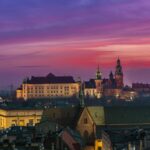
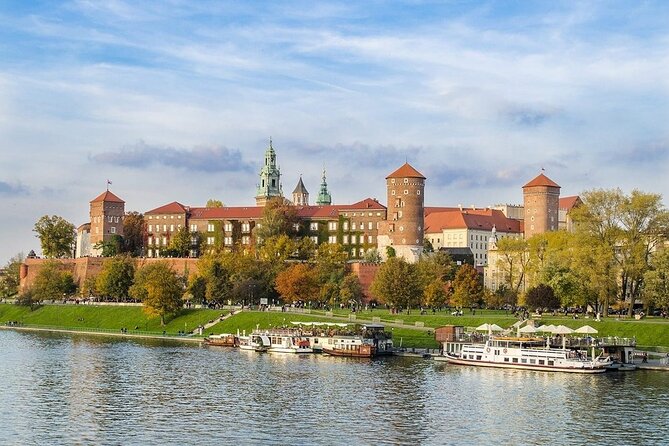
Wawel Royal Castle kicks off the tour, and that opening matters. Arriving early means you get to take in Wawel Hill and the castle surroundings before the main surge hits. You’ll spend about 40 minutes here, focusing on the castle courtyard and nearby areas tied to Polish kings and how they lived and ruled.
This is the stop where you’ll appreciate the “timing value.” Wawel is a big deal in Polish identity, so you can expect people. The early start turns that “big deal” into something you can actually look at—rather than something you’re trying to photograph while jostled.
You’ll also get a panoramic payoff from Wawel Hill over Kraków and the Vistula River. That view is one of those moments that makes the rest of the walk easier to understand, because you can see how the city sits and flows around the water.
Practical note: admission ticket is listed as free for this stop, which improves the value of the tour. You’ll still need your energy for the morning walk, but you won’t be paying extra for entry here.
St. Mary’s Basilica: the twin towers and the trumpet
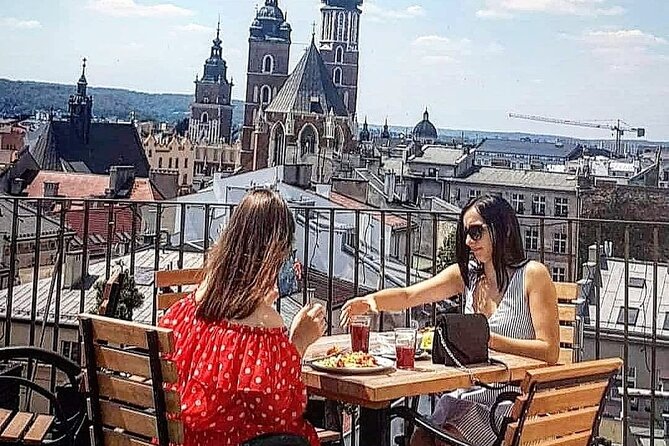
Next you head toward the Old Town along the route where St. Mary’s Basilica comes into view. This stop is shorter—about 10 minutes—but it’s a classic Krakow moment.
The basilica is known for its twin towers and the hourly trumpet call. Your guide explains the story behind that tradition and why the basilica is woven into Krakow’s identity. This is one of those details that sounds small until you connect it to the city’s daily rhythm and long memory. Even if you’ve seen photos of the towers before, you’ll understand more once you know what the trumpet call represents.
If you’re lucky with timing, you may catch the trumpet player. One recent highlight tied to Tomasz’s guiding style includes seeing and hearing that tradition. Even without the trumpet in your exact window, you still come away with the “what am I hearing?” context that makes the church feel alive.
Admission is also listed as free here, so you get the meaning without the extra ticket step.
Sukiennice (Cloth Hall): the medieval trade machine
After St. Mary’s, you’ll reach the Sukiennice—the Cloth Hall—where Krakow’s medieval trade story gets real. You spend about 40 minutes in this area, with time to walk around, take photos, and soak in the architecture.
The guide helps you understand why Sukiennice mattered. It used to sit at the heart of Krakow’s trade routes, where merchants from across Europe traded cloth, spices, and goods under the hall’s arches. That explanation is key: without it, Sukiennice can look like just another pretty building cluster. With it, you see the building as a “center of gravity” for the city’s economy and social life.
This stop is also where the tour’s pace works. You get a guided story, then you get space to look. I like that you’re not rushed out the moment the explanation ends.
Admission is listed as free for Sukiennice as well, which keeps the tour from feeling like it’s nickle-and-diming you as you go.
Rynek Główny Central Square: UNESCO in soft morning light
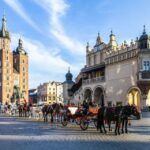
The tour continues into Rynek Główny, Krakow’s central square and a UNESCO World Heritage Site. You’ll spend about 40 minutes here, exploring the open space surrounded by historic townhouses, churches, and cafés.
Morning light helps. The square can feel like a magnet for crowds, but early in the day it’s easier to notice patterns: where people naturally pause, how the buildings frame the space, and how the city’s different “layers” show up around you.
Your guide ties things together here—stories of royal ceremonies and day-to-day life, plus how Krakow evolved from medieval capital to the modern city you’re standing in. This is where the earlier stops pay off. Wawel makes the royal side make sense. St. Mary’s shows the religious pulse. Sukiennice gives you the trading engine. Then Rynek pulls it all into one view.
It’s also the practical bridge to breakfast. You end up in a location that makes the transition feel natural, not like a sudden detour.
Traditional Polish breakfast: scrambled eggs, sandwiches, and coffee
Here’s the part I think makes this tour actually easy to enjoy: breakfast is included at a nearby local restaurant. You don’t need to eat before you meet up, and you don’t spend your morning hunting down a quick bite while the best sights are still in front of you.
The meal is described as scrambled eggs, sandwiches, various vegetables, plus coffee/tea and water. That combination feels like a real Polish morning meal rather than a token pastry stop. You’ll sit down and recharge, which matters after castle steps and walking through the Old Town.
Vegetarian options are welcome. For food allergies, the guidance is practical: unless you have multiple combined food allergies or you’re vegan, they’ll figure it out. That’s a better setup than many tours that only say “we can accommodate” without specifics.
If you care about local business, this is also where the tour signals community support: the breakfast is in a small bar owned by a private family.
Price and value: what you’re really paying for
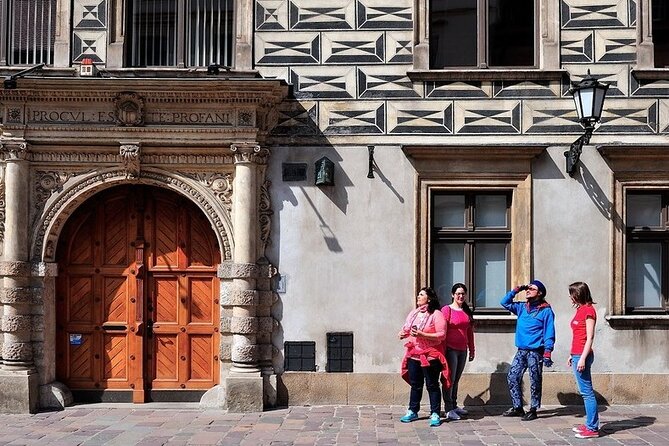
At $107.17 per person for about 2 hours 30 minutes, you might wonder if this is just a sightseeing loop. The value comes from three things that are hard to replicate on your own:
1) Guided time at multiple major sites
You’re getting interpretation at Wawel, St. Mary’s, Sukiennice, and Rynek rather than just collecting sights.
2) Free admission at the listed stops
Each stop is marked as admission ticket free in the itinerary details. That directly reduces the out-of-pocket cost compared to doing it solo.
3) Breakfast included
You’re not adding a separate meal plan. You get coffee/tea and water too, which helps you avoid paying for drinks separately mid-walk.
On top of that, the tour size stays capped at 12 travelers, which tends to improve the guide’s ability to keep quality high and answer questions.
If you’re booking with your budget in mind, this is a solid deal because it reduces decision fatigue: you show up, walk, learn, and eat.
Logistics that actually matter (meeting point, ticket, and timing)
The tour starts and ends back at the meeting point: Powiśle 7, 31-101 Kraków, Poland. It’s also noted as near public transportation, which is helpful if you’re coming in from another part of Krakow.
You’ll use a mobile ticket, and the tour is offered in English. Confirmation is received at booking, so you’re not stuck waiting for details.
One more practical detail: comfortable shoes are strongly recommended. This is a walking-heavy morning. Also, service animals are allowed, so if that’s relevant for you, plan with confidence.
If you like planning ahead, note that this tour is often booked well in advance—an average booking lead time is listed as 55 days. If you want a specific day, don’t wait for the last minute.
Who this Krakow morning walk suits best
This tour fits best if you want:
- a calmer first look at the Old Town and major monuments
- an English-speaking guide who explains what you’re seeing
- a schedule that includes breakfast so you can keep your morning moving
- a small-group feel (maximum 12)
It’s also a good match if you like your history explained in a way that connects to the city’s identity—royal power, tradition, and even the more complicated modern story. One review about Tomasz specifically highlights communist-era discussion and John Paul II-related locations (where he lived and worked, and where he was bishop). That kind of context is exactly what makes guided walking worth it.
Should you book this tour?
I’d book it if your priority is early, efficient sightseeing with food already handled. The crowd-free timing makes the hardest-to-enjoy parts of Krakow (popular monuments) feel manageable. And the fact that breakfast is included—and described clearly—means you can focus on the walk instead of logistics.
Skip it or rethink if you hate mornings, don’t want to walk for a couple of hours, or you’re the type who prefers to wander completely on your own without a guide connecting the dots. Otherwise, this is a smart value play: you get major sights, practical context, and a real Polish breakfast, all in one early stretch.
FAQ
How long is the Krakow morning walking tour?
The tour lasts about 2 hours 30 minutes.
What language is the guide?
The tour is offered in English.
What’s included with the tour price?
It includes a local friendly English-speaking guide, a traditional Polish breakfast at a local restaurant, plus coffee/tea and water.
Where does the tour start and end?
The tour starts at Powiśle 7, 31-101 Kraków, Poland and ends back at the same meeting point.
Are vegetarians able to join?
Yes. Vegetarians are welcome on the tours.
Can I cancel for a refund if my plans change?
Yes. You can cancel for a full refund up to 24 hours in advance of the experience start time.