REVIEW · KRAKOW
Krakow: Jewish Ghetto Walking Tour
Book on GetYourGuide →Operated by excursions.city · Bookable on GetYourGuide
Fear and hope walk the same streets here. This Kraków Jewish Ghetto tour turns the historic Podgórze district into a clear, emotional route through WWII life and loss, without turning it into a lecture. I especially like the stop at the Ghetto Heroes Square chair memorial and the chance to see the remaining Ghetto Wall fragments in their original setting.
Two things you’ll feel right away: the pacing is tight for just 1 hour, and the stories are grounded in real places. You’ll walk quiet streets where the city’s wartime layout still shapes what you see today, and that makes the history land in a more human way than a textbook.
One possible drawback: don’t expect many intact buildings. Even when you’re walking through authentic wartime streets, what’s left can be subtle, so you’ll want to rely on the guide to connect the dots.
In This Review
- Key things to know before you go
- Entering Podgórze: Why this route matters in Kraków
- Meeting point near Schindler’s Factory: quick way to get context
- The Ghetto Wall remains: seeing the boundary up close
- Ghetto Heroes Square and the chair memorial
- Under the Eagle Pharmacy: Tadeusz Pankiewicz and moral courage
- The streets between stops: how the tour helps you picture daily life
- How the 1-hour format hits: enough time, not too much
- Price and value: why $11 feels fair for this kind of impact
- Who should book this tour
- Practical tips for a smoother walk
- Should you book the Kraków Jewish Ghetto Walking Tour?
- FAQ
- How long is the Kraków Jewish Ghetto Walking Tour?
- What sites do you visit during the tour?
- How much does it cost?
- Is food included?
- What languages are available for the live tour guide?
- What if I’m late?
Key things to know before you go
- A licensed guide keeps the route coherent and respectful, with context for daily life, deportations, and survival
- Ghetto Wall remains are brief but powerful, because you see them in place
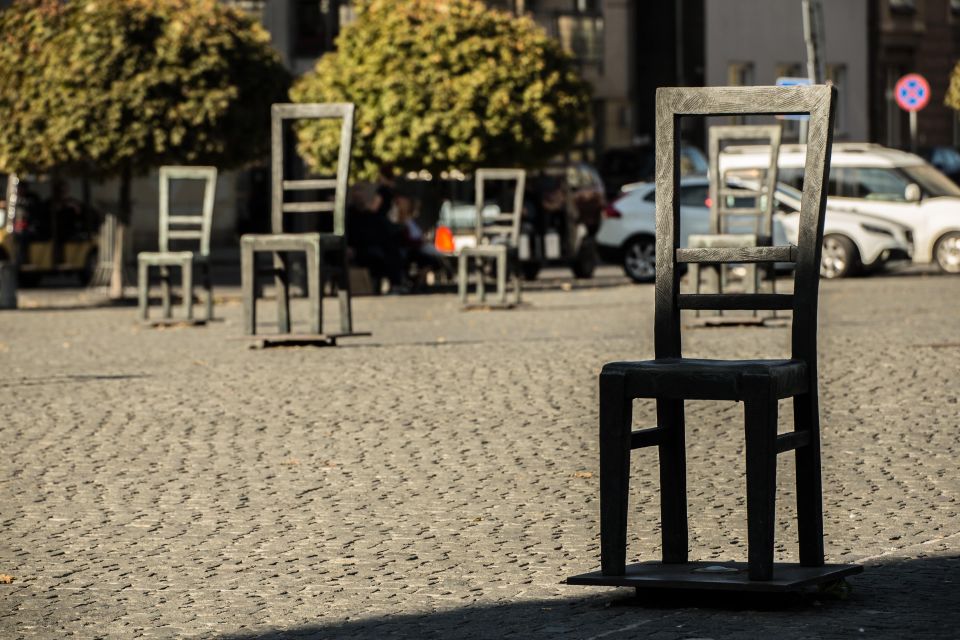
- Ghetto Heroes Square uses dozens of empty metal chairs to mark lives lost
- Under the Eagle Pharmacy highlights Tadeusz Pankiewicz and staff who risked their lives to help people in hiding
- It is only 1 hour, so you get impact fast, not a slow museum visit
- Rain or shine: you’re dressed for walking in real Kraków weather
Entering Podgórze: Why this route matters in Kraków
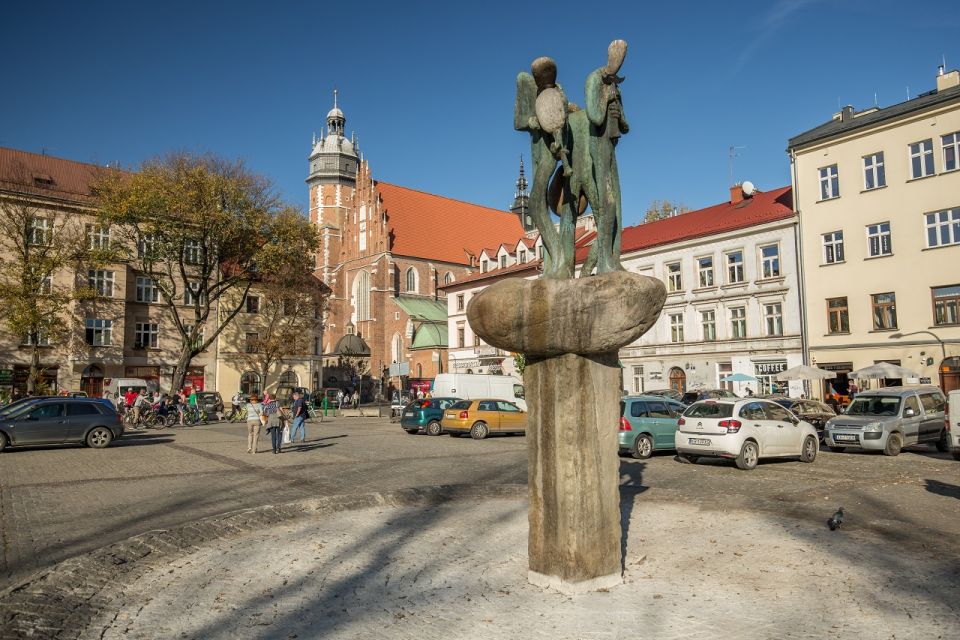
Podgórze is where the Kraków Ghetto took shape during WWII. What I like about the way this tour is built is that it doesn’t just point at memorials. It shows you the district as a working neighborhood—streets, corners, and boundaries—so you can imagine what confinement meant day to day.
That matters because the ghetto wasn’t an abstract idea. It was daily life under threat: fear in the air, limited choices, and small acts of solidarity that kept people going.
You can also read our reviews of more walking tours in Krakow

Meeting point near Schindler’s Factory: quick way to get context
In many cases, the group starts near the Schindler’s Factory area, which is a smart lead-in if you’ve already seen the museum. The timing also helps: instead of jumping to Auschwitz first and calling it done, you get the local story of how Jews were forced into the ghetto system inside Kraków.
If you’re trying to plan your day, this is one reason the tour feels efficient. It gives you a focused route after you’ve already soaked up part of Kraków’s WWII narrative.
The Ghetto Wall remains: seeing the boundary up close
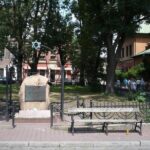
One of the most striking parts is the visit to the remains of the original Ghetto Wall. You’re not looking at a polished exhibit behind glass. You’re seeing fragments that once enclosed thousands of people within a tight space.
The guide’s job here is crucial. With only pieces surviving, the explanation turns those leftovers into something you can picture: the way walls define movement, control, and daily routines, and how quickly a city can be cut into categories of who belongs.
Ghetto Heroes Square and the chair memorial
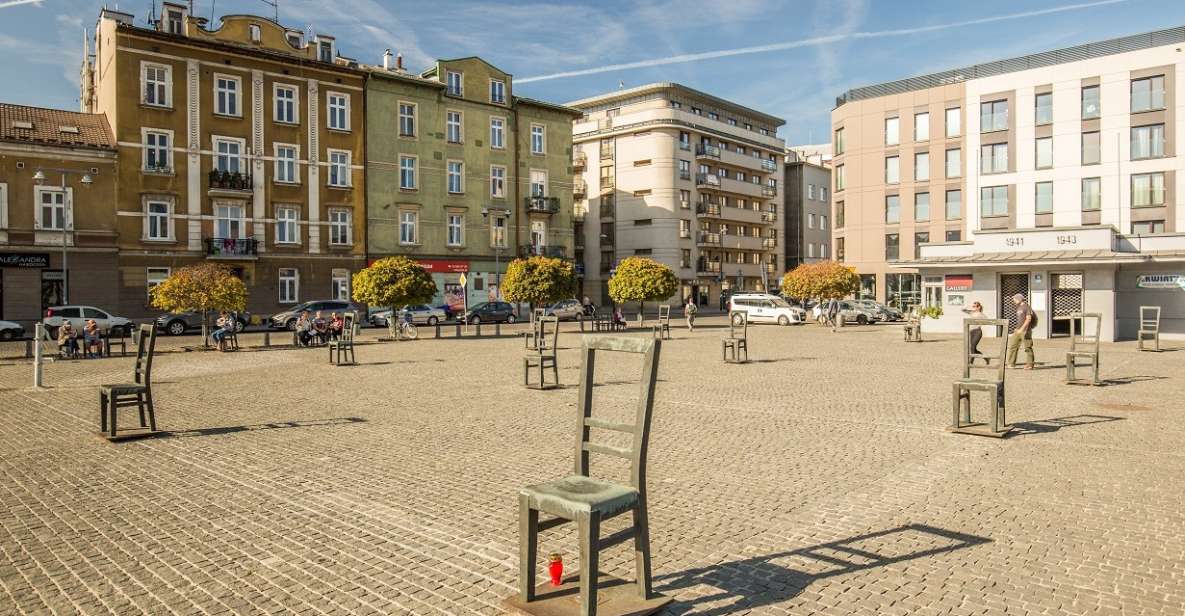
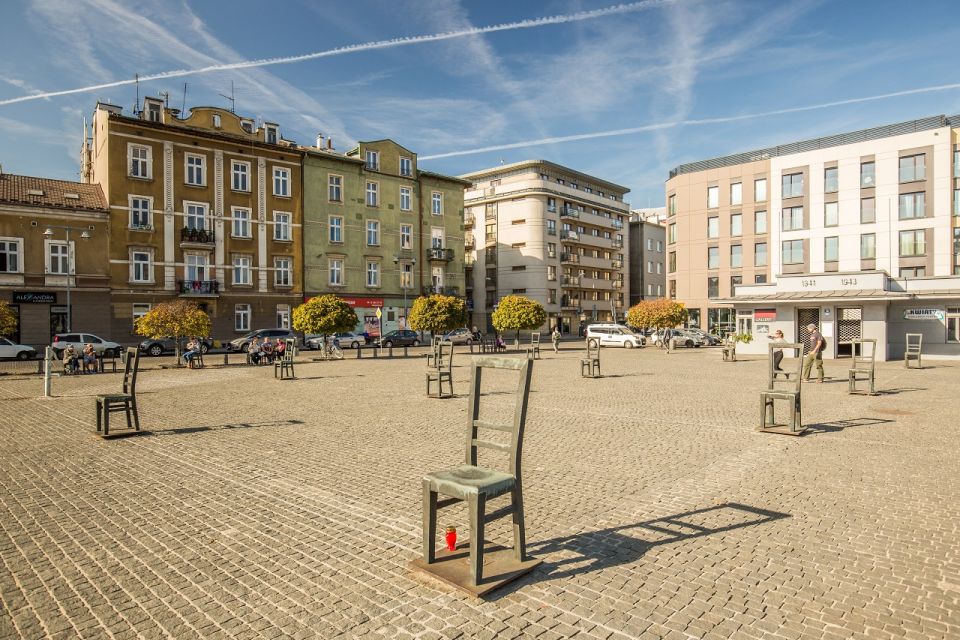
Next comes Ghetto Heroes Square, described and remembered as the ghetto’s central point. Historically, it was a gathering place tied to deportations, which gives the square a heavy purpose beyond today’s memorial calm.
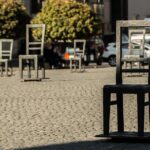
Today, you’ll see dozens of empty metal chairs—each one a symbol meant to represent lives lost during the Holocaust. I like how this works emotionally: you aren’t asked to guess. The memorial gives you a simple visual cue, and the guide connects it to the human reality behind the numbers.
If you’re sensitive to heavy themes, give yourself a minute here. This isn’t a place for rushing photos.
Under the Eagle Pharmacy: Tadeusz Pankiewicz and moral courage
Across the square is the historic Under the Eagle Pharmacy. This stop is often the most moving because it focuses on action: people who helped others at great personal risk.
The guide shares the story of Tadeusz Pankiewicz and the pharmacy staff, who risked their lives to provide medicine and shelter for ghetto residents. That detail is important, because survival wasn’t only about endurance. It was also about receiving help from people who refused to look away.
Guides such as Olga, Aga, Joanna, Ewa, and Helen have been praised for telling these stories with care and clarity. Even if your guide is different, you can expect the same core goal: make the bravery feel specific, not generic.

The streets between stops: how the tour helps you picture daily life
The walking itself is part of the lesson. You’ll move through the ghetto area street layout, and the guide uses that movement to explain how daily life worked under occupation—what people did, what they feared, and how deportations reshaped everything.
One detail I appreciate is the way some guides use photographs to help you orient yourself. When something has changed over decades, pictures can be the bridge between today’s street and what once stood there.
This is also where you’ll understand why the tour is such a good match with other WWII visits. Instead of treating Kraków as a backdrop, you get the local logic of the system.
How the 1-hour format hits: enough time, not too much
A 1-hour walking tour can sound short for something this heavy. But the structure is the point. You get the essentials—wall fragments, the chair memorial, and Under the Eagle Pharmacy—plus enough connective tissue to understand deportations, daily hardships, and survival.
People often describe the pace as steady and well controlled, with audio support like headsets or ear mics in some cases. That’s worth knowing because on busy sidewalks, you need to be able to hear without straining or losing track.
Also, expect it to be walking. It may be flat, but you’re still on your feet for an hour in whatever conditions Kraków is serving that day.
Price and value: why $11 feels fair for this kind of impact
At about $11 per person for a 1-hour guided walk, this is strong value for a tour tied to such meaningful sites. You’re paying for a licensed guide who provides context you’d likely miss if you walked the area alone.
Just be realistic about what you get for the money. This is not a long museum experience, and it isn’t a full deep-history lecture. It’s a guided route through a few key points where the meaning is concentrated.
If you’re already planning a WWII-focused day in Kraków, this becomes an economical way to add the ghetto story—especially since it pairs well after other major sites.
Who should book this tour
This tour is a great fit if you want:
- a respectful, place-based introduction to the Kraków Ghetto in Podgórze
- a quick way to connect day-to-day life with deportations and survival
- a guide-led route so you aren’t left guessing about what you’re seeing
It may not be the best choice if you want a long, slow, behind-the-scenes exploration. Since the tour is 1 hour, it’s built for impact over time spent lingering.
Practical tips for a smoother walk
- Wear comfortable shoes. The tour goes in all weather, rain or shine.
- Dress for the day, not the forecast headline. Kraków can feel colder than you expect.
- Arrive about 10 minutes early. Once the group leaves, latecomers can’t join and tickets aren’t refundable.
- Bring a little patience for emotional subject matter. You’ll be dealing with tragedy, but the guide’s job is to keep the tone respectful and clear.
If you’re doing this after Schindler’s Factory, it can work well as a follow-up—almost like moving from a museum snapshot into the neighborhood setting that made those events possible.
Should you book the Kraków Jewish Ghetto Walking Tour?
Yes, if you want a focused, meaningful walking route through Podgórze with the essential memorial sites and the story behind them. The combination of wall remains, Ghetto Heroes Square, and Under the Eagle Pharmacy makes the tour feel coherent rather than random.
Book it especially if you’re visiting Kraków for a short time and you want the ghetto story without spending hours on multiple stops. The time is short, the price is low, and the guide-led context is what makes it worth doing.
Skip it if you prefer long self-guided museum time, or if you’re not ready for a heavy WWII narrative in a small geographic space.
FAQ
How long is the Kraków Jewish Ghetto Walking Tour?
It lasts 1 hour.
What sites do you visit during the tour?
You’ll see the remains of the original Ghetto Wall, visit Ghetto Heroes Square with the chair memorial, and hear stories connected to Under the Eagle Pharmacy, including the actions of Tadeusz Pankiewicz and his staff.
How much does it cost?
The price is listed as $11 per person.
Is food included?
No. Food and drink aren’t included.
What languages are available for the live tour guide?
The tour is available in French, German, Italian, English, Spanish, Russian, Portuguese, Swedish, Slovak.
What if I’m late?
You’re asked to arrive 10 minutes before the tour begins. After the group has departed, latecomers can’t join and tickets can’t be refunded.