REVIEW · KRAKOW
Auschwitz & Birkenau Guided Tour with Hotel Pickup from Krakow
Book on Viator →Operated by Hello Cracow · Bookable on Viator
This trip hits hard, in a necessary way. You get hotel pickup, English guidance, and a structured visit to both Auschwitz camps without the stress of figuring anything out. Expect a long, emotionally heavy day—but with clear logistics and a pace that keeps you moving in the right direction.
I especially love the small-group setup (museum limits the camp visit to keep it manageable) and the fact that you’ll have headsets so you can actually hear what’s being explained. The main drawback is that your exact departure time can shift because the museum controls entry slots, and bad weather can make outdoor parts feel longer (cold, rain, wind—pick your poison).
In This Review
- Key Points Before You Go
- Price and Value: Why This Tour Feels Fair
- Hotel Pickup From Krakow: The Part You Really Notice
- Driving Time and Group Size: Comfort Without Chaos
- Auschwitz I: Auschwitz Gate Energy and 2 Hours That Matter
- A Short Break That’s Actually Useful
- Birkenau (Auschwitz II): The Brzezinka Story and the Walk That Lands
- Headsets, Rules, and How the Tour Stays Respectful
- What Outdoor Time Means for What You Pack
- Communication and Transfers: The Hidden Win
- Who This Tour Fits Best
- Potential Downsides You Should Know About
- Should You Book This Auschwitz & Birkenau Tour From Krakow?
Key Points Before You Go
- Hotel pickup in Krakow with a confirmed pickup time the day before
- Licensed English-speaking guide at the camps and headsets to follow along
- Two-camp route: Auschwitz I (about 2 hours) plus Birkenau (about 1.5 hours)
- Real-world timing with short breaks and a quick transfer between sites
- Strict rules and ID checks: your passport/ID name must match the booking exactly
Price and Value: Why This Tour Feels Fair
At $35.07 per person, the big value is what’s bundled in. You’re not just buying a guide—you’re also getting round-trip transport from Krakow, tickets for both Auschwitz I and Birkenau, and the headset system that lets you hear the explanation clearly.
Add the practical stuff: insurance and taxes are included, and you also get professional customer service support if something goes off-script. For a day as important as this one, I’d rather pay for organized basics than gamble on last-minute ticketing.
You can also read our reviews of more guided tours in Krakow
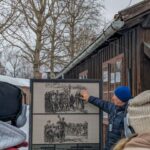
Hotel Pickup From Krakow: The Part You Really Notice
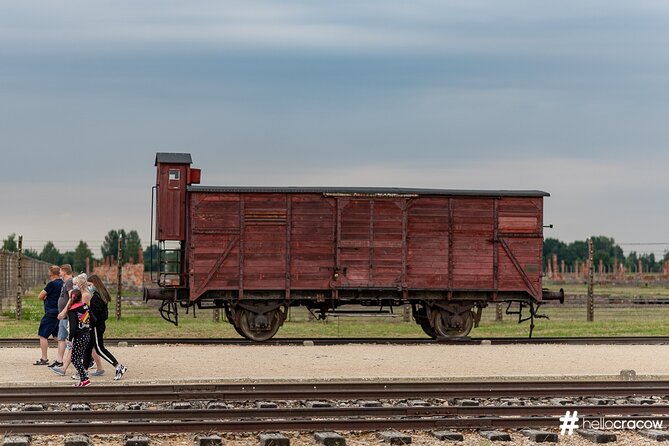
You’ll start with pickup from your hotel or specified address in Krakow. Pickup windows are tentative, and the exact time is confirmed the day before (latest afternoon), so you’re not left guessing in the morning.
One detail that matters: some Krakow hotels sit in traffic-restricted zones. In that case, pickup happens from the nearest accessible point, and you should expect to be told where that is. There’s also a note about roadworks and a temporarily closed meeting point (Straszewskiego 19), with an alternative arranged nearby if needed.
Driving Time and Group Size: Comfort Without Chaos
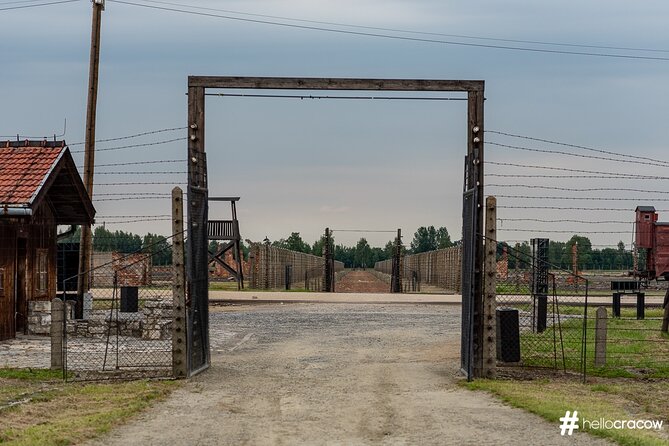
The camps are about 1 hour 15 minutes each way from Krakow (roughly 65 km one-way). That’s long enough to need comfort on the van, but not so long that you feel stuck for days.
The operation keeps a cap of about 30 travelers, and the Auschwitz camp visit itself is run with a group size that the museum rules allow. In plain terms: you won’t be sprinting down the site alone, but you also won’t be trapped in a giant crowd that kills your ability to process what you’re seeing.
Auschwitz I: Auschwitz Gate Energy and 2 Hours That Matter
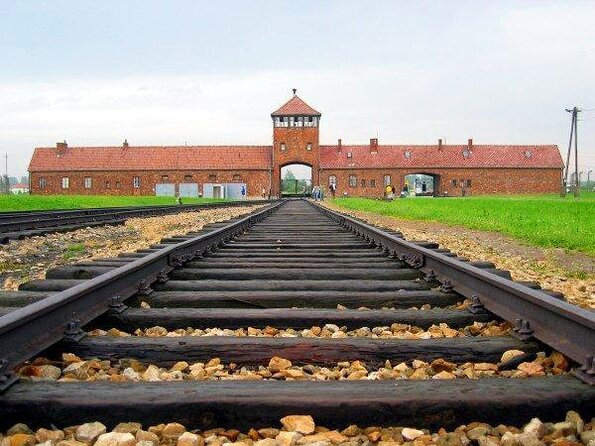
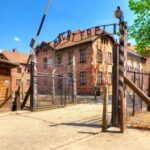
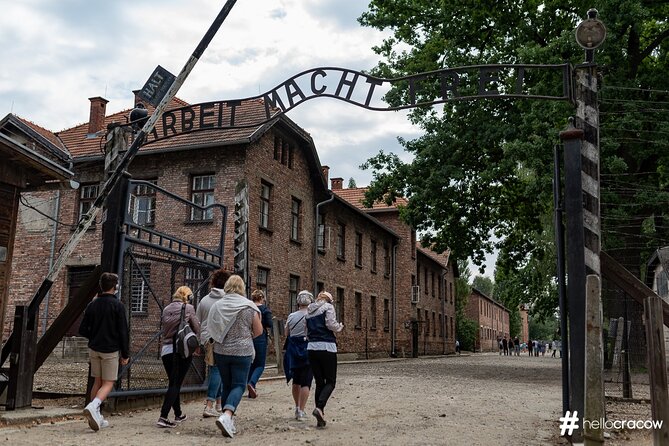
Auschwitz I is where the visit starts, moving through the camp’s preserved spaces and the story behind them. You’ll enter the first area and see the famous gate slogan Arbeit Macht Frei (Work Makes You Free), which sets a brutal tone right away.
What I like about the way this portion is handled is how guided narration + headsets work together. You get about 2 hours at Auschwitz I, and the headset system makes a big difference—especially when you’re surrounded by noise, foot traffic, and the kind of silence you don’t choose.
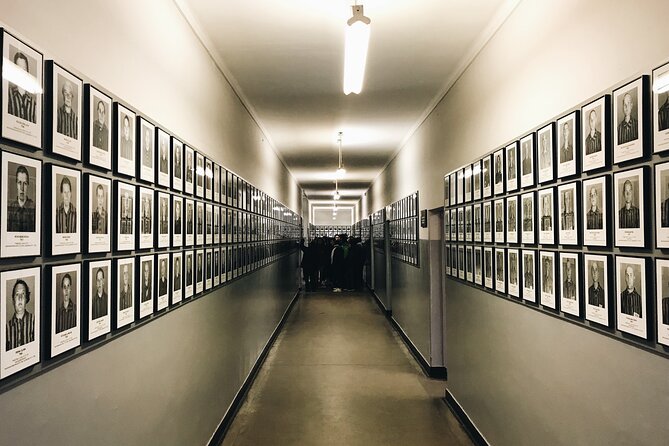
You’ll pass original elements like wooden buildings, fortified walls, barbed wire, and the sites tied to gas chambers and crematoria. It’s not a museum that asks you to guess. It shows, in stark detail, the machinery of imprisonment and mass murder, and your guide’s job is to give it historical context without turning away from the horror.
A Short Break That’s Actually Useful
Between camps, you’ll get a short break (up to 15 minutes). It’s brief by design, because the second camp is close—about 3 minutes away—and the schedule depends on museum timing and transfers.
This is where you’ll want to use your brain for the next leg: water if you can, bathroom if you need it, and a quick reset. If you’re traveling in cold months, this is also where you’ll appreciate warm layers, since the day is partly outdoors.
Birkenau (Auschwitz II): The Brzezinka Story and the Walk That Lands
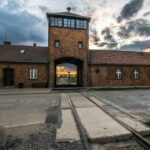
Birkenau, or Auschwitz II, is the larger camp built for the Nazis’ goal of making Europe Judenrein. You’ll be in Birkenau for about 1 hour 30 minutes, and your guide continues the story on-site in Brzezinka (Birkenau).
This portion can feel physically different because it’s more open, more spread out, and more exposed to weather. You’ll hear about the camp’s construction under Heinrich Himmler in 1941, and the scale of what the camp was designed to do, including the capacity tied to tens of thousands of prisoners.
Your guide also covers the terrible details: selection, cruel living conditions, and pseudo-medical experiments associated with prominent Nazi doctors, including Josef Mengele. Then you end with the history of liberation—January 27, 1945, when the gates opened and the genocide ended.
Headsets, Rules, and How the Tour Stays Respectful
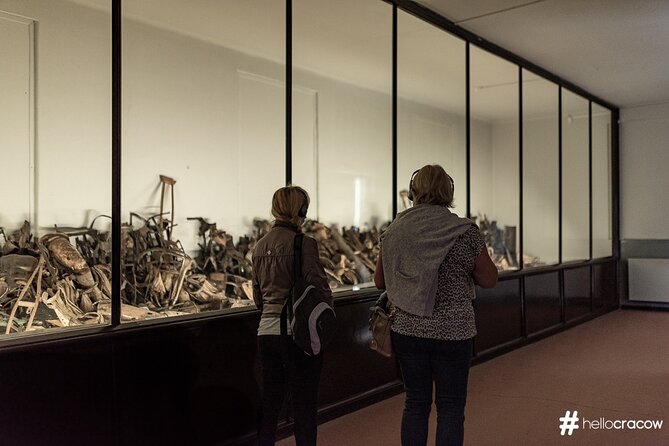
The tour is a guided group visit, not an independent walk. Inside Auschwitz I and Birkenau you’ll follow the route with no individual pacing, and there are site rules you must respect.
Bring your ID/passport for the airport-style security check before entry. The rules are strict: full names must match the booking exactly, with no nicknames, and no ID means no entry. This is one of those painful travel lessons you only need once—double-check your document name before you go.
Also plan for a smart casual dress approach and respectful behavior. Eating and smoking aren’t allowed during the visit, and loud behavior isn’t a good fit for a memorial like this.
What Outdoor Time Means for What You Pack
Expect weather to be part of the experience. Up to 70% of the visit takes place outdoors, so the tour runs year-round, rain or shine, but conditions can be brutal.
Pack for the basics:
- warm layers (even in shoulder seasons)
- a water bottle for warm days
- a snack, because lunch isn’t included and there’s not time for a full meal between camp visits
Some guests have mentioned arranging food options through the operator (like a lunch bag), but the tour info itself makes the safe assumption: you shouldn’t count on full meal stops. If you need energy, bring a snack that won’t fall apart in cold weather.
Communication and Transfers: The Hidden Win
This kind of tour lives or dies on communication. Pickup times can shift based on museum schedules, but the operation aims to keep you informed with clear updates.
You’ll typically get a message ahead of time so you know when pickup is coming, and you’ll be guided so you don’t wander off at the wrong moment. In real-world terms, this matters because Auschwitz entry slots can be timed, and getting there smoothly protects the calm of the day.
The transfer between Auschwitz I and Birkenau is handled by the same operation, so you don’t have to coordinate transport while your emotions are already maxed out.
Who This Tour Fits Best
This tour is a strong choice if you want:
- hotel pickup from Krakow
- an English-speaking licensed guide at the camps
- a setup that includes headsets, meaning you can focus on learning rather than straining to hear
It’s also a good fit if you want the “two camps in one day” format. You’ll do Auschwitz I first, then Birkenau right after, so your understanding builds logically instead of feeling like two unrelated visits.
Potential Downsides You Should Know About
The most common real risk isn’t the content—it’s the schedule. Departure times can change because the museum controls entry slots, and the timing can shift with traffic and museum availability. If you booked a specific morning plan in Krakow, keep it flexible.
Weather can also affect how the day feels. Birkenau is partly exposed, and cold or rain makes outdoor walking harder to handle emotionally and physically. If you’re the type who needs to fully linger everywhere, this is a guided route with no individual pacing, so you’ll move as the group moves.
There are also occasional operational hiccups in edge cases—like group size changes or vehicle issues reported by some guests. Those don’t change the core experience, but they are worth keeping in mind if you’re traveling with extra sensitivity about comfort and safety.
Should You Book This Auschwitz & Birkenau Tour From Krakow?
Yes, if you want a practical, well-run way to see both Auschwitz sites with transport + tickets + English guidance handled for you. The value is solid for what you get, and the headsets remove one of the most annoying barriers on a memorial day: not hearing your guide.
Book it if you can handle a long day, strict rules, and heavy subject matter. Don’t book it if you require free roaming or you’re planning to meet tight other commitments later that day—because the museum timing and outdoor conditions can stretch your day beyond what you’d hope.
If you do book, do two things that make the biggest difference: match your ID name exactly to your booking, and pack warm layers and a snack. That’s how you give yourself the best chance to focus on what matters.