REVIEW · KRAKOW
Krakow: Highlights of Old & New Town Private Walking Tour
Book on GetYourGuide →Operated by Rosotravel Poland · Bookable on GetYourGuide
One walk, two Krakows to compare, fast. I like how this private tour threads the Royal Route from the medieval center up to Wawel, while still making room for what changed in later centuries. Two things I especially like: you get expert context about Krakow’s big turning points, and you’re guided to key monuments you can easily miss when you travel solo. One drawback to consider: the experience can feel guide-dependent, so you’ll want to go in with a flexible mindset and dress for long walking time.
You start in the Old Town and leave with a clearer sense of how Krakow grew into the modern city people come for today. I also value that the tour is built around walking and courtyards, not just quick photo stops, so you actually understand what you’re seeing. The main consideration? Museum entrances are optional, so you may want to budget a little extra if you care about interior access beyond what’s included.
In This Review
- Key reasons this Krakow walking tour works
- First stop: Barbakan and the feel of Krakow’s gates
- Main Market Square and St. Mary’s Basilica: Gothic that actually clicks
- Cloth Hall to Jagiellonian University: the Royal Route gets smarter
- Wawel Hill courtyards: why the walk feels different
- Inside Wawel Cathedral: coronations and resting places
- The part many people miss: Krakow’s not-only-old-town story
- What “private” really changes on a walking tour
- How long is 4 hours, and how to handle the walking
- Optional interiors and museum decisions (what’s not included)
- The 6-hour extension: Kazimierz and Tempel Synagogue tickets
- Price and value: is $137 per person worth it?
- Who this tour suits best
- Should you book this Krakow Old & New Town private walking tour?
- FAQ
- How long is the Krakow highlights private walking tour?
- What’s included in the 6-hour Kazimierz version?
- Where do we meet the guide?
- Does the tour offer hotel pickup?
- What languages are available for the live guide?
- Are museum entrance fees included?
- Is the Tempel Synagogue always visited?
- Can I cancel and get a full refund?
- Is the tour wheelchair accessible?
Key reasons this Krakow walking tour works
- Private guide with licensed expertise and language options, so questions don’t get lost in a crowd
- The route links Old Town Market Square to Wawel Hill, making the city’s story easier to hold in your head
- You see signature landmarks like St. Mary’s Basilica and Wawel Cathedral rather than skating past them
- Time is spent on everyday life themes, not only monuments
- The longer option adds Kazimierz, including Tempel Synagogue tickets on most days when open
First stop: Barbakan and the feel of Krakow’s gates
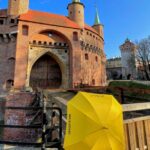
This tour starts near the Barbakan Krakowski, by Basztowa, on the side facing Brama Floriańska. That matters more than it sounds. You’re not beginning in a random plaza; you’re entering from the area that historically framed movement into the Old Town. It helps you get your bearings quickly, especially if Krakow is your first stop in Poland.
From there, your guide sets the tone. Expect a calm, organized pace designed for a 4-hour walk, with time to stop and look closely instead of speed-running the sights. If your goal is to leave with a mental map of the city and its timeline, that opening choice helps.
You can also read our reviews of more walking tours in Krakow


Main Market Square and St. Mary’s Basilica: Gothic that actually clicks
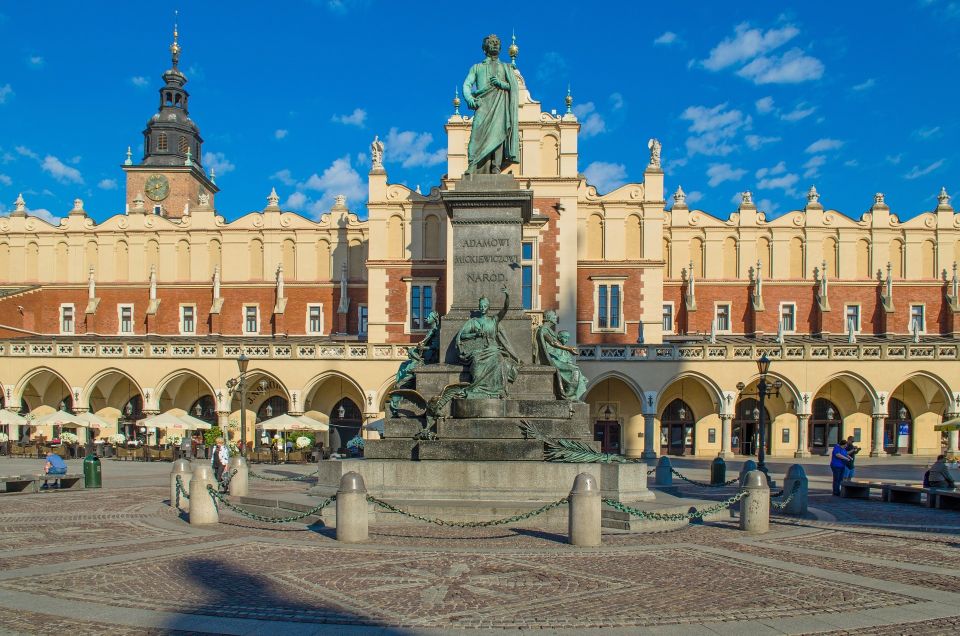
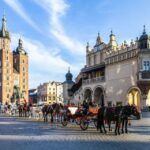
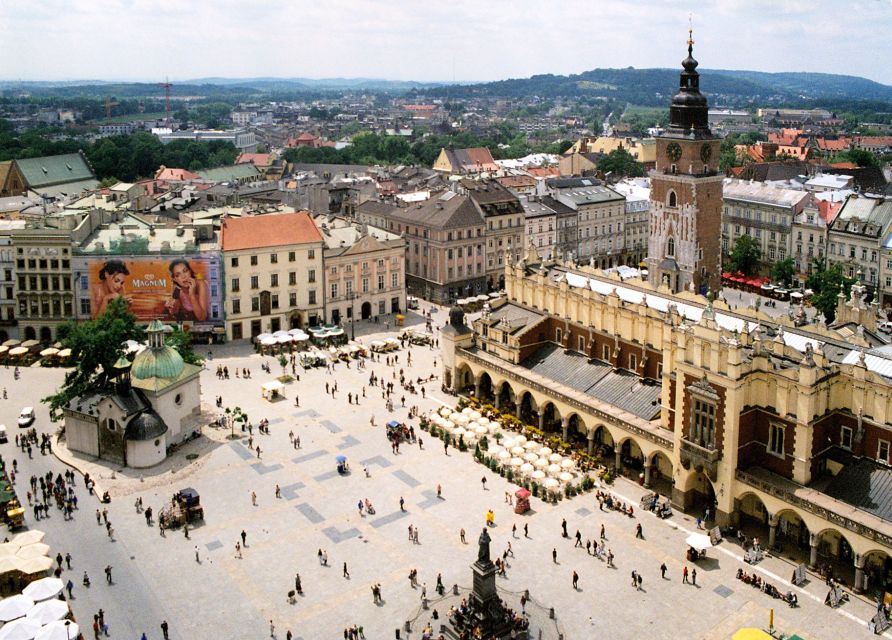
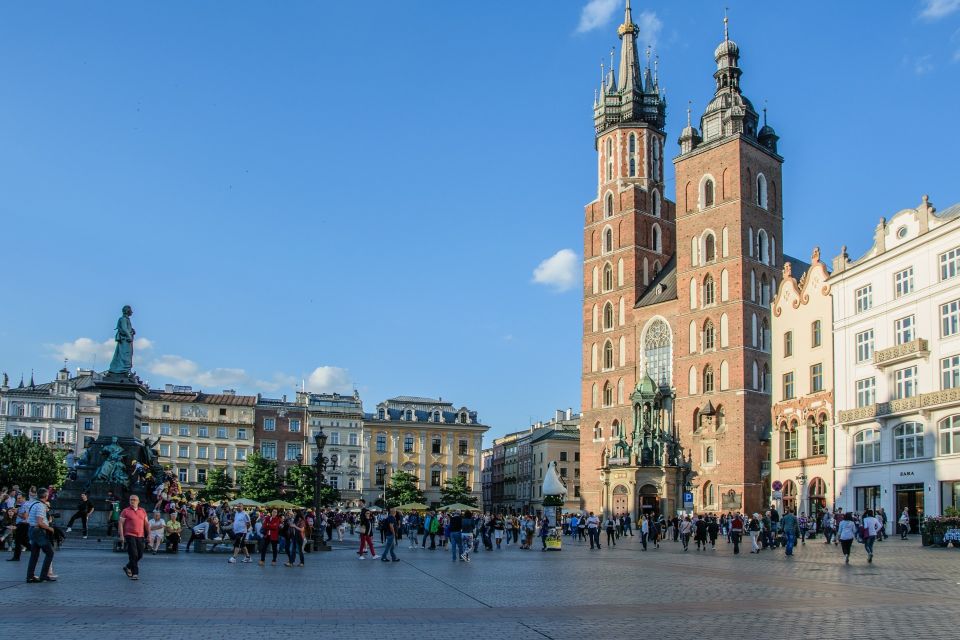
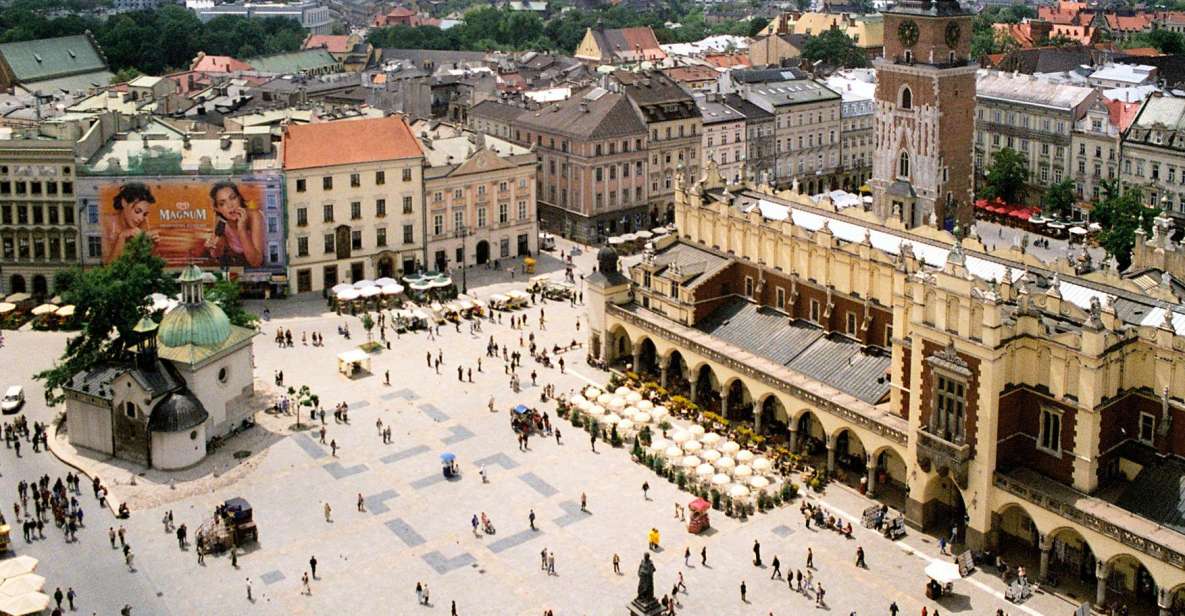
The walk moves you into the heart of Krakow: the main Market Square. This is where the city’s medieval identity shows up in architecture, street layout, and sheer historical weight.
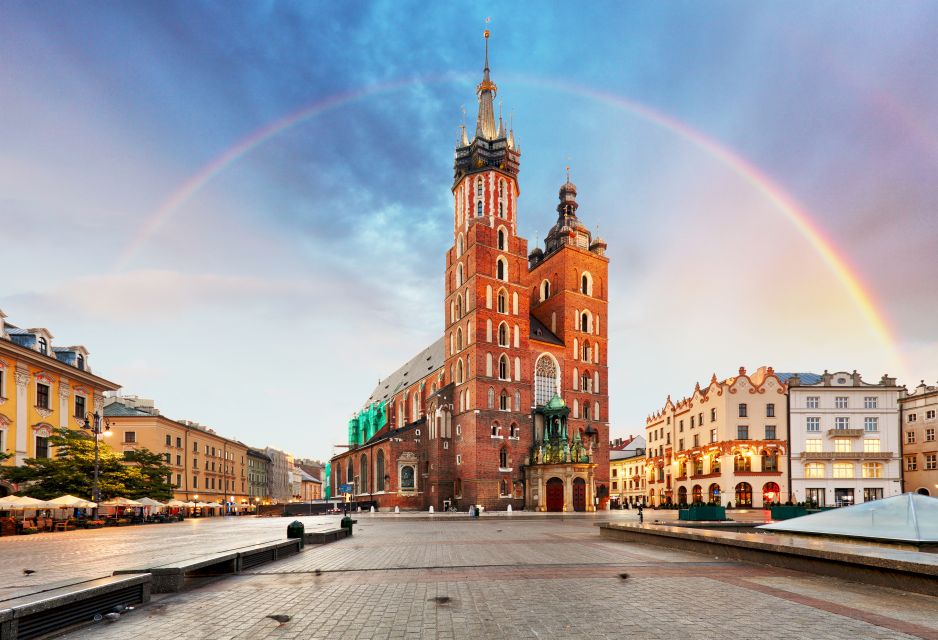
You focus on the Gothic exterior of St. Mary’s Basilica. Even if you don’t go inside, the exterior details give you a visual anchor for the whole tour. It’s one of those landmarks that’s famous, yet still worth having explained. Your guide’s role here is to help you see beyond the postcard look and understand why the style and setting became such a big deal.
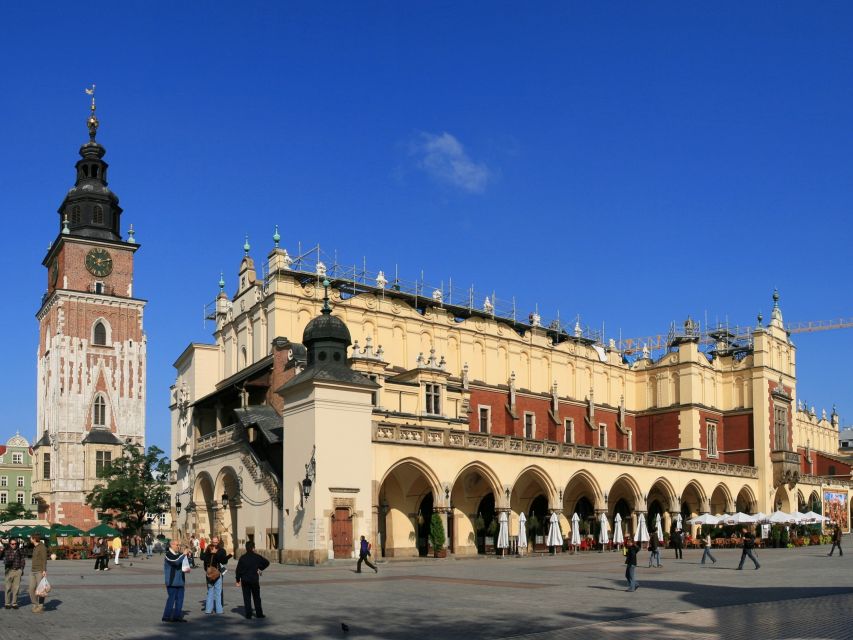
A few minutes later, you’ll come to the Cloth Hall and its decorative details—an essential stop because it ties the buildings to how people lived and worked. You’re looking at where merchants would meet, negotiate, and barter. That’s a different way to understand a monument: not as a frozen object, but as part of daily commerce.
Cloth Hall to Jagiellonian University: the Royal Route gets smarter
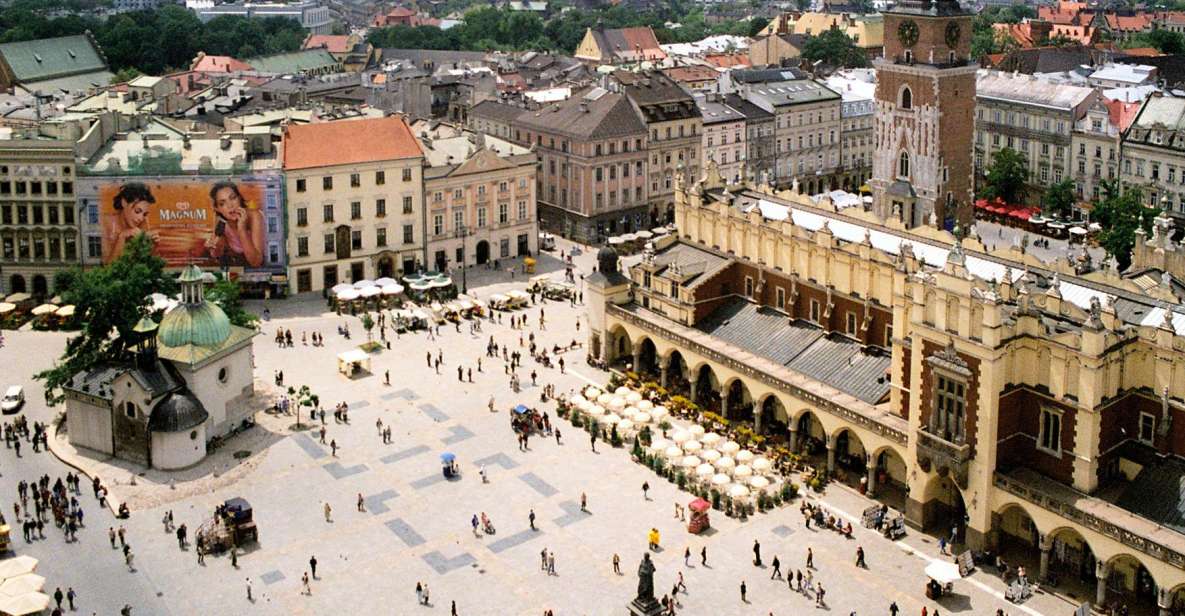
From the Cloth Hall area, the tour continues along the city’s “Royal Route” idea—medieval center first, then the rise toward Wawel. This is where the tour’s structure becomes useful for your planning.
You’ll pass the Jagiellonian University area. You’re not just walking by a campus; you’re seeing one of the stops that signals Krakow’s long-standing importance as a learning center. The value here is context: why this city attracted students, thinkers, and institutions, and how that shaped what Krakow became over centuries.
I like tours that connect dots instead of dropping names. This one gives you the “why,” especially when you’re trying to understand how Krakow stayed relevant from the medieval period to modern times.
Wawel Hill courtyards: why the walk feels different
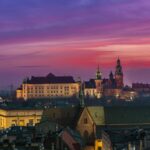
After the Market Square energy, the atmosphere shifts as you reach Wawel Hill. The tour emphasizes an architectural complex vibe—centuries of buildings layered on top of one another. Your guide points out courtyards and the way the complex connects church buildings and Renaissance structures.
This is also where the phrase Old and New Town in the tour name makes sense. Even though you’re mainly working through the medieval-to-renaissance story, the tour is built to help you compare periods. You learn how Krakow’s identity changed and why. That’s what keeps Wawel from turning into a checklist of impressive stops.
You’ll see Renaissance buildings such as the royal residence at Wawel Castle. The focus isn’t only on the grand scale. It’s also on how the complex functioned as a royal center and why the city still orbits it.
Inside Wawel Cathedral: coronations and resting places
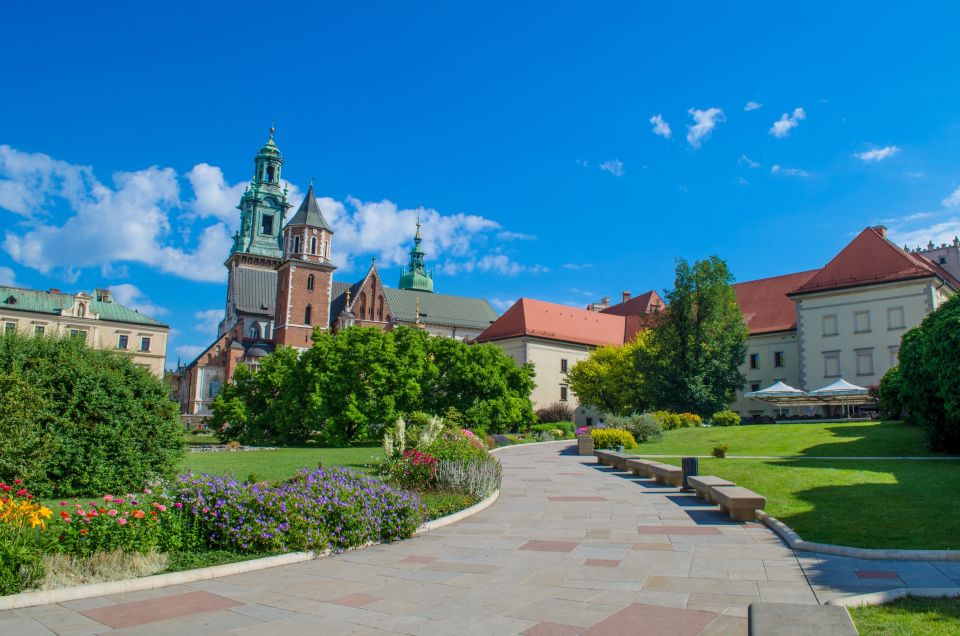
One of the biggest payoffs in this tour is Wawel Cathedral. This isn’t just a beautiful church stop. It’s tied to political and ceremonial power—kings of Poland were crowned here, and the cathedral is also closely linked to royal burial.
That’s the moment when monuments start to feel less like tourist stops and more like evidence. A good guide makes the cathedral’s role click into place: power, ceremony, continuity, and the city’s long relationship with rulers.
If you’re the type who likes “big picture” explanations, this is where you’ll feel it most. And if you’re the type who only wants photos, you can still enjoy it, but you’ll get more out of it by listening closely to the story your guide tells.
You can also read our reviews of more private tours in Krakow





The part many people miss: Krakow’s not-only-old-town story
A highlight of this tour is that it doesn’t treat Krakow as a museum piece. You’re encouraged to think about the more modern and more turbulent chapters too, including the period of World War II and the Polish People’s Republic era, and what came after.
I like this because it answers a common question you have in Krakow: how did this place go from medieval center to a modern hub with business centers and major tourism?
So instead of only looking at medieval streets, you also get themes about present-day life and what Krakow is famous for now. You’re effectively being taught how to read the city in layers.
What “private” really changes on a walking tour
Private tours sound nice on paper, but here’s what you should expect in practice. With a private guide, your pace stays yours. You don’t have to sprint to stay with the group, and you can spend extra time at a stop that grabs you.
It also matters that you’re working with a 5-star licensed guide fluent in your chosen language. The language support list is broad: Spanish, English, French, German, Italian, Polish, and Russian. If you’re traveling with someone who struggles with English, this can keep the experience comfortable.
The reviews also hint that what you get can depend on the guide. That’s worth respecting. A great guide does more than explain—they point you to quiet corners and make the city feel personal. If your guide uses clear explanations and includes anecdotes, the tour tends to land really well.
How long is 4 hours, and how to handle the walking
This is a 4-hour walk. That sounds reasonable until you’re doing it in cooler weather or with a lot of standing and looking time. One review-style takeaway from real-world use: 4 hours can feel long in rain or snow, so plan for it like you would for a full city stroll, not a quick overview.
My advice: wear grippy shoes and bring a layer you can add or remove. When you’re outside, the weather can change fast, and Wawel Hill is not the easiest place to be underdressed.
Optional interiors and museum decisions (what’s not included)
The basics of the major stops are the point, but museum entrance fees aren’t included. That’s not a dealbreaker. It just means you decide what matters to you.
If you love interiors and artifacts, you may want to add a paid stop or two on your own during or after the tour. If you prefer architecture and street-level storytelling, you can treat the included highlights as enough and spend your money elsewhere.
The 6-hour extension: Kazimierz and Tempel Synagogue tickets
If you can stretch to the 6-hour version, this tour adds Kazimierz, the historic district with major cultural weight—especially known for its Jewish heritage. This is also where the tour moves closer to the kind of Krakow story many visitors want to understand but often do in separate chunks.
In the 6-hour format, you get a Kazimierz Jewish Quarter tour, plus tickets to Tempel Synagogue. Important practical note: the Tempel Synagogue is closed to the public on Saturdays and Jewish holidays. If it’s closed, the tour replaces that attraction with tickets to Tadeusz Pankiewicz Pharmacy in Kazimierz.
I like having that substitution built in. It means you’re not left with a dead end on a day when access changes.
Price and value: is $137 per person worth it?
At $137 per person for 4 hours, this isn’t the cheapest way to see Krakow. But private, licensed guiding usually isn’t meant to be bargain travel. So the real question is value per hour and value per understanding.
You’re paying for:
- a coherent route that links Old Town to Wawel Hill
- language support in multiple major European languages
- a guide who can explain the medieval-to-modern shifts, not just point at buildings
- private pacing, with time for stops and questions
If you’re traveling with two people or a small group and you’d otherwise hire a guide for a shorter segment, this can feel efficient because you cover a lot of high-impact landmarks in one go.
If you’re on a strict budget and you’re comfortable reading guidebooks while walking, you might do fine on your own. But if you want interpretation—why places matter and how history connects—this tour leans more toward “worth it” than “just pay to walk.”
Who this tour suits best
This experience fits best if you:
- want a guided overview that connects major monuments to an understandable timeline
- prefer private pacing and the ability to ask questions
- like architecture with context, not just photo angles
- care about both the medieval core and Krakow’s later history
It might feel less perfect if you:
- want a super flexible itinerary where you can wander with zero structure
- hate listening and prefer only short stops
- are doing multiple heavy-hit experiences in the same day (pairing matters)
One planning tip I like from real usage: don’t cram every major Krakow theme into one day. If you’re also aiming for the Jewish quarter and other big museum-style stops, consider splitting them into separate visits so you can actually process what you’re seeing.
Should you book this Krakow Old & New Town private walking tour?
Yes, if you want a guided route that helps Krakow make sense. I’d book it when you have limited time and you want both the famous landmarks and the story behind them. The Wawel stops and the Market Square/Cloth Hall pairing are strong, and the inclusion of modern history themes gives you a more complete picture.
I’d be a little cautious if you’re booking mainly for quick hits or if you’ve had issues in the past with guide quality on tours. Since the experience can hinge on the specific guide’s style, you’ll get the best outcome by choosing a language you’re comfortable with and being ready to walk for several hours outdoors.
If you can do the 6-hour option, I think it’s often the better deal for depth, especially when you want Kazimierz added in the same guided flow.
FAQ
How long is the Krakow highlights private walking tour?
The standard tour lasts 4 hours. There’s also an extended 6-hour option that includes Kazimierz.
What’s included in the 6-hour Kazimierz version?
In the 6-hour option, you get a Kazimierz Jewish Quarter tour with tickets to Tempel Synagogue.
Where do we meet the guide?
Meet the guide in front of the Barbakan Krakowski, Basztowa, 30-547 Krakow, from the Brama Floriańska (Old Town) side.
Does the tour offer hotel pickup?
Pickup is available only for accommodations/hotels located in Krakow Old Town. If your address isn’t provided or you’re more than 1.5 km from the meeting point, the guide meets you at the Barbakan.
What languages are available for the live guide?
The guide is available in Spanish, English, French, German, Italian, Polish, and Russian.
Are museum entrance fees included?
No. Museum entrance fees are not included, though they are optional.
Is the Tempel Synagogue always visited?
No. Tempel Synagogue is closed on Saturdays and Jewish holidays. If it’s closed, the tour can replace it with tickets to Tadeusz Pankiewicz Pharmacy.
Can I cancel and get a full refund?
You can cancel up to 24 hours in advance for a full refund.
Is the tour wheelchair accessible?
Yes, the tour is listed as wheelchair accessible.