REVIEW · KRAKOW
Krakow: 2h World War II, visiting the Ghetto walking tour
Book on GetYourGuide →Operated by Krakow tours - segway, scooter, bike, walking tour in Krakow · Bookable on GetYourGuide
Krakow’s Podgórze streets carry real weight. This 2-hour World War II ghetto walk is built around Heroes of Getto Square and the surrounding landmarks, so you’re not just reading history from plaques. It’s also the kind of tour where your questions feel welcome, not brushed off.
I especially liked how the story ties together multiple places in the former Jewish quarter. One standout stop is Under the Eagle pharmacy, presented as the only pharmacy that served the Ghetto, which makes the site feel specific instead of generic.
The main drawback is also the point: the topic is grim. If you prefer lighter sightseeing, this one will hit hard, because the route directly addresses shootings, loss, and the tragedy of the Ghetto’s inhabitants.
In This Review
- Key things you’ll notice on this WWII ghetto walk
- Podgórze in Krakow: where the ghetto story lives in plain sight
- Your 2 hours of WWII storytelling: what the route actually covers
- Heroes of Getto Square: the memorial stop that frames everything else
- Schindler’s Factory: why the survivor angle lands harder
- Under the Eagle pharmacy: one surviving clue of daily life
- Remaining Ghetto walls and surviving buildings: what to look for while you walk
- Podgórze main square, Bridge of Love, and the athlete sculptures
- Price and value: is $36 for 2 hours fair?
- Getting the most out of the tour: small practical tips
- Who this Krakow WWII ghetto tour fits best
- Should you book this Krakow Ghetto and WWII walking tour?
- FAQ
- How long is the Krakow World War II Getto walking tour?
- How much does it cost?
- What’s included in the price?
- Is food or drinks included?
- What languages are offered for the live guide?
- What sites will I visit on the tour?
- Is there free cancellation?
- Can I reserve and pay later?
- Does the tour skip the ticket line?
Key things you’ll notice on this WWII ghetto walk
- Heroes of Getto Square and the names and meaning behind the space
- Schindler’s Factory story, including how workers survived
- Under the Eagle pharmacy as a rare, concrete piece of daily life in the Ghetto
- Remaining Ghetto walls and what’s left in the street plan
- Buildings that survived shootings, giving you a sharper sense of what changed
- A short break in WWII focus with the Podgórze main square, plus Bridge of Love and the athletes’ sculptures
Podgórze in Krakow: where the ghetto story lives in plain sight
If you only do the Main Market Square in Krakow, you miss a key side of the city. This tour concentrates on Podgórze, the district tied to the former Jewish Ghetto during World War II. The value here is that the route uses the geography itself. Streets, corners, and remaining wall fragments become part of the lesson.
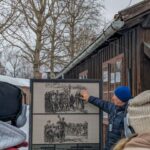
You’ll walk past reminders that the Ghetto wasn’t abstract. It was people, routines, and buildings that were either altered or destroyed. Even when the physical evidence is fragmentary, you can still see the way the city got reshaped by war.
The guide keeps things organized for a 2-hour slot. You won’t be left wandering with a loose script. Instead, you’ll get a steady sequence of places and stories, with time for questions.
You can also read our reviews of more walking tours in Krakow

Your 2 hours of WWII storytelling: what the route actually covers
This is a 2-hour guided walking tour, with a few stops that also include short scenic driving by landmarks outside the Ghetto core. Expect a pace that’s active but not rushed. Since food and drinks aren’t included, you’ll want to treat it like a focused morning-or-afternoon activity and eat before or after.
In the WWII portion, you’ll move through the former Ghetto area and surrounding Podgórze sites, covering:
- Key memorial space at Heroes of Getto Square
- The Schindler’s Factory story tied to Ghetto-era workers’ survival
- The Under the Eagle pharmacy stop and its significance as the one pharmacy in the Ghetto
- Remaining Ghetto walls
- Views of buildings that survived shootings
- A historical look at the Podgórze main square and what the area was before and after the war
Then there’s a lighter, brief contrast: you’ll pass Bridge of Love and the athletes’ sculptures that swing in the wind. It’s not there to distract you from the tragedy. It’s there to help your brain reset for a moment before heading back into normal Krakow.
Heroes of Getto Square: the memorial stop that frames everything else
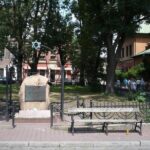
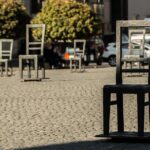
The tour begins with the emotional anchor: Heroes of Getto Square. This matters because the square isn’t just a point on a map. It sets the tone for how you read the rest of what you’ll see.
I like memorial spaces that don’t feel like a quick photo op, and this one is treated that way. The guide connects the square to the people and the events you’ll learn about afterward. That makes the later stops—walls, surviving structures, and the daily-life detail at the pharmacy—feel less random.
One of the best parts of this tour style is the Q-and-A atmosphere. In past groups, guides such as Irene and Vlad have been praised for creating a welcoming space for questions and patient answers, which helps when the material is difficult.
Schindler’s Factory: why the survivor angle lands harder
A highlight on the route is Schindler’s Factory, where the tour shares the story around Schindler and workers who survived the war due to his efforts. This stop is valuable for a simple reason: it adds a thread of cause and outcome rather than only tragedy.
You’ll hear the story linked to the people who worked there and how those connections mattered. For me, that survival focus does not erase the horror. It gives the history a human math problem you can actually track: actions taken, risk avoided, lives saved.
Also, a good tour here will keep you from turning Schindler into a movie-style symbol. The best moments come when the guide connects the factory story back to the Ghetto context you’re walking through. You come away with better mental links between locations.
Under the Eagle pharmacy: one surviving clue of daily life
Then comes one of the most specific stops you’ll find on any WWII-themed walk in Krakow: Under the Eagle pharmacy. The key detail is what makes it rare in this context—it was the one pharmacy in the Ghetto.
That single fact changes how you look at the site. Instead of treating it as another historical label, you can picture practical needs: medicine, basic care, and the reality that even in a confined space, people still had to treat illness and injury.
I also like that the tour doesn’t only do big-picture WWII talking points. It gives you small, concrete everyday anchors. That’s when history starts to feel less like a chapter and more like a lived place.
You can also read our reviews of more tours and experiences in Krakow


Remaining Ghetto walls and surviving buildings: what to look for while you walk
Walking sections that include remaining Ghetto walls can feel a bit strange at first—because walls are no longer whole and the city has changed. But that’s exactly why they’re powerful. Even partial remains show you the shape of separation and the boundaries that governed daily life.
As you move through the area, you’ll also get a glimpse of buildings that survived shootings. Again, partial survival is the key. War didn’t simply erase everything. It broke some structures, left others standing, and forced new rhythms around what was left.
Here’s how to get more out of this part:
- Look at the street alignment and think about what traffic and movement looked like during the war.
- Notice any difference between older structures and later rebuilds (even if you can’t date them, your eye will sense contrast).
- When the guide points things out, pause. This isn’t a “walk and scroll” segment.
If you want to honor the subject, treat this section as a slow moment rather than a sprint. Even a small pause changes the way you remember the stop.
Podgórze main square, Bridge of Love, and the athlete sculptures
Not every minute of this tour is strictly Ghetto-focused. You’ll also get to the Podgórze main square, with its own history and a sense of what the area is beyond WWII. That’s helpful, because the goal isn’t to trap you in one era. It’s to help you understand the place as it is now, shaped by what happened then.
After the heavier stops, the route includes a scenic drive past:
- Bridge of Love
- Sculptures of athletes that swing in the wind
This doesn’t turn the experience into a fun stroll. It gives your mind a break while still staying in the same Krakow orbit. Think of it as punctuation at the end of a tough paragraph.
Price and value: is $36 for 2 hours fair?
The price is $36 per person for a 2-hour guided experience. No food or drinks are included, and the only listed inclusion is the tour guide.
So the value question becomes: do you get enough major sites and enough guided storytelling in that time? In this case, you do. The route hits multiple headline elements that many people come to Krakow specifically to understand: memorial space at Heroes of Getto Square, the Schindler’s Factory story, and the Under the Eagle pharmacy detail that isn’t commonly covered elsewhere.
Also, the tour includes skip the ticket line, which can save time at specific stops (and prevents your schedule from getting snagged). And because the tour is live with a guide in English, Polish, or Russian, you’re paying for explanation, not just location sightseeing.
In short: for $36, you’re buying a guided narrative that stitches together several key sites in a short timeframe. If you like guided context, it feels like a solid deal.
Getting the most out of the tour: small practical tips
A few practical things will make this easier and more meaningful:
- Wear comfortable walking shoes. You’ll be out for two hours on city streets.
- Bring a small bottle of water if you tend to get thirsty. Food and drinks aren’t included.
- Come with one question you actually want answered. The guide’s style in past groups, especially under guides like Irene and Vlad, has been described as welcoming and patient.
- If you’re booking close to other plans, keep the rest of the day flexible. This tour can stick with you, in a quiet way.
Also, consider tipping. Tips are accepted and appreciated, and if your guide is helping you understand a hard topic clearly, it’s a good place to show thanks.
Who this Krakow WWII ghetto tour fits best
This tour is a strong fit if you:
- Want a guided World War II and Jewish Ghetto context in Krakow
- Like your history explained through real places, not only museums
- Prefer a structured 2-hour walk that moves between multiple meaningful stops
It’s less ideal if you want a casual, light sightseeing break. The subject matter is heavy by design, and the tour doesn’t sugarcoat it.
If you’re traveling with someone who gets overwhelmed by dark topics, talk it through ahead of time. A short, focused tour can be easier to manage than a longer one—but the content is still intense.
Should you book this Krakow Ghetto and WWII walking tour?
I’d book it if you’re coming to Krakow for more than postcards and you want a grounded, place-based understanding of the Podgórze Ghetto story. The specific stops—Heroes of Getto Square, Schindler’s Factory, and Under the Eagle pharmacy—make it more than a generic WWII walk.
It also scores well on guide quality. The experience has an average rating of 4.2 from 7 bookings, and multiple past participants highlighted the guides’ ability to answer questions clearly and handle the difficult subject with care, including names like Irene and Vlad.
If you feel up for a serious hour-plus of history and walking, this is a worthwhile use of time in Krakow.
FAQ
How long is the Krakow World War II Getto walking tour?
The tour lasts 2 hours.
How much does it cost?
It costs $36 per person.
What’s included in the price?
The price includes a tour guide.
Is food or drinks included?
No. Food and drinks are not included.
What languages are offered for the live guide?
The live tour guide is available in English, Polish, and Russian.
What sites will I visit on the tour?
You’ll visit Heroes of Getto Square, see the story of Schindler’s Factory, and stop at Under the Eagle pharmacy. You’ll also see remaining Ghetto walls, buildings that survived shootings, and learn about the Podgórze main square. The route also includes passing Bridge of Love and the athlete sculptures swinging in the wind.
Is there free cancellation?
Yes. Free cancellation is available up to 24 hours in advance for a full refund.
Can I reserve and pay later?
Yes. You can reserve your spot and pay later (pay nothing today).
Does the tour skip the ticket line?
Yes. The activity description states skip the ticket line.