REVIEW · KRAKOW
Jewish Krakow Walking Tour
Book on Viator →Operated by Walkative! TOUR · Bookable on Viator
Krakow’s Jewish Quarter tells a story you can walk. This Jewish Krakow Walking Tour strings together synagogues, streets, and WWII landmarks into one clear route, with a local expert guide for context. You’ll start at the Old Synagogue and finish at Plac Bohaterów Getta after about 2.5 hours of steady, meaningful walking.
What I like most is the way the tour focuses on people and lived experience, not just stone and signage, and how the narrative keeps moving from pre-war community life toward the ghetto and its aftermath. One possible drawback: a few stops involve standing around in place, so if you’re hoping for nonstop walking, plan for some pauses—especially in rain or cold.
In This Review
- Key highlights worth planning for
- Why this Jewish Krakow walk works better than DIY
- Starting at the Old Synagogue (Szeroka 24) and framing the architecture
- Szeroka Street and Remuh Synagogue: the Jewish Quarter as a lived network
- Market Square and the Eagle Pharmacy: where daily life meets witness
- Mrs. Dresner courtyard and the stairs: the Schindler’s List link, explained properly
- Plac Bohaterów Getta: the WWII ghetto square section that takes time
- Eagle-eyed logistics: price, tickets, and what’s included
- Group size, pace, and weather reality in Krakow
- Who this tour suits best
- Smart add-ons after the tour ends near Schindler’s Factory
- Should you book this Jewish Krakow walking tour?
- FAQ
- How long is the Jewish Krakow Walking Tour?
- Where does the tour start and end?
- Is the tour in English?
- What ticket admissions are included?
- Is food or drinks provided?
- How many people are in a group?
- Does it run in bad weather?
- Is the tour suitable for kids?
- Are service animals allowed?
- What’s the cancellation refund window?
Key highlights worth planning for
- Old Synagogue opening stop: oldest synagogue in Poland, with architectural and community meaning explained outside
- Szeroka Street orientation: you’ll trace the main Jewish Quarter street and why it mattered
- Remuh Synagogue and courtyard-style context: built for one of Krakow’s most significant rabbis, explained as a private praying house
- Schindler’s List connection: Mrs. Dresner courtyard and stairs, plus the real story behind the film moment
- Plac Bohaterów Getta focus: a longer, slower section (about 50 minutes) at the WWII ghetto square
- Small-group feel: max 35 travelers, with an English-speaking guide and a mobile ticket
Why this Jewish Krakow walk works better than DIY
This tour is built like a guided timeline you can actually follow on foot. Instead of bouncing between landmarks, you get a guided narrative that ties each place to what Jewish life looked like in Krakow, then what changed under Nazi occupation, and how the area’s memory still shows up in the streets today.
I also like the emotional balance the guide aims for. The subject matter is inevitably heavy, but the tour doesn’t feel like pure misery-porn. It often lands on human details—community routines before the catastrophe, and the contrast between destruction and the stubborn need for dignity, love, and hope.
Value-wise, you’re paying for interpretation. At places like synagogues and ghetto sites, reading alone can leave you with the “I’ve seen it” feeling. With a guide, you’re more likely to leave with “I understand why this matters,” which is the whole point in a city like Krakow.
You can also read our reviews of more walking tours in Krakow

Starting at the Old Synagogue (Szeroka 24) and framing the architecture
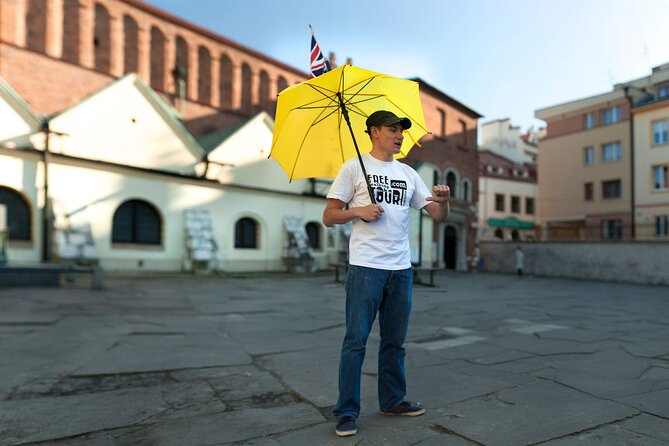
Your walk starts at the Old Synagogue on Szeroka 24. This stop is short—about 15 minutes—but it sets the tone. You’ll learn why this synagogue is considered the oldest synagogue in Poland and how the building’s design connects to the community that used it.
A helpful detail: admission here is free on this tour. That means you get the major orientation value without extra hassle at the beginning. And because the explanation is outside, you can keep your focus on the building itself—its layout, its physical cues, and what people would have recognized when they came here.
Practical tip: the Old Synagogue area can feel busy, and the tour uses a mobile ticket. If you arrive a few minutes early, you’ll avoid stress and be ready when the group forms.
Szeroka Street and Remuh Synagogue: the Jewish Quarter as a lived network
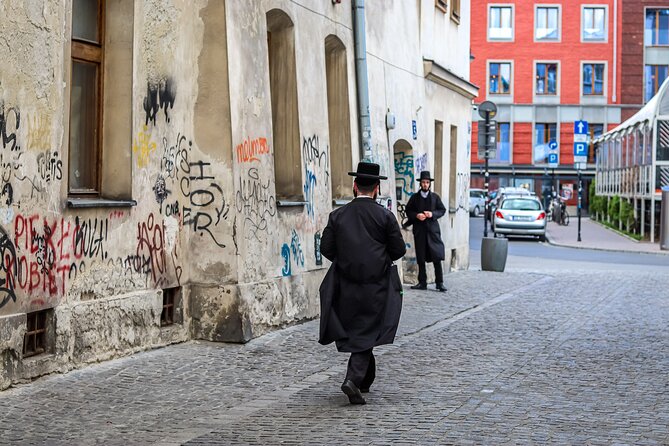
Next comes Szeroka Street, the main street of the Jewish Quarter. This part is about 10 minutes, and the goal isn’t to sprint down a famous road—it’s to understand why this street mattered. You’ll get a sense of how important people moved through the quarter and how the street functioned as a connector inside the community.
Then you move to Remuh Synagogue (Synagoga Remuh). This stop is another quick one (about 10 minutes), but it points you toward a specific kind of religious life. Remuh was a private praying house built for one of Krakow’s most significant rabbis, and the tour explains what that meant for followers and how the building served a particular community need.
Important cost note: admission for Remuh is not included. If you strongly want to go inside (not just look from the outside), plan for separate tickets. That’s a real trade-off for your time and budget, so decide in advance what matters most to you.
Market Square and the Eagle Pharmacy: where daily life meets witness
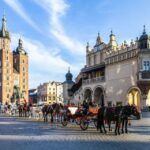
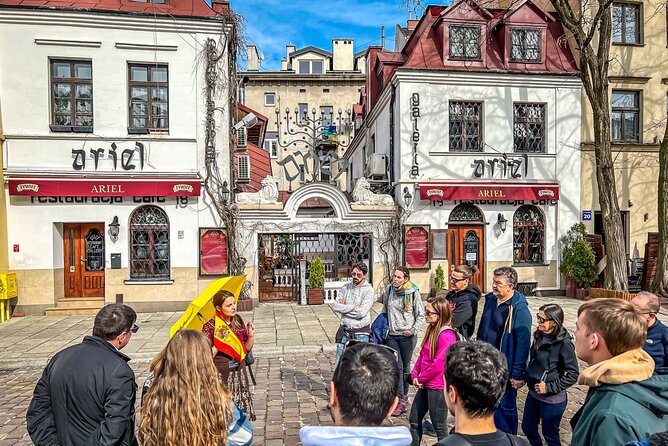
From the religious sites, the tour shifts to public space. Market Square is next, about 10 minutes, and it’s described as part of the revival and nightlife of the Jewish Quarter. Even if you visit earlier in the day, you’ll still get the idea: this isn’t a sealed museum zone. The area’s modern use matters because it shows what survives and what was rebuilt.
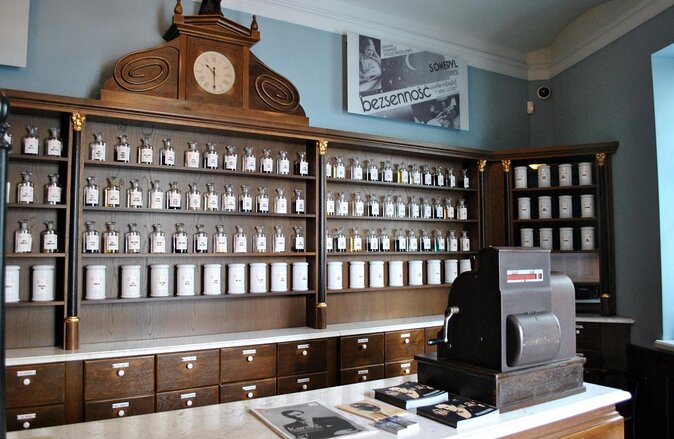
After that, you’ll hear about the Eagle Pharmacy, tied to the Museum of Krakow. This stop is explained outside and is about 15 minutes. The big story here is that it was home to the only non-Jewish inhabitant of the WWII ghetto who became an eyewitness of Nazi crimes. That perspective changes the shape of the narrative. Instead of only focusing on Jewish experience, you also get a witness point—someone outside the community who still saw what happened.
If you tend to get overwhelmed by long historical explanations, this section can actually help you breathe. The tour turns from sacred spaces and memorialized corridors to the kind of everyday geography people would have moved through.
Mrs. Dresner courtyard and the stairs: the Schindler’s List link, explained properly
One of the most memorable stops is Mrs. Dresner courtyard and stairs. This is about 10 minutes, and it’s tightly connected to Schindler’s List. The tour doesn’t just point at the location; it frames the real story behind the movie moment and adds clarity about what’s being shown—and what’s being interpreted—through film.
This matters because the popular version of these stories can get fuzzy fast. You might think you understand the setting, but once a guide puts it into context—who was there, what life looked like, and how the tragedy unfolded—you start noticing details you’d miss if you only watched the film and then visited the spot.
Tip from the tour’s overall tone: if you’ve never seen Schindler’s List before coming, consider watching it beforehand so you recognize the visual references. The location hits harder when you know what you’re seeing.
Plac Bohaterów Getta: the WWII ghetto square section that takes time
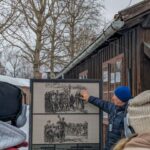
The longest portion of the tour is Plac Bohaterów Getta, about 50 minutes. This is where the route slows down for a deeper look at the main square of the WWII ghetto and the district created by Nazis.
This longer stop is a clue about what the guide thinks matters most. The square isn’t just a marker; it’s a place where you can feel the scale of the area and the fact that policy turned geography into a system of control. Standing here with a guide can help you connect the dots: how the surrounding streets relate, how boundaries shaped movement, and how the memory of the site is preserved.
Because this is a heavier section, your best move is mental preparation. Dress warm, keep water handy, and let the silence do some work when the guide pauses. You’ll often understand more in those moments than during the rush of the next stop.
Eagle-eyed logistics: price, tickets, and what’s included
The price is $26.60 per person for an approximately 2.5-hour walk in English. For Krakow, that’s a solid value when you look at what you’re paying for: a local expert guide and a structured narrative that links multiple sites in one coherent route.
Here’s the practical split:
- Included: the guide and the narrative construction of the tour
- Not included: food and drinks, and most admissions
- Mixed: Old Synagogue admission is free on this tour, while places like Szeroka Street viewing and Remuh Synagogue have no admission included
You should budget extra if you plan to go inside non-included sites. If you’re fine with outside viewing where admission isn’t included, you can keep costs closer to the ticket price.
Also note something that can affect your total “value feel.” This tour is described as joining a general pay-what-you-wish style setup where what you pay covers a reservation fee and the guide’s payment. If you want to add a contribution for a guide who really nails the storytelling, plan to do so at the end.
Group size, pace, and weather reality in Krakow
This walk caps at 35 travelers, so it’s not a cramped mob. That size is big enough for lively discussion, but small enough that you can still hear your guide and keep track of the route.
The tour includes a note for moderate physical fitness. It’s walking plus standing, with no promise of a fully seated pace. If you have mobility challenges, you’ll want to consider that some stops involve waiting in place for explanations.
Weather is another reality check. The tour runs in all weather conditions, and the guide can shorten or end it if conditions may threaten safety. So bring practical layers, a rain layer, and shoes you trust. If it’s cold, you’ll likely appreciate having a warm hat and gloves more than you expect.
One small caution: a few people feel there’s too much time paused at certain points. If you personally dislike extended standing, treat the stops as structured breaks rather than a free-flow stroll.
Who this tour suits best
This Jewish Krakow Walking Tour is a strong match if you want to see the Jewish Quarter and WWII ghetto sites in a way that makes sense in your head, not just in your camera roll. It also works well if you like narrative-driven guides who focus on people and how the area changed over time.
It’s especially worth it for first-timers to Krakow who want the “big connections” covered in one outing: synagogues, key streets, and the ghetto square with the Schindler’s List courtyard stop built in.
If you’re the kind of traveler who prefers to move quickly from one view to the next with minimal explanation, this might feel a bit structured. The emotional weight is real too—expect a tone that can be devastating.
Smart add-ons after the tour ends near Schindler’s Factory
Your tour ends at Plac Bohaterów Getta. One practical benefit: it’s about a short walk from Schindler’s Factory, so you can potentially continue to that museum area right after your walking tour.
Even if you don’t go immediately, finishing near that cluster of sites is useful. You won’t have to backtrack across town just to keep your historical day moving.
Should you book this Jewish Krakow walking tour?
I’d book it if you want a clear, organized route through the Jewish Quarter and the WWII ghetto area, with a guide who turns locations into meaning. The combination of synagogues outside viewing, the Szeroka Street orientation, the Schindler’s List courtyard explanation, and the longer stop at Plac Bohaterów Getta is exactly the kind of “one day, strong context” plan that makes Krakow’s history click.
I’d pause before booking if you hate standing still for explanations, or if you’re only looking for casual sightseeing with minimal historical framing. In that case, you might prefer a lighter self-guided approach.
FAQ
How long is the Jewish Krakow Walking Tour?
The tour is about 2 hours 30 minutes (approx.).
Where does the tour start and end?
It starts at Old Synagogue, Szeroka 24, 31-053 Kraków, Poland, and ends at Plac Bohaterów Getta, Kraków, Poland.
Is the tour in English?
Yes, it’s offered in English.
What ticket admissions are included?
Admission for the Old Synagogue is free on this tour. Admissions at other sites on the route are not included.
Is food or drinks provided?
No. Food and drinks are not included.
How many people are in a group?
The tour has a maximum of 35 travelers.
Does it run in bad weather?
It operates in all weather conditions. The guide may shorten or end the tour if weather conditions pose a threat to life or health.
Is the tour suitable for kids?
Children must be accompanied by an adult.
Are service animals allowed?
Yes, service animals are allowed.
What’s the cancellation refund window?
Free cancellation is available up to 24 hours in advance for a full refund.