REVIEW · KRAKOW
Krakow Grand City Tour by golf cart – All 3 districts
Book on Viator →Operated by See Cracow Tours - wycieczki melexem, zwiedzanie Krakowa · Bookable on Viator
Krakow slides by at golf-cart speed. I like the electric ride and the English audio that line you up for three major areas in about 90 minutes. One drawback to plan around: a lot of the “telling” is prerecorded, so if you want deep, live Q&A on every stop, you may prefer a more traditional guide.
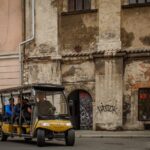
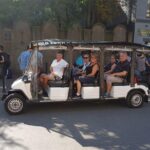
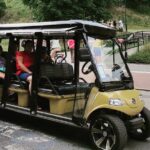
This is a smart option when you want the highlights without losing the day to logistics and walking. The cart is small—up to 12 people—and on cold trips you may get a heated seat and blankets, which makes a huge difference in winter.
One more small thing: the meeting spot at plac Jana Matejki 3 can be a little unclear on busy streets, so give yourself a few extra minutes to find the cart and start on time.
In This Review
- Quick hits before you ride
- Why an electric golf cart works so well in Krakow
- Old Town highlights: from Main Square to Wawel Castle
- Kazimierz’s Jewish Quarter: synagogues, Szeroka Street, and Rubinstein
- Catholic Kazimierz stops: town hall and Corpus Christi church
- The ghetto route: Ghetto Heroes Square, Eagle Pharmacy, and wall fragments
- Schindler’s factory stop: what you see vs. what you must pay for
- Audio narration in English: clear, timed, and mostly prerecorded
- Comfort, warmth, and seating tips for photos and motion
- Price and value check: what $27.83 buys you
- Who this Krakow golf cart tour is best for
- A few planning pointers before you go
- Should you book this tour?
- FAQ
- How long is the Krakow Grand City Tour by golf cart?
- What areas of Krakow does this tour cover?
- Is the tour available in English?
- How many people are in each tour group?
- Where does the tour start and end?
- Does the ticket include entry to Schindler’s Factory museum?
- Can I cancel for free?
Quick hits before you ride
- Electric golf cart comfort: warmer than you’d expect, with heated seating and blankets when it’s cold
- Old Town + Kazimierz + ghetto, in one loop: Main Square to Wawel, then over to Jewish Krakow
- Headphones and English audio: clear narration timed to what you’re seeing outside
- Photo-friendly stops: you can get out for pictures at key viewpoints
- Schindler’s factory included as a stop, not admission: museum entry is not part of the ticket
- Max 12 people: easier to hear the audio and move as a group than on big buses
Why an electric golf cart works so well in Krakow
Krakow’s center rewards slow wandering, but sometimes you just need orientation. This tour is built for that first-day feeling: you get driven through the layout fast, with narration that helps you connect the dots between landmarks.
An electric golf cart also means you’re not just “bus sightseeing.” You’re closer to the streetscape. The route takes you past defensive walls and gates in the Old Town, then angles you toward Kazimierz and the former Jewish quarter. That matters because these areas don’t feel like separate “tour blocks.” They’re linked neighborhoods, and the cart helps you see how the city sits in layers.
I also like the small size. With a maximum group of 12 travelers, it’s easier to hear the audio, take photos, and stay together without feeling like you’re herding a crowd.
You can also read our reviews of more city tours in Krakow
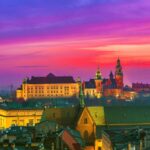
Old Town highlights: from Main Square to Wawel Castle
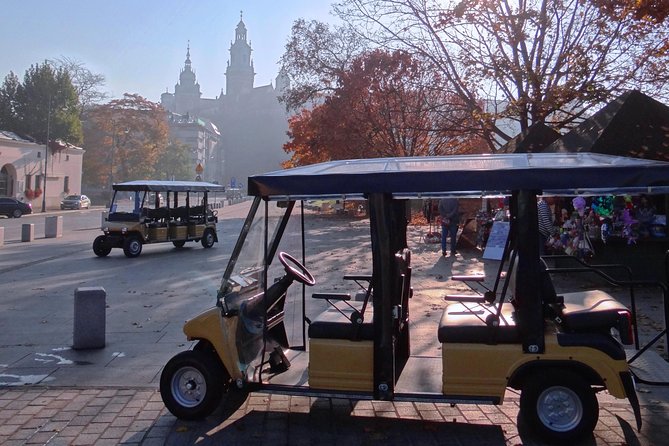
The Old Town portion is where you build your mental map. Expect a loop that covers the biggest icons plus the parts that explain how the city defended itself and hosted power.
Here’s what you should watch for as you roll around:
Main Square and St. Mary’s Basilica area
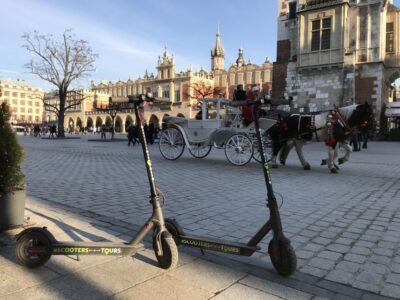
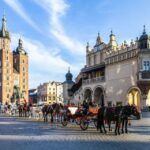
Main Square is the classic anchor point, and St. Mary’s Basilica is the visual headline. You’ll also pass through the Cloth Hall and the Town Hall Tower area—great reminders that this was a trading and civic center, not just a pretty square.
Słowacki’s Theatre and Planty Park
You’ll get a sense of Krakow’s “public face” beyond churches: the Słowacki’s Theatre area and Planty Park help connect the Old Town core to the green ring that follows the historic layout.
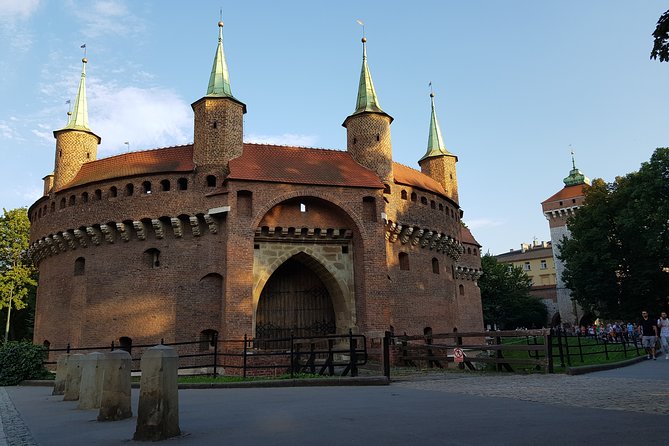
City defensive walls, Florian Gate, and the Barbican
These stops are more than scenery. They show you why Krakow’s Old Town feels enclosed. When you’re later walking on your own, you’ll recognize these edges immediately.
Jagiellonian University and the Wawel direction
Seeing Jagiellonian University from the route helps you understand how Krakow’s identity is tied to learning and the long academic tradition here.
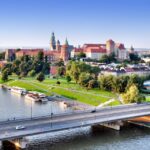
Wawel Castle
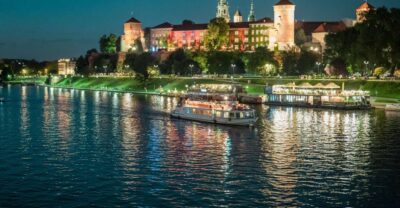
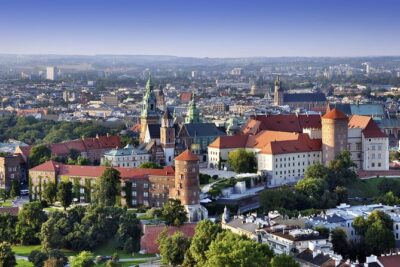
The cart brings you up toward Wawel Castle, which is one of those “you must see it” places even if you’re not doing a full castle visit on the same day. The value of this stop is that it puts the castle in context with the Old Town routes around it.
If you’re short on time, this Old Town segment is the one that pays off fastest. After the tour, you’ll have a better sense of what’s worth circling back to on foot.
Kazimierz’s Jewish Quarter: synagogues, Szeroka Street, and Rubinstein
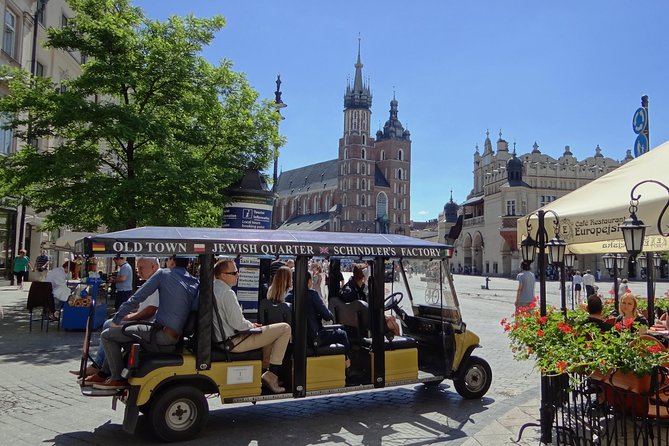
Kazimierz is where the tour shifts tone, and you should treat it like a real historical route, not a quick sightseeing sidebar. The narration helps you follow the story, and the stops are chosen to reflect religious life, daily streets, and names you’ll see again later in Krakow.
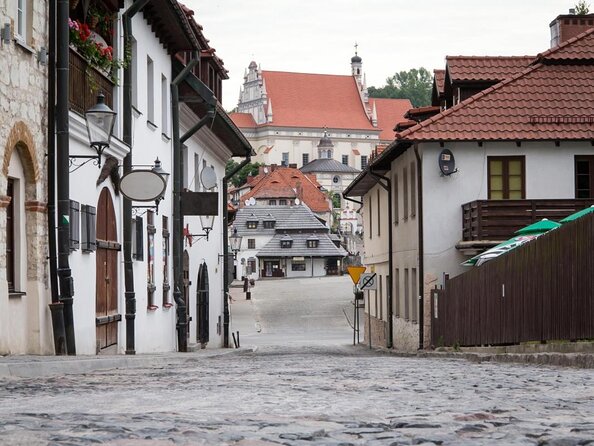
You’ll pass by major synagogue sites, including: Old Synagogue, Rhemu Synagogue, Issaak Synagogue, and Tempel Synagogue. Even if you don’t go inside every building, seeing them from the street gives you a clearer sense of where the community centered itself.
Then comes the neighborhood street fabric:
Szeroka Street and the old Jewish cemeteries
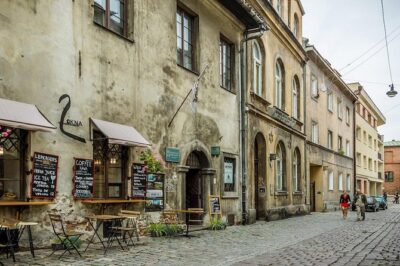
Szeroka Street is the kind of place where you can feel the scale of everyday life. The old Jewish cemeteries add weight and perspective, and they’re part of why Kazimierz can feel both historic and personal.
A house connected to Helena Rubinstein and New Square
The route also includes the house of Helena Rubinstein and the area around New Square. These stops are useful because they connect the neighborhood to individual lives—people, not just institutions.
A practical tip: this is a lot of “names + places” in one ride. If you’re the kind of person who likes to take notes, have a phone note or a small list ready. You’ll thank yourself later when you’re planning which synagogue area or cemetery to revisit.
Catholic Kazimierz stops: town hall and Corpus Christi church
After the former Jewish quarter stops, the tour continues through Catholic Kazimierz highlights, including the town hall and the Corpus Christi church.
Why this transition is valuable: it shows you that Kazimierz isn’t frozen in one chapter. It’s a working neighborhood with overlapping layers of faith, governance, and community spaces. When you understand that mix, your later walks around Kazimierz feel less like wandering through one “theme zone” and more like reading the city in order.
The ghetto route: Ghetto Heroes Square, Eagle Pharmacy, and wall fragments
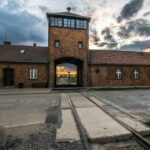
The tour’s former ghetto segment is shorter than the rest, but it’s heavy. You’ll visit Ghetto Heroes Square, the Eagle Pharmacy, and a fragment of the Ghetto Wall.
This part is worth doing by cart because it keeps you moving through key points without losing time to detours. But it’s also worth pausing mentally. The narration and the visible markers help you understand what you’re looking at, especially if it’s your first time in Krakow and you don’t yet know the geography of the ghetto area.
One small consideration: because the tour is time-limited, you’ll likely want to come back later on your own for deeper reading and slower viewing. Treat this segment like a strong introduction.
Schindler’s factory stop: what you see vs. what you must pay for
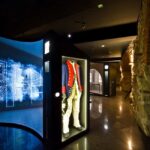
You’ll also stop at Fabryka Emalia Oskara Schindlera, tied to the museum exhibition Krakow under Nazi Occupation. The time is short (around 5 minutes), so you’re not getting a full museum day.
Important value point: admission tickets are not included. That means the cart stop is best seen as a doorway. You decide whether you want to spend more time inside after you’ve seen the setting.
If you’re trying to fit a lot into one trip, this is a smart add-on. It gives the emotional anchor of Schindler’s Factory without forcing you to turn the whole day into a museum marathon.
Audio narration in English: clear, timed, and mostly prerecorded
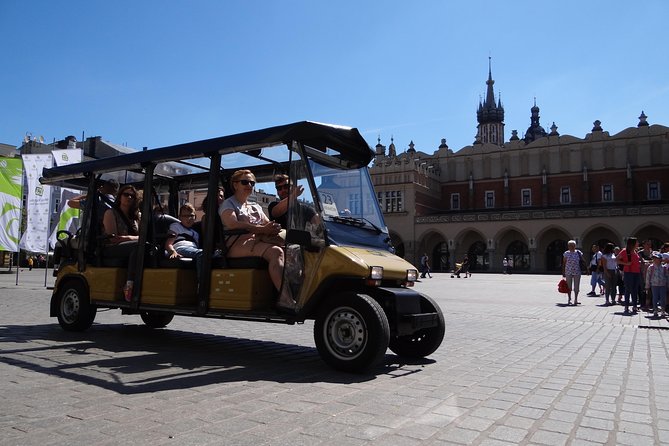
The tour’s main “guide mode” is the narration system inside the golf cart, offered in English. Many people love how this works because you’re hearing explanations timed to the buildings in front of you.
That said, not everyone will love the balance between recorded narration and live interaction. Some experiences describe the staff as friendly and helpful, but the core content is still prerecorded. If your ideal tour is lots of back-and-forth conversation, you might find a different format a better match.
Still, audio is a practical win when you’re trying to cover many stops quickly. It keeps the pacing steady and reduces the “what am I looking at?” gap that happens when you self-tour.
Comfort, warmth, and seating tips for photos and motion
A lot of the comfort talk comes down to season. Reviews note heated seating and blankets, which makes this tour far more doable when Krakow is cold enough that walking feels like work.
You’ll also want to think about seating:
- If you’re prone to motion discomfort, try to aim for the most stable, best-facing position if you can. One caution shared: back seats that face the opposite direction were not ideal for someone with vertigo, and they couldn’t be changed.
- Bring it up early. If you tell the driver before you set off, you improve your odds of getting a position that works for you.
Photo time is usually part of the experience too. People report being able to get out for pictures, and at least one guide offered extra pauses for photos and viewpoints. If you know you want specific shots, it’s fair to ask the driver where the best angles are at each stop.
Price and value check: what $27.83 buys you
At $27.83 per person for around 1 hour 30 minutes, this tour isn’t paying for museum tickets or a full-day program. Admission at Schindler’s Factory is separate, and that’s not a small detail.
So what are you actually paying for?
1) Time savings: You cover multiple districts that would take longer to connect by walking, especially in winter.
2) Route intelligence: The narration helps you understand what you’re passing, not just what you’re seeing.
3) Comfort on wheels: Heated seating and blankets turn a cold ride into something you’ll actually enjoy.
4) High-impact stops: Big hits like St. Mary’s Basilica and Wawel Castle happen along with Kazimierz and ghetto markers, without you needing to build a complicated itinerary.
If you’re comparing to a self-walk, this costs money for the “direction help.” If you’re comparing to a private tour, it’s much cheaper because the cart keeps the format efficient and the group size stays small.
My take: it’s good value as an orientation tour—especially if you’re planning to return later on your own for the places that pull you in.
Who this Krakow golf cart tour is best for
This tour fits best if you want:
- A first-day overview of Krakow’s main areas so you can plan the rest of your trip with confidence
- A comfortable way to cover three districts without burning daylight in transit and winding streets
- An English narration format that explains what you’re seeing as you ride
- A small-group experience (max 12), which feels more personal than large bus tours
It may be less ideal if you:
- Want a tour driven by live Q&A and deep conversation throughout
- Need a specific seating orientation for comfort and motion limitations and can’t be accommodated
If you’re traveling as a couple, solo, or with older family members, the warm cart setup and short overall duration can be a big plus.
A few planning pointers before you go
- Start early in your trip. Getting the city layout and the district connections while you’re fresh makes it easier to choose what to revisit.
- Bring a note app for names. You’ll hear many place names across Old Town, Kazimierz, and the ghetto.
- Plan for Schindler’s Factory separately. The cart stop is brief, and the museum admission isn’t included.
- Arrive a bit early at plac Jana Matejki 3. Give yourself time to confirm you’re at the right pickup point.
Should you book this tour?
I’d book this Krakow Grand City Tour by electric golf cart if your goal is a fast, comfortable, high-signal introduction to Old Town, Kazimierz, and the ghetto—without needing a full day of walking and planning. The warmth (heated seating and blankets), the small group size, and the English audio make it practical.
If you’re the kind of traveler who wants nonstop live storytelling and lots of tailored answers, you may want to pair this with another format for deeper conversation later. For most visitors, though, this is a smart early step that helps you make better choices once you’re on foot.
FAQ
How long is the Krakow Grand City Tour by golf cart?
The tour lasts about 1 hour 30 minutes (approx.).
What areas of Krakow does this tour cover?
It covers Krakow Old Town, Kazimierz (including the former Jewish Quarter), and the ghetto area.
Is the tour available in English?
Yes, the tour includes English audio commentary.
How many people are in each tour group?
The tour has a maximum of 12 travelers.
Where does the tour start and end?
It starts at plac Jana Matejki 3, 31-157 Kraków, Poland, and ends back at the same meeting point.
Does the ticket include entry to Schindler’s Factory museum?
No. Admission ticket is not included for the stop at Fabryka Emalia Oskara Schindlera.
Can I cancel for free?
Yes. You can cancel up to 24 hours in advance for a full refund.