REVIEW · KRAKOW
Highlights of Krakow Bike Tour – Small group
Book on Viator →Operated by Cruising Krakow Bike Tours · Bookable on Viator
Pedal through Kraków’s big sights fast. This small-group bike tour packs major landmarks into a 4-hour loop that feels bigger than walking, with an English-speaking guide calling out what to notice. You get two big wins right away: easy riding on flat streets and stops built around Kraków’s University Quarter and the Jewish Quarter story, including the WWII ghetto area. One thing to keep in mind is that the pace is stop-and-learn, so if you want lots of time to go inside places, you may feel a bit rushed.
I like the way this route gives you a real sense of the city’s layout. You start at the Rynek Główny (Main Square), then move outward through Planty Park and into Wawel, before looping back through Kazimierz and the ghetto sites. The possible drawback is simple: lunch is optional and paid on your own, and the tour also depends on good weather—bad conditions can mean a different date or a refund.
In This Review
- Key highlights (the stuff you’ll actually care about)
- Why a Kraków bike tour beats a walking day
- Meeting at Rynek Główny and getting rolling quickly
- Old Town core: Rynek Główny and the Planty Park loop
- Barbican and the city walls: seeing Kraków’s defenses
- University Quarter: monuments, St. Anne, and Jagiellonian University
- Bishop’s Palace to Wawel Castle: from learning to power
- Riding the Vistula to the ghetto area: the story shifts
- Kazimierz and the Old Jewish Quarter: streets you can actually picture
- Plac Nowy and Maly Rynek: time for snacks and street life
- Slowacki Theatre: a great finish line for architecture lovers
- Bikes, pace, and the reality of comfort on this route
- Lunch stop: what you pay for and how to plan
- Price and value: $36.28 for a guided circuit
- Guide style: why names like Mike, Zoey, and Chris matter
- Who should book this Kraków bike tour
- Should You Book This Kraków Bike Tour?
- FAQ
- What’s the meeting point for the Kraków bike tour?
- How long is the bike tour?
- How much does the tour cost?
- Is bike rental included?
- What language is the tour offered in?
- Do I need to pay for lunch during the tour?
- Are there any age or height requirements for children?
- Is the tour suitable for most people?
- Is the tour limited to a small group?
- What happens if the weather is bad?
Key highlights (the stuff you’ll actually care about)
- Small group (max 15): easier conversation and fewer people to fight for the best photo spot.
- Flat, cruiser-style riding: built for comfort, with lots of short stops for viewing and explanations.
- University Quarter + Wawel + Kazimierz: one route covers the stories that usually take multiple days.
- WWII ghetto area stops: you see key memorial spots like Schindler-related sites and wall fragments.
- Bike rental + guide included: the price is mostly paying for the bike and an expert on-the-ground storyteller.
- Rain poncho available: helpful in Kraków’s changeable weather.
Why a Kraków bike tour beats a walking day
Kraków is one of those cities where you can learn fast if you see the whole shape of it. A bike tour helps you do that, because you cover distance without wearing out your feet in cobblestones and crowds.
This one works especially well because it hits the top “orientation” zones: the medieval center first, then the University Quarter, then Wawel, and finally Kazimierz and the WWII ghetto area. You leave with a map in your head, not just a list of attractions.
You can also read our reviews of more cycling tours in Krakow
Meeting at Rynek Główny and getting rolling quickly
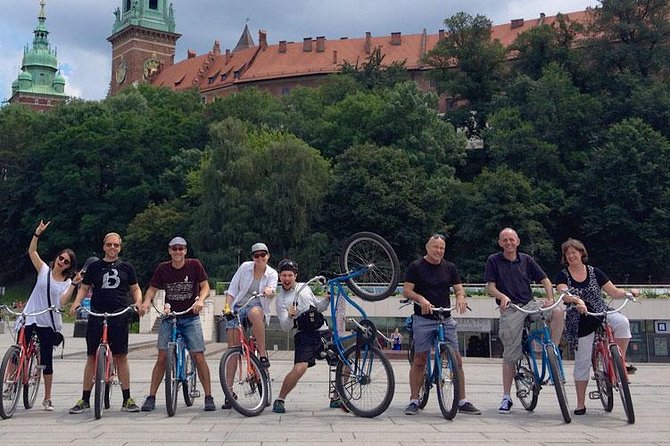
The tour starts at the Adam Mickiewicz Monument in Kraków’s Main Square area. That’s a smart launch point since Rynek Główny is the most obvious place to meet and it puts you straight into the Old Town vibe.
Right after the start, you’ll head past the tour office area and then out into the Planty area—the ring of green space that encircles the Old Town. Planty is a great “warm-up” because it’s long (about 4 km as a belt around the historic core) and it breaks the day into manageable riding chunks.
Practical tip: wear something you can pedal in comfortably and bring a layer. Even in warm weather, you may feel cooler near the river later in the ride.
Old Town core: Rynek Główny and the Planty Park loop
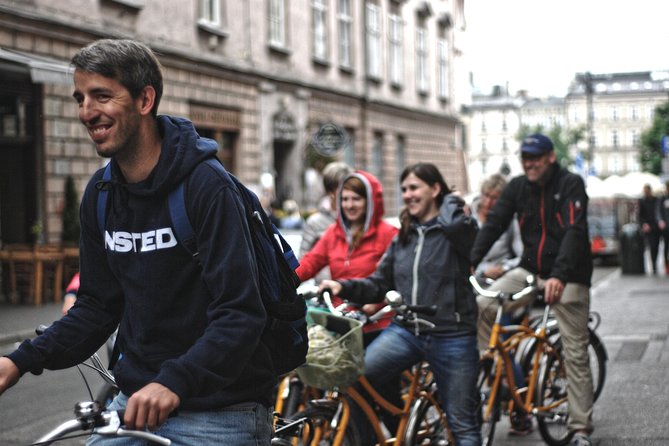
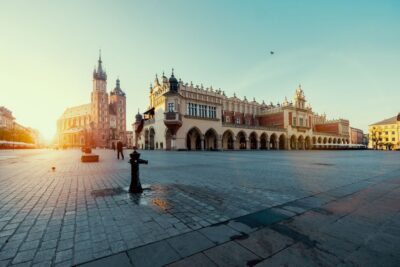
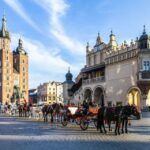
Your first big stop is Rynek Główny, described as the largest medieval square in Europe. It’s the kind of place you can’t understand from a postcard, because the scale changes how you read everything around it.
From there, Planty Park becomes your moving classroom. It’s not just scenic; it’s a transition. You ride along a green belt that marks where the old city walls and old-town boundaries feel like they still matter.
A small group also helps here. With fewer people, your guide can keep the group together without yanking you past details.
Barbican and the city walls: seeing Kraków’s defenses
Next you’ll pass the Barbican area, tied to the city wall story and the Museum of Kraków. This stop is useful because it gives you context for how Kraków protected itself long before modern streets existed.
When you’re on a bike, you get a wider view than you would on foot at the same spots. That’s good for understanding how defensive walls relate to gate locations and the medieval layout.
University Quarter: monuments, St. Anne, and Jagiellonian University
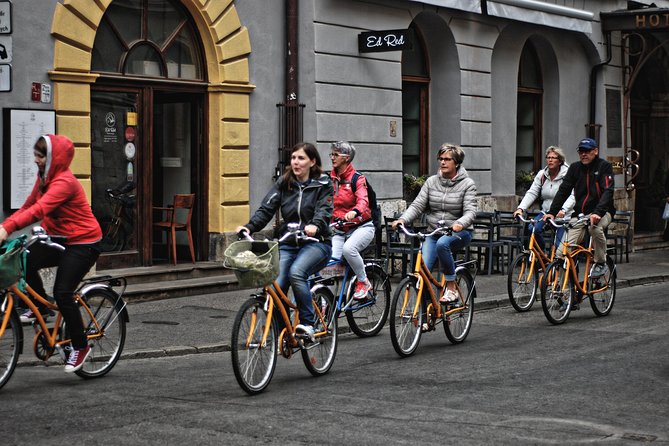
Then the tour shifts into the university zone, with several stops that help you understand why this quarter matters.
You’ll see the Jadwiga and Jagiello monument, which connects to the Polish-Lithuanian Commonwealth story. Even if the details are new to you, it gives you names to anchor the bigger political history.
After that, you’ll visit the University Collegiate Church of St. Anne in Kraków. This area is key because it’s where academic life and religious architecture intertwine, and your guide will use the stop to connect Kraków’s identity beyond the central square.
The star here is Jagiellonian University. It dates back to 1364, and the tour points you to the oldest parts of that academic presence. If you’ve ever wondered why Kraków feels scholarly as well as historic, this is part of the answer.
You’ll also spend time at the Collegium Maius museum courtyard and clock area. These are the places where you can slow down for a photo and actually notice the details you’d miss if you were only walking through.
Bishop’s Palace to Wawel Castle: from learning to power
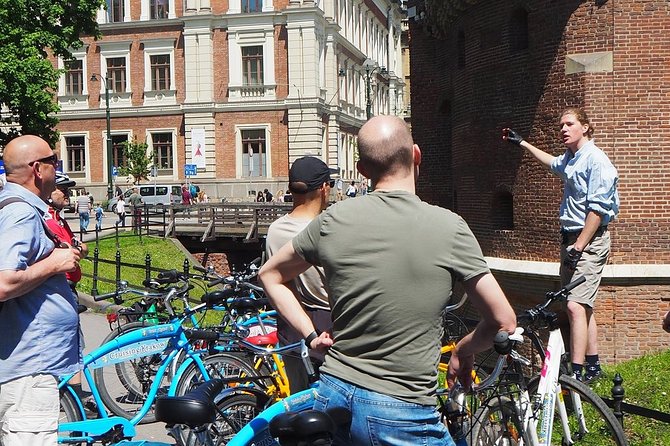
As the route moves toward Wawel, you’ll stop at Bishop’s Palace, which is linked to the history of Pope John Paul II. That connection matters because Kraków isn’t just medieval buildings—it’s also modern spiritual and national history layered on top of older sites.
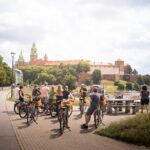
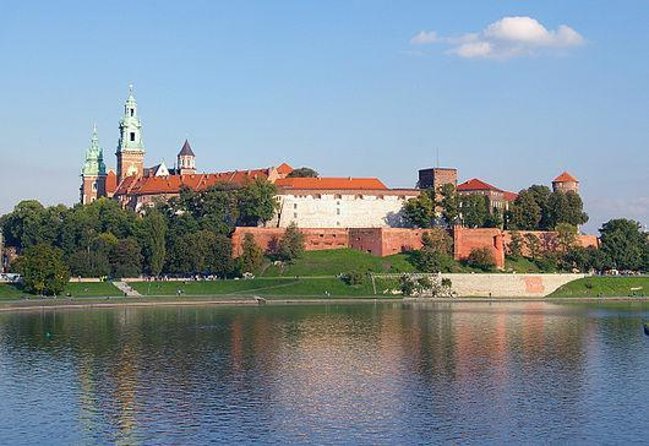
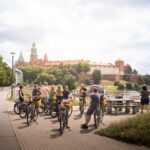
Then comes Wawel Royal Castle, the former seat of the Polish royal throne and today one of the country’s premier art museum sites. Even if you don’t go inside, the location alone explains why kings and national leaders kept coming back to this hill.
You’ll also stop at the Monument of the Wawel Dragon. It’s one of those fun moments that keeps the day from becoming one long march of serious facts. Think of it as your mental palate cleanser.
Riding the Vistula to the ghetto area: the story shifts
From Wawel, the tour travels along the Vistula River before entering the Krakow Ghetto area. That river ride is practical, too. It’s a breathing space between major stops and it gives you a calmer stretch of riding before the heavier WWII portion.
Then you move into the Podgórze district, with stops that focus on WWII ghetto sites. You’ll see Plac Bohaterów Getta, then a ghetto wall fragment, and you’ll also get time around Schindler-related history.
This part of the tour is handled through specific place-based stops: the Oskar Schindler’s Enamel Factory area (tied to Schindler’s famous list story) and later cemetery stops and Jewish Quarter streets. Your guide is there to connect the dots so you don’t just pass memorials like they’re scenery.
Kazimierz and the Old Jewish Quarter: streets you can actually picture
After the WWII ghetto segment, you head toward Kazimierz—Kraków’s historic Jewish quarter—where the route becomes both reflective and lively.
You’ll pass Szeroka Street, then the Old Synagogue area, and you’ll continue to Remuh Cemetery. The itinerary also includes the New Jewish Cemetery stop, so you get a broader sense of community history rather than only one snapshot.
At these points, biking is an advantage. You can see how neighborhoods connect without having to choose between far-apart locations on separate days. You also get small stretches of quiet between explanations, which helps the whole experience land.
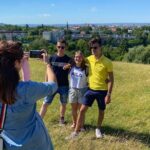
Photo tip: take pictures, then look up again. These stops deserve more than just a quick screen grab.
Plac Nowy and Maly Rynek: time for snacks and street life
After the heavier historical sites, you’ll ride through a more everyday Kraków rhythm.
You’ll stop at Plac Nowy, known for pizza baguettes and the more lively party-adjacent atmosphere. Then you’ll reach the Little Market Square (Maly Rynek), a smaller square that still carries Old Town character.
This is a useful rhythm shift. It gives you a moment to be a tourist again—snack, sit, and let the history settle before you wrap up.
Slowacki Theatre: a great finish line for architecture lovers
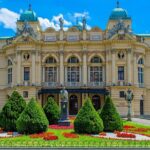
Near the end, you’ll stop at Slowacki Theatre, described as a favorite architecture piece for the tour. It’s a strong closing sight because theatre buildings signal “culture city,” not just “historic city.”
By the time you reach this point, you’ll likely feel more confident about where things are. You’ve been from the medieval square out to the university quarter, then across to Wawel and through Kazimierz and ghetto sites. That mental map helps you plan the rest of your trip.
Bikes, pace, and the reality of comfort on this route
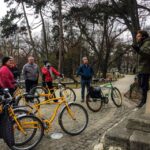
This tour is built for easy cycling. The highlight list calls out flat roads as ideal for cycling on a beach cruiser style bike, and the reviews back up that it feels safe.
Bikes are suitable for children over 128 cm height, and the tour is small (max 15). That combo matters because you’re less likely to deal with big gaps between riders or long waits at stops.
From the reviews, you can also expect a “broken up” pace: short riding spells followed by explanations and viewing breaks. Many people also note the tour distance as around 8 miles, and they describe it as non strenuous for most participants.
One caution: a good guide means you stop often. If you prefer longer time in fewer spots, you might find the timing tight. There’s at least one review that wished for a little more sight time at certain stops.
Lunch stop: what you pay for and how to plan
Lunch is not included. The tour includes a break at an authentic Polish restaurant for lunch (own expense) as part of the ride back around toward the end.
In practice, this is good planning. You can grab something fast and keep energy up without turning lunch into a separate half-day plan.
Do bring money or a card you can use in Kraków for food and drinks. Also, if you’re riding in warm weather, plan to drink water during the breaks, not only when you feel thirsty.
Price and value: $36.28 for a guided circuit
At about $36.28 per person, this tour is priced like a “local guide + bike rental” deal, not like you’re buying museum tickets all day.
Bike rental is included, and the city guide is included. The itinerary also lists admission tickets as free at the stops, which means you’re paying mainly for access to the route and interpretation of what you’re seeing.
It’s also booked about 26 days in advance on average, which usually means the time slots you want can sell out. If you’re visiting in peak season, booking early is a good move.
Guide style: why names like Mike, Zoey, and Chris matter
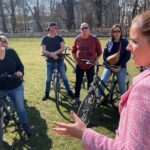
You’ll get a real English-speaking guide, and the reviews give you a feel for the guide style.
Names that show up include Mike, Zoey, and Chris, and several reviews note that guides mix humor and personal anecdotes with clear explanations. One review even mentions a guide who has Canadian heritage, which shows up as easy-to-follow English and approachable delivery.
There’s also a recurring detail: a tour dog named Ramsey has joined rides, making the experience memorable without getting in the way.
If you want a tour where you learn the why behind what you see, this guide team style is a big part of the value.
Who should book this Kraków bike tour
Book it if you want to:
- Get bearings on day one and understand where major areas sit.
- See Old Town, Wawel, and Kazimierz on the same day.
- Prefer riding over long stretches of walking, especially when it’s hot.
It’s also a good fit for families with kids tall enough for the bikes, since the route is described as safe and not overly demanding.
Consider other options if you:
- Want lots of interior time (long museum visits) rather than frequent stop-and-view.
- Get overwhelmed by a heavier WWII focus in a single afternoon. You can still manage it, but it’s part of the route, not an optional detour.
Should You Book This Kraków Bike Tour?
Yes—if you want a fast, well-paced orientation of Kraków with real context. It’s one of the smarter ways to cover the medieval center, university sights, Wawel, and the Kazimierz and WWII ghetto area without turning your trip into a jigsaw of separate tickets and taxis.
Just go in expecting stop-and-learn timing, bring funds for lunch, and check the weather. If you can do those basics, you’ll likely leave with a much clearer understanding of Kraków than you started with.
FAQ
What’s the meeting point for the Kraków bike tour?
The tour meets at the Adam Mickiewicz Monument at Rynek Główny, 31-042 Kraków, Poland.
How long is the bike tour?
The duration is about 4 hours.
How much does the tour cost?
The price is listed as $36.28 per person.
Is bike rental included?
Yes. Bike rental is included.
What language is the tour offered in?
The tour is offered in English.
Do I need to pay for lunch during the tour?
Lunch is not included. There is a lunch stop at an authentic Polish restaurant, but food and drinks are paid by you unless specified.
Are there any age or height requirements for children?
Bikes are suitable for children over 128 cm height.
Is the tour suitable for most people?
Most travelers can participate, and the tour is designed to be manageable for a wide range of guests.
Is the tour limited to a small group?
Yes. The maximum group size is 15 travelers.
What happens if the weather is bad?
This experience requires good weather. If it’s canceled due to poor weather, you’ll be offered a different date or a full refund.