REVIEW · KRAKOW
Krakow: Bike Tour of the Old Town, Kazimierz, and the Ghetto
Book on GetYourGuide →Operated by Cruising Krakow Bike & Segway Tours · Bookable on GetYourGuide
Steel wheels beat walking. This Kraków tour is built for getting your bearings fast, looping through the Old Town, then sliding into Kazimierz, and ending with a respectful look at the former WWII ghetto area in Podgórze. It’s also the kind of sightseeing that keeps you moving without feeling rushed.
I love the mix of big landmarks and small, street-level moments: Main Square views, the Planty Park path, a ride past Wawel, and then the Jewish Quarter streets where you can actually feel the neighborhood rhythm. I also love how the guides slow things down with frequent stops for photos and context.
One drawback to keep in mind: you need to be comfortable riding a bike, and you’ll want to plan for time (and weather). Lunch is not included, even though there’s a break.
In This Review
- Key things that make this bike tour work so well
- Getting Your Bearings Fast on Two Wheels in Kraków
- Where You Start: The Adam Mickiewicz Statue and a Safety Brief That Actually Helps
- Old Town by Bike: Main Square to the Barbican and Planty Park
- Jagiellonian University, St. Francis of Assisi, Wawel, and the Church on the Rock
- Riding Along the Vistula: A Real Photo Stop
- Podgórze and the Former WWII Ghetto Area: A Serious Portion of the Ride
- Oskar Schindler’s Factory: Context Without the Time Sink
- Kazimierz: The Jewish Quarter Feels Like a Neighborhood, Not a Checklist
- Cemeteries and Synagogues: Old Synagogue, Remuh, and New Jewish Cemetery Stops
- Plac Nowy and Juliusz Słowacki Theatre: Where the Ride Ends Feeling Local
- Pace, Fitness Level, and the Reality of a 3.5–4 Hour Ride
- Who Should Book This Tour (and Who Should Skip It)
- Value for $26: Bike Rental, Helmet, and a Real Guide
- If You’re Choosing a Guide: Names People Mention
- Should You Book This Kraków Bike Tour?
- FAQ
- How long is the bike tour?
- Where does the tour start?
- What parts of Kraków does the tour cover?
- What’s included in the price?
- Is lunch included?
- Are e-bikes included?
- What languages are the guides?
- Is the tour suitable for people who can’t ride a bike?
- Can I get a refund if I cancel?
Key things that make this bike tour work so well
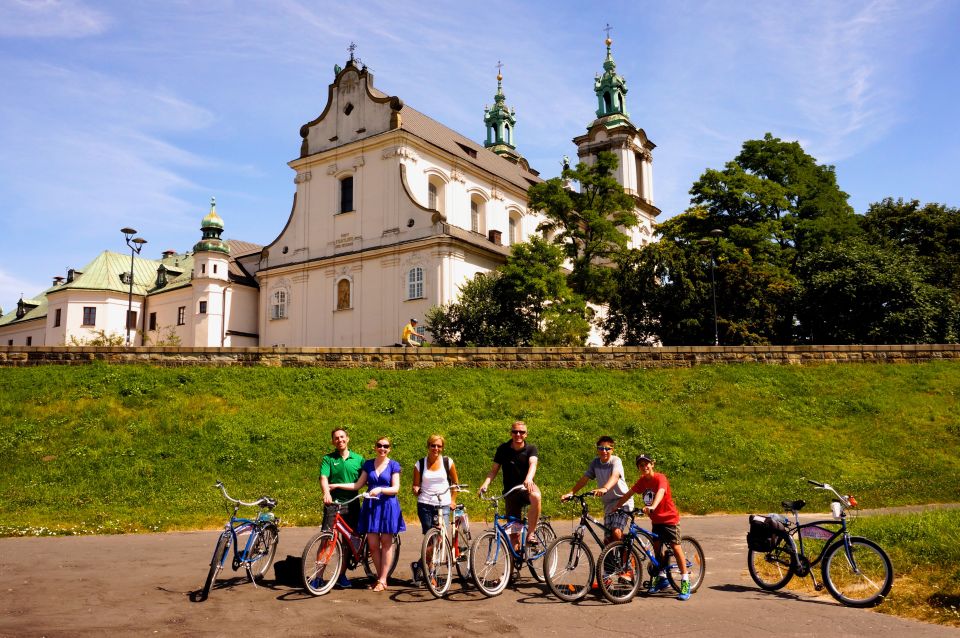
- Bike-first orientation: you cover a lot of Kraków without wasting your legs on hills and gaps between districts
- Old Town to Kazimierz route: major landmarks plus the street texture of the Jewish Quarter
- Podgórze ghetto-area focus: the WWII history portion is part of the same ride, not tacked on
- Frequent stops for photos and explanations: the pace stays friendly, even with a longer circuit
- Common-sense comfort: bikes and helmets are included, and the ride is described as not too strenuous
Getting Your Bearings Fast on Two Wheels in Kraków
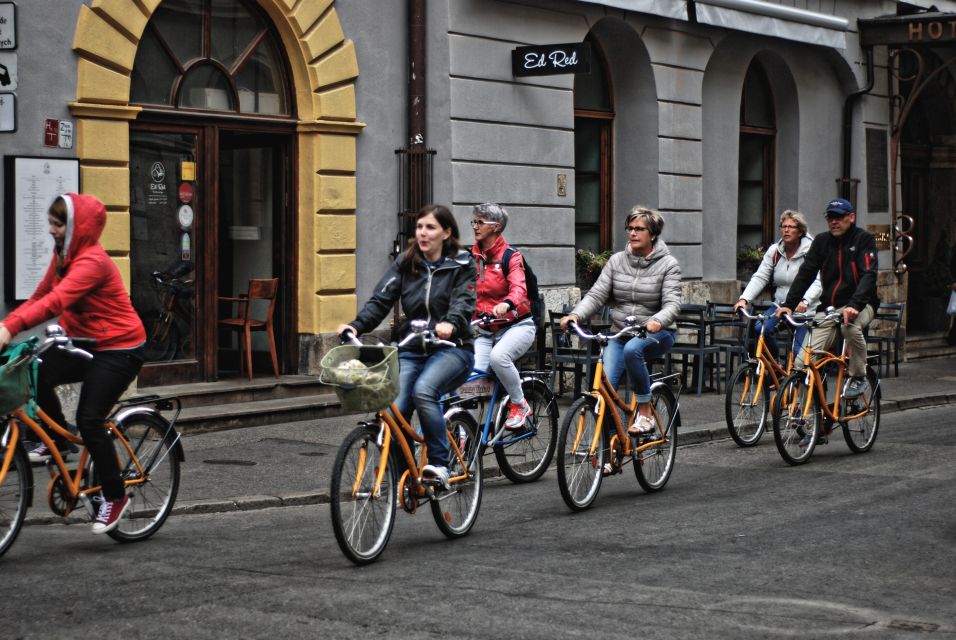
If you’re trying to plan the rest of your Kraków days, this tour is a smart move. It’s designed like a guided “city map you can ride,” so you come away knowing where the main sights sit, how neighborhoods connect, and which streets feel like they belong together.
The route links three places that are often visited separately. Old Town is where you orient yourself with the city’s postcard core. Kazimierz is where the streets, synagogues, cemeteries, and cafés create a different pace and vibe. Then Podgórze brings you to the WWII ghetto area—an important stop that changes the tone of the ride in a serious, respectful way.
Price matters here too. At about $26 per person, you’re paying for a real guided experience with bike rental and a helmet included. That’s good value compared to thinking you’ll cover all this on your own via taxis or multiple paid transfers.
You can also read our reviews of more cycling tours in Krakow
Where You Start: The Adam Mickiewicz Statue and a Safety Brief That Actually Helps
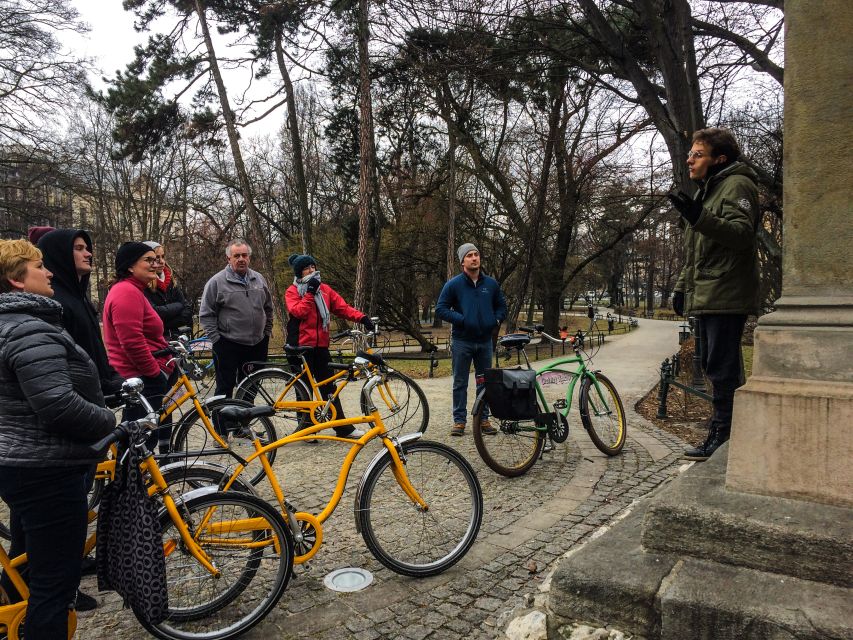
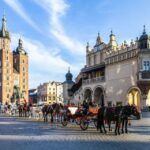
The tour begins at the Adam Mickiewicz statue in the Main Market Square area. That’s a useful starting point because it places you right where most first-timers naturally gravitate, and it also makes it easier to connect your tour with the rest of your sightseeing plans.
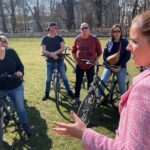
You’ll usually get a quick pass in the Main Market Square before the group settles in. Then comes the safety briefing—this isn’t just formality. A decent bike guide sets expectations early: how to move as a group, where to look out for intersections, and how to handle stop-and-go sightseeing without turning the ride into a stress test.
From there, the tour’s rhythm becomes clear. You’re not sprinting between attractions. You’re cruising, stopping, and listening—enough to learn without losing your energy.
Old Town by Bike: Main Square to the Barbican and Planty Park
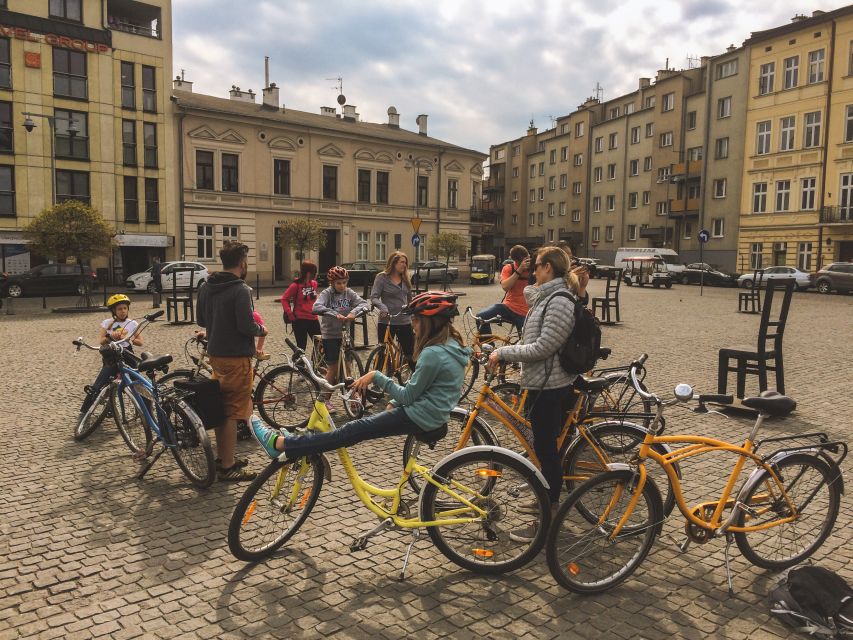
Once you’re rolling out of the Market Square area, you get the Old Town pieces in a way that feels practical. The ride takes you past major city markers, then filters you into green space and historic streets.
One highlight is the stretch that includes the Kraków Barbican. It’s one of those landmarks that’s impressive up close, but it’s also easier to appreciate when you’re not wrestling for a good photo position in a dense crowd. From the bike, you can see the structure and the surrounding defensive-era feel without spending half your time searching for a viewpoint.
Then you move into Planty Park, where the city loosens up into paths and gardens. Even when you’re not thinking about it, Planty Park acts like a reset button. It breaks the sightseeing into something more like a stroll with wheels—calm enough to take in details and keep your pace comfortable.
If you like architecture and city planning, this is where you start seeing how Kraków is put together: historic core, protective layers, and then green buffers that guide the flow of movement.
Jagiellonian University, St. Francis of Assisi, Wawel, and the Church on the Rock
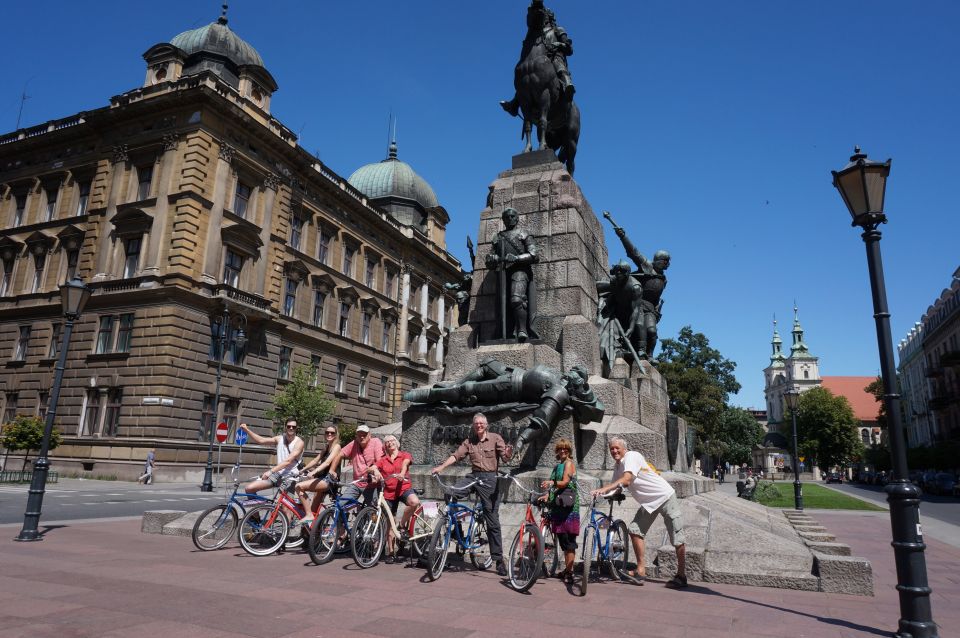
The tour continues through some of Kraków’s most recognizable cultural markers and religious landmarks, and the order matters. You’re building a mental map as you go.
You’ll pass by Jagiellonian University, then the Church of St. Francis of Assisi. These stops work best if you’re the kind of traveler who enjoys context. The guide’s job here is to tie what you see to why it matters in Kraków’s identity, not just list names.
Then you reach Wawel Royal Castle. Wawel is the kind of place that can feel overwhelming if you only visit once on foot and try to cram it all in. On a bike tour, you get the scale and location without losing the whole day. You can take in the big picture and still keep moving.
After that, there’s Church on the Rock. It’s quick from the saddle, but these short segments are useful because they keep you from burning time. You can always choose to return later if one spot grabs you.
Riding Along the Vistula: A Real Photo Stop
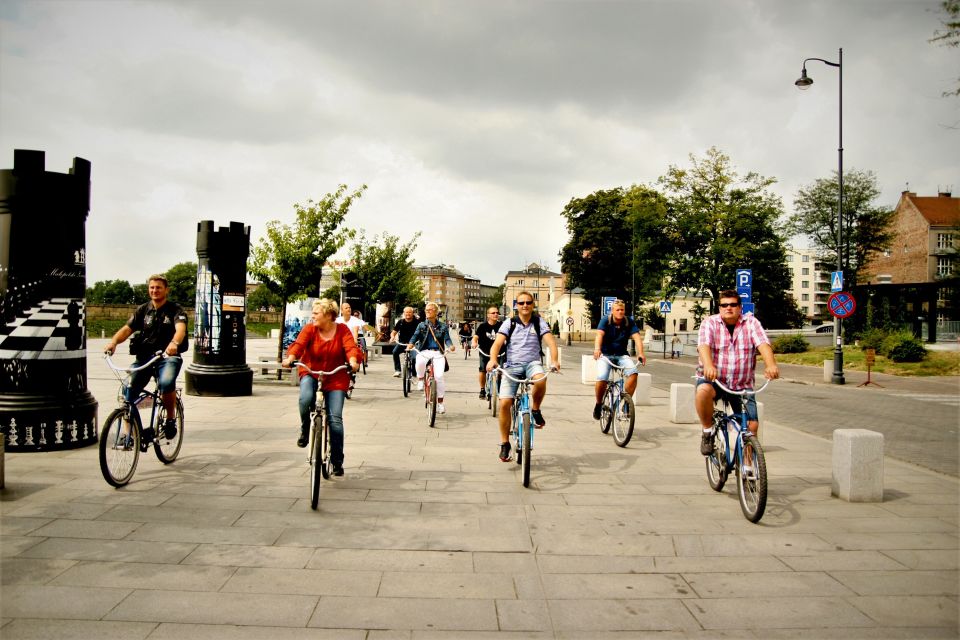
Not every tour gives you a breather, but this one includes a Vistula River photo stop. It’s not a long detour—it’s a pause that helps you orient again, with open space and a different perspective on the city.
You’ll also feel the ride changing here. When you’re near water, the city seems less compressed. That matters because you’ll later shift into Podgórze and Kazimierz, where the street character is different and the history requires a more thoughtful pace.
Podgórze and the Former WWII Ghetto Area: A Serious Portion of the Ride
This is the part of the tour that deserves a slow, careful approach. Podgórze is the district that includes the WWII ghetto area location, and the tour’s design makes it part of the journey rather than an optional side trip.
You’ll spend time biking through Podgórze, then stop at Plac Bohaterów Getta. This is where the tone changes. It’s not about ticking off another landmark—it’s about understanding the human weight attached to the streets you’re riding.
The best way to get value from this segment is simple: listen all the way through the guide’s explanation at each stop, then use your photo time carefully. If you rush, you’ll miss the context that gives the history meaning.
Oskar Schindler’s Factory: Context Without the Time Sink
After the ghetto-area focus, the tour includes a stop connected to Oskar Schindler’s Factory. Even if you don’t go inside during this tour, you’ll get the location and the surrounding framing that helps you connect what you learned earlier with what you’ll likely want to explore later.
This is a helpful approach if your schedule is tight. You still get the historical thread, but you’re not forced into a long museum block when you might prefer to wander at your own pace afterward.
Kazimierz: The Jewish Quarter Feels Like a Neighborhood, Not a Checklist
Once you reach Kazimierz, the ride turns into something more playful—but still grounded. Kazimierz is where you get street-level immersion: smaller blocks, recognizable synagogues and cemeteries, and places that feel like you could spend hours just walking and people-watching.
You’ll spend about 40 minutes in Kazimierz, and that time is key. It’s enough to get orientation and to decide what you want to revisit later. It’s also long enough to notice how the neighborhood shifts as you move between major landmarks and smaller streets.
Then you hit stops like Szeroka Street. This is the kind of street where the architecture and atmosphere do a lot of the talking. From the bike, you see how the space opens up, and you can decide where you want to get off and look closer.
Cemeteries and Synagogues: Old Synagogue, Remuh, and New Jewish Cemetery Stops
This tour doesn’t treat religious and memorial sites as background scenery. It includes dedicated stops like:
- Krakow New Jewish Cemetery
- Old Synagogue, Krakow
- Remuh Cemetery
These are short segments while you’re on the bike, but they matter. Memorial sites and synagogues aren’t places to rush through. The stops give you a structured pause so you’re not arriving with no context.
If you’re the type who likes to understand how a city remembers its past, you’ll appreciate that the tour keeps moving, but it doesn’t let you treat these spots as quick photo stops only. The guide explanations are what turn these stops from scenery into understanding.
Plac Nowy and Juliusz Słowacki Theatre: Where the Ride Ends Feeling Local
After synagogues and cemeteries, the tour drifts toward more everyday Kraków. You’ll bike through plac Nowy, and then pass Juliusz Słowacki Theatre.
This matters because it changes how you land in your evening plans. By the time you finish, you’re not thinking only about monuments. You’re thinking about where you can grab a meal, where the streets feel lively, and how Kazimierz connects to the rest of the city after dark.
You end back at the meeting point area near where you started, so you don’t feel like you’ve been dropped somewhere far away.
Pace, Fitness Level, and the Reality of a 3.5–4 Hour Ride
The ride is described as not too strenuous and suitable for all levels of fitness, but it’s still a bike tour. That means your body will work for a few hours, with repeated stops and starts.
The schedule is built with breaks in mind. The full tour typically runs 3.5 to 4 hours, including a 45-minute lunch break. Lunch itself is not included, but the break gives you time to eat, reset, and return to the ride with less crankiness.
In summer, you’ll usually see two options:
- a longer morning tour that covers Old Town + Kazimierz + Podgórze (the WWII ghetto area)
- a shorter evening tour focused on Old Town + Kazimierz only
If you’re trying to fit Kraków into a short trip, the evening option can be perfect. If WWII history is part of what you want to understand deeply, choose the longer route.
Who Should Book This Tour (and Who Should Skip It)
This tour is a great match if you:
- want an easy way to get your bearings quickly in Kraków
- like history that’s explained in context as you move through neighborhoods
- enjoy biking and don’t mind spending a chunk of time outside
- want a single guided loop that links Old Town, Kazimierz, and the ghetto-area location
Skip it if:
- you can’t ride a bike
- you have mobility impairments that would make biking difficult
Also plan for weather. You’ll want clothes that work for the day’s conditions, since the tour rides through multiple districts outdoors.
Value for $26: Bike Rental, Helmet, and a Real Guide
Here’s the practical value equation. For around $26 per person, you get:
- a live tour guide
- bike rental
- a helmet
What you don’t get:
- lunch
- an e-bike option
That balance is pretty fair. The tour is built around the ride and the explanations, not around paid meals or powered bikes. If you’re comfortable bringing your own lunch plan or picking up something near the break, you’re in great shape.
One more plus: the tour runs in English and Dutch, with private group availability. If you’re traveling in a mixed group or want a smaller format, that flexibility can help.
If You’re Choosing a Guide: Names People Mention
In the feedback for this company, guides like Mike, Zoe, and Chris show up often. That doesn’t mean you’ll get the same person, but it’s a useful clue about what you’re likely to experience: guides who mix clear explanations with a friendly, grounded tone.
Should You Book This Kraków Bike Tour?
I’d book it if you want to understand Kraków in one efficient loop. The price is low for what you get, and the routing makes sense: Old Town for orientation, Kazimierz for neighborhood feeling, and Podgórze for WWII history in a way that doesn’t feel like a random detour.
Choose it particularly if you:
- don’t have a lot of days in Kraków
- want a guide to help you see what matters instead of just riding past it
- enjoy the rhythm of biking with frequent stops
Pass if you’re looking for a purely relaxed, no-effort sightseeing day. It’s comfortable and friendly, but it’s still an active tour. If that’s your style, you’ll likely leave with a stronger sense of place and a clearer plan for what to explore next.
FAQ
How long is the bike tour?
The tour duration is listed as 2 to 4 hours, depending on the option you book. The full circuit is about 3.5 to 4 hours and includes a 45-minute lunch break.
Where does the tour start?
Meet at the Adam Mickiewicz statue in Kraków’s main market square area. The exact meeting point may vary depending on the option booked.
What parts of Kraków does the tour cover?
It covers the Old Town, Kazimierz, and Podgórze (including the location of the WWII ghetto). The shorter evening option in summer excludes Podgórze.
What’s included in the price?
Included features are a live tour guide, bike rental, and a helmet.
Is lunch included?
No. There is a 45-minute lunch break, but lunch itself is not included.
Are e-bikes included?
No. The tour information lists that e-bike is not included.
What languages are the guides?
The live tour guide is available in English and Dutch.
Is the tour suitable for people who can’t ride a bike?
No. It’s not suitable for people who can’t ride a bike.
Can I get a refund if I cancel?
Yes. Free cancellation is available up to 24 hours in advance for a full refund.