REVIEW · KRAKOW
1 Day Trip Auschwitz Birkenau and Salt Mines with Hotel Transfer
Book on Viator →Operated by Krakow Tours by KrakowDirect · Bookable on Viator
Two UNESCO icons in one bruising day. You’ll pair Auschwitz-Birkenau with the wonder of Wieliczka Salt Mine, all wrapped into one long guided day with pickup from central Krakow.
I like the headset-guided structure inside the camps, and I like that the drive includes the documentary The Liberation of Auschwitz to set the tone before you arrive.
The main consideration is the day runs long and asks for real walking, so double-check you booked the full Auschwitz + Salt Mine combo and not a Salt Mine-only option.
In This Review
- Key Highlights Worth Knowing
- Why This Krakow Day Trip Works (Even If It’s a Lot)
- Getting There Comfortably: Pickup, Minibus Pace, and the Pre-Tour Documentary
- Auschwitz-Birkenau: The Gate, the Headsets, and the Museum Rules
- Auschwitz II (Birkenau): Why the Scale Hits Harder
- The Transition Break to Wieliczka: When You Get Time Back
- Wieliczka Salt Mine: 400 Steps Down to Salt Carvings and Sculptures
- Price and Value: What $117.30 Buys You (And What It Doesn’t)
- Tour Timing Reality: It’s a 10+ Hour Day With Real Walking
- Practical Tips That Will Save Your Day
- The Biggest Booking Trap: Confirm Your Actual Option
- Should You Book This Auschwitz-Birkenau and Wieliczka Combination Tour?
- FAQ
- How long is the Auschwitz Birkenau and Salt Mines trip?
- Where does the tour start in Krakow?
- Are entrance fees included?
- Will I need to bring ID for Auschwitz?
- Is food included in the tour?
- What time is the Wieliczka Salt Mine guided tour?
- How many stairs and steps are involved at the Salt Mine?
- What group size should I expect?
Key Highlights Worth Knowing
- Central Krakow pickup or a fixed meeting point makes the day start simple.
- Licensed Auschwitz guides with headsets help you hear every detail inside the memorial.
- The Liberation of Auschwitz documentary plays on the way, including footage from the Soviet liberation.
- Skip-the-line, guided entrance at both UNESCO sites means fewer waits and a tighter schedule.
- Wieliczka runs cool underground (about 15°C) with major stairs, salt carvings, and sculptures.
- Small capped groups (up to 35 total; Auschwitz tour groups up to 30) keep the experience from feeling overcrowded.
Why This Krakow Day Trip Works (Even If It’s a Lot)
This is one of those day trips where the logistics are the point. You get transport, guided museum time, and entrance handling in one package, which matters because both Auschwitz-Birkenau and Wieliczka are busy and time slots can be tight.
The pairing also makes sense. Auschwitz-Birkenau is about historical scale and human choices you can’t unsee. Wieliczka is the opposite feeling: cool air, white salt, and detailed carvings that are still working-salt-country awe-inspiring.
You can also read our reviews of more tours and experiences in Krakow
Getting There Comfortably: Pickup, Minibus Pace, and the Pre-Tour Documentary
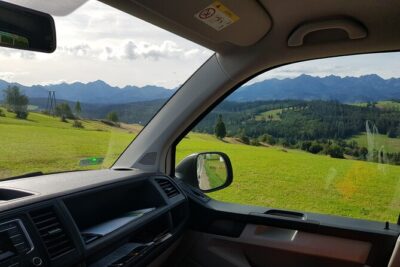
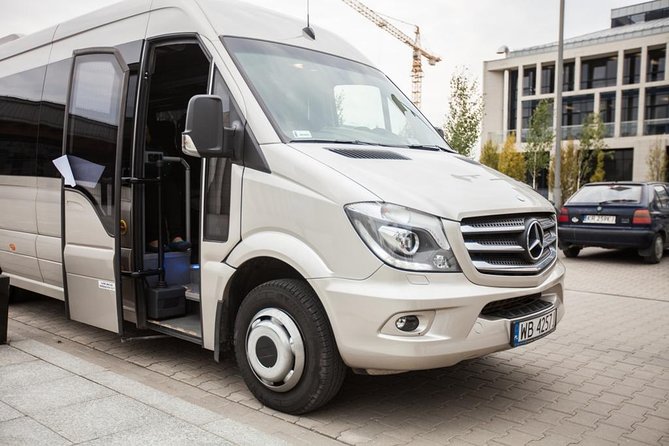
The day starts with pickup at your Krakow hotel or from a central meeting point. The drive to Auschwitz-Birkenau takes about 1 hour 15 minutes (roughly 65 km), and you’ll be in a Mercedes-Benz minivan or minibus.
On the way, you watch the short documentary The Liberation of Auschwitz. It’s not entertainment; it’s a context-setting buffer so you arrive with the timeline already in your head. The screening includes footage from the Soviet soldiers who liberated the camp, which can help you understand what liberation meant—and why it mattered.
A quick practical note: your departure time is confirmed the day before, and the schedule can shift due to museum timing and traffic. In winter, that means you might be standing outside a bit—so pack warm layers.
Auschwitz-Birkenau: The Gate, the Headsets, and the Museum Rules
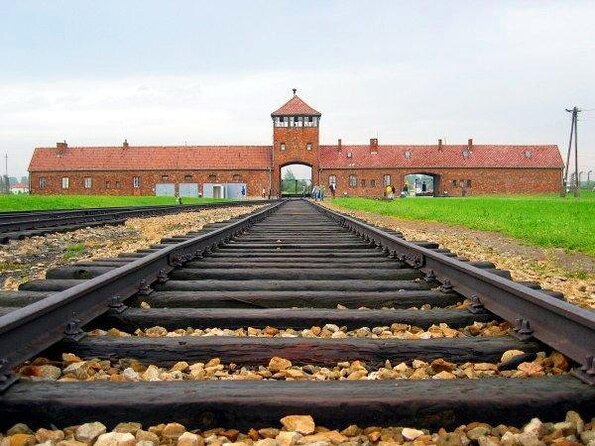
Auschwitz-Birkenau is two different experiences under one umbrella. Your tour starts at Auschwitz I, then you move to Birkenau (Auschwitz II) after a short break.
Before you even enter the memorial, there’s an important admin step: bring your passport or ID. The museum requires visitors to confirm personal details at the entrance, and without ID you may be turned away.
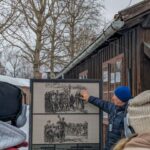
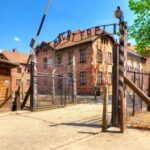
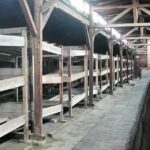
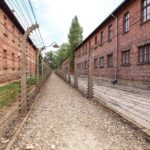
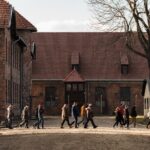
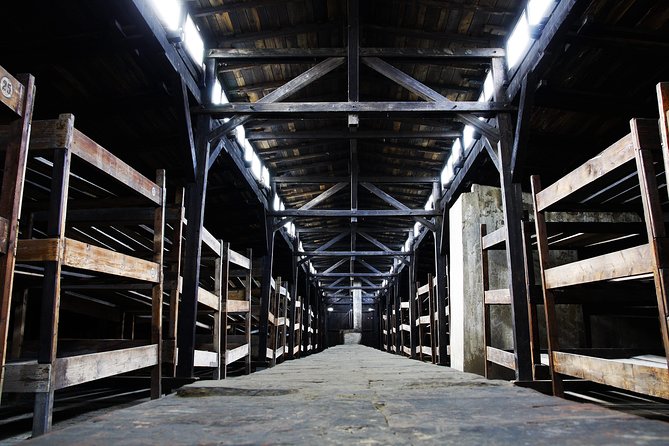
At Auschwitz I, you walk through the gate and see the sign Arbeit Macht Frei. This is where the memorial’s story starts, and your licensed guide leads you through original wooden barracks, fortified walls, barbed wire fences, gas chambers, and crematoria. Expect the tour to last about 2 hours, with headsets provided so you can actually follow the guide instead of competing with wind and voices.
Group size is capped for a reason: no more than about 30 in the Auschwitz walking portion. That helps you hear explanations clearly and keeps the pace manageable inside such a difficult setting.
Auschwitz II (Birkenau): Why the Scale Hits Harder

After Auschwitz I, you get a short break (up to about 15 minutes), then you head to Birkenau. The transfer is brief—only a few minutes by vehicle—so you don’t lose the momentum your guide builds.
Birkenau is where the scale becomes unavoidable. It was built and operated with the goal of making Europe “Judenrein,” and the camp’s capacity is described as around 90,000 prisoners. Your guide continues the story in Birkenau (in the Brzezinka area), including the selection process and the brutality of camp life.
You’ll also hear about pseudo-scientific medical experiments conducted by Nazi doctors, including Josef Mengele. This part is heavy, but the guided framing is valuable because it keeps the facts coherent and helps you connect what you’re seeing to what happened.
The tour ends with liberation context, including that gates opened on January 27, 1945 by soldiers from the 60th Army of the First Ukrainian Front. It’s a difficult ending, but it closes the story in a way that’s meant to land.
The Transition Break to Wieliczka: When You Get Time Back
Between the camps and the mine, you shift gears with a transfer to Wieliczka Salt Mine. Before going underground, you typically get about 1 hour for a coffee, quick grocery stop, or rest.
This break matters more than it sounds. Even if you’re not hungry, your body gets tight after hours of walking on uneven ground and standing in cold air. Use the time to warm up and check that you’ve got what you need for underground steps.
You can also read our reviews of more tours and experiences in Krakow



Wieliczka Salt Mine: 400 Steps Down to Salt Carvings and Sculptures
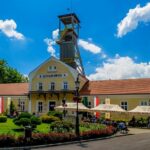
Wieliczka is a working salt mine with centuries of history, and it’s also UNESCO-listed. You’ll join an English guided tour scheduled around 4:00 pm or 5:00 pm, depending on road conditions.
What I really like here is that the mine tour isn’t a quick photo stop. You go about 140 meters underground and follow a route around 2.5 km long, with a guided walk that lasts roughly 2.5 hours.
Bring a sweater, because underground it’s about 15°C (around 59°F). Narrow paths can feel claustrophobic, and once you’re underground you can’t shorten the visit or turn back. Also, it’s not pushchair-friendly: baby pushchairs aren’t allowed underground.
Expect stairs. You descend 400 steps and the total tourist route includes over 800 stairs. A few people mention that there’s a lift and that it feels intimate but short—still, you should plan for a lot of steps either way.
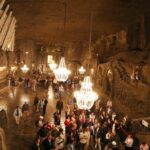
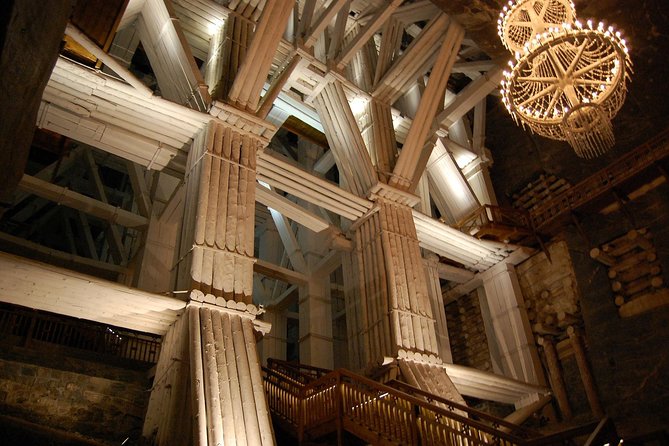
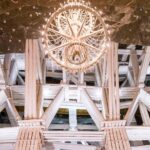
Then there’s the payoff: salt pillars, vaulted ceilings, and sculptures carved into the walls. Some carvings are small and detailed; others are cathedral-sized in feel. It’s one of the few places where “wow” feels earned, because it’s the result of careful, slow craft you can see up close.
Price and Value: What $117.30 Buys You (And What It Doesn’t)
At around $117.30 per person, this tour isn’t just transport plus a ticket. You’re paying for a lot of planning done for you:
- Guided tours at both UNESCO sites
- Headsets for the Auschwitz portion
- Entrance fees included
- Skip-the-line admission handling
- Air-conditioned vehicle for the long day
- Insurance included
That value adds up because both destinations require timed entry and strict rules. You’re also buying time: instead of researching routes, booking separate guides, and juggling meeting points, the tour tries to keep everything in motion.
What’s not included is equally clear: food and drinks. And based on the pacing of a full day, you’ll want to plan for lunch time to be limited. If you’re the type who likes a real sit-down meal, don’t assume you’ll get one.
Tour Timing Reality: It’s a 10+ Hour Day With Real Walking
The total duration is about 10 hours 30 minutes. Even if you’re comfortable with travel days, Auschwitz and Wieliczka are both walking-heavy.
At Auschwitz, walking can feel like much more than you expect. One recent group experience described about 5 miles of walking at Auschwitz alone, plus waiting in cold air and moving between sites. Add the stairs at Wieliczka and you’ve got a day that’s active, not just sightseeing.
The upside: guided time keeps it meaningful and keeps you from wandering in circles. The downside: there’s less room for lingering. If you want to sit quietly and absorb at your own pace, you may feel slightly rushed by the schedule.
Practical Tips That Will Save Your Day
Here are the things I’d do before I leave the hotel:
Bring your ID/passport for Auschwitz. It’s required at the entrance, and skipping it is a fast way to lose the day.
Dress for cold and wind on the surface. Even if it’s not snowing, Auschwitz can feel raw in winter. A warm jacket and proper footwear matter.
Wear shoes with grip. The ground can be uneven across both sites. If you slip there, the day becomes stressful instead of reflective.
Use the headsets fully. If your tour gives you headsets, treat them like part of your experience. You’ll miss key parts if you take them off.
Pack light. There’s a carry-on size limit listed as 30 x 20 x 10 cm, and you can leave bigger luggage in the car.
Don’t forget the mine’s temperature and stairs. Expect 15°C and lots of steps. If stairs are hard for you, consider whether this is the right day trip—or choose a gentler format.
The Biggest Booking Trap: Confirm Your Actual Option
This tour’s biggest practical risk isn’t the camps or the mine. It’s confusion over which version you booked.
Some people got picked up for a Salt Mine-only itinerary even when they thought they booked the Auschwitz combination. The fix is simple: before you go, confirm that your voucher clearly states the Auschwitz-Birkenau + Wieliczka Salt Mines option (and that Auschwitz entrance is included), not just Salt Mine transportation and entry.
If you’re booking under a platform title that mentions both places, still verify the specific option name in your confirmation. It can mean a very different day.
Should You Book This Auschwitz-Birkenau and Wieliczka Combination Tour?
Book it if you want a structured day with guided interpretation at both UNESCO stops, and you like the idea of having transport and entrances handled for you. It’s a strong value when you consider the guided time, headsets, and included tickets.
Don’t book it if you’re trying to avoid long walking, and don’t book it if you’re easily thrown off by tight schedules. Also, be extra careful if you’re doing last-minute booking or you’re relying on a vague title—verify your exact option so you don’t show up expecting Auschwitz and end up somewhere else.
If you get the right option and show up ready for steps, this is one of the most powerful one-day combinations from Krakow. The contrast is sharp: human history at Auschwitz, then salt-carving wonder underground at Wieliczka.
FAQ
How long is the Auschwitz Birkenau and Salt Mines trip?
It runs for about 10 hours 30 minutes.
Where does the tour start in Krakow?
It starts at Floriana Straszewskiego 17, 31-101 Kraków, or you can choose hotel pickup depending on the option you select.
Are entrance fees included?
Yes. The Auschwitz option includes entry to the Auschwitz-Birkenau State Museum, and entrance to the Salt Mine is also included.
Will I need to bring ID for Auschwitz?
Yes. A passport or ID is required for the Auschwitz-Birkenau Museum entrance process.
Is food included in the tour?
No. Food and drinks are not included.
What time is the Wieliczka Salt Mine guided tour?
The English guided tour is scheduled for 4:00 pm or 5:00 pm, depending on road conditions.
How many stairs and steps are involved at the Salt Mine?
You descend 400 steps and the full tourist route includes over 800 stairs.
What group size should I expect?
The tour has a maximum of 35 travelers, and the Auschwitz part is limited to a group size of up to 30.