REVIEW · KRAKOW
Krakow to Auschwitz Birkenau and Salt Mine 1 Day Tour
Book on Viator →Operated by AT Cracow · Bookable on Viator
One day, two UNESCO sites.
This is a tight schedule that combines the Auschwitz-Birkenau memorial with the underground world of the Wieliczka Salt Mine, plus round-trip transport from Krakow. You get an English-speaking guide, and the timing is built to help you see both places without spending your precious Krakow time figuring logistics out on your own.
I like two things a lot. First, the tour handles the hard parts of the day: transport in an air-conditioned vehicle and admission tickets included for both stops. Second, you’re not left wandering underground or around the camps—guides lead the experience, and at the mine you get a planned route with a big dose of “how did they build this?” history.
The main drawback is the strain of a long, early day. Pickup can be very early (people have reported 3:00–4:00 AM), and you’ll be walking a lot across both sites, including 700 steps down in the salt mine.
In This Review
- Key things to know before you go
- Why this Auschwitz and Salt Mine combo works for short on time
- The long-day reality: pickup times, pacing, and crowds
- Auschwitz-Birkenau: what you’re seeing and how the guide helps you process it
- A respectful heads-up (and a practical one)
- Practical prep for Auschwitz: bags, full names, and cold morning survival
- Wieliczka Salt Mine: what you’ll do underground and why it still feels special
- What to bring (that isn’t complicated)
- Transport and comfort: how the vehicles affect the day
- Lunchbox reality: included if you choose it, and don’t assume it always lands
- Price and value: is $314.42 a fair deal?
- Who this tour fits best (and who might regret the schedule)
- Should you book this tour?
- FAQ
- How long is the Krakow to Auschwitz Birkenau and Salt Mine 1 Day Tour?
- Is the tour offered in English?
- Are tickets included for Auschwitz and the Salt Mine?
- What time does pickup happen from Krakow?
- Is a lunchbox included, and can I request a special diet?
- What bag size is allowed at the Auschwitz museum?
- How many steps are there in the salt mine?
- What are the rules for children and youth/student tickets?
- Does the tour check health/temperature before entering?
Key things to know before you go
- One-day UNESCO combo: Auschwitz-Birkenau plus Wieliczka Salt Mine, with included tickets and guides
- Long day, real early pickup: exact time sent the day before after 5 PM, sometimes extremely early
- Guides matter here: Auschwitz and Birkenau are heavy—good narration helps you make sense of what you see
- Salt mine is physical: 700 steps down, then an elevator ride back up
- Bag rules at Auschwitz: max bag size 30 x 20 x 10 cm, with storage options if needed
- Group size capped at 30: small enough for control, big enough for crowds at entry points
Why this Auschwitz and Salt Mine combo works for short on time
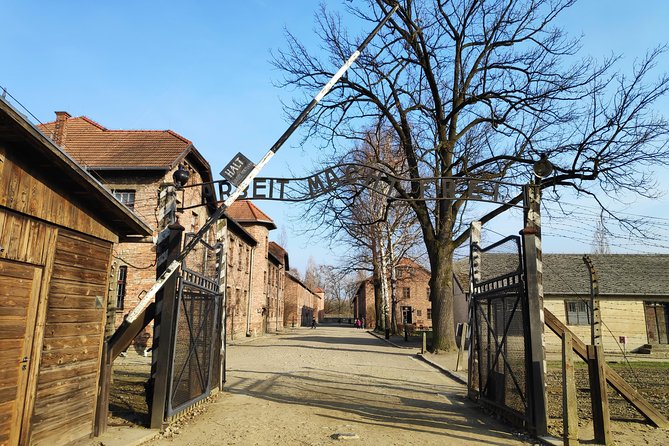
If Krakow is your base and you want both Auschwitz-Birkenau and Wieliczka Salt Mine, this combo makes practical sense. You’ll save a chunk of time versus doing them separately, and you’ll also reduce the “where do we go next” stress that can eat into your day.
More importantly, the pairing has a logic. Auschwitz-Birkenau is about modern history and human cruelty, with preserved ruins that make the scale hard to grasp. The Wieliczka Salt Mine, by contrast, shows human skill and persistence in a world built underground. You leave one site thinking about atrocity and the other thinking about craft, work, and survival of a different kind.
This is also a value play. At $314.42 per person, you’re paying for more than sightseeing. Your ticket includes admission for the museum and for the mine, plus round-trip transfers from Krakow and an English-speaking guide to keep the day organized.
You can also read our reviews of more tours and experiences in Krakow
The long-day reality: pickup times, pacing, and crowds
This tour runs about 11 to 12 hours, and the schedule is tight enough that you’ll feel it, even if everything goes smoothly. The day typically breaks down like this: about 2 hours at Auschwitz I, about 1 hour at Auschwitz II–Birkenau, then about 3 hours at the Salt Mine. The rest is travel and transitions.
Pickup can be early in a way that surprises people. Exact timing is sent after 5 PM the day before, and it may be as early as 3:00–4:00 AM depending on museum schedules. You can sometimes choose a preferred pickup time, but it’s not guaranteed. The goal is simple: make sure you get the right entry times with the right guide.
Expect waiting. There can be a queue before entry at Auschwitz-Birkenau because of the number of visitors. The upside is that you’re not left to figure it out alone. Your group should get breaks before entering at each site, and your guide is with you through the experience.
One more note that affects comfort: group size is capped at 30 travelers, but you may still experience the kind of crowd flow that comes with world-famous sites. Several people mention that guides and drivers help keep the day running, but this is still not a quiet, private visit.
Auschwitz-Birkenau: what you’re seeing and how the guide helps you process it
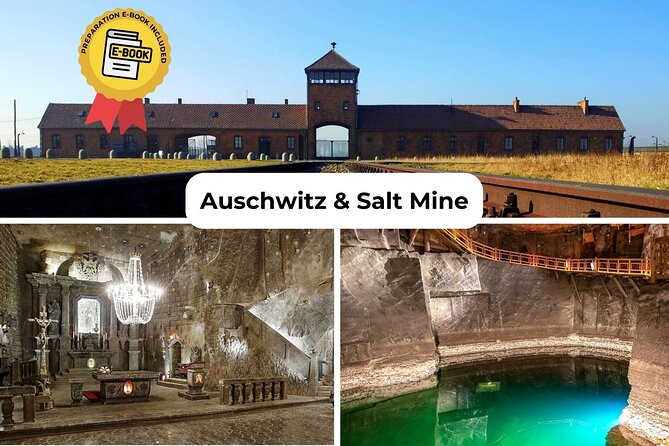
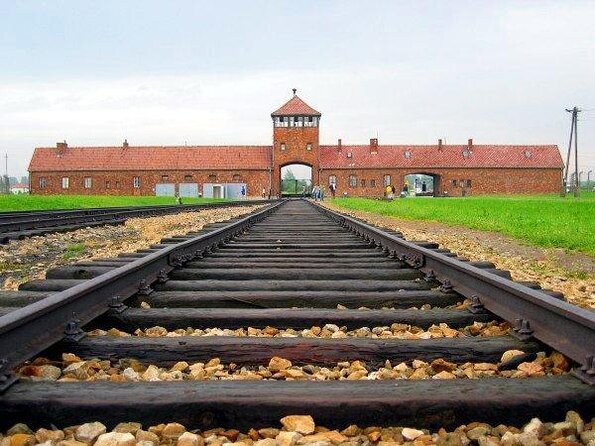
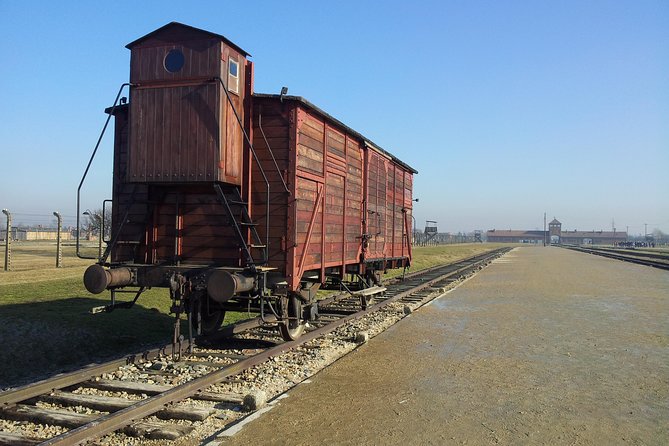
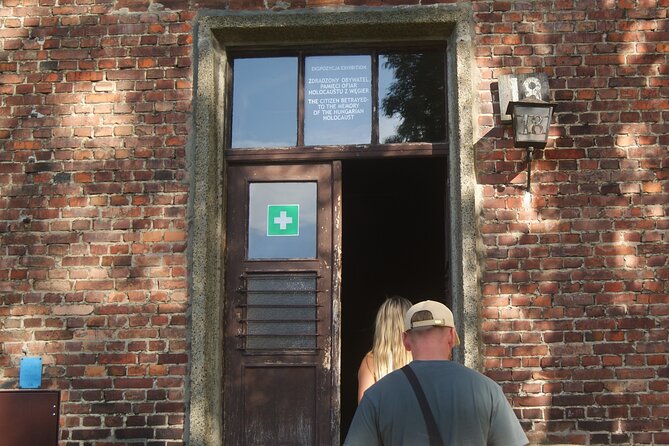
At Auschwitz-Birkenau, the experience is somber by design. The memorial covers 191 hectares, and it includes preserved camp relics across the complex. Your visit is guided through three concentration camps housed in the complex, with a focus on context and meaning rather than shock value.
In practical terms, you’ll spend time at Auschwitz I first, then continue to Auschwitz II–Birkenau. The ruins you’ll see include remnants linked to gas chambers and crematoria being part of the grounds. This is not history presented in a neat timeline. It’s history presented as physical evidence.
This is where the guide makes a real difference. Multiple people specifically praised guides by name—Joanna led them at Auschwitz and also at Birkenau, and Daniel was mentioned as brilliant from start to finish. In a place like this, good explanation helps you connect what you see to what it meant, and it can also help you avoid treating the memorial like a checklist.
A respectful heads-up (and a practical one)
This is a memorial, so dress for weather and keep the tone respectful. You’ll also want to manage your expectations for photography. Some visitors have found it hard to understand why people take photos of exhibits—so if you’re thinking about pictures, consider whether you’ll be respectful in how you do it, or whether it’s better to just put your attention where it belongs.
Also, audio can matter. One person reported a microphone problem during part of the Auschwitz tour, making it harder to hear. That’s not something you can control, but it’s a reminder that hearing the guide clearly is part of making this visit work.
Practical prep for Auschwitz: bags, full names, and cold morning survival
There are a few details you’ll be glad you handle in advance.
Bag size limit: Auschwitz grounds allow bags up to 30 x 20 x 10 cm (about 12 x 8 x 4 inches). If you have bigger luggage, you can leave belongings in the vehicle or use the luggage store in Auschwitz. If you tend to overpack, this is the moment to edit.
Full names required: At Auschwitz & Birkenau, you must provide the full names of all participants. When you book, make sure names match what you’ll use on the day.
Weather and waiting: Expect cold or rain while waiting before entry. Dress in layers. Even on days that start bright, queues and early morning waits can chill you fast.
Health check: Before start, the tour measures everyone’s temperature. The tour may refuse to attend customers with temperatures over 37.5°C (99.5°F).
If you’re traveling with kids, there’s another rule to know: children’s tickets (age 3–11) include an entrance ticket without receivers and headphones at Auschwitz. If you want your child to have a headset, you’ll need to book Youth tickets instead.
Wieliczka Salt Mine: what you’ll do underground and why it still feels special
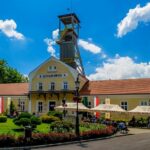
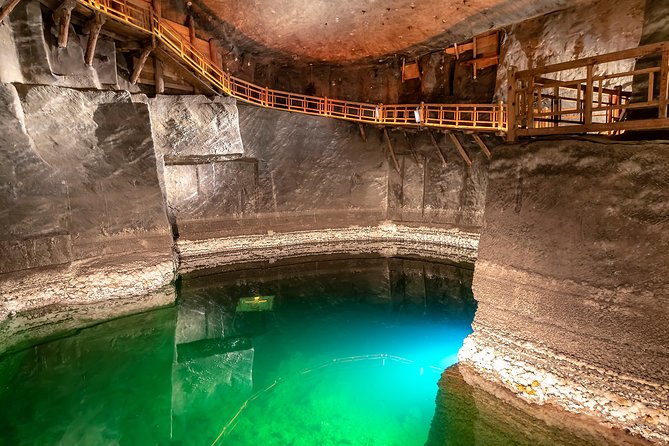
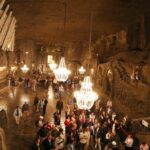
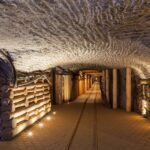
After Auschwitz, the salt mine can feel like a jolt in tone. But that’s exactly why it’s such a satisfying pairing. Wieliczka is a functioning underground world with chapels, shafts, lakes, and sculptures carved in rock salt. The tour also covers historic mining technology used centuries ago.
The mine route covers about a 3 km stretch. You’ll see how the space was shaped over time, including work done by miners long before modern tourism. One visitor even highlighted the human effort of early excavation done by hand.
The physical piece is real. You’ll take a staircase of 700 steps down to the mine level. Then, once your guided tour ends, you go back up via elevator. One review mentioned the depth feeling like about 13 metres, though the key fact for your planning is the 700-step climb down and the elevator ride up.
What to bring (that isn’t complicated)
You’ll want comfortable shoes with solid grip for stairs that can feel slick. Wear clothing that you can layer because temperatures underground can feel different than the Krakow air outside. And while there are snack and shop options at the sites, plan for a long day by making sure you have what you need for your energy.
One more timing thing: in a review, someone noted that the salt mine was closed on All Saints Day, which forced their hand on the schedule. That doesn’t mean it’s always closed on holidays, but it does mean you should double-check the exact day you’re going.
Transport and comfort: how the vehicles affect the day
Transport is included, and it’s air-conditioned, which matters when you’re stuck on a long ride. Still, vehicle size can change your comfort.
Some people mention that a smaller 19-seat bus could be cramped, especially for taller passengers. Others report punctual, polite drivers. Guides on transfers were also singled out—Justina was praised for making the trip easy and comfortable, including sorting out lunch complications for one group.
If you’re the type who hates waking up to an alarm you can’t hit snooze on, focus on this: pickup is often early, but the payoff is that you don’t lose time on your own hunting for the right entrance windows. A good transfer team can make a long day feel controlled.
Lunchbox reality: included if you choose it, and don’t assume it always lands
If you select the option with a lunchbox, it’s included. One review said their lunchbox was missed, and they ended up without food for much of the day, though the operator said a refund would be handled. Another person said they had ordered lunch and it wasn’t provided at first, but the transfer guide helped sort it out.
If you care about having food ready, I’d treat lunch as a “plan for it” item rather than a guarantee. If you have diet restrictions, you must let the supplier know by 5 PM the day before; otherwise, you receive a regular lunchbox with ham.
For many people, the simplest solution is to bring a little backup snack and water bottle to cover gaps. This is one of those long-day tours where small safety nets make a big difference.
Price and value: is $314.42 a fair deal?
At $314.42 per person, the value depends on how you’d do it on your own.
Here’s what you’re getting that typically costs real money when booked separately:
- Round-trip transfers from Krakow
- Admission tickets included for Auschwitz-Birkenau and the Salt Mine
- English-speaking guided tours at both sites
- All fees and taxes handled for you
- An air-conditioned vehicle
If you were to DIY this, you’d still need transport, timed entry, and expert guidance to make sense of what you’re seeing—especially at Auschwitz-Birkenau where explanation matters. Combine that with the early pickup coordination, and the price starts to look less like a splurge and more like buying time and reducing uncertainty.
That said, the schedule is heavy. If you hate very early mornings, or if a long day with stairs will drain you, the value isn’t the same. You might prefer splitting Auschwitz and the salt mine into separate days and travel at a slower rhythm.
Who this tour fits best (and who might regret the schedule)
This tour is best for you if:
- You’re short on time in Krakow and want both major sites in one shot
- You want an English-speaking guide to frame what you see, not just walk around
- You can handle a long day and plenty of walking
- You like structure and don’t want to manage transfers and entry times yourself
It may feel like a lot if:
- You’re older or easily worn down by long travel blocks and waiting
- You dislike early morning starts (pickup can be 3:00–4:00 AM)
- You want a slower pace to process everything at Auschwitz
One review described it as not feasible for older folks once they hit the fatigue point, and another traveler recommended splitting Auschwitz and the mine across two days if you can. That advice is worth taking seriously.
Should you book this tour?
I’d book it if you want a guided, time-saving route that covers both Auschwitz-Birkenau and Wieliczka Salt Mine with admission tickets included and transport done for you. The emotional weight at Auschwitz is real, but the guide-led structure and the practical organization can make the experience more manageable.
I’d skip (or rethink) if the idea of an early pickup and a long, intense day doesn’t match your energy. Auschwitz plus 700 steps down the mine is a lot in one package. In that case, doing them separately can help you breathe between the extremes of the day.
If you go, go prepared: pack within the 30 x 20 x 10 cm limit, dress for waiting, and remember that a memorial deserves your full attention more than your camera roll.
FAQ
How long is the Krakow to Auschwitz Birkenau and Salt Mine 1 Day Tour?
The tour runs about 11 to 12 hours. The schedule typically includes around 2 hours at Auschwitz I, 1 hour at Auschwitz II–Birkenau, and about 3 hours at the Wieliczka Salt Mine.
Is the tour offered in English?
Yes. This experience is offered in English, with an English-speaking guide accompanying you.
Are tickets included for Auschwitz and the Salt Mine?
Yes. Admission tickets are included for the Auschwitz-Birkenau museum portion and for the Wieliczka Salt Mine portion.
What time does pickup happen from Krakow?
The exact pickup time is sent the day before, after 5 PM. Pickup can be very early, including reports of 3:00–4:00 AM, depending on the museums’ schedule and guide availability.
Is a lunchbox included, and can I request a special diet?
A lunchbox is included only if you select an option with lunchbox. If you have diet restrictions, you must inform the supplier by 5 PM the day before; otherwise, you’ll receive a regular lunchbox with ham.
What bag size is allowed at the Auschwitz museum?
The maximum size allowed on the museum grounds is 30 x 20 x 10 centimetres. You can leave belongings inside the vehicle or use the luggage store in Auschwitz.
How many steps are there in the salt mine?
The Salt Mine visit includes a staircase of 700 steps to reach the mine level. You return to the ground level by elevator after the tour ends.
What are the rules for children and youth/student tickets?
Children age 3–11 have tickets that include the Auschwitz entrance ticket but without receivers and headphones. If you want your child to visit with a headset, book Youth tickets. Youth tickets require valid student ID on the day of the tour, and you’ll need to bring the ID or you may need to pay an extra fee for an adult ticket.
Does the tour check health/temperature before entering?
Yes. Before the start, the tour measures the temperature of every participant, and the tour may refuse entry for anyone with a temperature over 37.5°C (99.5°F).