REVIEW · KRAKOW
Krakow: Auschwitz-Birkenau Guided Tour with Ticket and Transfer
Book on Viator →Operated by DISCOVER CRACOW · Bookable on Viator
8 hours to face history. This Krakow trip takes you to Auschwitz-Birkenau, a UNESCO World Heritage Site, with guided time in Auschwitz I and Birkenau, plus transportation that saves you from juggling trains and tickets.
I love having headsets for clearer narration, and I also like the round-trip transfers from Krakow so you can focus on the day, not logistics.
One thing to think about: the schedule can run very early, and ticket handling may not feel like a true skip-the-line for everyone—so build in patience.
In This Review
- Key Points Before You Go
- Auschwitz-Birkenau from Krakow: What This Day Trip Really Is
- Price and Value: Why $93.57 Can Be a Good Deal
- The Drive from Krakow to Oswiecim: Transfers, Timing, and Patience
- Stop 1 in Auschwitz I: Entering Through the Gate and Seeing the Site Up Close
- The Heavy Part in Birkenau (Brzezinka): Scale, Arrivals, and “Selection”
- How the Guides and Headsets Affect the Quality
- Walking Reality: Footwear, Weather, and the Outdoor Time Factor
- Best Ways to Get the Most Out of Auschwitz-Birkenau
- Who This Tour Suits (and Who Might Prefer a Different Plan)
- Should You Book This Krakow to Auschwitz-Birkenau Tour?
- FAQ
- How long is the Krakow Auschwitz-Birkenau guided tour?
- Where do I meet the tour in Krakow?
- Are admission tickets to Auschwitz I and Birkenau included?
- What language is the tour guide?
- Is this tour suitable for children?
- What should I bring on the tour?
Key Points Before You Go
- Licensed museum guidance at Auschwitz I helps you understand what you’re seeing without guessing.
- Headsets make it easier to follow the story in busy, echoing spaces.
- Round-trip A/C transport from Krakow saves time and hassle for an 8-hour itinerary.
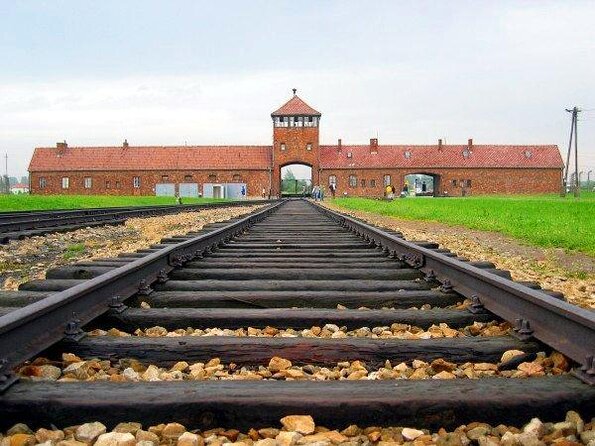
- Birkenau in Brzezinka is where the scale hits you hard, with key points tied to arrivals and selections.
- Walking and outdoor time are part of the deal, so comfortable shoes and weather gear matter.
- Ask how tickets work in practice before you go, since some travelers report surprises at the gate.
Auschwitz-Birkenau from Krakow: What This Day Trip Really Is
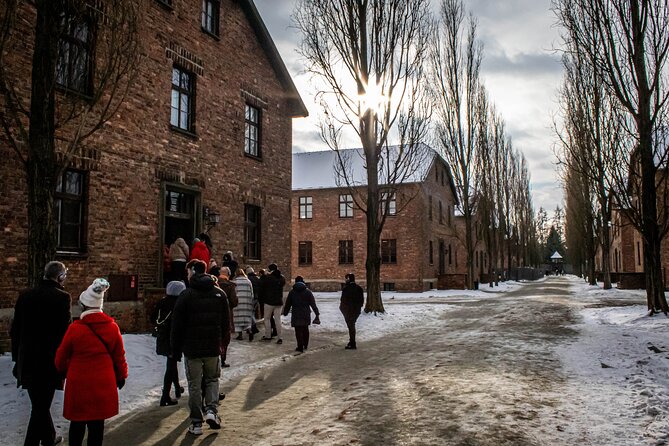
This is not a light sightseeing loop. It’s a structured visit to one of the most devastating places in modern history, with guided stops that help you connect buildings, documents, and layout to what happened there.
The value here is that you get a full route—Auschwitz I first, then Birkenau—without needing to plan transit between Krakow and Oswiecim/Brzezinka on your own. The downside is that the experience is long and emotionally heavy, and the logistics can feel rushed if something slips.
If you’re the type who likes facts, context, and clear wayfinding, you’ll appreciate the format. If you need lots of downtime, this may feel like too much.
You can also read our reviews of more tours and experiences in Krakow

Price and Value: Why $93.57 Can Be a Good Deal
At about $93.57 per person, you’re paying for the bundle: round-trip transport, entry to both parts of the site, and a guided visit with headsets. On top of that, it includes museum-licensed guidance (for the Auschwitz I portion) and a small-ish group size (up to 30 travelers).
That can be good value compared to cobbling together a DIY day with transit and timed admissions. The real question is not the price. It’s whether the “tickets included” promise matches how it works for your specific departure.
Some negative experiences point to ticketing confusion—like being told admissions weren’t fully secured in advance and having to handle ticketing at the museum counter. So here’s my practical advice: when you confirm your booking, ask whether your Auschwitz and Birkenau admissions are pre-purchased in your name for the tour time you’re assigned. You don’t need a paragraph—just a yes or no and what to expect at the gate.
The Drive from Krakow to Oswiecim: Transfers, Timing, and Patience
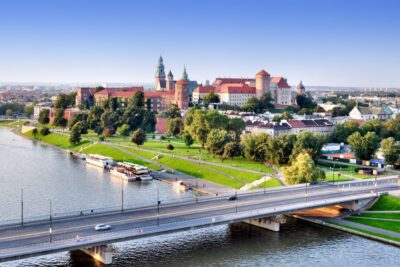
The transfer is roughly 1 hour 30 minutes each way from Krakow to Auschwitz/Oswiecim. You’ll start either from your hotel (if you chose pickup) or from the set meeting point at Pawia 18B near the Mercure hotel kiss-and-ride stop.
Important reality check: departure time may shift the day before your tour due to limited guide availability at the museum. That’s not rare for Auschwitz visits, but it can still impact your morning routine. Multiple unhappy accounts describe major early changes and long waiting times outside the gates or at ticket counters.
So, if you book this, plan like you’re going to deal with a morning that starts earlier than you’d like. Bring a layer for the car ride and the lineup. Keep your phone charged. And treat the early hours as part of the cost of admission to a place that runs on tight scheduling.
Also, the group takes no long lunch break. That means the day can feel packed—another reason the transport piece is helpful.
Stop 1 in Auschwitz I: Entering Through the Gate and Seeing the Site Up Close
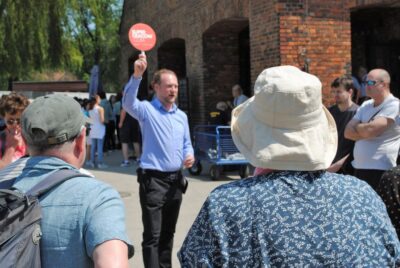
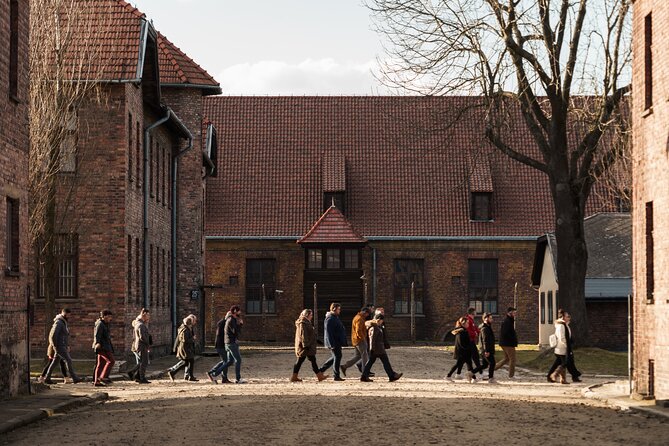
Your visit to Auschwitz I starts after a quick arrival break—think coffee or a brief look around outside—before you meet the professional guide (licensed by the museum) and begin walking.
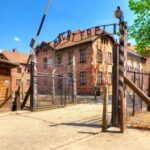
Then you’ll enter through the gate with the inscription Arbeit Macht Frei. Even if you know the words from photos, seeing the gate in person changes the whole feel of the place. It’s not “a monument.” It’s an entry point to what prisoners were forced to live through.
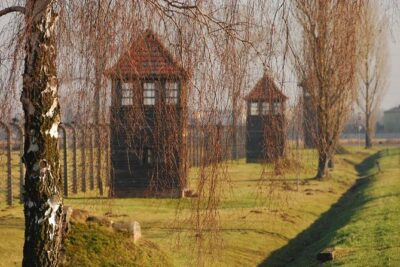
Here’s what Auschwitz I is about: you’ll move through original buildings and key infrastructure—roads, fences, watchtowers, railway areas, and specific features like the so-called death wall. The guide connects the physical space to the system that operated there, including what prisoners arrived with and what was taken from them.
You’ll spend about 2 hours here, and that time matters. Auschwitz I is often where first-time visitors get oriented: what was happening, who was imprisoned, and how the camp functioned in the early phase. A good guide turns the layout into understanding.
The Heavy Part in Birkenau (Brzezinka): Scale, Arrivals, and “Selection”
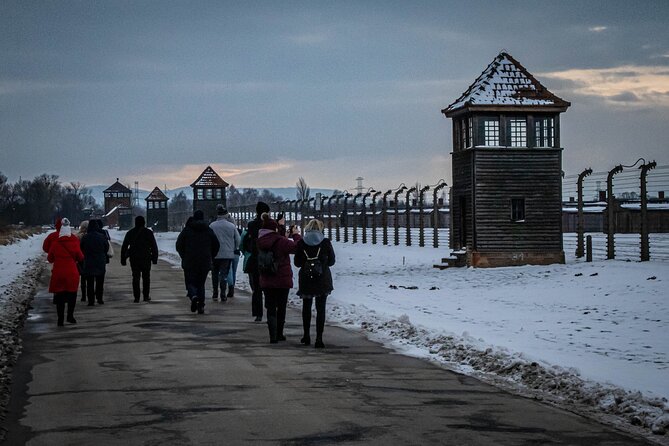
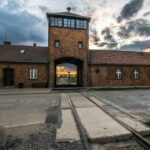
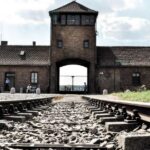
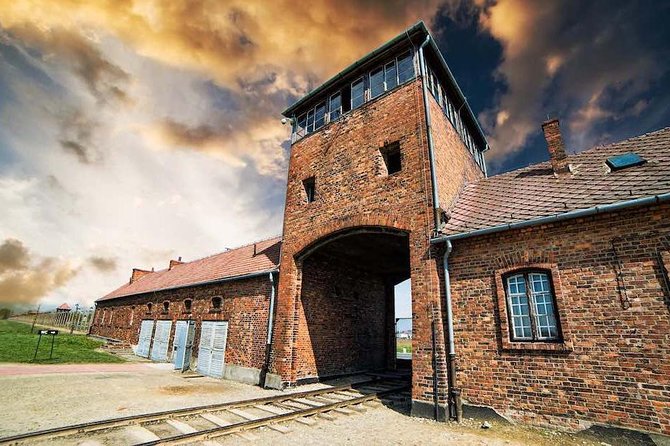
After Auschwitz I, the tour heads to Birkenau, also known as Auschwitz II, in Brzezinka, about 3 kilometers away. This is where the scale hits hardest. Birkenau was built starting in October 1941 on the site of a mostly demolished village, and it was designed for a huge capacity—yet conditions were brutal, and many people were destined to die from cold, hunger, disease, and exhaustion.
Construction used slave labor, and the camp grew into a center for extermination of Jews, alongside prisoners of other nationalities. Your guide keeps linking what you’re walking past to arrivals, forced labor, and the machinery of death.
You’ll walk preserved barracks and reach key points like the rail ramp—where arrivals and separation processes happened. The tour also points out the role of Dr. Mengele in selections, and how gas chambers were located roughly 200 meters away.
This part of the day is the most emotionally demanding. It’s not only because of what happened. It’s also because you’re moving through open areas and long sightlines that make the camp’s layout feel brutally efficient.
If you’re prone to getting overwhelmed in crowds, consider bringing headphones down and pausing when you need it. The tour asks for solemnity—no smoking, eating, or loud behavior—and that matters here. You’re there to witness, not to “tour.”
You can also read our reviews of more guided tours in Krakow
How the Guides and Headsets Affect the Quality
This tour’s structure is only as good as the communication. The good news: it includes headsets, which is a big deal in Auschwitz spaces where sounds get swallowed or echoed and groups often bunch up.
The guide quality can vary by departure, and that’s not something you can control. Some unhappy accounts describe moments when a guide couldn’t fully translate the narration, or when organization led to delays that squeezed the visit. Other accounts describe strong guides and hosts, including people named Natalia, Bohdan, and drivers like Fillip who helped keep things calm.
So here’s what I’d do if you want the best chance of a smooth day: show up early, stay close to your group meeting spot, and don’t be shy about asking the tour leader for where you should be next if you get separated. At Auschwitz, one missed turn can steal your time fast.
Walking Reality: Footwear, Weather, and the Outdoor Time Factor
Expect a lot of walking. Even though the museum experience is structured, you’ll spend significant time outdoors and between camp areas.
The tour explicitly asks you to wear comfortable footwear and reminds you breaks are short—no more than 10 minutes. Weather matters because much of the visit is outside, so bring an umbrella or raincoat if forecasts look rough.
Also plan for long-standing quiet. You’re walking through places that are preserved with respect, and the rules are clear: be solemn, keep your voice down, and avoid eating inside the museum areas. If you need snacks, treat it as outside and quick.
For lunch: there isn’t a guaranteed lunch break. You may buy lunch from the tour leader during the day, or you can bring your own food and drinks. That last option is often the easiest way to control costs and energy.
Best Ways to Get the Most Out of Auschwitz-Birkenau
A guided tour is not just about convenience. It helps you connect details: dates, prisoner categories, camp systems, and the layout that made the violence possible.
Before you go, I recommend one small prep step: decide what you want to understand. Do you want the difference between Auschwitz I and Birkenau? Are you focused on the prisoner experience? Or are you trying to understand the process of arrivals and selections? If you go in with one goal, the guide’s narration will land better.
During the walk, use the headsets and watch for cues from the guide. When they stop near a fence line, watchtower, or railway feature, it usually isn’t random. It’s where the story becomes physical.
Finally, be kind to yourself. This place is designed to withstand time, which means it keeps its weight. You don’t need to “power through” like it’s a checklist.
Who This Tour Suits (and Who Might Prefer a Different Plan)
This is best for you if:
- you want round-trip transport from Krakow
- you prefer a guided visit over reading alone
- you can handle a long, emotionally intense day with limited breaks
- you want Auschwitz I explained with a museum-licensed guide and then Birkenau guided as well
It may be a rough fit if:
- you’re traveling with children under 14 (the tour is not recommended for them)
- you hate early mornings and lineup chaos
- you need a very flexible itinerary and lots of waiting-free time
If you’re worried about timing, note there’s also a last-minute option covering just transit. That doesn’t replace a guided visit, but it can reduce some logistical friction depending on what’s available.
Should You Book This Krakow to Auschwitz-Birkenau Tour?
Book it if you want an efficient, structured day with transport from Krakow, admission to Auschwitz I and Birkenau, and guided time that helps you understand what you’re seeing—especially with headsets and museum-licensed guidance for Auschwitz I.
Hold off or ask extra questions if ticket handling details matter to you personally. Because while the package says tickets are included, some departures have reportedly involved confusing handoffs and long waits. Your best safeguard is a quick confirmation from the operator about how admissions will be handled at the museum gate for your specific departure time.
If you can tolerate an intense day and possible early scheduling shifts, this tour is a practical way to visit Auschwitz-Birkenau without DIY stress.
FAQ
How long is the Krakow Auschwitz-Birkenau guided tour?
The tour is about 8 hours (approx.), including driving time and guided visits at Auschwitz I and Birkenau, plus a return trip to Krakow.
Where do I meet the tour in Krakow?
The meeting point is Pawia 18B, 31-154 Kraków, Poland (near the Mercure hotel kiss-and-ride). If you choose hotel pickup, you’ll be picked up from your provided hotel address, but some hotels may require pickup from the nearest available location due to restricted traffic zones.
Are admission tickets to Auschwitz I and Birkenau included?
Yes. Entry tickets to Auschwitz I and Birkenau are included in the package, with the admission for Auschwitz I and the Birkenau segment indicated as ticket-included/free within the tour structure.
What language is the tour guide?
The tour is offered in English.
Is this tour suitable for children?
It is not recommended for children aged 14 and under.
What should I bring on the tour?
Bring ID or a passport (security asks for it). Wear comfortable shoes since there’s a lot of walking, and dress for weather because it operates in all weather conditions. The tour does not plan a lunch break, so you may want to bring food and drinks or plan to purchase lunch from your tour leader.