REVIEW · KRAKOW
Krakow: Schindler’s Factory Guided Tour
Book on GetYourGuide →Operated by Thousand Miles Cracow Adventure Company · Bookable on GetYourGuide
Nazi history, told room by room. I love how this 90-minute guided visit keeps moving, and how the story lands on Oskar Schindler without getting lost in trivia. One thing to watch: the museum is huge for 90 minutes, so if your group is large or the pace is brisk, you might not get to every room you hoped for.
The Schindler’s Factory Museum is a relatively “young” institution, but it’s become one of Krakow’s most in-demand stops. Expect multimedia, artifacts, and themed rooms that gradually send you backward through World War II life in Krakow—so the experience feels like a guided walk through time, not a stack of reading panels.
Plan for a smooth entry: you meet at Lipowa 4 by the main entrance and your guide holds an excursion.city sign, and you’ll skip the ticket line. Also note that from January 1, 2026, you must enter with personalized tickets, meaning you’ll need to provide full participant names when reserving and bring your passport or ID for admission.
In This Review
- Key things that make this tour worth your time
- Schindler’s Factory Museum: what “guided” really changes
- Finding your guide at Lipowa 4 (and staying on schedule)
- The 90-minute route: what you’ll actually see
- The photo and everyday-life rooms
- Officialdom and the officer’s room
- Prison cell and the sense of confinement
- Old transport: tram and railway settings
- Krakow Jewish Ghetto grounds
- The Płaszów-like camp area
- Schindler’s Factory office areas (inside the story)
- Oskar Schindler’s office: why it lands differently on a tour
- What the guide experience affects most (and how to prepare)
- Price and value: does $50 make sense for 90 minutes?
- Who this tour suits best (and who should consider alternatives)
- Should you book Schindler’s Factory: my straight answer
- FAQ
- FAQ
- Where is the meeting point for the Schindler’s Factory tour?
- How long is the guided tour?
- What is included in the price?
- Do I need to buy tickets separately?
- What languages are the live guides available in?
- What will I learn during the tour?
- Which rooms or areas can I expect to see?
- Is the tour time exact?
- What do I need for entry from January 1, 2026?
- Can I cancel for a refund?
Key things that make this tour worth your time
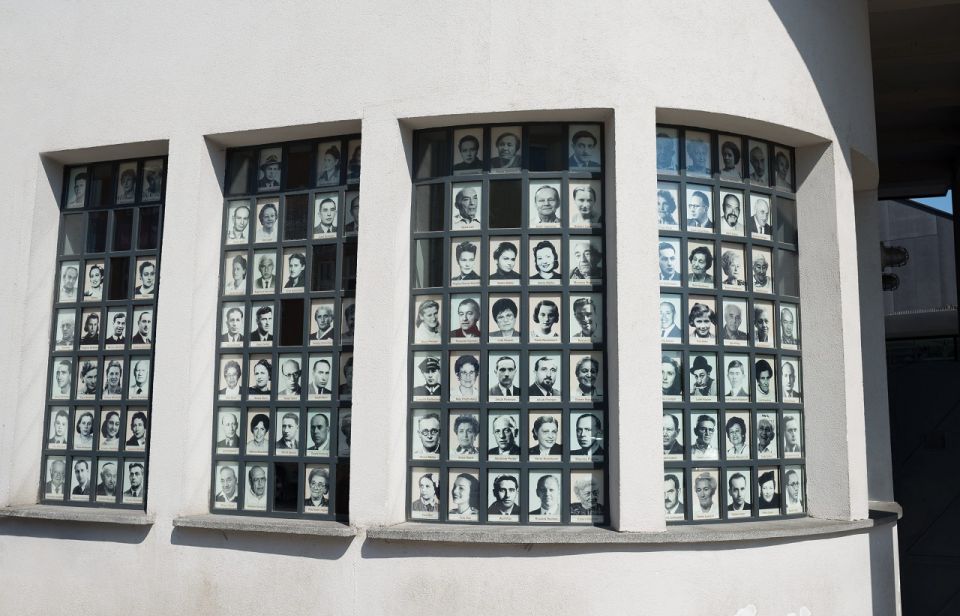
- Room-by-room time travel through Nazi-occupied Krakow, with multimedia and artifacts in each setup
- Oskar Schindler focus that connects the citywide story to one real person’s choices
- English (and other languages) with a live guide, so you can ask what something means right then
- Skip the ticket line, which matters in a museum this popular
- A pace built for 90 minutes, so expect a smart route, not a slow wander
Schindler’s Factory Museum: what “guided” really changes
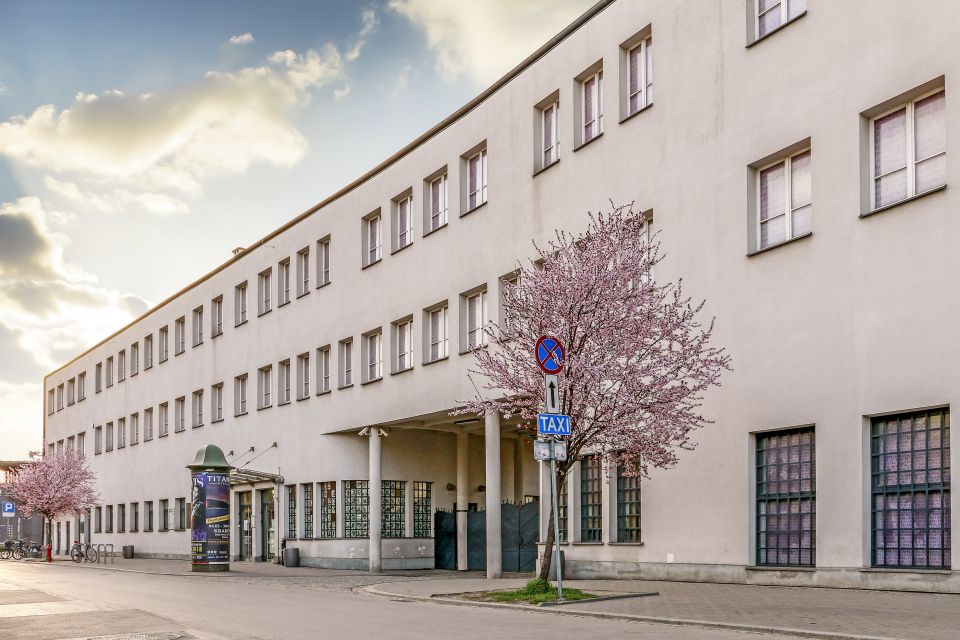
This is one of those museums where the guide matters. Without one, you can still walk through and read. With a good guide, the experience turns into something more practical: you start to understand why each room is shaped the way it is, and how each detail connects to what happened in Krakow.
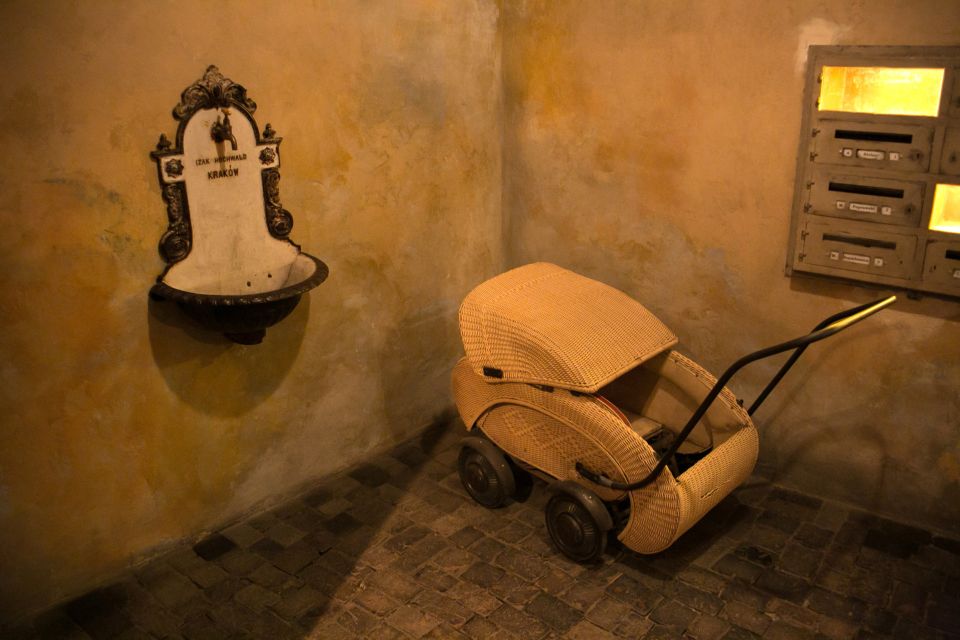
The museum’s design does a lot of work for you. Each room is staged differently, so you get a changing “scene” as you go—photo-focused spaces, uniforms and officialdom imagery, prison-like areas, and transport settings like tram and railway portions. It’s not just information. It’s atmosphere.
You’ll also notice a pattern: the tour doesn’t just show atrocities in general terms. It helps you track everyday life under occupation—what people saw, what they wore, where they moved, and how the city’s normal rhythms were turned into something darker.
That’s the real value of the guided format here: it helps you process big, heavy topics without turning the visit into an emotional blur.
You can also read our reviews of more guided tours in Krakow
Finding your guide at Lipowa 4 (and staying on schedule)
Your meeting point is Lipowa 4, 30-702 Krakow, near the main entrance to the Factory. Your guide will be holding an excursion.city sign, so look for that first and then check the group.
Why this matters: Schindler’s Factory is busy. “Running late” is the fastest way to feel stressed inside a museum that’s already intense. If you want your brain to stay calm, arrive a few minutes early, find the sign, and settle in before you start walking.
Language options are strong—Italian, Spanish, French, English, and German—so you can pick the one that matches how you like to think and listen. A live guide means you aren’t stuck decoding everything on your own, especially in sections that rely on context and explanation.
Also, this tour is 90 minutes, and the timing is described as approximate because it depends on the museum’s scheduling. If you’re catching another timed booking afterward, build in buffer time. It’s not because the tour runs late all the time; it’s because the museum controls when you can move between spaces.
The 90-minute route: what you’ll actually see
This tour is designed to hit the museum’s key narrative points without wasting time. Here’s what the visit feels like as you move through the themed areas.
The photo and everyday-life rooms
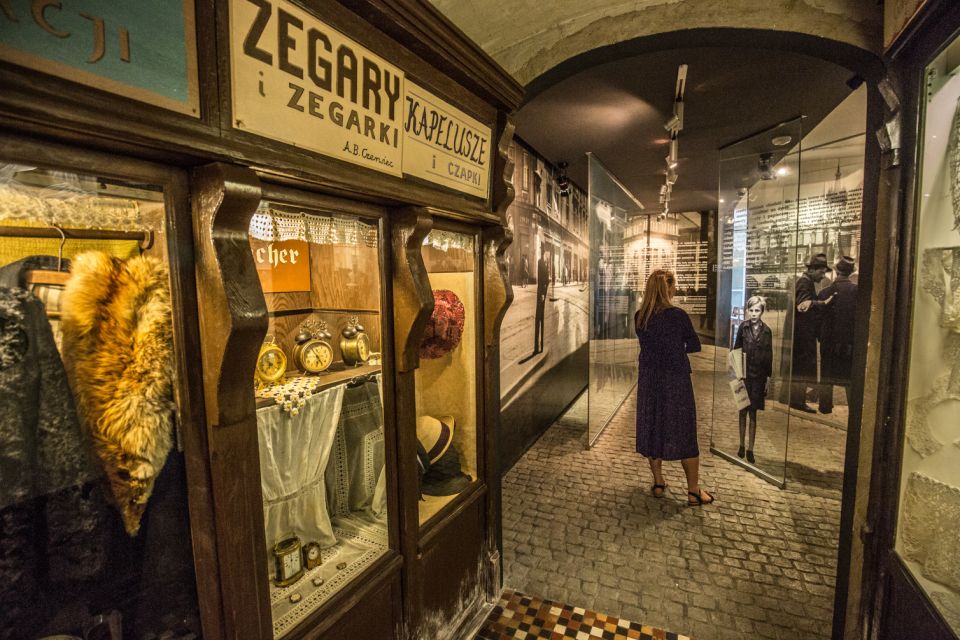
You start by stepping into earlier wartime framing, including a photo salon. That section helps set the tone and shows how images were part of how people understood their world—then and now. It’s a useful opening because it teaches you how to look at what you see rather than just stare at it.
From there, you get into the streets of Krakow. This part is important because it shifts the museum from abstract history into location-based reality. You begin to connect the story to a specific place, which makes everything that follows hit harder and feel more grounded.
Officialdom and the officer’s room
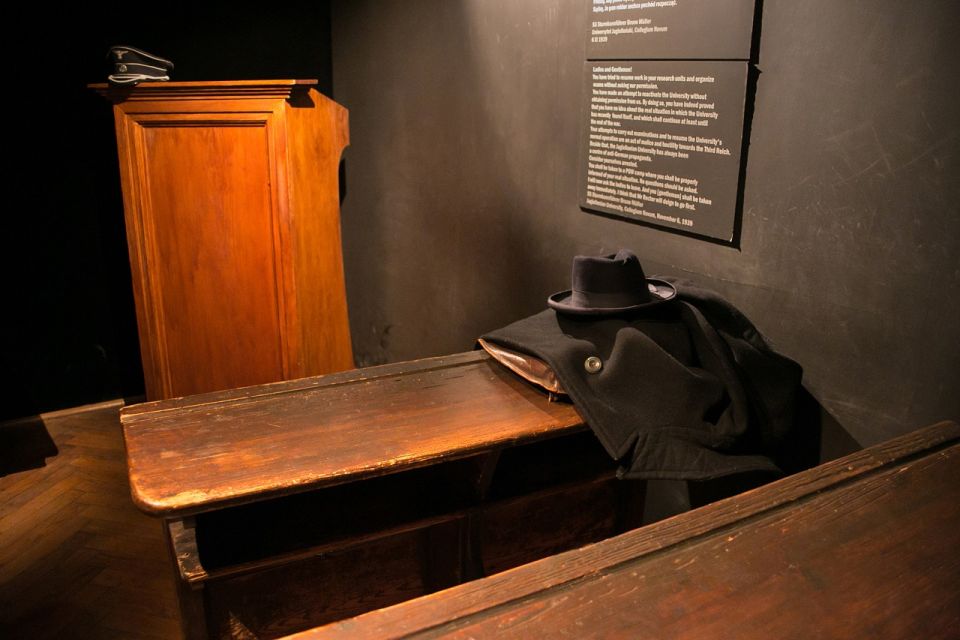
Next comes a stark room involving a swastika-patterned officer’s space. It’s exactly the kind of exhibit that can feel visually aggressive. The guide’s job here is to frame what you’re seeing—what those symbols meant, how they were used, and how power showed up in daily surroundings.
If you don’t like feeling pushed by visuals, you might feel your shoulders tense in this section. That’s normal. Use the guide’s pacing as your anchor: listen for the explanation, not just the impact of what’s around you.

Prison cell and the sense of confinement
Then you move into a prison cell. This is where the museum shifts from occupation as atmosphere to occupation as control. You’ll feel the difference immediately: less space, more constraint, and stronger emphasis on how people were detained and processed.
This is also a good section to ask yourself a practical question: what does the exhibit want you to understand about fear and power? Even without dramatic “storytelling,” the layout and props do the teaching for you.
Old transport: tram and railway settings
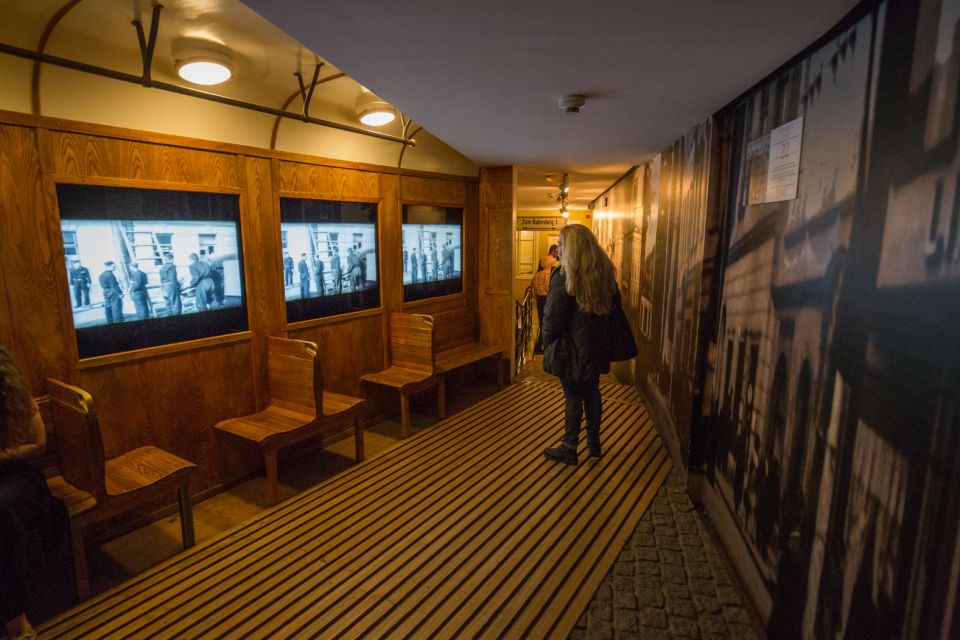
One of the more memorable transitions is the old tram and railway portion. Transport details matter because they show how movement became regulated. It’s the kind of room that turns history into mechanics: routes, schedules, transfers, and the simple fact that getting from A to B could become dangerous or impossible.
You’ll then reach a railway station setting. Station spaces work like story hubs in the museum—people think of them as transit points, but the exhibit uses them to explain how the machinery of the Holocaust operated.
Krakow Jewish Ghetto grounds
After the transport theme, the museum brings you to the grounds of the Krakow Jewish Ghetto. This is a crucial narrative step because it changes the focus from systems and movement to a specific community’s experience.
In a guided tour, you’ll get context fast. Instead of guessing what everything means, you hear the guide connect the exhibit to the broader occupation story—so you understand why the museum wants this space to be distinct and not “just another room.”
The Płaszów-like camp area
Near the end of the route, there’s a space that resembles an area of Płaszów concentration camp. The museum uses this to show what the end stages of the occupation could look like—an environment designed for dehumanization and suffering.
This isn’t a casual stop. If you’re sensitive to intense content, it helps to brace yourself mentally and take a slower moment while you process the room.
Schindler’s Factory office areas (inside the story)
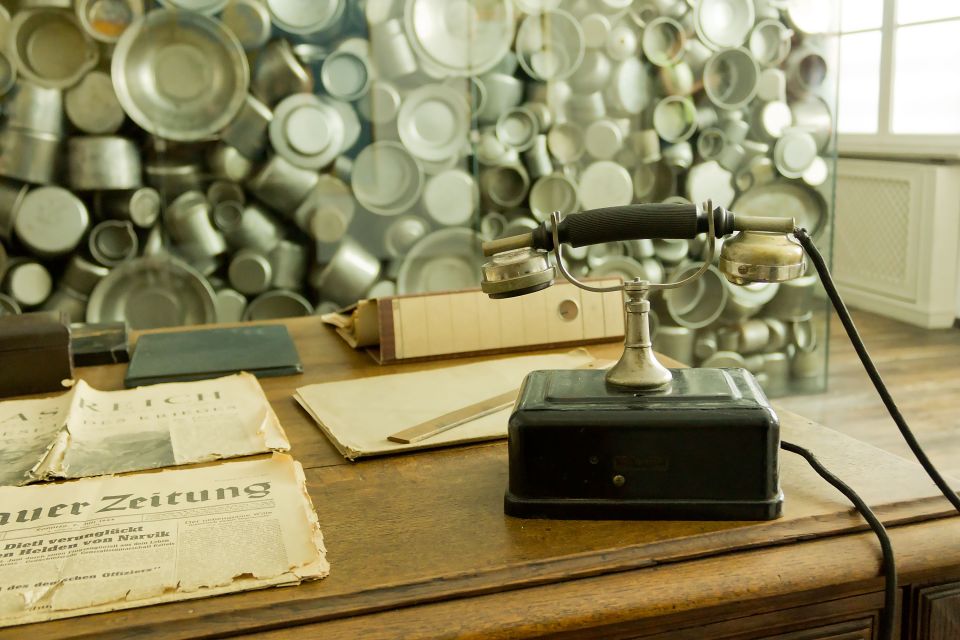
If you came for Oskar Schindler, this is the part that ties your curiosity to something concrete. The tour includes the former factory director’s office and the secretariat, giving you a clearer picture of where Schindler worked and how the business setting related to the wider wartime story.
Even if you already know the name, these office sections help you anchor the narrative in a physical place—paperwork, positions, and the ordinary “work world” contrast sharply with what was happening outside.
Oskar Schindler’s office: why it lands differently on a tour
The museum’s layout makes your attention shift from Krakow as a city to Schindler as a human pivot. That matters.
An office setting can be easy to underplay in a story like this—people expect battlefields and ghettos, not desks and rooms. But that’s exactly why the stop feels powerful. You see how one person’s choices played out inside the structure of a factory environment, and the guide’s commentary helps connect those dots.
I like that the tour doesn’t treat Schindler as a one-note hero story. It presents him as part of a larger system—then shows why the office and secretariat areas are worth your time.
If you’re trying to understand how individuals can affect outcomes, this section gives you a clearer framework than a museum pamphlet ever could.
What the guide experience affects most (and how to prepare)
From what I’ve seen in how these tours run in practice, a few factors can change your day more than you’d expect.
Group size and pacing are the biggest ones. Some groups move through fast and skip details. Others get time to linger where the guide is strongest. With 90 minutes, the museum can only fit so much. So yes, it’s possible you won’t see every room in the exact same depth each time.
Audio and listenability also matter. In smaller groups, it’s easier to hear explanations and follow the guide’s route from room to room. If you end up in a larger group, you may spend more time tracking bodies than meaning. Your fix is simple: stand where you can see the guide clearly, and don’t be shy about asking for a quick clarification when the guide pauses.
Finally, languages. The tour offers live guidance in Italian, Spanish, French, English, and German. Pick the language that lets you understand nuance without strain. Museum history loses impact if you’re mentally translating every sentence.
Practical tip: wear comfortable shoes. You’ll be walking across several staged areas, and it’s not the place to suffer for fashion.
Price and value: does $50 make sense for 90 minutes?
At around $50 per person, this isn’t a budget “quick stop.” But it also isn’t just a museum ticket slapped on top of a walk.
Here’s the value logic:
- You get entrance ticket + a live guide. That’s the big part.
- You skip the ticket line, which saves time and reduces pre-museum stress.
- You get a structured route through the most important rooms, which is crucial when you only have 90 minutes.
If you were planning to visit solo, you’d need to do a lot more reading to stitch the story together. Paying for the guide is how you buy context. The only “cost” is time: 90 minutes can feel quick if you’re hoping for a slow, absorb-every-detail pace.
So who should consider paying this? People who want meaning, not just access. If you like guided structure, the price usually feels fair.
Who this tour suits best (and who should consider alternatives)
This guided tour is a strong fit for:
- You’re interested in Nazi-occupied Krakow and want the story organized for you
- You specifically want the Oskar Schindler connection
- You prefer a guide to help you make sense of multimedia and staged rooms
It may be less ideal if:
- You hate fast pacing and want to spend longer in each room
- You want to browse artifacts and text at your own speed without a group rhythm
- You’re hoping for full coverage of every corner with time to spare
Because the museum is famous and the tour is only 90 minutes, I treat this as the “best way to get oriented fast” option. If you want deeper browsing after the tour, you’ll likely appreciate it even more.
Should you book Schindler’s Factory: my straight answer
Yes, I’d book it if your goal is to leave with a clear understanding of what happened in Krakow and why Schindler’s role matters—especially if you want an English-speaking guide option.
Book this tour if you:
- want guided context instead of piecing it together yourself
- value time efficiency (skip the line, structured route)
- like history told with a plan rather than a random walk
Consider skipping (or pairing with more time) if you:
- want a slow, independent museum day
- get overwhelmed by intense, staged visuals and need extended breaks
- are trying to fit too many timed stops in the same window
FAQ
FAQ
Where is the meeting point for the Schindler’s Factory tour?
Meet your guide at Lipowa 4, 30-702 Krakow, near the main entrance to the Factory. The guide will be holding an excursion.city sign.
How long is the guided tour?
The tour lasts about 90 minutes.
What is included in the price?
The price includes an entrance ticket and a live guide.
Do I need to buy tickets separately?
No. This experience includes the entrance ticket, and it also offers skip-the-ticket-line entry.
What languages are the live guides available in?
Live tour guides are available in Italian, Spanish, French, English, and German.
What will I learn during the tour?
You’ll learn about Nazi-occupied Krakow and the detailed story of Oskar Schindler, with guided explanation of the museum’s themed areas.
Which rooms or areas can I expect to see?
You can expect themed sections such as a photo salon, the streets of Krakow, a swastika-patterned officer’s room, a prison cell, old tram and railway scenes, a railway station area, the grounds of the Krakow Jewish Ghetto, and a room resembling an area of Płaszów concentration camp. The former factory director’s office and secretariat are also included.
Is the tour time exact?
The start times are approximate and may change due to Schindler’s Factory Museum scheduling.
What do I need for entry from January 1, 2026?
You’ll need to provide full names of all participants when reserving and bring a passport or ID for entry to Schindler’s Factory Museum.
Can I cancel for a refund?
Yes. Free cancellation is available up to 24 hours in advance for a full refund.