REVIEW · KRAKOW
Kraków Oskar Schindler’s Enamel Factory Museum skip the line tour
Book on Viator →Operated by Cracow Holidays · Bookable on Viator
Schindler’s factory hits hard, in the best way. This skip-the-line museum tour uses a licensed guide to connect Kraków’s everyday life to the fate of its Polish and Jewish communities during World War II. I particularly liked how the story is built around real places in the factory and licensed guidance, not a quick pass through captions.
What I love most: you also get the museum ticket included, so you spend less time figuring things out and more time learning. The main thing to consider is that this is a serious subject, so if you’re looking for a light, casual outing, you may find the tone heavy.
In This Review
- Key Points You’ll Actually Use
- Schindler’s Enamel Factory Tour: Why This Place Matters in Kraków
- Price and Value: Is $46.34 a Good Deal?
- Meeting Point at Lipowa 4: Getting Started Smoothly
- Your Licensed Guide: What Makes the Tour Feel Different
- The Main Stop: Inside Fabryka Emalia Oskara Schindlera
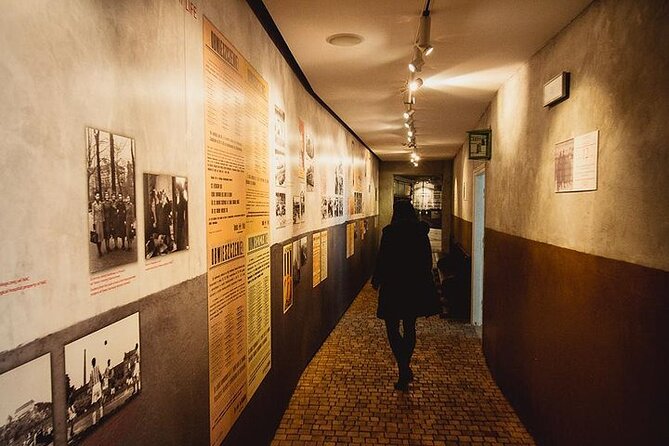
- What to expect inside the museum space
- Schindler’s Preserved Office: Where the Story Turns Personal
- The Ark of Survivors: Pots, Symbol, and Memory
- Skip-the-Line Entry: What You Gain (and What You Don’t)
- Duration and Pacing: Plan Your Day Around 1.5–2 Hours
- Group Size and Atmosphere: Small Group for a Heavy Story
- Who Should Book This Tour?
- Should You Book the Kraków Schindler Factory Skip-the-Line Tour?
- FAQ
- How long is the Schindler Enamel Factory Museum skip-the-line tour?
- Does the tour include museum admission?
- Is there a mobile ticket?
- Where does the tour start?
- How many people are in the group?
- Is the meeting point near public transportation?
- Is coffee or tea included?
- Is private transportation included?
- Can most travelers participate?
- If I cancel, what’s the rule for a full refund?
- FAQ
- Does the tour truly skip the line at the museum?
- Will I end back at the meeting point?
Key Points You’ll Actually Use
- Skip-the-line entry helps you start the visit without museum waiting time eating your schedule.
- Licensed, professional guide adds context and explains what you’re seeing, instead of treating it like a self-guided worksheet.
- Small group size (max 10) keeps the pacing calm and makes it easier to ask questions.
- Museum includes admission in the tour price, so the total cost is simpler to judge.
- A preserved office and symbolic Ark of Survivors turn the factory story into something tangible, not abstract.
Schindler’s Enamel Factory Tour: Why This Place Matters in Kraków
Kraków has a way of mixing beauty with painful memory. At the Schindler Enamel Factory Museum, you don’t just learn about World War II in general terms. You walk through a site tied to work, survival, and a man whose choices mattered in the middle of monstrous cruelty.
The tour’s big strength is how it links private life to world events. You can’t really treat this as just another museum stop, because the guide helps you see how the war disrupted daily routines and forced impossible decisions. The museum focuses on the wartime role of the Deutsche Emailwarenfabrik (DEF) and the figure of Oskar Schindler, whose story became widely known after the release of Steven Spielberg’s 1993 film Schindler’s List.
One practical reason to book a guided version: it gives you structure. The museum can feel dense because it’s telling several intertwined stories. With a guide, you’re less likely to miss the emotional logic behind exhibits and building details.
You can also read our reviews of more museum experiences in Krakow

Price and Value: Is $46.34 a Good Deal?
The tour price is $46.34 per person, and the visit runs about 1 hour 30 minutes (plan for roughly 1.5–2 hours in real life). On paper, that’s not “cheap,” but the value math is fairly clean.
Here’s why I think it’s worth considering:
- Admission to the museum is included. You’re paying for the ticket and the guide together, so you avoid the extra line-item cost that often comes with guided museum days.
- You get a professional, licensed guide. This is the kind of museum where context changes everything. A guide can explain why an artifact matters, not just what it is.
- Skip-the-line matters more than people expect. If you only have a short window in Kraków, saving waiting time is real value, not a marketing promise.
- Small group size (max 10) helps the tour feel personal rather than rushed.
The main cost-related consideration is time. If you only want a quick look, this is probably longer and more emotionally intense than you might want. But if you’re the type who likes to understand the story behind the walls, it’s a fair use of your day.
Meeting Point at Lipowa 4: Getting Started Smoothly
You’ll meet at Lipowa 4, 32-051 Kraków, Poland. The activity ends back at the meeting point, so you’re not left figuring out how to get yourself out afterward.
This also makes the tour easy to slot into a broader Kraków itinerary. You know where you’ll start and where you’ll finish. The location is also described as near public transportation, which is a big deal in a city where your walking pace can swing wildly depending on weather and crowds.
The tour uses a mobile ticket, which is handy. You won’t be hunting for paper tickets or trying to match a barcode in low light on your phone. Just have the ticket ready when you arrive.
Your Licensed Guide: What Makes the Tour Feel Different
This is the part that often separates a “museum visit” from an experience you remember.
The tour includes a professional and licensed guide who tells the story of Kraków and the fate of the city’s Polish and Jewish inhabitants during World War II. The guide’s role isn’t to read an exhibit label back to you. It’s to connect the labels to the bigger reality: how the DEF factory fit into wartime life, how Oskar Schindler operated, and what it meant for the people involved.
In particular, the best feedback you’ll hear about this tour highlights guides who bring the museum to life through context and storytelling. One guide name that came up clearly is Paul. The impression is consistent: Paul adds extra background and helps you understand what you’re looking at, so the visit feels purposeful rather than passive.
That matters because many museums about the Holocaust can be emotionally overwhelming. A good guide doesn’t sugarcoat anything, but they pace you through the meaning.
The Main Stop: Inside Fabryka Emalia Oskara Schindlera
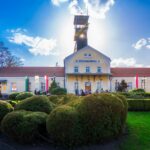
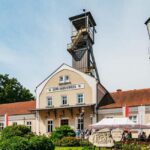
The whole tour centers on the Schindler factory site, where the museum tells a story through buildings and exhibits tied to wartime production.
You’re starting at the museum’s core setting: Fabryka Emalia Oskara Schindlera. The tour frames the site as a place where major wartime history intersects with everyday reality. That intersection is one of the tour’s strongest themes. You’re not just learning about the Holocaust as a sequence of dates. You’re also seeing how ordinary routines were shaped, broken, and weaponized by the war.
The wartime background includes the factory’s German wartime identity, Deutsche Emailwarenfabrik (DEF), and how Oskar Schindler became part of that environment. Even if you’ve seen Schindler’s List, the museum experience often feels more grounded because it ties the story to objects and spaces tied to work.
You can also read our reviews of more tours and experiences in Krakow




What to expect inside the museum space
You’ll generally move through the main exhibition area and learn about:
- How the factory context is tied to Kraków’s wartime population
- How the story of Oskar Schindler is presented in relation to those he saved
- How Kraków’s complicated war history is not just abstract, but personal
One practical note: because the topic is serious, the pacing is steady and reflective. The tour length is designed around it, so don’t cram this right after something that demands full energy.
Schindler’s Preserved Office: Where the Story Turns Personal
A key highlight is the preserved office area within the factory’s administrative building. The tour explains that this space was kept, and it helps illustrate the contrast between the normal office world and the horror happening around it.
This is where the narrative shifts toward action and responsibility. The guide connects Oskar Schindler’s role to the wartime reality of the people living under Nazi oppression. That’s also where you start to understand the moral weight of the story in a physical way.
The experience is described as you going to where Schindler saved over a thousand people. While the museum’s goal is not to reduce that number to a headline, the tour uses the preserved spaces to make the scale feel real rather than distant.
If you like museums that explain why a building detail matters, this is the section you’ll appreciate most.
The Ark of Survivors: Pots, Symbol, and Memory
One of the most striking details tied to the museum is the symbolic display often described as an ark of survivors. It’s made from thousands of pots resembling those produced by Schindler’s employees during the war.
That’s a powerful choice, because it makes production—the act of making enamel pots—into a symbol of survival and continuation. The factory becomes more than a background. It becomes part of the memory language.
The tour also ties these objects to the wartime craft and labor, so you’re not just seeing a memorial sculpture. You’re learning how the museum uses everyday production to hold a story of rescue.
If you’re the kind of visitor who likes to understand exhibit design, this is the area where the museum earns its emotional impact. Even if you don’t know the story beforehand, the symbolism gives you a foothold.
Skip-the-Line Entry: What You Gain (and What You Don’t)
Skip-the-line here means you won’t be stuck waiting just to get into the museum. That’s a real win in Kraków, where your day can get eaten by queues if you’re not careful.
What it doesn’t do is shorten the time you spend learning once you’re inside. The tour is still designed for understanding, and the subject matter needs a thoughtful pace. In other words: you gain time before the museum, not a “speed run” through it.
One practical takeaway: if you’re pairing this with other Kraków sights, you’ll have a more predictable start time. That makes your schedule less fragile, which is often the difference between a fun day and a stressful one.
Duration and Pacing: Plan Your Day Around 1.5–2 Hours
The tour is listed around 1 hour 30 minutes, and in practice you may experience a bit closer to two hours depending on the pace and questions. Either way, it’s not a “grab-and-go” activity.
My advice: schedule it when you won’t be rushing afterward. You’ll likely want a moment to reset after the emotional weight of the story. You may also find yourself slowing down to read more carefully, or watching how the guide links sections of the museum together.
If you’re visiting during peak times, the skip-the-line entry helps, but you still want buffer time. Museums are slow by design, especially one like this.
Group Size and Atmosphere: Small Group for a Heavy Story
This tour caps at 10 travelers. That size matters. In small groups, the guide can maintain a steady pace without turning the experience into a factory line of short stops.
It also helps with questions. When you can ask something without shouting over a crowd, the guide can respond in a way that strengthens your understanding. That’s especially useful here, because the story covers complex relationships between the city’s Polish population, Jewish residents, and wartime forces.
Also, since this is a “story tour,” the small group size usually makes the tone more respectful and less chaotic.
Who Should Book This Tour?
I’d send you on this tour if:
- You want a guided explanation of Oskar Schindler, the DEF wartime setting, and how the rescue story unfolded in Kraków
- You appreciate museum experiences where the guide connects exhibits to meaning
- You’re comfortable with serious history and want it explained thoughtfully, not treated like a quick stop
I’d think twice if:
- You’re only looking for a casual, light activity
- You prefer self-guided museums where you can skim at your own speed and move on quickly
- You’re visiting with limited time and can’t spare 1.5–2 hours plus a little emotional decompression afterward
Should You Book the Kraków Schindler Factory Skip-the-Line Tour?
If you’re asking whether this is a smart use of time in Kraków, my answer is mostly yes. The combination of skip-the-line access, included museum admission, and a licensed guide is exactly what you want for a museum that relies on context to land well.
This is also one of those experiences where a strong guide matters. The named example of Paul in feedback points to storytelling that adds more than the walls can say alone. If you care about understanding how the factory and its preserved spaces relate to the people whose lives were affected, booking this tour will likely feel like the most efficient way to get the most out of the museum.
If you’d like, tell me your travel dates and what else you plan to see in Kraków (Old Town churches, Jewish Quarter sites, something else). I can suggest a simple day flow that pairs well with the Schindler tour.
FAQ
How long is the Schindler Enamel Factory Museum skip-the-line tour?
It runs for about 1 hour 30 minutes.
Does the tour include museum admission?
Yes. The museum admission ticket is included in the tour price.
Is there a mobile ticket?
Yes. The tour uses a mobile ticket.
Where does the tour start?
The meeting point is Lipowa 4, 32-051 Kraków, Poland.
How many people are in the group?
The tour has a maximum of 10 travelers.
Is the meeting point near public transportation?
Yes, it’s described as near public transportation.
Is coffee or tea included?
No. Coffee and/or tea is not included.
Is private transportation included?
No. Private transportation is not included.
Can most travelers participate?
The information says most travelers can participate.
If I cancel, what’s the rule for a full refund?
You can cancel up to 24 hours in advance for a full refund. Cancelling less than 24 hours before the experience start time does not provide a refund.
FAQ
Does the tour truly skip the line at the museum?
The experience is listed as a skip-the-line tour, which means you’re meant to avoid waiting to enter.
Will I end back at the meeting point?
Yes, the activity ends back at the meeting point.