REVIEW · KRAKOW
Krakow: Auschwitz-Birkenau Tour & Museum Expert Guide
Book on Viator →Operated by Discover Poland · Bookable on Viator
Early starts. Serious history. Real guidance.
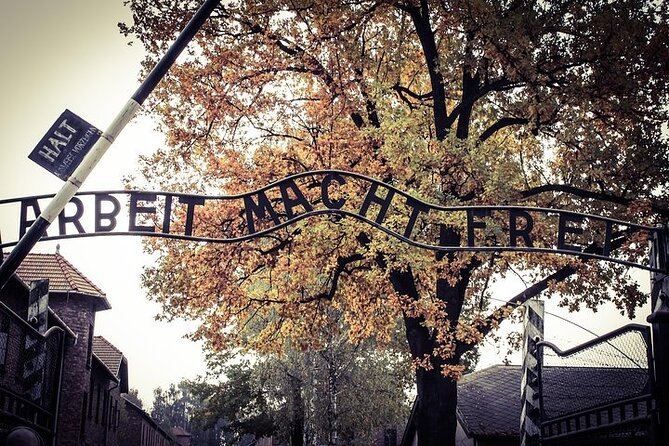
This Auschwitz-Birkenau tour from Krakow is interesting because it removes the toughest logistics with round-trip transport and a licensed English-speaking local guide who’s approved to lead inside the museums. You’ll see the Auschwitz I barracks, watchtowers, and the Arbeit Macht Frei gate, then move on to Birkenau (Auschwitz II) for a guided explanation of what the Nazis built and how they ran it. The big drawback is that pickup times can shift way earlier than you expect—sometimes so early you’ll feel like you’re traveling in the middle of the night.
The trip is built for listening too: you get headsets so the guide’s narration lands clearly, and the group is capped at 30 travelers. The trade-off is that you’ll do a lot of outdoor walking, and food isn’t included—so plan for heat, rain, and limited break time.
In This Review
- Quick take: what you’ll notice most
- Price and timing: why this tour feels cheap, then demands your morning
- Krakow to Auschwitz I: the part where logistics matter most
- A short transfer break, then Birkenau’s scale hits
- Guides, headsets, and why English matters here
- Breaks, walking, and what to bring so you can last the whole day
- Queues, uncertainty, and how to avoid a rough day
- Should you book this Auschwitz-Birkenau tour from Krakow?
- FAQ
- What is the meeting point in Kraków?
- Is round-trip transportation included?
- Is the tour guided in English?
- Do I need to bring identification?
- Are headsets provided?
- How long do you spend at Auschwitz I and Birkenau?
- Are food and drinks included?
- Can the departure time change?
- Can I cancel and get a refund?
Quick take: what you’ll notice most
- Museum-approved, licensed guide who provides the structured explanation you need at both Auschwitz I and Birkenau
- Headsets included so you can hear in crowded areas
- Early pickup and possible time changes due to Auschwitz-Birkenau entrance rules
- Short breaks only (often under 10 minutes), plus a longer end stop
- Entry fees are included and you’ll still face potential entrance queues
- Bring rain gear and walking shoes because much of the day is outdoors
Price and timing: why this tour feels cheap, then demands your morning
At about $30.23 per person for a day that can run 7 to 8 hours, this tour is priced to be an easy fit for many budgets. You’re not just buying a narration—you’re also paying for round-trip transportation from Krakow, museum admission, and the headsets that keep the tour from turning into a guessing game in crowds.
But the value comes with a reality check: Auschwitz-Birkenau runs on tight access rules, so your departure time may change. The tour also encourages you to confirm the exact departure time the day before, and that matters because some groups report pickup being moved dramatically earlier than the time they expected. If you’re the type who plans your day with a calm spreadsheet, this is your moment to stop. Your morning might start very, very early.
My practical advice: treat the tour start as a “hard window,” not a suggestion. If you’re staying in Krakow, make peace with the idea that you might be up before breakfast. If that sounds like misery, you might want to consider a different approach—like booking directly with the museum for your time slot (when you can pick a departure you can handle).
You can also read our reviews of more guided tours in Krakow
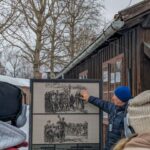
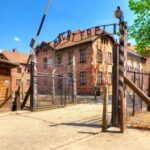
Krakow to Auschwitz I: the part where logistics matter most
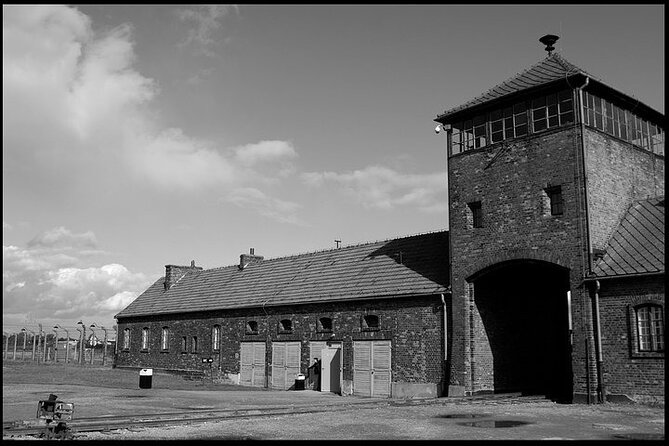
Your day starts in central Krakow at Pawia 18B, 31-154 Kraków, with pickup offered and travel by air-conditioned van or mini-bus. Once you’re on the road, the tour leader (in English) is there to help you stay oriented—especially important because getting to Auschwitz isn’t like hopping on a train. It’s a long, controlled journey with tight timing at the entrance.
A key moment happens around Oswiecim (Oświęcim): you get a short break for coffee and a chance to look at some outdoor exhibits. This is small, but useful. It breaks the drive up and gives you a chance to reset before the experience gets heavy.
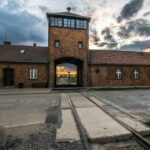
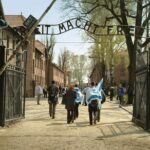
Then you enter Panstwowe Muzeum Auschwitz-Birkenau (Auschwitz I) with a guide who’s officially approved to lead inside the museum. The visit centers on the camp’s remains and artifacts, including barracks and watchtowers, and you’ll stop at the famous gate area with the Arbeit Macht Frei sign. The museum content leans heavily on personal belongings, photographs, and documents—things that turn the scale of history into human stories you can’t easily shake off.
The museum time you’re scheduled for is about 2 hours 30 minutes, so you’re not just doing a quick walk-by. Still, keep your expectations realistic: you’ll be moving through spaces that are emotionally intense, and you might find you need a slower pace than the group. If you’re sensitive to crowds, consider stepping back for a minute when you can—without rushing anyone else.
One more practical note: Auschwitz can have a queue at the entrance due to high tourist traffic, so patience is part of the deal. The good news is that you’ll have a guide to explain what you’re seeing as you go.
A short transfer break, then Birkenau’s scale hits
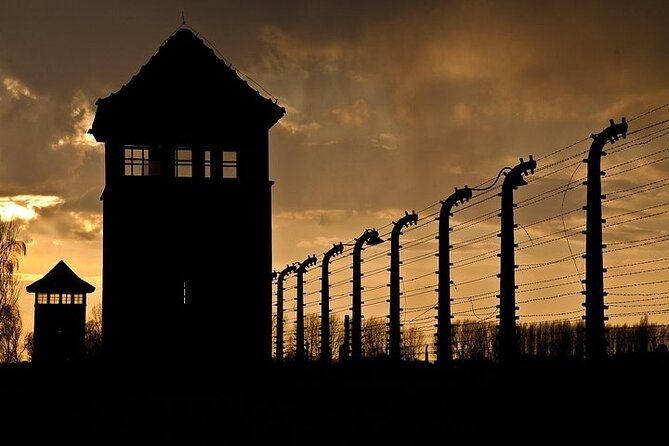
After Auschwitz I, there’s a short break—the schedule calls it up to 15 minutes, while the tour description also warns that breaks are generally no longer than 10 minutes. Either way, don’t count on a long rest. Use that window for water, quick bathroom access, and a moment to breathe.
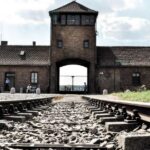
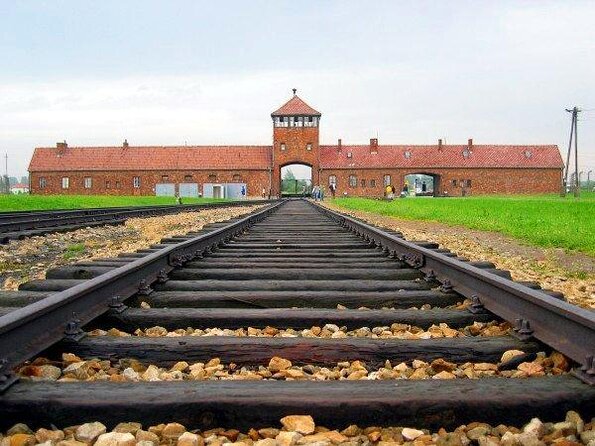
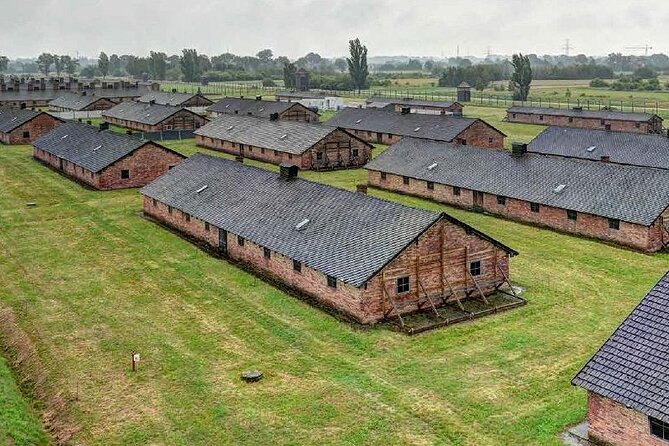
Then it’s off to Brzezinka, where you’ll visit Birkenau (Auschwitz II). This is only a few minutes away, but it feels like a different universe once you arrive. Birkenau is the larger camp, built with the specific goal of forcibly removing Jewish people—often described in historical context as creating a Europe free of Jews.
The guide’s narration here is usually the part that people remember longest, because you’ll hear how the camp was constructed (in 1941, ordered by Heinrich Himmler) and how it functioned. The tour explains how the camp could hold enormous numbers of prisoners (the description mentions around 90,000), and it covers selection procedures and pseudo-scientific medical experiments tied to prominent Nazi doctors, including Josef Mengele.
The tone is always serious, and the overall arc ends with liberation—January 27, 1945, when the 60th Army of the First Ukrainian Front opened the gates. The tour aims to leave you with the weight of what happened and the moral insistence that it must never happen again.
Your Birkenau time is about 1 hour 30 minutes. That can feel short because the camp is so spread out and because your brain keeps replaying what you’re learning. Still, you’ll see the essentials, and the guide’s explanations help you connect the physical layout to the system behind it.
Guides, headsets, and why English matters here
The tour includes a licensed English-speaking local guide, plus a friendly tour leader who helps with the logistics and keeps communication clear. You’ll also get headsets, which is a big deal at Auschwitz. Without them, you often end up straining to hear over other visitors and the constant background noise of a busy site.
You may hear guides described as warm, organized, and clear. In past groups, some names show up with praise for strong English and solid storytelling—like Norbert, Paulina, and John. The important part for you isn’t the celebrity of a name—it’s the format: a guide who connects the exhibits to the bigger picture, explains the meaning behind the buildings and documents, and answers questions when the group can handle it.
Also, remember what the tour is trying to do: respectful witnessing. If the guide asks you to avoid certain behavior (like intrusive posing), treat it as part of the rules of being in someone’s history—not a suggestion.
Breaks, walking, and what to bring so you can last the whole day
This isn’t a sit-and-watch tour. It’s a long day with significant walking, and it includes outdoor time. The pace also isn’t built around frequent stops. The schedule allows for short breaks between sections and a modest reset period, and the overall structure keeps you moving.
If you want this experience to land well instead of turning into a painful slog, plan for your body:
- Wear comfortable walking shoes you can rely on for long stretches
- Bring an umbrella or raincoat in case of bad weather
- Pack water and simple snacks, because food and drinks aren’t included
- If it’s hot, dress for heat; if it’s cold, dress for standing and walking outdoors
There are also limits for people with serious health or mobility restrictions. The tour description says it’s not recommended for those needs, so be honest with yourself about endurance.
One more realistic detail: at the end of the tour, you’ll get at least a 20-minute break—time you can use to visit a bookstore, grab groceries, or simply reset. After that, you’re back on the road for about 1 hour 15 minutes before drop-off in Krakow.
You can also read our reviews of more museum experiences in Krakow


Queues, uncertainty, and how to avoid a rough day
Even when everything goes well, Auschwitz day trips involve friction. You can face entrance queues because of tourist volume, and you may also face changes to departure time due to Auschwitz-Birkenau policy. That’s not the fault of your guide—it’s the system.
So how do you protect your day?
- Contact the day before to confirm the exact departure time.
- Arrive at the meeting point early, especially if you’ve got kids, tight transit connections, or prebooked plans.
- Expect to stand in line and plan your patience. A long line doesn’t mean your day is ruined; it means you’re in the normal flow of how access works.
- Don’t depend on being able to eat immediately when you think you should. Food is not included, and break time is limited.
There’s also one hard lesson from how these operations sometimes behave: if you need a guaranteed exact pickup time to protect other reservations, this isn’t the best fit. The tour is designed to follow museum timing, and museum timing is king.
Should you book this Auschwitz-Birkenau tour from Krakow?
If you want an English-guided Auschwitz-Birkenau day with transport, museum entry, and headsets, this can be a strong value. The best version of this tour is straightforward: you get to the sites, you hear a respectful guide explain what you’re seeing, and the day ends without you having to figure out complicated logistics.
I’d book it if:
- You’re okay with an early start and possible time changes
- You want a group format with an approved English guide
- You can manage walking through outdoor areas and want to come prepared
I’d skip it if:
- You absolutely cannot handle a start time being moved earlier
- You’re relying on the tour for food and breaks (because they’re limited and not included)
- You have serious mobility or health limits
Bottom line: this is worth your time if you treat the schedule uncertainty as part of the bargain and focus on doing it right—comfortable shoes, rain protection, snacks, and patience when queues happen.
FAQ
What is the meeting point in Kraków?
The tour starts at Pawia 18B, 31-154 Kraków, Poland.
Is round-trip transportation included?
Yes. You get round-trip transportation from and to Krakow in an air-conditioned vehicle.
Is the tour guided in English?
Yes. The tour is offered in English, with a licensed English-speaking local guide.
Do I need to bring identification?
Yes. The tour instructions say you should bring ID or passport because security checks before entrance can ask for it.
Are headsets provided?
Yes. Headsets are included so you can hear the guide clearly.
How long do you spend at Auschwitz I and Birkenau?
Auschwitz I is about 2 hours 30 minutes, and Birkenau (Auschwitz II) is about 1 hour 30 minutes.
Are food and drinks included?
No. Food and drinks are not included.
Can the departure time change?
Yes. The description says the departure time may change due to Auschwitz-Birkenau policy, and you should contact the day before to confirm the exact departure time.
Can I cancel and get a refund?
No. This experience is listed as non-refundable and cannot be changed for any reason.