REVIEW · MEMORIAL AND MUSEUM AUSCHWITZ BIRKENAU
Auschwitz-Birkenau: Memorial Entry Ticket and Guided Tour
Book on GetYourGuide →Operated by Xtrip · Bookable on GetYourGuide
Dark gates, clear facts. This guided Auschwitz-Birkenau visit helps you move through the camps with skip-the-line entry and a live guide with headsets, so you can actually follow the story without getting lost in the crowd. You’ll walk the dramatic entrance area, barracks, and railway platform in Auschwitz I and Auschwitz II, plus you’ll see the ruins of the gas chambers.
I also like that the tour is built for understanding, not just sightseeing. You start in Auschwitz I, then you ride a short on-site bus to Auschwitz II-Birkenau, where the layout and logistics of the transports become easier to grasp as you walk the ground where people were held and processed.
One consideration: this is timed and rules-heavy. The scheduled time is approximate, can shift by up to 2 hours, and your name must match your ID/passport exactly, or you may be refused entry.
In This Review
- Key things worth knowing before you go
- Auschwitz-Birkenau with a guided entry: what this experience really gives you
- Price and value: what you’re paying for in the $55 ticket
- Getting there and meeting up: avoiding the most common stress points
- What the rules mean for your day (and what to pack)
- Auschwitz I walkthrough: entrance gate, barracks, and exhibitions
- Between camps: the short on-site bus transfer
- Auschwitz II-Birkenau: railway transports and the gas chamber ruins
- Punctuality and tour-day quirks: how to handle a schedule that can shift
- Who should book this tour (and who may want a different approach)
- Should you book this Auschwitz-Birkenau guided entry?
- FAQ
- What’s included in this Auschwitz-Birkenau tour?
- Where do I meet the guide?
- Is the tour in English?
- How long is the tour?
- Do I need to bring my own transport?
- Is this tour suitable for children under 14 or for mobility impairments?
Key things worth knowing before you go
- Headsets included so you can hear the guide, even when the group gets spread out.
- Both camps in one run: Auschwitz I first, then Auschwitz II-Birkenau.
- On-site bus between sections saves you from trying to self-navigate between the two memorial areas.
- Sensitive sites and strict rules (no shorts, no sleeveless tops, no large bags) keep the visit respectful and controlled.
- Arrival timing matters because entry and the visitor-service pace control how much ground you cover.
Auschwitz-Birkenau with a guided entry: what this experience really gives you
Auschwitz-Birkenau is not the kind of place you can do like a normal museum day. The power is in what you see and how you connect it to the human stories and the machinery of persecution. This tour is designed for that exact challenge: you get the timed ticket advantage up front, then you follow an authorized live guide across both sections of the memorial.
The biggest practical win is that you’re not dealing with the hardest part of the day on your own. You show up, use your skip-the-line tickets, and head inside with your group. From there, the guide shapes the route in a way that helps you make sense of what can otherwise feel like a series of grim photo stops.
Also, your ears are handled. The tour provides headsets, which matters more than it sounds. In a site this large and emotionally heavy, you don’t want to keep craning your neck or trying to hear over other languages, footsteps, and movement. You also don’t want to accidentally miss the point of a particular barracks or exhibit because you lost the thread for 30 seconds.
The core tour length is about 210 minutes, so yes, it’s a full visit, but not a long, slow meander. You’ll cover a lot of ground, including the railway transport area and the ruins connected to the gas chambers. That compressed structure can feel intense, but it also keeps you moving through the memorial in the order that helps you understand cause and effect.
You can also read our reviews of more tours and experiences in Memorial And Museum Auschwitz Birkenau



Price and value: what you’re paying for in the $55 ticket
At about $55 per person, this isn’t a bargain-style attraction price. But you’re not just buying entry. You’re paying for three high-value pieces:
- Skip-the-line access, which reduces wasted time at the gate.
- A live authorized guide, who interprets the site and connects the layout to the historical reality.
- Headsets, which prevent the classic problem of missing the guide’s words halfway through the camp.
If you tried to self-tour, you’d still have entry logistics and you’d still face the challenge of interpreting what you’re seeing. Here, the guidance is part of the ticket cost, and the tour’s structure (Auschwitz I then Auschwitz II) is controlled so you don’t lose time deciding where to go next.
A small realism check: the tour price won’t include food or drinks, and you’re on your own for transport to and from the site. That means your real “trip cost” is usually the sum of the ticket plus whatever it takes to get there comfortably and on time. Still, for many people, the inclusion of a live English guide plus headsets is exactly what makes this tour feel worth it.
Getting there and meeting up: avoiding the most common stress points
This tour is start-from-the-memorial. There’s no hotel pickup. You’ll need your own transport to get to Auschwitz and return.
Your meeting point is at Auschwitz I, right by the gate leading to the parking, where you’ll find the information boards. The guide meets you there and then you walk into the memorial together.
Here’s what you should plan for day-of:
- The “given time” can be approximate and may change by up to 2 hours.
- Your name must match your ID/passport exactly. If the name on your booking doesn’t match, entrance might be refused.
- Pace is determined by the memorial’s visitor service, not by the group’s preferences.
Practical tip: arrive earlier than you think you need. Even small delays can matter because this is one of those days where the site timing and the group flow control everything. If you arrive right at the last second, you’ll feel rushed before you’ve even stepped inside.
Also, bring the right ID. You’ll need a passport or ID card for entry, and you should assume you’ll be checking details carefully.
What the rules mean for your day (and what to pack)
Auschwitz is strict for a reason. It protects the grounds, keeps the flow respectful, and limits distractions.
What you should bring:
- Passport or ID card
- Comfortable shoes
What you cannot bring:
- Shorts
- Weapons or sharp objects
- Luggage or large bags
There’s also a bag-size limit: the maximum size for luggage/bag/purse/backpack is 30 x 20 x 10 cm. If you’re used to carrying a day bag, you’ll want to downsize. Think small camera, water bottle if allowed, and essential items only.
Clothing matters too. Sleeveless shirts and shorts are not allowed. If you’re visiting in warm weather, plan light layers that still meet the rules.
And one more important fit check: this tour is not suitable for children under 14 and it isn’t suitable for people with mobility impairments. Since the pace and route depend on visitor-service timing, you should not count on making detours or slow down on your own.
Auschwitz I walkthrough: entrance gate, barracks, and exhibitions
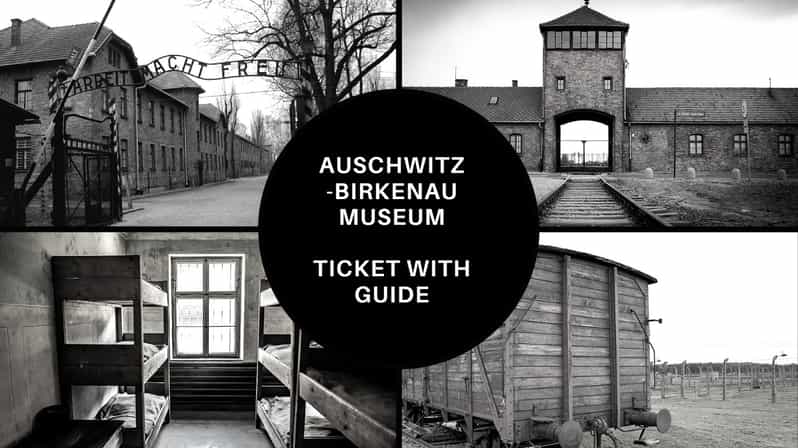
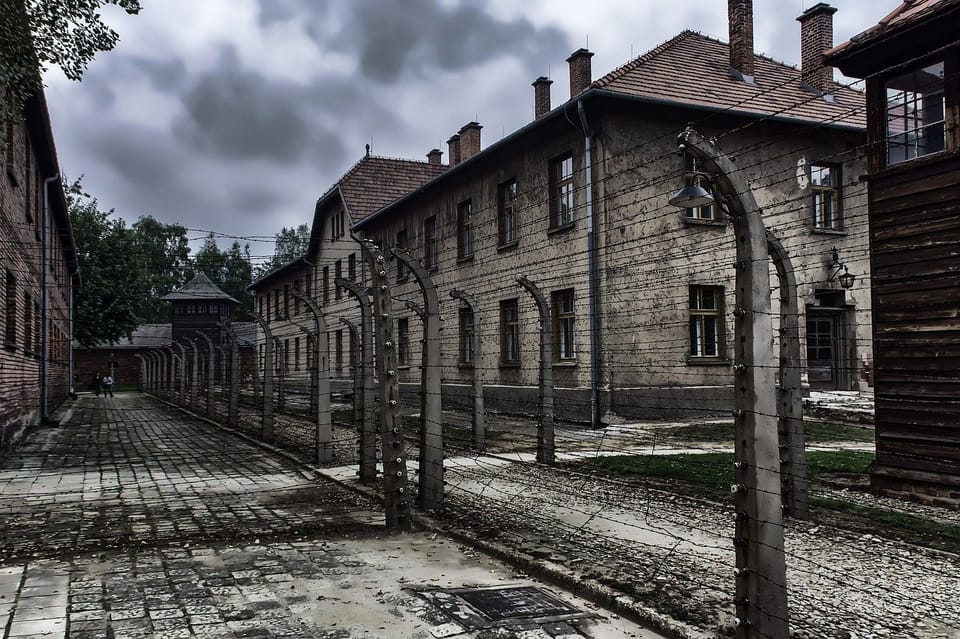
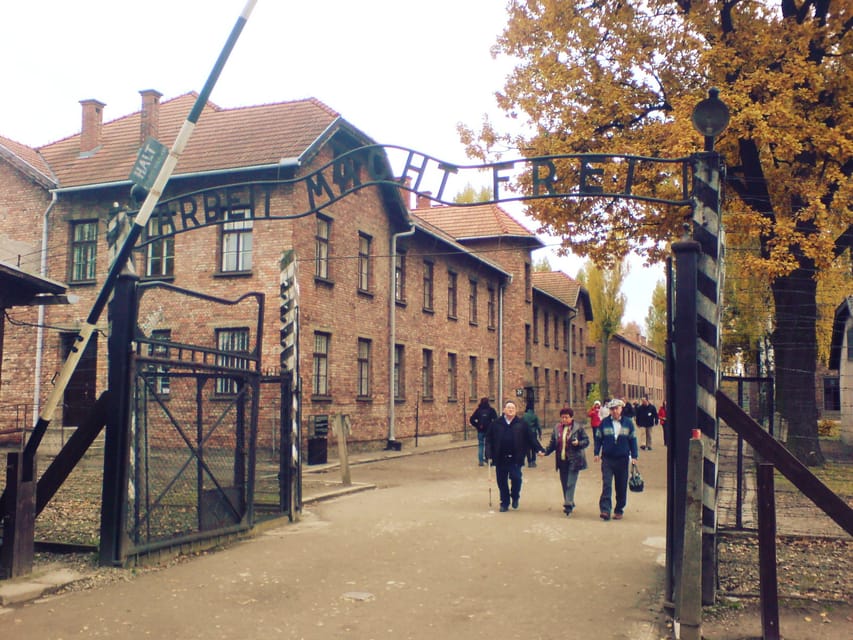
You start at Auschwitz I, the older camp area, which was built in 1940 in the suburbs of Oświęcim. This is where you’ll get your bearings fast, because the entry zone and core camp layout are the foundation for everything that follows later in the day.
What you’ll see includes:
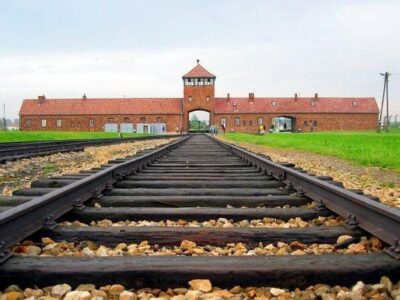
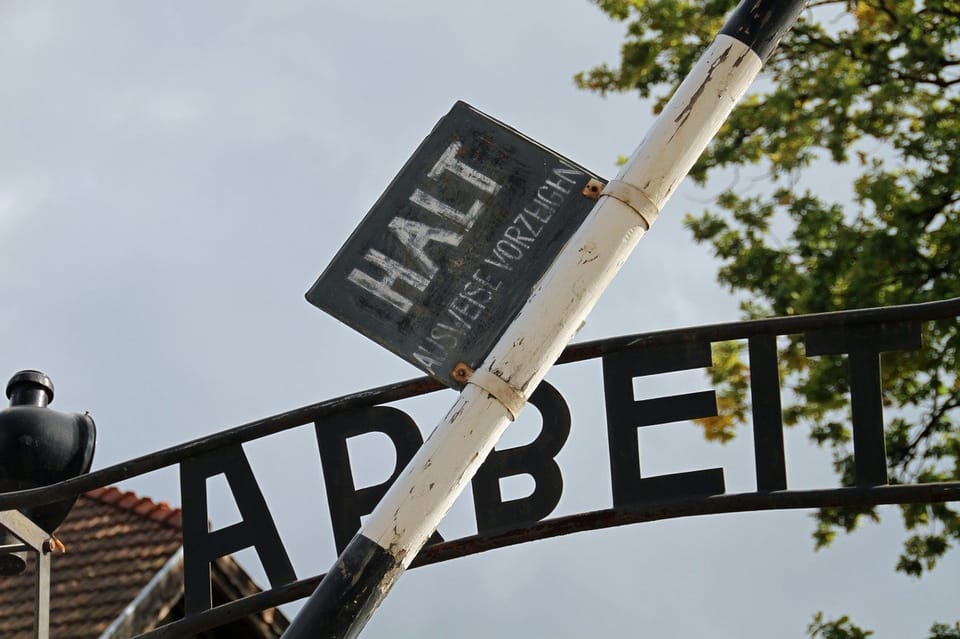
- The infamous entrance gate
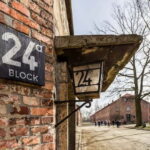
- Barracks
- Ground-level areas where people were kept
- Exhibitions presented inside barracks they used to live in
The guide uses the headset so the explanations stay clear as the group moves and pauses. This matters because Auschwitz I can feel like it’s “all the important things at once.” A strong guide helps you slow down mentally, even if your feet are moving.
You’ll also hear the broader scale of what happened here: the estimated total deaths are over 1.5 million, across 28 nationalities, with nearly 90 percent of them being Jews. That isn’t trivia. It’s the frame the guide uses so the space doesn’t float by as vague tragedy. It becomes specific, and the specificity is part of what makes the visit meaningful.
One practical drawback: Auschwitz I can be emotionally heavy in a way that makes you forget basic logistics. So I suggest you keep your comfort items simple (small bag, hands free, shoes you don’t regret). If you’re constantly adjusting gear, you lose the chance to absorb what you came to understand.
You can also read our reviews of more guided tours in Memorial And Museum Auschwitz Birkenau


Between camps: the short on-site bus transfer
After the first part, the tour uses a bus available on-site and takes you a few minutes to Auschwitz II-Birkenau. This transfer is a relief from self-navigation. You’re not trying to time your own walking route, and you’re not stuck waiting around without guidance.
The timing feels straightforward: you finish Auschwitz I, then you’re moved to the next area so the guide can continue without the day falling apart.
This section is also a mental checkpoint. In Auschwitz I, you’re often focused on the camp’s structure and the immediate surroundings. In Auschwitz II-Birkenau, the sheer scale of the layout and the transport system become harder to ignore.
Auschwitz II-Birkenau: railway transports and the gas chamber ruins
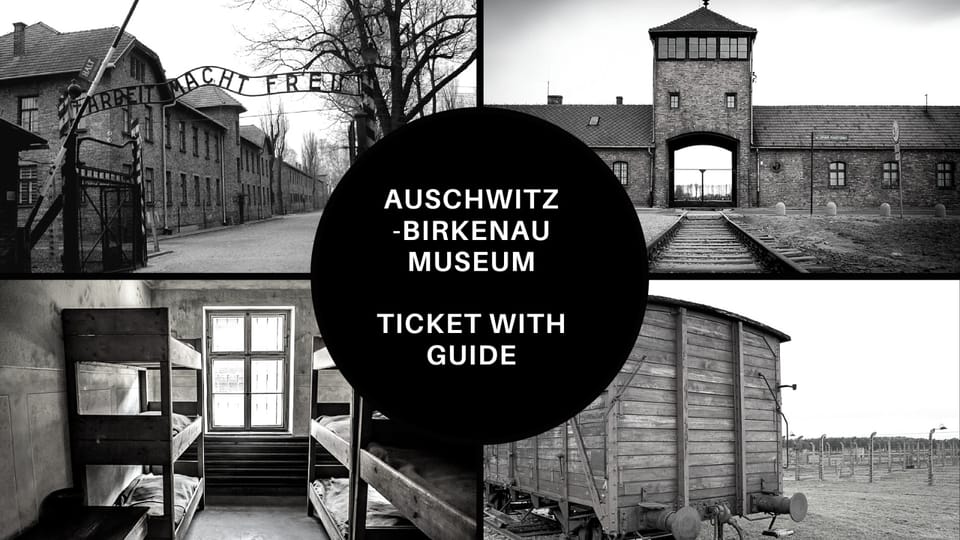
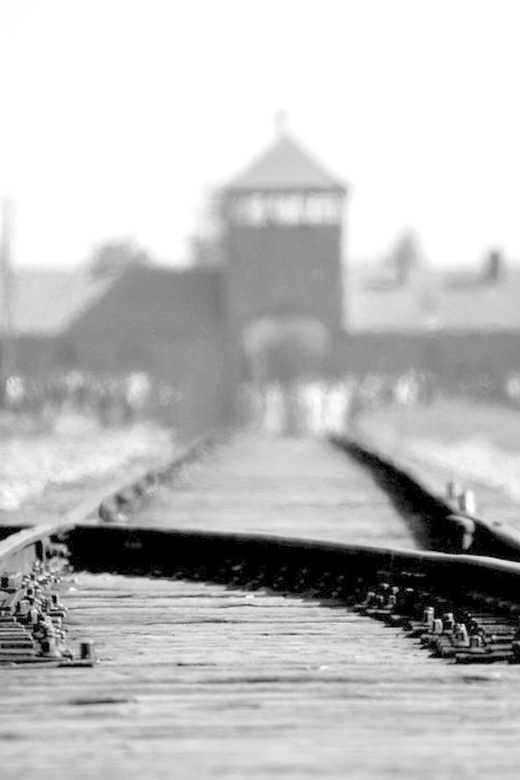
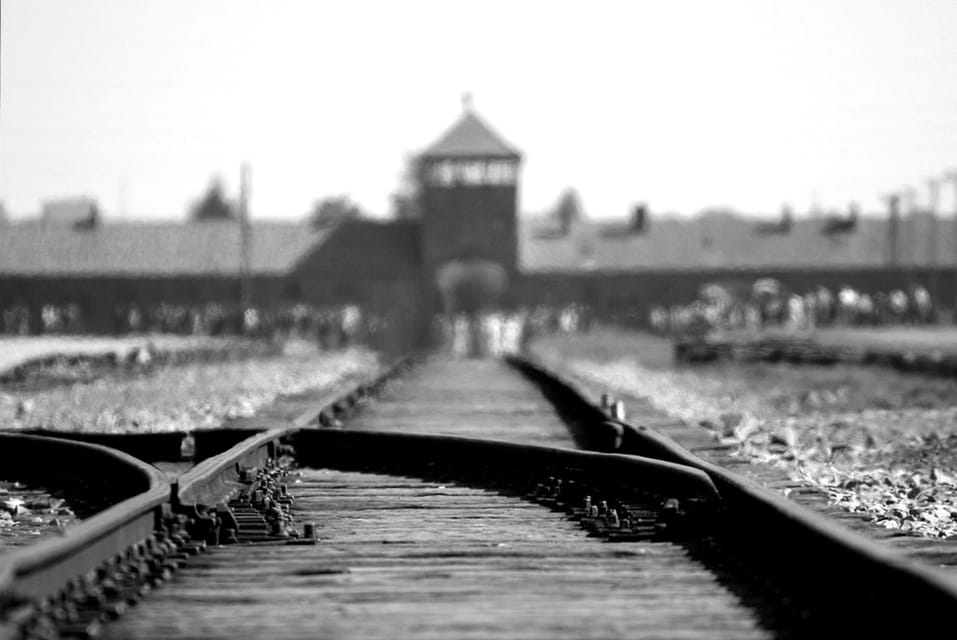
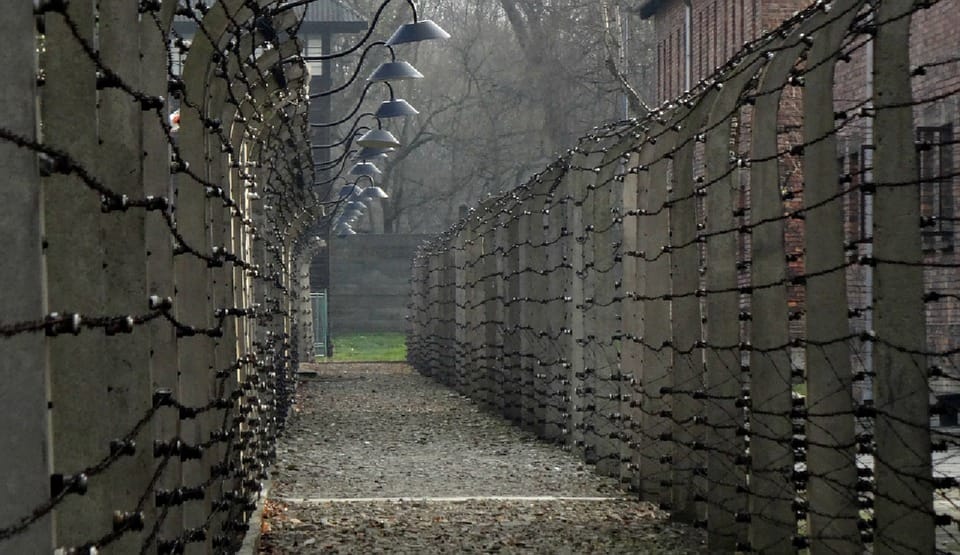
In Auschwitz II-Birkenau, the tour continues with your guide, and the walking route focuses on transport and the industrial scale of what the Nazis carried out. You’ll walk along the railway which facilitated transports to the other part of the camp, and you’ll see ruins connected to the gas chambers where people were murdered on a mass scale.
Seeing the railway line in context helps the story click. Instead of imagining transportation as an abstract horror, you connect it to physical space: the direction of movement, the points where people were processed, and the distance between arrival and detention zones.
This is also where the guided structure really matters. Without a guide, you might notice buildings and remnants but miss the why. With a guide, you understand how the camp’s design supported the Nazis’ goal.
As you move through this area, the mood of the group tends to shift. Some people need silence. Others want to keep listening. The headset helps you do either without having to chase words across the crowd.
Punctuality and tour-day quirks: how to handle a schedule that can shift
Because start times are approximate and can change by up to 2 hours, you should treat this like a “timed by the memorial” experience, not a “clockwork museum ticket.” That’s not a criticism. It’s reality: visitor flows and on-site operations guide the day.
Also, like any company-managed booking, there can be day-of hiccups. Some bookings have reported last-minute changes and missing the exact meeting spot as planned. This doesn’t mean you should panic. It does mean you should be practical:
- Re-check your messages close to departure.
- Know your exact meeting point at Auschwitz I by the parking gate and information boards.
- If you’re standing in the wrong place, you’ll lose time fast.
The good news: when things run smoothly, the tour holds together well. The structure across both camps is the point, and the headsets make the guide’s words land clearly.
Who should book this tour (and who may want a different approach)
This guided, skip-the-line entry tour fits best if you:
- Want both Auschwitz I and Auschwitz II in one guided visit
- Prefer to hear the story explained clearly in English
- Don’t want to handle timing and navigation between the two camp areas alone
- Are okay with strict rules on clothing and bags
You might want to choose something else if:
- You need hotel pickup or you’re not confident about reaching the site on your own
- You’re traveling with a child under 14
- You have mobility limitations that would make this pace difficult
- You’d struggle with a tightly scheduled visit to a profoundly serious site
Should you book this Auschwitz-Birkenau guided entry?
If you’re deciding between self-touring and a guided run, I’d lean toward booking this style of tour. The mix of skip-the-line access, headsets, and a guide across both Auschwitz I and Auschwitz II makes the visit more coherent. And coherence is key here. You’ll get more understanding from the same physical space.
Book it if you can follow the rules (ID matching, clothing, bag size) and you’re willing to plan for timing that isn’t rigid to the minute. If you arrive early, keep your bag small, and meet the guide at Auschwitz I by the parking gate information boards, you’ll start the day with less stress and more mental room for what matters.
If you’re looking for a short, gentle, flexible day trip, this isn’t that. But if you want a structured, guided experience that helps you see the site with clarity, this is a strong choice.
FAQ
What’s included in this Auschwitz-Birkenau tour?
You get skip-the-line entrance tickets, a guided group tour with a live English guide, and headsets to hear the guide clearly.
Where do I meet the guide?
Meet at the Memorial and Museum Auschwitz I, right by the gate leading to the parking, look for the information boards.
Is the tour in English?
Yes, the live tour guide language is English.
How long is the tour?
The total duration is about 210 minutes, and starting times depend on availability.
Do I need to bring my own transport?
Yes. Hotel pickup and drop-off aren’t included, so you’ll use your own transport to get to Auschwitz and back.
Is this tour suitable for children under 14 or for mobility impairments?
No. It’s not suitable for children under 14, and it’s not suitable for people with mobility impairments.