REVIEW · KRAKOW
Krakow: Jewish Ghetto Walking Tour
Book on GetYourGuide →Operated by Thousand Miles Cracow Adventure Company · Bookable on GetYourGuide
A short walk carries a heavy story. This Krakow Jewish Ghetto tour connects the streets of the former Poguzhe district to the real events of World War II, with visible traces like wall fragments and a final stop at Under the Eagle pharmacy.
I especially like the mix of physical landmarks and human explanations, with the ghetto wall fragment and the pharmacy making the lesson feel concrete.
The tour also benefits from tight timing. You get a focused 1-hour route with a live guide, so it fits well even on packed days. One thing to keep in mind: the subject matter is intense, and the pharmacy entry ticket isn’t included, so you may want a little extra budget or time for that final stop.
In This Review
- Key moments in this Krakow Jewish Ghetto walk
- A focused 1-hour tour that respects your schedule
- Where you start: Schindler Factory Museum and an easy handoff
- Plac Bohaterów Getta: the square where people were identified
- Following the ghetto wall: why the fragment matters
- Walking past the buildings where life was compressed
- Under the Eagle pharmacy: the final stop you should plan for
- The price: is $15 good value for this Krakow tour?
- Guide quality: language choice and storytelling
- Who should book this tour, and who might want something else
- Should you book the Krakow Jewish Ghetto Walking Tour?
- FAQ
- Where is the meeting point for the Jewish Ghetto walking tour?
- How long is the tour?
- How much does the Krakow Jewish Ghetto walking tour cost?
- What is included in the price?
- Is food or drink included?
- Do I need an entry ticket for Under the Eagle pharmacy?
- What languages are available for the tour?
- Is there a cancellation option?
Key moments in this Krakow Jewish Ghetto walk
- Meeting at the Schindler Factory Museum entrance with a clear excursions.city sign, so you’re not hunting around
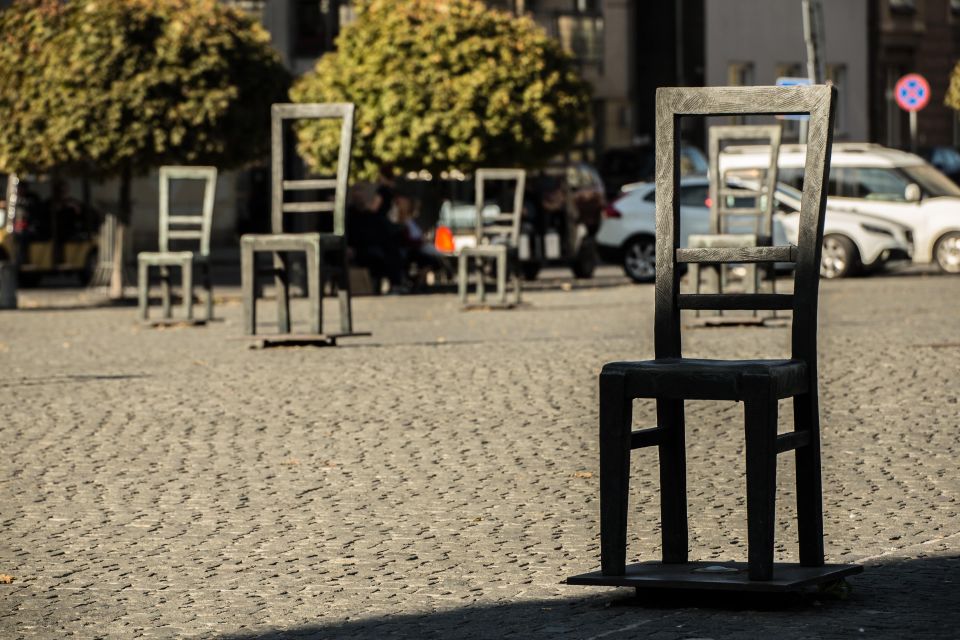
- Ghetto Heroes’ Square (Plac Bohaterów Getta), where identification and deportations were carried out
- A surviving fragment of the ghetto wall, now treated as a monument and pilgrimage site
- Walking the cramped-era buildings where displaced Jews once lived in the ghetto district
- Under the Eagle pharmacy (Pod Orłem) as the tour’s memorable, historic finishing point
- A live guide in multiple languages, including English, Spanish, German, French, and Italian
A focused 1-hour tour that respects your schedule
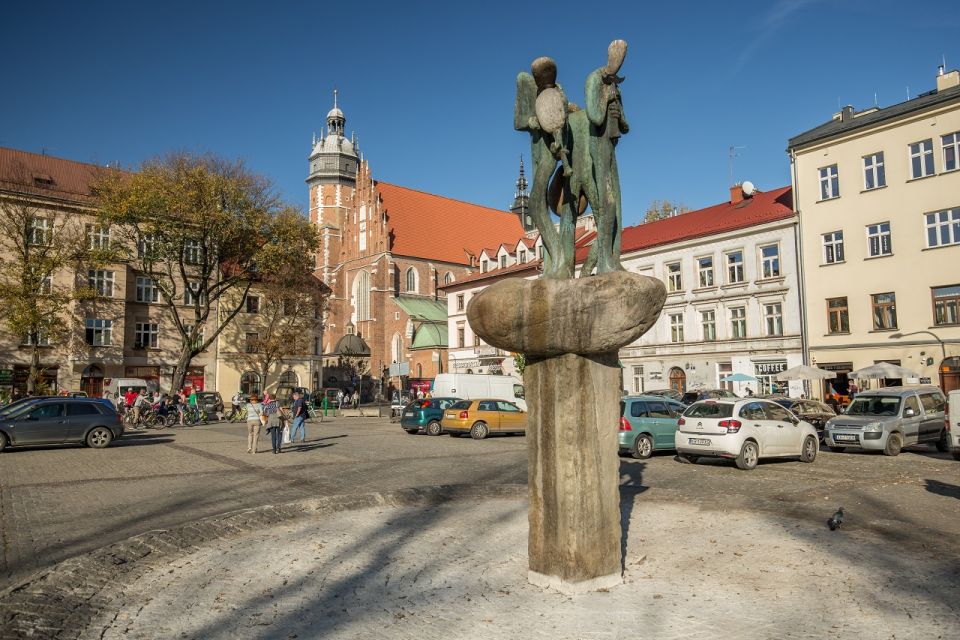
Krakow has layers everywhere: medieval streets, war-era scars, and memorial spaces that quietly demand attention. This 1-hour Jewish ghetto walking tour keeps things focused without trying to cram too much into your day. It’s a good choice when you want context, not chaos—especially if you already plan to see Schindler’s Factory or other major WWII sites.
The route is built around walking past what’s still there: the former ghetto boundary, memorial squares, and surviving structures. That matters because the story isn’t only in a museum room. You see the geography of confinement and the contrast between normal city life now and the way people were trapped in that area during the war.
The other reason this works: the guide helps you “read” the neighborhood. Without that, you can walk past historic-looking buildings and still miss why they matter. With the guide, you start noticing the cues and understanding how the city layout shaped daily life.
You can also read our reviews of more walking tours in Krakow


Where you start: Schindler Factory Museum and an easy handoff
Your tour begins at the entrance to the Schindler Factory Museum. Look for a guide holding an excursions.city sign. It’s one of those small details that makes a difference. You don’t waste time figuring out meeting points on foot, and you can start the tour with your mind already in WWII mode.
It also makes practical sense. You’re already in the right part of Krakow for WWII history. If you’re building a day around Schindler’s Factory, this tour slots in without requiring a long repositioning.
If you want the smoothest experience, plan to arrive a few minutes early. That gives you time to match the sign, confirm the group, and settle before the guide starts the story.
Plac Bohaterów Getta: the square where people were identified
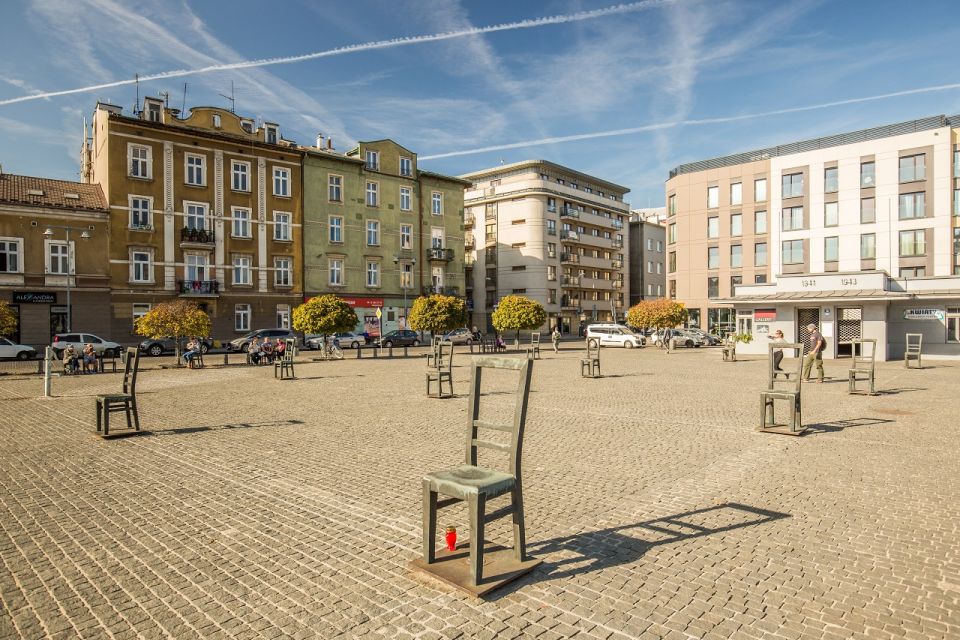
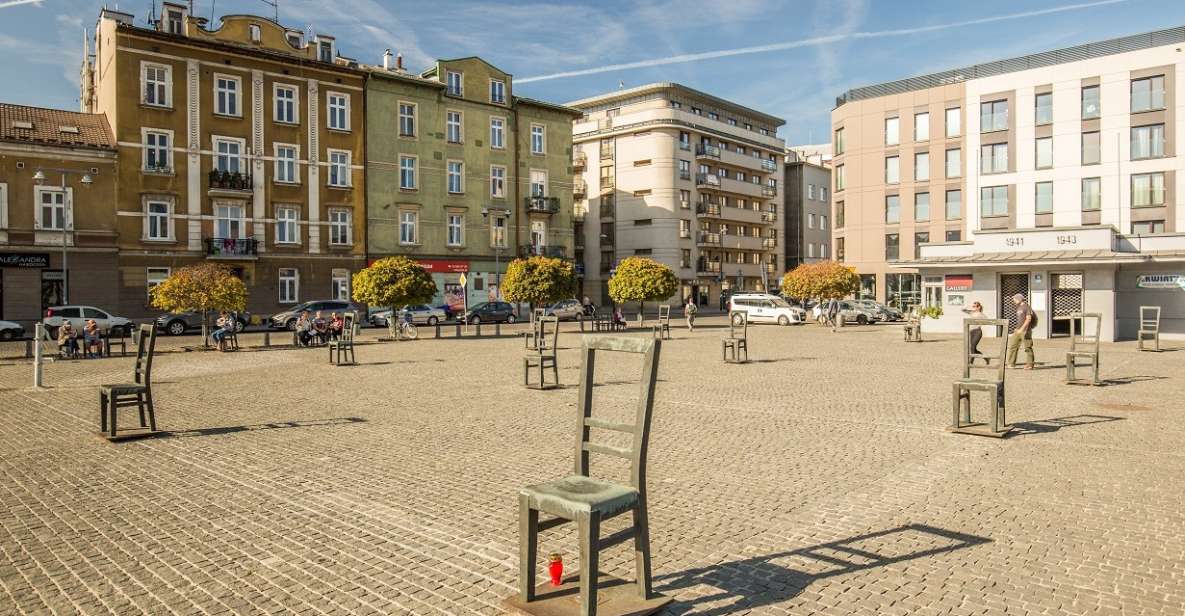
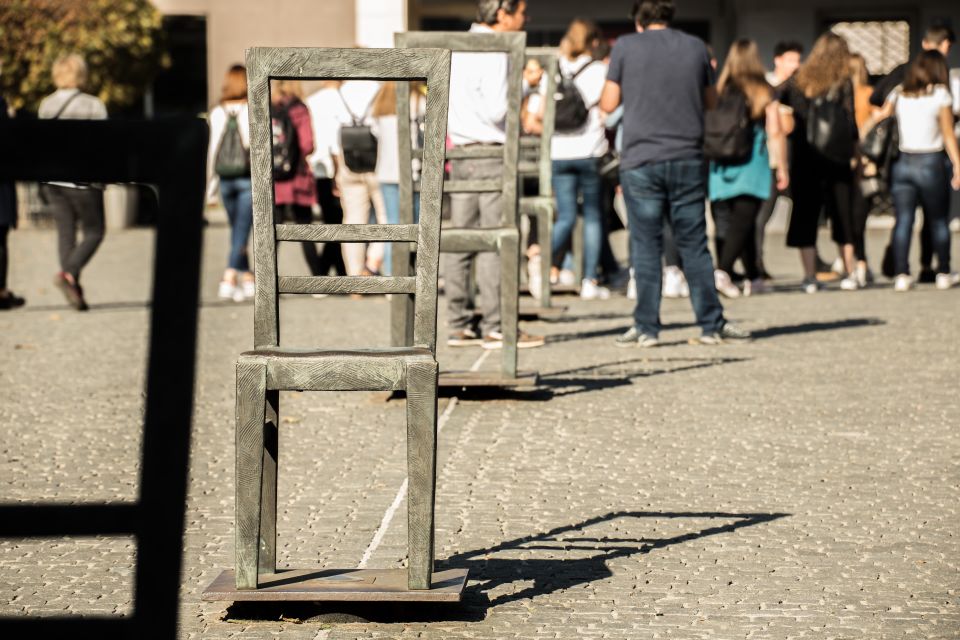
One of the tour’s most important stops is Ghetto Heroes’ Square (Plac Bohaterów Getta). This is the kind of place where the meaning comes from more than plaques. The square is linked to what happened to Jewish inhabitants of Krakow: they were identified and then sent onward to concentration camps during the Holocaust.
What I like about including this stop is that it anchors the tour’s walking route to a clear sequence of events. The guide isn’t just pointing at old buildings. They’re explaining how people were processed, how the ghetto system functioned, and why this area became a choke point in the machinery of persecution.
Because this is a one-hour format, you get the story in a concentrated way. That’s helpful if you want to understand what you’re seeing without ending up with five different “half-stories” from random spots you choose on your own.
Following the ghetto wall: why the fragment matters
A highlight on this walk is seeing a remaining piece of the original ghetto wall. Even though it’s only a fragment, it carries heavy weight. It marks the physical boundary of confinement—the line that separated “inside” from “outside,” and created a world where ordinary movement was controlled.
The guide frames the wall fragment as both a monument and a place of pilgrimage for Jewish visitors from abroad. That’s a key part of understanding the space. You’re not only looking at history; you’re also witnessing how memory is kept alive through visits and remembrance.
Practical tip: stand still for a moment when you reach the wall fragment. In a group you may keep moving, but this is one stop where your brain benefits from a pause. Let the guide’s explanation land, then take your own minute to look.
Walking past the buildings where life was compressed
After the wall, you continue along the buildings where thousands of displaced Jews used to live in cramped conditions. This is where the tour becomes more than a history lecture—it becomes a reality check.
You’ll likely notice why the guide’s direction matters here. One of the best comments from past visitors is that without a guided walk, it’s easy to overlook the significance of the buildings. With a guide, you understand what you’re looking at: why the density mattered, how the ghetto forced overcrowding, and how daily routines were shaped by restriction.
Because the topic is difficult, the best kind of guidance is clear and respectful. The guides on this tour lead you through the area’s meaning step-by-step, keeping the timeline understandable.

Under the Eagle pharmacy: the final stop you should plan for
The tour’s finish is the famous Under the Eagle pharmacy (often referenced as Pod Orłem). This is a standout ending because it’s specific and memorable, not just another checkpoint.
Here’s the practical part: the entry ticket to the pharmacy is not included in the tour price. So if you want to go in at the end, expect a separate cost. If you’re short on time, at least plan whether you’ll buy the ticket or simply use the stop as a guided arrival point.
Also, the guide’s explanation usually helps you understand why this pharmacy became such an important reference site. It isn’t only about old décor or pharmacy jars. It’s about how the building fits into the wider wartime story of the area.
If you tend to love “last stop” moments—where you can turn information into a place you can actually enter—this tour style will suit you. Just keep that ticket detail in mind.
The price: is $15 good value for this Krakow tour?
At $15 per person for a 1-hour live-guided walk, I’d call the value strong, especially if you’re the type who learns better with narration than by reading signs at your own pace. You’re paying for three things: a guided storyline, help connecting street-level details to WWII events, and a route that’s short enough to fit almost any itinerary.
What pushes value even higher is the included live guide and the number of major stops packed into one hour: Ghetto Heroes’ Square, the wall fragment, the ghetto buildings, and a finish at Under the Eagle pharmacy.
The tradeoff is that food and drink aren’t included, and the pharmacy ticket isn’t included. Those are normal extras for a guided historic walk, but they can matter if you’re budgeting tightly.
If you do plan to visit the pharmacy interior, add that ticket cost into your “true” total. Even with that, this format is still a cost-effective way to get meaning from a short walk.
Guide quality: language choice and storytelling
This tour is led by a live guide in Italian, English, Spanish, German, and French. That gives you options if you want the explanation in a language you’re truly comfortable processing.
The best part is how the guide brings the route to life through personal storytelling and a clear sense of purpose. Past guides have been praised for being informative from start to finish and for sharing personal knowledge and experience—like one guide named Aga, noted for her passion and strong, grounded explanations.
A short guide-driven tour can go two ways: either it feels rushed, or it feels like it has a real rhythm. Here, the goal seems to be the second one. People have specifically called out that it matches the right timescale when they were also walking around town doing other things.
If you’re choosing between self-guided and guided, this is the kind of subject where guidance helps you connect the dots quickly.
Who should book this tour, and who might want something else
This is a smart fit if you:
- want a short, focused WWII-era experience without committing half a day
- like learning from a guide who explains what you’re seeing, not just where to stand
- want to combine major memorial stops with a final landmark at Under the Eagle
- need language options (English, German, French, Spanish, Italian)
You might rethink it if:
- you’re strongly sensitive to Holocaust-related content and prefer a lighter theme
- you’re hoping for an itinerary with lots of museum time (this is a walking tour, and the pharmacy ticket isn’t included)
- you prefer completely unstructured wandering—because this walk gives you a guided storyline and schedule
In other words: if you can handle a serious topic, this is a strong use of time.
Should you book the Krakow Jewish Ghetto Walking Tour?
If you want a respectful, story-driven way to understand the Jewish ghetto area in just one hour, I think this tour is a very good bet. The route hits the key visual anchors—Ghetto Heroes’ Square, a surviving ghetto wall fragment, the cramped-era buildings, and the famous Under the Eagle pharmacy—plus you get live guidance in multiple languages.
I’d book it if you value clarity, structure, and street-level context over long museum hours. Just plan for the pharmacy entry ticket if you want the full experience at the end, and mentally prepare for a heavy subject done in a direct way.
FAQ
Where is the meeting point for the Jewish Ghetto walking tour?
Meet your guide at the entrance to the Schindler Factory Museum. Look for a guide with an excursions.city sign.
How long is the tour?
The tour lasts about 1 hour.
How much does the Krakow Jewish Ghetto walking tour cost?
It’s listed at $15 per person.
What is included in the price?
The tour includes a live guide.
Is food or drink included?
No. Food and drink are not included.
Do I need an entry ticket for Under the Eagle pharmacy?
The entry ticket to the pharmacy is not included, so you may need to pay separately if you plan to go in.
What languages are available for the tour?
The live guide is available in Italian, English, Spanish, German, and French.
Is there a cancellation option?
Yes. Free cancellation is available up to 24 hours in advance for a full refund.