REVIEW · KRAKOW
Wheelchair accessible PRIVATE transfer to Auschwitz – Birkenau
Book on Viator →Operated by Taxi Bus Krakow · Bookable on Viator
A smooth day starts with the right ride. This private wheelchair-friendly transfer from Krakow gets you to Auschwitz-Birkenau without the usual pre-trip chaos, thanks to hotel pickup timed to your entry slot. I also like the wheelchair-accessible minivan setup, which can handle both electric and manual wheelchairs.
One thing to plan for: the museum itself is not fully accessible, so your route may be limited in places even with help and a headphone system.
In This Review
- Key Things to Know Before You Go
- Timed Hotel Pickup Makes the Day Feel Manageable
- Private Wheelchair Transfer: What the Van Setup Actually Means
- Auschwitz I: Main Entrance, Ticket Timing, and the First 2 Hours
- Birkenau After Auschwitz I: The Extra Hour at a Second Site
- Headphones and an English-Speaking Driver: How Support Works Here
- Price and Value: Why $295.87 per Group Can Be Worth It
- Accessibility Reality Check: The Museum Is Not Fully Accessible
- Before You Book: ID, Bags, and Security Rules
- Who Should Choose This Transfer (and Who Might Reconsider)
- Should You Book This Private Wheelchair Transfer?
- FAQ
- Is this a private transfer or shared?
- Do I need to go to a meeting point in Krakow?
- How early is pickup before my Auschwitz-Birkenau entrance time?
- How long is the visit once you arrive?
- Is the Auschwitz-Birkenau museum fully wheelchair accessible?
- Are museum entrance tickets included in the price?
- Can I cancel and get a full refund?
Key Things to Know Before You Go
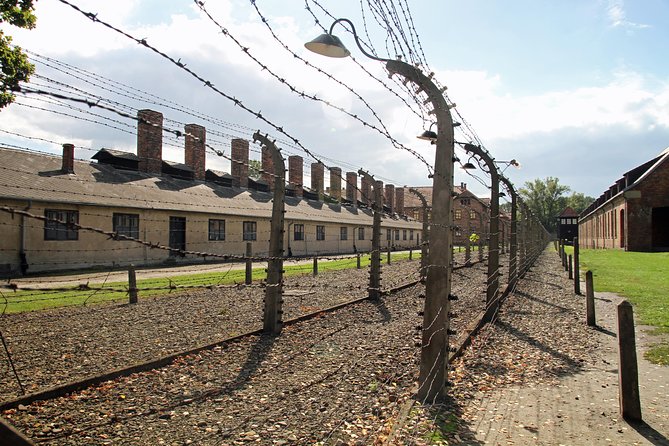
- Hotel pickup 2 hours before your entry keeps you on schedule and removes the stress of finding the start point.
- Private transfer for up to 5 people means you are not sharing the ride or waiting on other groups.
- Electric and manual wheelchair service with room for 1 wheelchair plus 4 standard seats.
- Two-part site visit with about 2 hours at Auschwitz I, then about 1 hour at Birkenau.
- Headphones included to make the experience easier to follow on-site.
- Limited visitor numbers mean you should buy entrance tickets in advance.
Timed Hotel Pickup Makes the Day Feel Manageable
The biggest win here is simple: you do not have to figure out logistics in a hurry before heading to Auschwitz-Birkenau. You start with a pickup from your Krakow accommodation, and the key detail is timing. The pickup is scheduled for two hours before your museum entrance—and you choose the entrance time at booking.
That matters because Auschwitz-Birkenau is not a place you want to rush. Getting to the main entrance on time helps you avoid the stress spiral that can happen when travel runs late or when you are negotiating with transit options that are not designed for your needs.
Once you get in the vehicle, you are looking at roughly 1.5 hours of driving to the site in Oświęcim. The day then unfolds in two parts: first Auschwitz I, then Birkenau. When your transport is already lined up, you can focus on what you came for—access, comfort, and a clear plan.
Also, this is private. That means the driver is working around your schedule, not a shared itinerary that can feel like herding cats.
You can also read our reviews of more private tours in Krakow



Private Wheelchair Transfer: What the Van Setup Actually Means
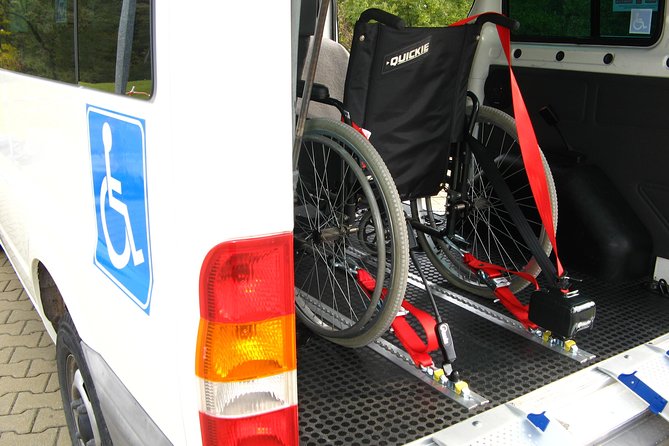
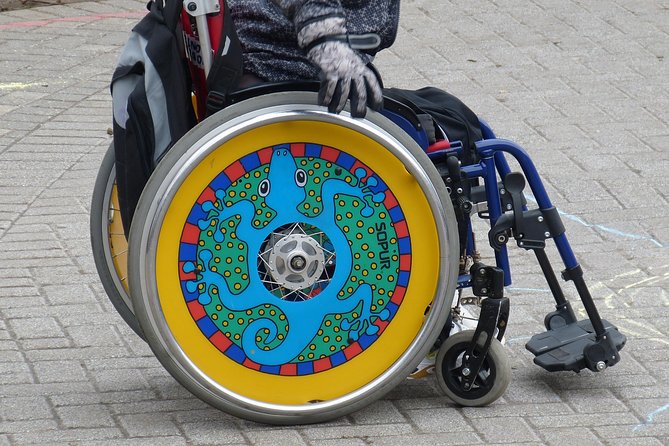
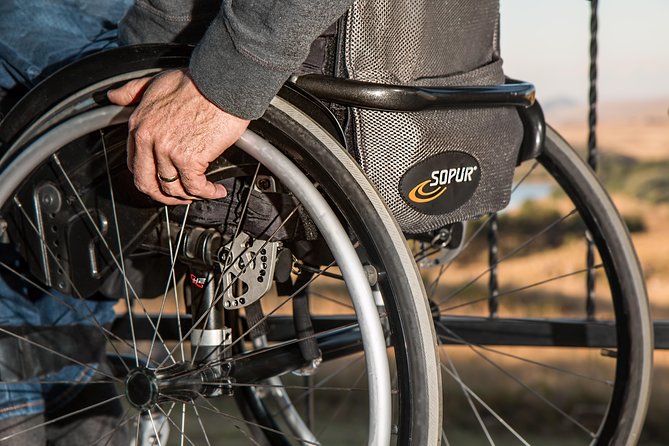
This transfer uses a wheelchair-accessible minivan, and the service can work for both electric and manual chairs. The vehicle is set up to carry room for 1 wheelchair along with 4 standard seats, so it can suit a small group where one person needs wheelchair access and others can travel seated.
You also avoid the biggest headache of many accessibility transfers: waiting for a bus or taxi that might not fit your chair comfortably. Here, the transfer is designed around the equipment and the passengers, and the driver is there to assist in an English-speaking capacity.
In practical terms, private transport gives you control over pacing. Even though the driver must follow museum rules, the ride itself can be calm. No negotiating curb ramps, no splitting up, no awkward pauses while you try to coordinate with strangers who are not traveling with your exact mobility needs.
One extra human detail that stands out: the service includes drivers who have been known to handle schedule trouble in a helpful way. In one reported situation, a driver named Piotr worked with the office after a tour time change, helping the group still participate and see the remaining part of the visit.
Auschwitz I: Main Entrance, Ticket Timing, and the First 2 Hours
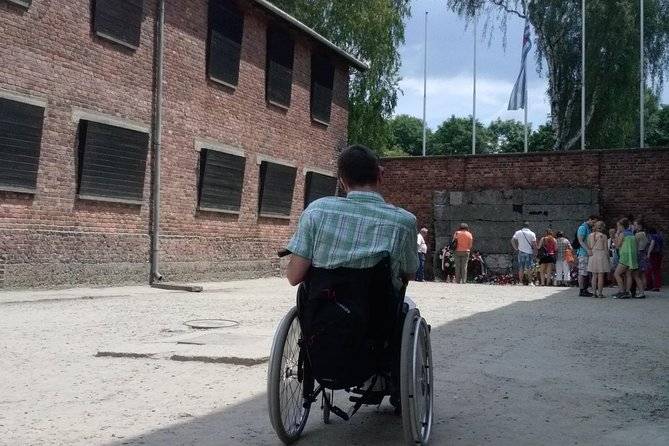
You reach the museum area and are taken to the main entrance. From there, the day becomes about pacing and access. The operator is clear that you should buy your museum tickets in advance, especially because visitor numbers are limited. That is not just a nice-to-have; it helps you lock in your entrance time so the entire day (including pickup) actually works.
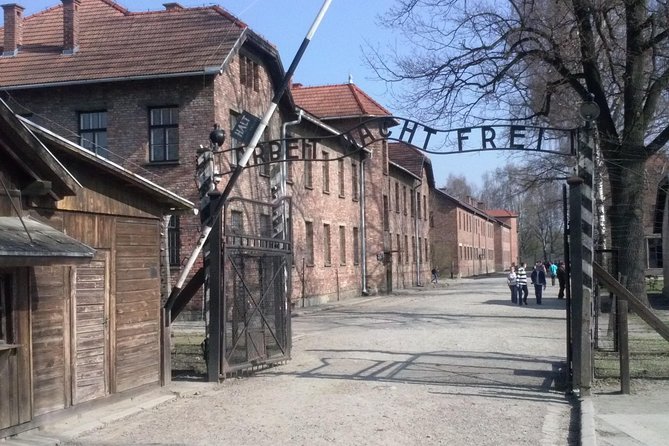
Plan on about 2 hours of visiting Auschwitz I. That is usually the part where you get your first orientation. You will be moving through significant areas at a steady pace, and this is where headphones can make a difference.
Headphones are included, which is useful because information can be hard to absorb when sound is competing with other factors like distance, crowds, and your exact position in an accessible route. It does not replace on-site context, but it can help you follow along without constantly stopping to ask questions or re-read details.
One more practical heads-up: there is a security process at the grounds. Every person entering must undergo security checks, including electronic detection. If someone refuses the checks, they will not be allowed on the grounds. So if you are traveling with any sensitivities around screening, it’s worth thinking through that before the day starts.
Birkenau After Auschwitz I: The Extra Hour at a Second Site
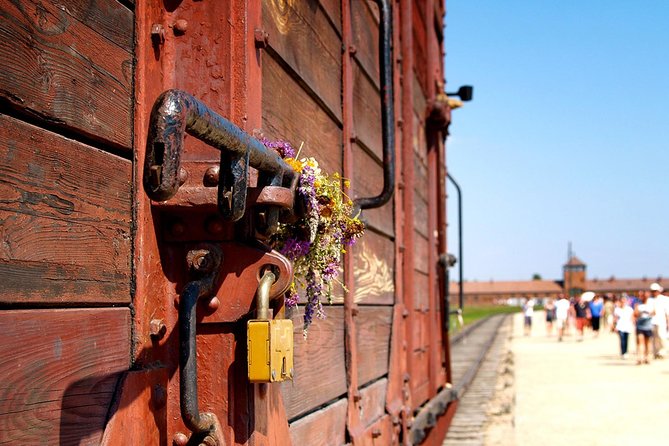
After your time at Auschwitz I, the transfer continues to the next stop. You are taken by the same minivan to Birkenau for about 1 hour of additional visiting.
This structure is actually helpful for accessibility planning. Instead of trying to cram everything into one massive block, you get a first section for orientation and context, then a second section that adds perspective. The total day still runs long—expect 8 to 9 hours overall, including transport and time spent within the sites—but the visit is broken into manageable chunks.
Birkenau is also where terrain and mobility challenges can feel more pronounced for some visitors. The operator is upfront that the museum is not fully accessible, so you should assume some parts may be difficult to reach or navigate with a wheelchair. I suggest you go in with a flexible mindset: aim for what you can access comfortably, not for every possible corner.
Also, because you are using the same vehicle, you can keep your energy for the walking and viewing rather than burning time on figuring out how to shuttle between areas.
Headphones and an English-Speaking Driver: How Support Works Here
The transfer includes a headphone system, and it is there for a reason. The Auschwitz-Birkenau site is not designed as a fully accessible museum experience everywhere. Headphones can help you get key narration and audio guidance more easily, especially when your movements or seating mean you might not be able to hear or read everything from the same spot as others.
Your driver can also adapt to your needs. The key phrase is that the driver will try to work with you, but they are obligated to follow museum regulations. Translation: your day is supportive, but it still operates under site rules. That balance matters. The best accessibility help respects both your needs and the venue’s constraints.
Parking fees are included, which is another underrated detail. When accessibility transport is involved, parking can become the weak link—getting to the right spot and not losing time. Having parking covered helps protect the schedule.
And if a schedule hiccup happens, you are not left alone to brute-force it. The service has examples of drivers stepping up when timings shift, including the Piotr story noted earlier.
You can also read our reviews of more tours and experiences in Krakow




Price and Value: Why $295.87 per Group Can Be Worth It
The price is $295.87 per group (up to 5 people). That is not cheap, so I treat it like this: you are paying for a few things that usually cost time, energy, and stress—especially when mobility needs are in play.
Here is what you are getting in the transfer cost:
- Round-trip private transport from Krakow
- Hotel pickup and drop-off
- Wheelchair-accessible minivan
- Service for electric or manual wheelchairs
- English-speaking driver assistance
- Parking fees
What you are not getting:
- Museum entrance tickets
- Food and drinks
So the value question becomes: would you rather spend extra money to remove friction, or would you rather risk a less reliable chain of transport and timing? For many wheelchair users and families traveling with limited energy, private access is the difference between a doable day and a stressful one.
If you are traveling with 2–5 people, the per-group rate can also feel fairer than booking separate taxis. And because the ride is private, you do not lose time waiting on other passengers.
Accessibility Reality Check: The Museum Is Not Fully Accessible
The operator clearly warns that the museum is not fully accessible. That’s the big consideration you should not skip.
This does not mean you cannot visit. It means you should expect obstacles that may include areas that are hard to navigate, uneven surfaces, and sections where access routes might be limited. The driver and equipment help, but the site itself sets the ceiling on what is possible.
So I recommend you plan around this idea:
- Think of the wheelchair transfer as a way to get there comfortably and be supported.
- Think of the visit as something you will tailor to what is accessible on that specific day.
Also, the operator provides headphone support, which suggests they know not every standard approach works equally well for everyone.
If you are traveling with a person who needs very smooth, step-free routes for comfort and safety, you should consider that the site limits may affect what you can experience.
Before You Book: ID, Bags, and Security Rules
A few on-the-ground rules can make or break your timing, so I’d prep them early.
- You need a document with photo, name, and surname.
- Bags and backpacks are limited to 30x20x10 cm.
- Everyone entering goes through security checks, including electronic devices to detect dangerous materials and objects. If someone refuses the checks, they are not allowed on the grounds.
These aren’t dramatic rules, but they can cause last-minute scrambling. Keep your bag within the size limit and have your ID ready. If you are traveling with medication, devices, or anything you might need, place it in a way that is easy to access during screening—without exceeding the bag dimensions.
And yes, tickets matter. Since visitor numbers are limited, buying entrance tickets in advance is essential for your chosen entrance time to actually line up with your pickup.
Who Should Choose This Transfer (and Who Might Reconsider)
This is a strong option if you:
- Need a wheelchair-accessible private transfer from Krakow to Auschwitz-Birkenau.
- Want to avoid meeting points and prefer a pickup from your accommodation.
- Are traveling in a small group (up to 5) where one wheelchair user needs supported transport.
It may be less ideal if:
- You are traveling with children—this is not recommended for child aged 14 and under.
- You expect the museum grounds to be fully wheelchair accessible. They are not.
I also like this setup for anyone who values predictability. The day is built around your entrance time, with a clear sequence: drive, Auschwitz I for about 2 hours, transfer to Birkenau for about 1 hour, and back again.
Should You Book This Private Wheelchair Transfer?
Book it if your top priorities are comfort, predictable timing, and accessibility-focused transport. The hotel pickup timed to your entrance is exactly the kind of planning that prevents stress on a heavy day. Add in wheelchair support for both electric and manual chairs, plus the headphone system, and you get a smoother path through a difficult-to-navigate venue.
I would not book it if you need guaranteed full accessibility inside every section of the museum. Even with the best transport, the site has access limits. Also, if you are bringing kids under 14, this option is explicitly not recommended.
If you do book, double-check three things before you finalize: your wheelchair type (electric vs. manual), your museum entrance time (since pickup depends on it), and your packing and ID for security.
FAQ
Is this a private transfer or shared?
This is a private tour/activity. Only your group participates.
Do I need to go to a meeting point in Krakow?
No. You start with hotel pickup from your accommodation, timed based on your museum entrance.
How early is pickup before my Auschwitz-Birkenau entrance time?
Pickup is scheduled for two hours before your entrance to the museum. You specify the entrance time at booking.
How long is the visit once you arrive?
You’ll visit Auschwitz I for about 2 hours, then go to Birkenau for about 1 hour.
Is the Auschwitz-Birkenau museum fully wheelchair accessible?
No. The museum is not fully accessible, even with the transfer support and headphone system.
Are museum entrance tickets included in the price?
No. Museum entrance fees are not included. You are expected to buy tickets in advance because visitor numbers are limited.
Can I cancel and get a full refund?
Yes, you can cancel for a full refund if you cancel at least 24 hours before the experience starts. Free cancellation is offered.