REVIEW · KRAKOW
From Krakow: Nowa Huta Premium Tour
Book on GetYourGuide →Operated by Mr.Shuttle · Bookable on GetYourGuide
Krakow has a second side, and Nowa Huta is it. This Nowa Huta Premium Tour gives you a guided look at Poland’s communist-era planning, then sends you underground to see how that ideology played out in real spaces. It feels like a history lesson with legs: you get context above ground, then you step into the hidden stuff.
I like two big things here. First, you get the story backdrop fast at Plac Centralny (Central Square), so the rest of the district makes sense. Second, the contrast is strong: you’ll walk Aleja Roz (Avenue of Roses) and see the grand socialist design, then you’ll hit the steelworks and a secret underground tunnel for a very different mood.
One consideration: this tour isn’t recommended for people with limited mobility or back/heart problems, and it’s not suitable for wheelchair users. If walking uneven ground or spending time in underground areas is an issue for you, plan differently.
In This Review
- Key highlights worth your attention
- Time travel without the fantasy: why Nowa Huta hits differently
- Getting there from Krakow: the 5-hour rhythm that keeps it easy
- Plac Centralny (Central Square): the district’s “why” in 30 minutes
- Aleja Roz (Avenue of Roses): socialist architecture you can actually read
- Tadeusz Sendzimir Steelworks: where power becomes concrete
- Secret underground tunnels: a colder story under the streets
- Arka Pana (Lord’s Ark) Church: the first church in a planned socialist district
- Soviet IS-2 tanks by the Museum of the Armed Act
- Price and value: is $111 a smart deal?
- Who should book this Nowa Huta Premium Tour
- Should you book Nowa Huta Premium Tour?
- FAQ
- How long is the Nowa Huta Premium Tour?
- What is included in the price?
- Is food included?
- What language is the guide?
- Is pickup included from Krakow?
- Is the tour suitable for wheelchair users or limited mobility?
Key highlights worth your attention

- Plac Centralny: the district’s starting point, explained with the 1949–1989 time frame
- Aleja Roz (Avenue of Roses): architecture you can read like a language
- Tadeusz Sendzimir Steelworks: industrial power, shown through offices and daily workings
- Secret underground tunnels: a rare peek into Nowa Huta’s hidden layers
- Arka Pana (Lord’s Ark) Church: the first church built in Nowa Huta, with major meaning
- Soviet IS-2 tanks by the Museum of the Armed Act: big, blunt Cold War visuals you can’t ignore
Time travel without the fantasy: why Nowa Huta hits differently
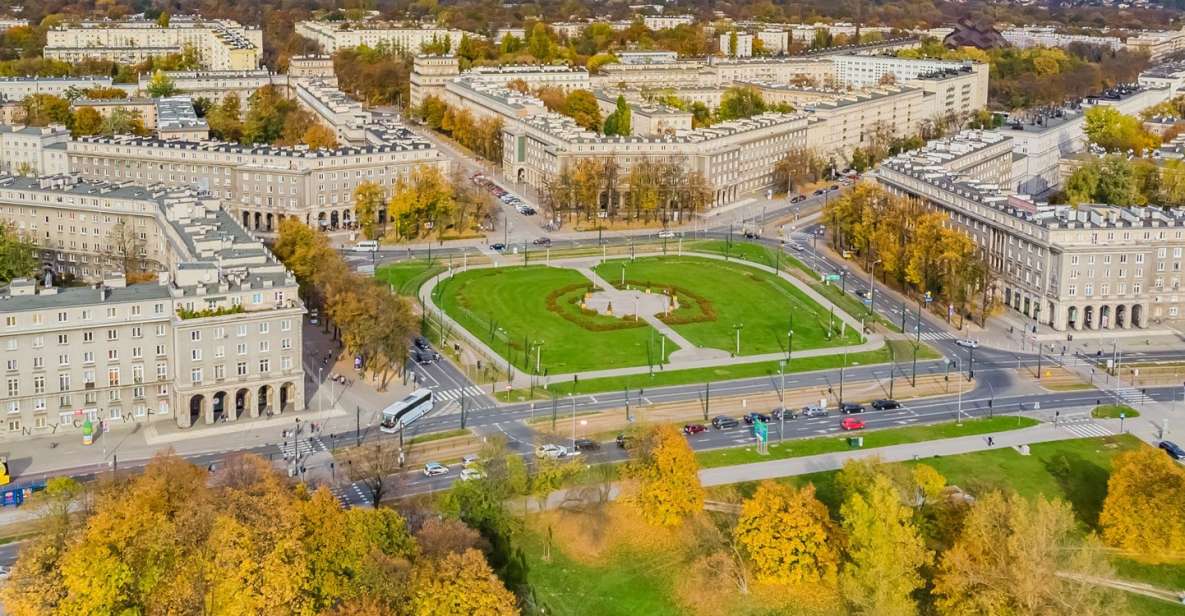
Nowa Huta was built with a mission. This district was designed as a “utopian socialist city,” and the effects of that plan are still visible in the streets, the layout, and the way buildings relate to each other. Even if you don’t love political history, the place reads like a physical blueprint: wide axes, planned neighborhoods, and a sense that everything had a role.
What I appreciate is how the tour doesn’t stop at slogans. You’ll move from the district’s core, to the architecture walk, to the steelworks, and then into the underground. That shift matters because it shows how ideology touches both the public face and the private, practical spaces behind it.
The guide is also a big part of the experience. One of the most praised aspects is how guide energy can turn sites into something you can actually understand. When someone explains what you’re looking at with passion, you stop “viewing” and start noticing.
You can also read our reviews of more tours and experiences in Krakow.
Getting there from Krakow: the 5-hour rhythm that keeps it easy
You’ll start with pickup included, and the tour is designed to run smoothly without you having to plan transit on your own. Expect a total of about 5 hours, with transport time built in.
Once you’re in the van, you’re not just commuting. The timing supports the flow: you arrive, get oriented quickly, then settle into longer guided segments. That’s useful if you want a full experience but don’t want to burn an entire day figuring out buses and schedules.
Good to know: the tour includes an English-speaking guide, so language should be straightforward as long as you’re comfortable with English explanations. Also, comfortable shoes are a must. You’ll be walking a fair bit, and you’ll be on your feet for multiple stops. If you’re the type who likes to linger, the pacing still leaves room to look around, especially during the steelworks portion.
Plac Centralny (Central Square): the district’s “why” in 30 minutes
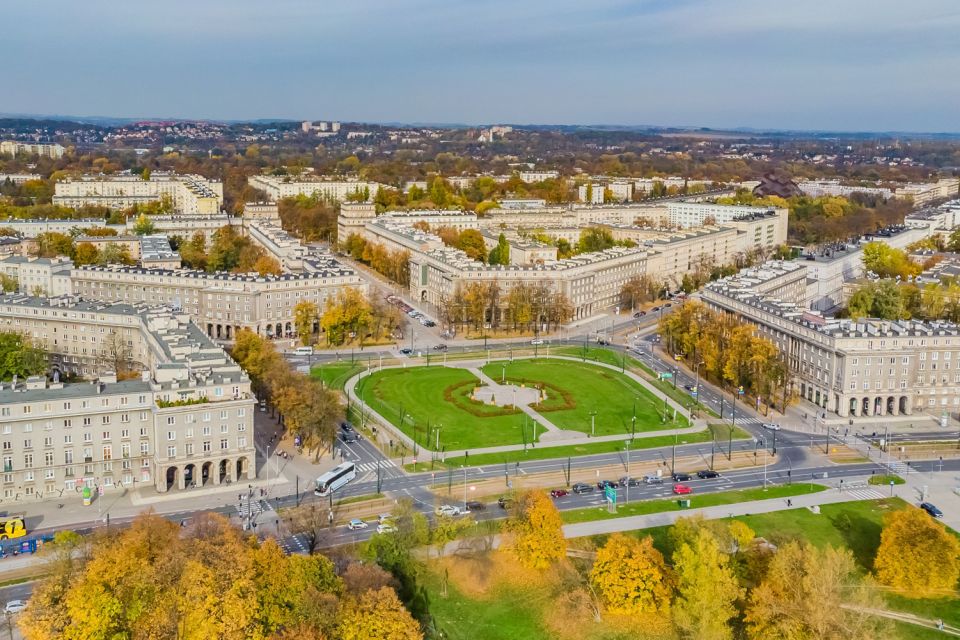
The tour begins at Plac Centralny (Central Square), and that’s a smart move. This is the kind of location where a little context goes a long way. The guide will explain how Nowa Huta was developed between 1949 and 1989, so you’re not just seeing buildings in a vacuum.
Central Square helps you understand the intent of the district. In planned socialist cities, the center often signals the “official” side of life. Think of it as the public stage where the city’s identity is supposed to show. When you learn the timeline here, later stops like Avenue of Roses and the steelworks feel less random.
If you like to connect the dots while you travel, this opening works well. You’ll leave the square with a mental map: what the district was meant to be, and why certain spaces were built in particular ways.
Aleja Roz (Avenue of Roses): socialist architecture you can actually read
Next comes Aleja Roz (Avenue of Roses), where the focus shifts from timeline to form. This is your architecture walk, and it’s the part of the tour where you’ll start noticing patterns.
On this kind of street, you’re usually looking at more than pretty facades. The buildings often reflect how the city expected people to live and move. The guide’s job here is to translate design choices into meaning: scale, symmetry, and the way public space is shaped to guide daily life.
I like this stop because it’s not purely theoretical. You can stand in place, look down the avenue, and feel how the planning creates a certain rhythm. It’s an easy way to get a “new perspective on city” without needing advanced knowledge.
Tadeusz Sendzimir Steelworks: where power becomes concrete
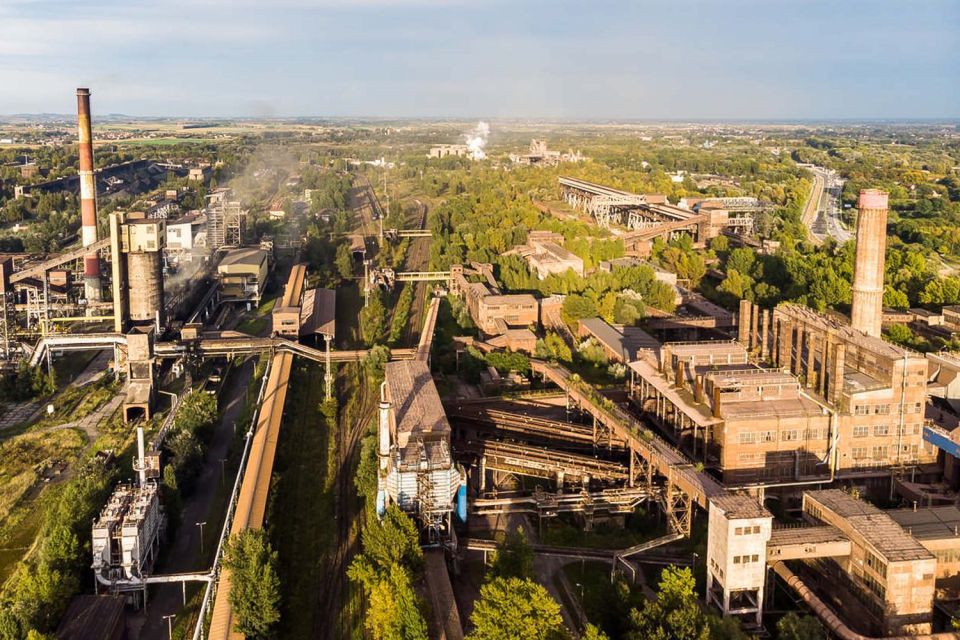
The Tadeusz Sendzimir Steelworks stop is one of the tour’s most practical lessons. Here, politics turns into infrastructure. This is where you’ll spend time wandering through offices, which matters because it’s not only about the machines. You’re seeing the human and administrative side of a major industrial operation.
When a district is built around a steelworks, it changes everything. People commute differently. Jobs cluster. Even the social environment shifts. Seeing the steelworks in the middle of the tour helps you understand why Nowa Huta feels the way it does today.
Also, the contrast is helpful. After architecture, you get something more grounded. The scale of industry, plus the chance to look around offices, gives the tour a “real life” texture. It’s not just an aesthetic snapshot.
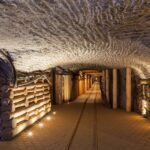
Secret underground tunnels: a colder story under the streets
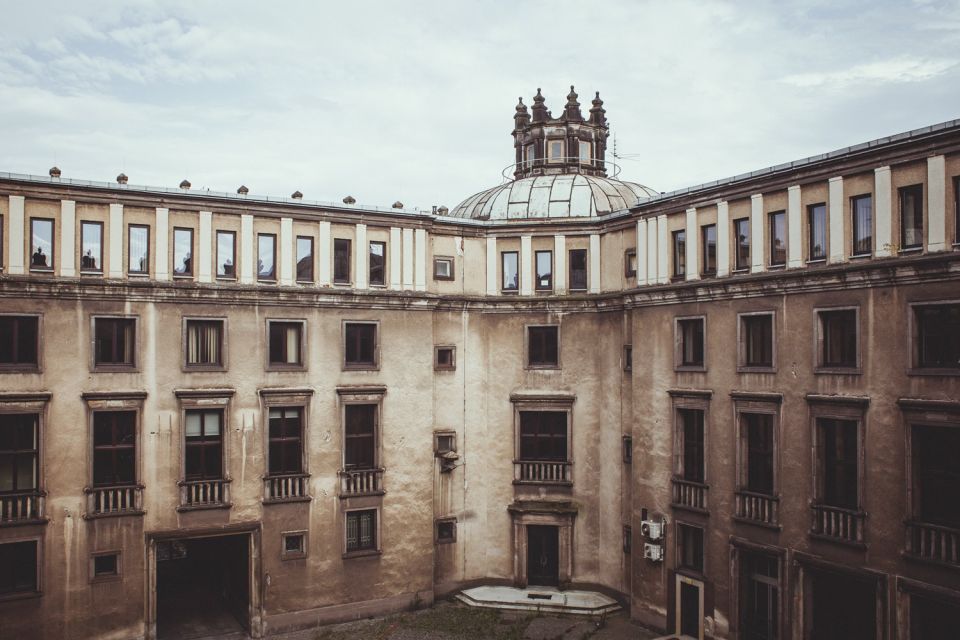
Then comes the part that many people remember longest: the secret underground tunnel. There’s something naturally intense about going below ground in a district that was designed with political purpose. The guide will help connect the underground spaces to what you saw above, so it doesn’t feel like a random detour.
Underground sites usually change your senses: sound carries differently, lighting alters the feel of scale, and you move more slowly. That slow pacing is part of the value. It forces attention.
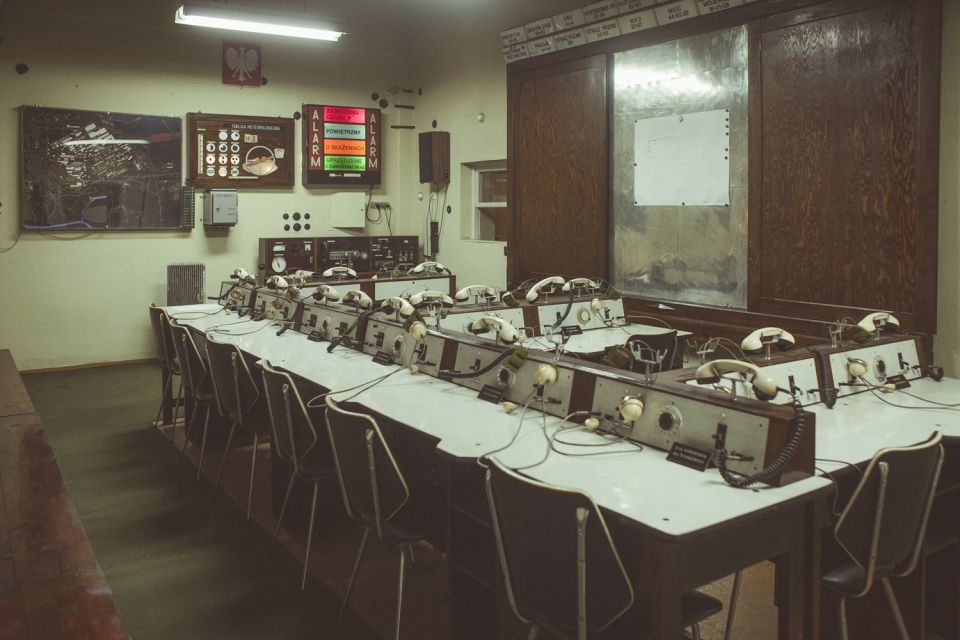
If you want the “time machine” effect people talk about, this is where it comes from. The setting makes the past feel immediate, especially when the guide explains what the bunker-like spaces were for and how that shaped real behavior.
One practical note: because this is underground, go with comfortable shoes and be ready for a bit of uneven ground or tighter movement. If you’re prone to claustrophobia, consider whether this is your comfort zone.
Arka Pana (Lord’s Ark) Church: the first church in a planned socialist district
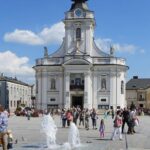
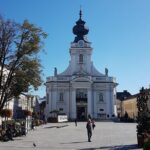
Back above ground, you’ll visit Arka Pana (Lord’s Ark) Church, described as the first church built in Nowa Huta. That detail is more than trivia. In a district built around socialist ideology, a church carries weight: it represents belief and community, but also the tension between official planning and personal life.
This stop softens the tour after the underground element. The focus is still on meaning, just a different kind. Instead of power and survival, you get place and identity.
I also find it valuable because the tour doesn’t treat religion as an add-on. The guide frames it as part of Nowa Huta’s story as the district evolved. You end the walk with a broader view of what daily life included, beyond work and politics.
Soviet IS-2 tanks by the Museum of the Armed Act
To close strong, you’ll see real Soviet IS-2 tanks in front of the Museum of the Armed Act. Even if you don’t usually care about military equipment, these tanks are powerful visuals. They’re heavy, physical, and impossible to ignore, and they fit the tour’s theme of ideology made real.
What I like here is that it pulls the tour back toward the larger Cold War context. You’ve been learning about architecture, steel production, and underground spaces. The tanks act like a blunt symbol of how global politics shaped local life.
This stop also gives you an easy photo anchor. The tanks are big, and the setting helps you tie together everything you learned earlier: the planned district, the industrial backbone, the hidden spaces, and the military presence that hung over the era.
Price and value: is $111 a smart deal?
At about $111 per person for roughly 5 hours, this tour sits in the “worth it if you want structure” category. It’s not just a ride to a nearby neighborhood. You’re paying for:
- hotel pickup and return transportation
- an English-speaking guide for the guided parts
- admission fees and tickets
- insurance included
For many visitors, the biggest value is the guidance. Nowa Huta is the kind of place where it helps to know what you’re looking at. Without context, you might see interesting architecture and a few landmarks. With a guide, you get the district’s development logic, plus the underground tunnel and key sites that carry meaning.
Food is not included, so you’ll want to plan a meal before or after. That’s not a deal-breaker, but it does affect how you schedule your day.
If you prefer day trips where someone else handles timing and routing, and you want a focused, coherent storyline, this price starts to make sense.
Who should book this Nowa Huta Premium Tour
This tour makes the most sense if you enjoy Soviet-era or communist-era history and you like travel that’s more than pretty streets. You’ll get a balanced mix: architecture, industry, underground spaces, a church with specific historical meaning, and Soviet military imagery.
It’s also a good fit if you want to see a different side of Krakow without getting lost in logistics. The whole format is built for a single afternoon window, with pickup and a clear return to your starting point.
On the other hand, it’s not for everyone. It’s not recommended for people with limited mobility, back problems, heart problems, pregnant women, or wheelchair users. If any of those apply, check alternatives that match your needs.
Should you book Nowa Huta Premium Tour?
If you want a guided, structured look at how ideology built a whole district—and you’re curious about the underground side of that story—then yes, this is the kind of tour that delivers. The best reasons to book are the sequence: you get orientation at Central Square, you read the architecture along Aleja Roz, you see the industrial engine at Tadeusz Sendzimir Steelworks, and you finish with both the human side (Lord’s Ark Church) and the Cold War visuals (IS-2 tanks).
If you’re sensitive to underground areas or you need step-free access, skip it and choose a different style of visit. For everyone else who can comfortably walk, it’s an efficient, story-driven way to leave Krakow with a genuinely different perspective.
FAQ
How long is the Nowa Huta Premium Tour?
The tour lasts about 5 hours total, with around 3 hours of guided time on site.
What is included in the price?
Pickup, an English-speaking guide, all admission fees and tickets, and insurance are included.
Is food included?
No, food is not included.
What language is the guide?
The guide speaks English.
Is pickup included from Krakow?
Yes, pickup is included. Your final confirmation will specify pickup details.
Is the tour suitable for wheelchair users or limited mobility?
No. The tour is not recommended for limited mobility and is not suitable for wheelchair users.