REVIEW · KRAKOW
Kraków: Schindler’s Factory and Former Ghetto Tour
Book on Viator →Operated by VIP Poland · Bookable on Viator
A former ghetto district with a modern, easy ride? Yes. I like how this tour uses clear prerecorded audio and a comfortable electric car to help you take in Podgórze without feeling rushed. The trade-off: there’s no live guide on hand to answer questions during the audio stops, so you’ll rely on the recordings.
You’ll get a focused route through some of Krakow’s most important WWII sites, starting at Plac Bohaterow Getta and Apteka pod Orłem, then ending with a visit to Oskar Schindler’s Enamel Factory (Schindler’s Factory). It’s especially good if you want structure and context, not just wandering.
Best part? It’s built for people who want a lot of impact in about 2 hours. Just keep in mind this is a moving, serious route, so plan for a quieter pace afterward—your brain will be doing a lot of work.
In This Review
- Key things to know before you go
- How the tour flows through Podgórze (without feeling chaotic)
- Price and value: is $65 worth the route?
- Plac Bohaterow Getta: the first 15 minutes set your emotional compass
- Apteka pod Orłem: why the Eagle Pharmacy matters
- Oskar Schindler’s Enamel Factory: the long stop and the story scope
- Electric car ride + photo moments: how to use the 2 hours well
- Who this tour suits (and who might want a different style)
- Should you book this Schindler’s Factory + ghetto tour?
- FAQ
- How long is the tour?
- What does the tour cost?
- Do you get picked up in Kraków?
- Where do you meet?
- Is the tour guided by a person or audio?
- Which stops include admission?
- What if the weather is bad?
Key things to know before you go
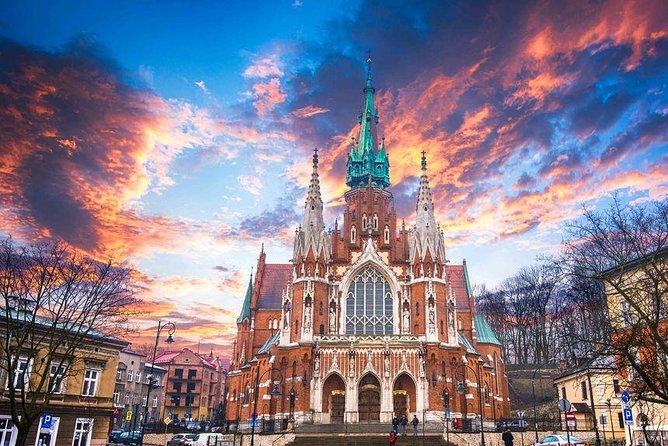
- Two meeting options in central Krakow: choose one of 2 central meeting points, or use the offered pickup.
- Audio-led exploring in Podgórze: you’ll follow a prerecorded track through key former ghetto sites.
- Fast photo-friendly transit: the electric car makes it easy to stop, hop out, and capture the main viewpoints.
- Plac Bohaterow Getta first: you start at Heroes of the Ghetto Square and see remnants tied to repression and daily terror.
- Apteka pod Orłem adds museum-level context: the Eagle Pharmacy stop is included and focuses on why this place mattered.
- Schindler’s Enamel Factory closes the loop: you’ll spend the longest time here with moving WWII-era exhibitions tied to Krakow and its people.
How the tour flows through Podgórze (without feeling chaotic)
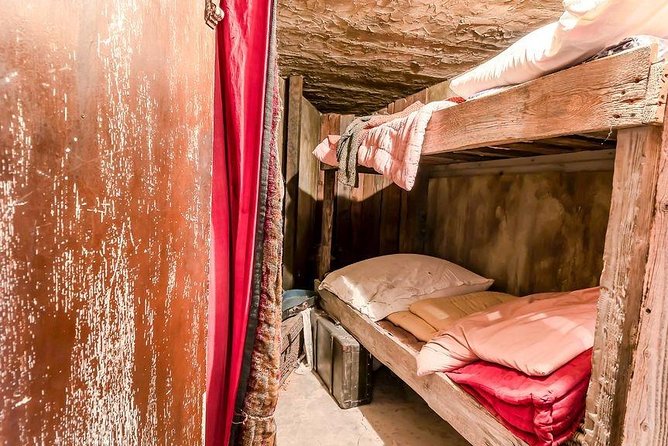
This experience is set up like a guided route, but with a twist: instead of a person talking the whole time, you listen to prerecorded audio. That can actually be a big plus. The audio keeps the story consistent, and the track is built to cover what you’re seeing as you move around Podgórze.
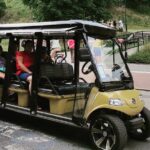
You start with a quick meetup. Then your driver greets you and you’re off in a comfortable, eco-friendly electric car. In the real world, this matters. Podgórze is best understood while you can see the street layout and key locations close together. The electric car also helps you avoid the awkward pause of trying to walk, re-locate, and re-sync your bearings.
You should know the biggest downside right away. Because the tour is primarily audio-led and self-guided at the stops, you won’t always have someone standing next to you to answer tricky questions. If you’re the type who likes to ask why this happened, or how a specific person was involved, you may want to take notes while listening and save your deeper questions for later, either at the museum or at your own pace after the tour ends.
The overall rhythm is simple: short stops at former ghetto landmarks, then more time at the museum. That structure helps you absorb a lot without constantly feeling like you’re late for the next thing.
You can also read our reviews of more tours and experiences in Krakow.
Price and value: is $65 worth the route?
At $65 for about 2 hours, you’re paying for three things: transportation in an electric car, organized stops at major WWII locations, and admission time at the places that charge.
Here’s where the value math gets interesting:
- One stop is free entry (Plac Bohaterow Getta), so you’re not paying admission for that portion.
- The other two stops include admission (Apteka pod Orłem and Oskar Schindler’s Enamel Factory).
- The schedule gives you a meaningful mix: outdoor former-ghetto remnants first, then a museum exhibition that’s designed to carry the story longer.
In other words, the price isn’t just for driving. It’s for not having to plan a route, figure out how much time to spend at each stop, and coordinate entry to the two paid sites. If you’re visiting Krakow for a short window, or you want a guilt-free way to cover the essentials without turning the day into a spreadsheet, this format is a strong use of time.
Still, you’re choosing an audio-first approach. If you strongly prefer a live guide for Q&A and spontaneous storytelling, you might feel a bit constrained. The factory portion also may not satisfy every expectation about Schindler the person, depending on what you came hoping to learn.
Plac Bohaterow Getta: the first 15 minutes set your emotional compass
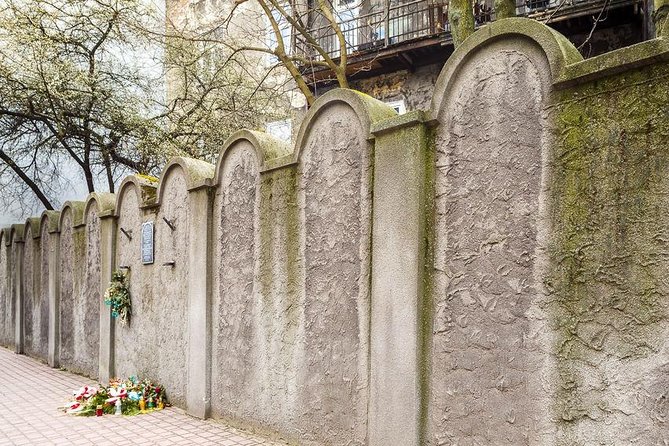
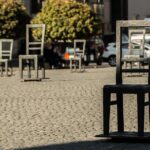
Your first stop is Plac Bohaterow Getta (Heroes of the Ghetto Square). You’ll spend about 15 minutes here, and admission is free.
This opening stop is powerful because it anchors you in the geography and symbolism of Podgórze. You’ll see iconic locations connected to a tragic story of repression, and you’ll walk away with a clearer sense of what the former ghetto experience meant in daily life. The route here is also helpful because it prepares you for what you’ll see next. If you jump straight to the museum without this early context, the later stops can feel like separate chapters. With this order, the story builds.
A practical tip: treat this first stop as your “setup” moment. Use the time to get your photos done quickly, but also listen carefully to how the audio frames what you’re looking at. Even short stops can feel heavy. The recordings are doing most of the work here—so don’t multitask.
Also, remember you’re not just sightseeing. You’re looking at remnants and sites tied to WWII occupation and the life forced on people in the ghetto. Keep your phone use respectful and brief.
Apteka pod Orłem: why the Eagle Pharmacy matters
Next up is Apteka pod Orłem (the Eagle Pharmacy). You’ll have around 30 minutes, and admission is included.
This stop stands out because it’s not only about a building. The Eagle Pharmacy is presented as an important piece of the ghetto story, tied to what people endured and how repression showed up in daily spaces. In a way, this is where the tour starts to shift from “where things happened” to “how people lived—and suffered.”
The time is long enough for you to slow down, read what you can, and absorb the setting. If you’re the type who likes to stand back for a minute and let a place sink in, this is a good moment to do it. You’ll likely feel less rushed than at the first stop.
One more practical note: because this portion is included, you’ll want to arrive ready to look closely. Don’t wait until the last few minutes to really take it in. The museum-style nature of the stop rewards patient attention.
Oskar Schindler’s Enamel Factory: the long stop and the story scope
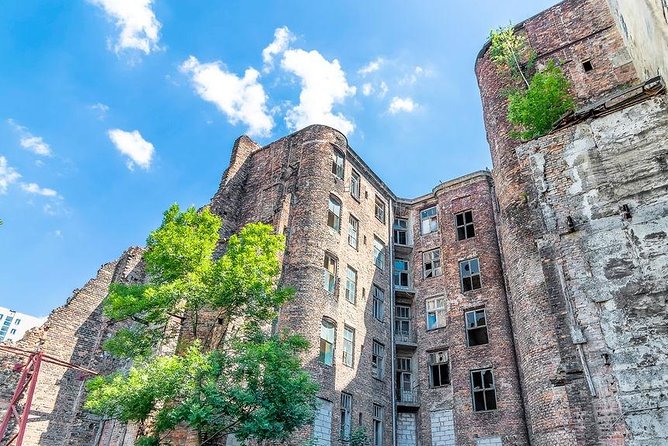
The final stop is Oskar Schindler’s Enamel Factory, where you’ll spend about 1 hour 15 minutes. Admission is included here too.
This is the most substantial part of the itinerary. And the way the exhibition is described gives you a big clue about what you’ll get. The museum focuses on Kraków and its inhabitants—both Polish and Jewish—during World War Two. It also includes the story of Nazi Germans as occupiers who arrived on 6 September 1939, brutally disrupting centuries of Polish-Jewish relations.
That framing is emotionally important. It keeps the story grounded in real place and real people, not just big events. You’ll also notice the exhibition approach aims to connect world-level history with everyday life, and personal dramas with tragedy that affected far beyond Krakow.
Now, a fair heads-up. If you’re coming specifically for a deep biography of Oskar Schindler as the main protagonist—details like his upbringing and training—you may find the museum’s focus broader than that. Some visitors seem to wish they heard more personal background. On the other hand, the broader focus can be exactly what you want if you’re trying to understand the human network around the Holocaust era, not only one individual’s life.
Practical advice for this stop: plan to slow down here and take your time. The exhibition needs reading time, and this is where you’ll feel the biggest shift from “external landmarks” to “context you can carry with you.”
If you want to make your visit more meaningful, pick one or two themes to track while you walk—occupation, everyday life, disruption of relations, and what the exhibition emphasizes about Kraków itself. That keeps the information from blurring together.
Electric car ride + photo moments: how to use the 2 hours well
I like how the tour design respects one big reality: you can’t see a lot if you’re stuck organizing movement on foot. The electric car gives you the chance to concentrate on the story at each stop rather than constantly mapping your next step.
The rhythm is built for easy photo access. When you’re able to hop out, photograph quickly, and then hop back in, you’ll spend more energy listening and looking instead of trudging between points. That’s especially useful if you’re doing this as part of a packed Krakow schedule.
Still, don’t treat the stops like a highlights tour. The outdoor locations involve human suffering and repression. You don’t need to stare long in silence, but you should keep your behavior measured. The best photos here come from calm attention, not sprinting for the perfect angle.
Also, because you’re following prerecorded audio, timing matters. If you miss part of a track, it’s not like you can ask a guide to repeat a section. So when you transition between stops, give your brain a moment to reset before you start listening again.
Who this tour suits (and who might want a different style)
This tour is a strong match if you want:
- A structured route through key former ghetto sites without planning the logistics yourself
- Clear audio guidance that explains what you’re looking at, step by step
- A practical way to cover both outdoor WWII remnants and a serious museum visit in about 2 hours
- Pickup convenience if you prefer not to organize your own central meeting point
It may not be ideal if you:
- Want a live guide for spontaneous questions and back-and-forth discussion
- Came mainly hoping for deep biographical focus on Oskar Schindler as a central character, rather than Kraków and its WWII-era inhabitants
If you’re torn, think about what kind of learning you prefer. Audio storytelling plus a self-paced museum can be very effective. But if you love interaction, you might want an option with a live expert.
Should you book this Schindler’s Factory + ghetto tour?
I’d book it if your priority is coverage with context. For the price and the short time window, you get a coherent route through Podgórze: Heroes of the Ghetto Square, the Eagle Pharmacy, and then the long museum stop at Oskar Schindler’s Enamel Factory.
Skip it—or pair it with additional museum time elsewhere—if you absolutely need a live guide to answer questions, or if you’re expecting the exhibition to be mainly about Schindler’s personal biography. The museum focus you’ll see is clearly about Kraków, its people, and the occupation story.
One final tip: wear comfortable shoes and bring a clear expectation. This is not a casual “walk and click photos” outing. It’s a compact course in WWII-era Kraków, told through places that still shape how you understand the past.
FAQ
How long is the tour?
It runs for about 2 hours.
What does the tour cost?
The price is $65.
Do you get picked up in Kraków?
Yes, pickup is offered.
Where do you meet?
You choose from 1 of 2 meeting points in central Krakow.
Is the tour guided by a person or audio?
You’ll have an audio-guided experience with prerecorded commentary as you visit the Podgórze district and key sites.
Which stops include admission?
Admission is included for Apteka pod Orłem and Oskar Schindler’s Enamel Factory. Plac Bohaterow Getta is free.
What if the weather is bad?
The experience requires good weather. If it’s canceled due to poor weather, you’ll be offered a different date or a full refund.