REVIEW · KRAKOW
Lesser Poland Wooden Architecture Trail UNESCO Private Tour from Krakow
Book on Viator →Operated by Poland Active · Bookable on Viator
Wood and faith travel well together. This private trail strings together UNESCO-linked churches and lets you see how Lesser Poland’s timber traditions took on major Gothic styles. UNESCO-listed wooden churches are the headline, and I also like the hotel pickup with an English-speaking guide that keeps the day from turning into a logistics puzzle. One thing to consider: the schedule is tight, with short 30-minute visits, so you’ll want to choose what you linger over.
You’ll ride out of Krakow in an air-conditioned mini-bus, meet your guide, and spend the day hopping between villages that look like they’ve always been there. The route highlights everything from late-Gothic wooden design to a Lemko Greek Catholic wooden church, which makes the tour feel more like a guided story than a checklist.
The churches are often set in small village centers, so expect a calm, rural rhythm. If you’re hoping for a slow, museum-style crawl with long interiors, this may feel a bit brisk. But if you like being outside, learning as you go, and getting maximum variety in one day, it’s a very strong option.
In This Review
- Key things to know before you go
- Why Lesser Poland’s Wooden Churches Made Such an Impact
- Private, English-Led Pickup From Krakow: How Your Day Runs
- The Wooden Church Route: What Each Stop Feels Like
- Lipnica Murowana and St. Leonard’s Church
- A 15th-Century Wooden Church in the Village
- St. Michael the Archangel in Binarowa (Late Gothic Worth the Wait)
- Sękowa and the Pearl of Beskid Niski
- Owczary and a Lemko Greek Catholic Wooden Church
- Kwiaton and St. Parasceve’s Church
- Pace Control With Your Guide: See More Without Feeling Sprinted
- What You’ll Learn From Wooden Gothic (Without Needing a Degree)
- Food, Water, and Breaks: Plan Like a Local
- Price and Value: Is $299.53 Worth It From Krakow?
- Who This Tour Fits Best (and Who Should Skip It)
- Should You Book This Lesser Poland Wooden Architecture Trail?
- FAQ
- How long is the wooden architecture trail tour?
- Does the tour offer hotel pickup in Krakow?
- What days and start times does the tour operate?
- Is this tour private and offered in English?
- How much time do you spend at each church stop?
- Are entrance fees included?
- Is food included in the price?
- What is the cancellation policy?
Key things to know before you go
- Private group only means your pace and questions are part of the plan
- English guide plus free-entry stops keeps the experience smooth and good value
- UNESCO connection across several wooden churches gives you a clear architectural thread
- Late-Gothic and Lemko (Greek Catholic) sites add variety beyond one single style
- Your guide can adjust how many churches you see within the day’s timing
Why Lesser Poland’s Wooden Churches Made Such an Impact
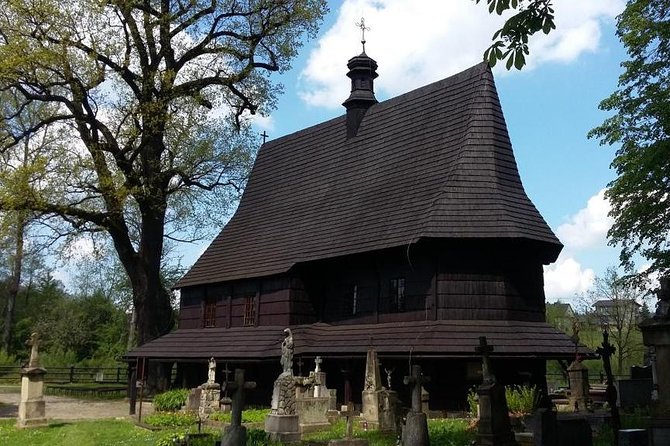
This tour is built around a big idea: how and why wooden church architecture flourished in southern Lesser Poland. It’s not just about pretty buildings. It’s about a local solution—timber that allowed communities to create bold sacred spaces—then styling those spaces with the popular forms of the time.
What I find appealing is that the tour mixes eras and traditions so you don’t just see one “type” of wooden church. You start with Gothic-flavored wooden churches tied to UNESCO recognition, then you shift into a more distinctive Lemko Greek Catholic tradition. By the time you reach the later stops, the day starts to feel like a living architectural map of the region.
You also get a guided explanation for what to notice. The buildings aren’t just static. They reflect choices—structure, decoration, and how communities wanted their churches to look and feel. If you’ve ever wondered how Gothic design could show up in timber, this is exactly the kind of day that answers that.
You can also read our reviews of more private tours in Krakow


Private, English-Led Pickup From Krakow: How Your Day Runs
The experience runs roughly 10 to 12 hours, and it’s scheduled Wednesday through Sunday during the 7:00 AM to 8:00 AM pickup window. You’ll typically be picked up from your accommodation in Krakow, then returned back to the same area near the end.
This is a private tour, so it’s only your group. That matters because the pace and timing can be adjusted to your preferences rather than being locked to a larger group’s clock. It also makes it easier to ask questions while you’re standing right in front of the church details.
Transport is handled by an air-conditioned mini-bus, which is a genuine comfort win on a day that’s mostly spent on the road between villages. You’ll also use a mobile ticket, which keeps things paper-light.
One practical note: this tour is offered in English, so if you’re traveling with someone who needs another language, this may not be the right fit.
The Wooden Church Route: What Each Stop Feels Like
Most stops are around 30 minutes, and that short window is part of the design. The guide helps you see what matters fastest, then you decide whether the interior is worth slowing down for.
Here’s what the day looks like stop by stop, and why each one is worth your time.
Lipnica Murowana and St. Leonard’s Church
You begin in Lipnica Murowana at St. Leonard’s church, built at the end of the 15th century. This church is one of the six wooden churches in southern Lesser Poland that are part of the UNESCO World Heritage listing.
This opening stop matters because it sets the baseline. You’ll get your first clear look at the wooden church design vocabulary, plus you’ll start the UNESCO story early rather than leaving it for later. If you arrive with a curious eye, this is where you’ll start noticing how the style is constructed, not just how it looks.
Admission is listed as free here, so you can focus on the experience rather than budget math for entry.
A 15th-Century Wooden Church in the Village
Next comes KoSciol p.w. Nawiedzenia NajSwietszej Maryi Panny, a wooden church from the 15th century. It’s another short stop, again about 30 minutes, and the admission is also free.
This stop works well because it reinforces the UNESCO-linked vibe while showing that there’s more than one standout building along the route. If you’re the type who likes patterns, you’ll start seeing what changes between churches and what stays consistent.
The drawback of a short stop: you’ll have to pick your priorities. Exterior details are easy to appreciate quickly, while interior time depends on what’s open and how long you want to spend.
St. Michael the Archangel in Binarowa (Late Gothic Worth the Wait)
In Binarowa, you visit Church St. Michael the Archangel. This one is described as a particularly valuable late-Gothic example in Poland.
Late Gothic sounds like a label, but on a wooden church it often shows up in the proportions, shape language, and overall visual rhythm. In other words: it’s not just a building made of wood. It’s wood used to express a Gothic-era design language.
This is the stop that tends to satisfy architecture lovers most, because it feels like a turning point between “timber tradition” and “Gothic style made real.”
Sękowa and the Pearl of Beskid Niski
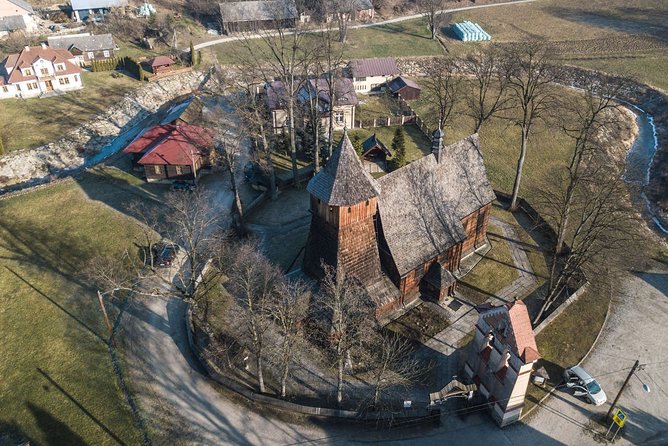
Then you head to Sękowa for the Church of St. Philip and St. James the Apostles. This church is built at the beginning of the 15th century, and it’s known as the Pearl of Beskid Niski.
This is the kind of stop that earns its nickname. The guide will help you spot the design choices that make the church stand out, and the short visit format keeps you moving without losing the chance to appreciate what’s special.
If you love photo opportunities, this is often where you’ll feel the most motivated to step back and take a few minutes to frame the building. Just remember that village churches don’t always follow big-city photo rules—give yourself time to look around respectfully.
Owczary and a Lemko Greek Catholic Wooden Church
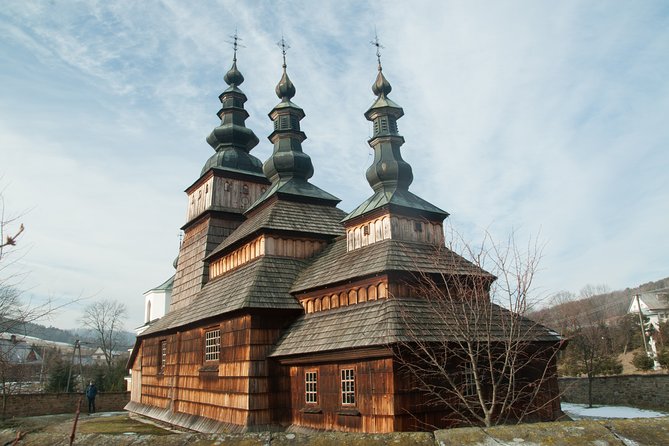
After that, you’ll visit Greek Catholic Church of Protection of Our Most Holy Lady in Owczary. It’s an old Lemko tserkov from the middle of the 17th century.
This stop changes the mood of the day. You’re moving beyond one narrow Gothic theme and into a different religious and regional tradition. That means different symbolism, and likely a different interior feel if it’s accessible. Even if you don’t know the terminology, your guide can point out what makes this tradition distinct.
This is also where the tour feels most culturally layered, because it shows that wooden church architecture wasn’t one single story told the same way everywhere.
Kwiaton and St. Parasceve’s Church
You finish with Church of St. Parasceve in Kwiaton, described as one of the most beautiful wooden churches in Lesser Poland.
Ending matters. A finale like this is meant to leave you with a strong visual memory—especially because you’ll be tired by the end of a 10 to 12 hour day. It’s a smart way to pace the experience: start with the UNESCO framework, build variety, then close with the most emotionally satisfying architecture.
Because the visit is still around 30 minutes, you’ll likely want to plan for your best look immediately on arrival rather than saving it for the last minute.
Pace Control With Your Guide: See More Without Feeling Sprinted
One of the most praised parts of this tour is how the guide handles timing. On a prior private run, the guide (Maciej) checked in about the pace and explained that you could see up to 8–9 churches if you want to maximize time. The baseline mentioned was 4–5, depending on how long people wanted to spend inside and how the day flowed.
That’s useful information for you, because it signals this tour is not locked to a rigid checklist mood. Your guide can adjust. If you’re the type who wants to go in for interiors and read details, say so. If you’re mostly exterior-focused, you can move faster.
It also helps that the guide waits promptly when you arrive. That sounds basic, but on rural stops it’s the difference between a relaxed entry and a stressed scramble. Short visits work when someone is keeping the schedule realistic.
A practical tip: decide in advance how you want to experience the interiors. Some churches may have guided access or an audio option. If you like hearing the story while you look, you’ll get more out of your time. If you prefer quiet looking, ask your guide to help you find the right moment.
What You’ll Learn From Wooden Gothic (Without Needing a Degree)
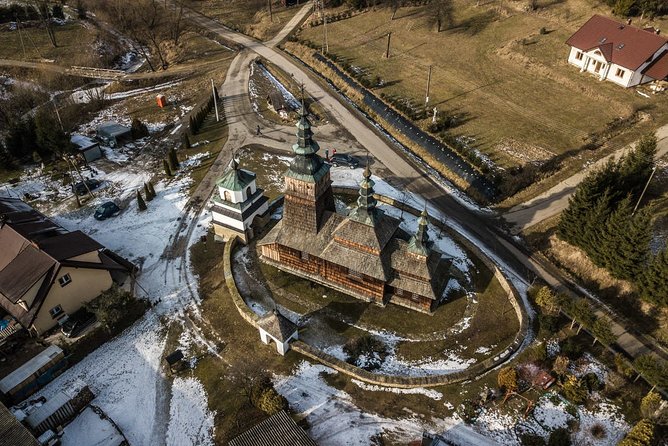
This tour is designed to make the architecture feel understandable, not like a foreign subject. The highlight is that you learn how and why this wooden church style grew here—plus you see how different architectural influences show up in timber form.
You’ll also benefit from the fact that the tour mixes:
- UNESCO-recognized wooden churches tied to southern Lesser Poland
- a late-Gothic emphasis in Binarowa
- a Lemko Greek Catholic tradition at Owczary
- multiple village churches that collectively show regional variation
That combination prevents the classic problem: one church is amazing, then the rest blur together. Here, the variety helps each stop register as its own lesson.
And because the visits are short, you don’t get stuck in over-reading mode. You’ll leave with a clearer sense of the big picture: the region’s religious life, local building practice, and the architectural language of the time.
Food, Water, and Breaks: Plan Like a Local
Food and drinks aren’t included. That means you’ll want to plan for water and a light breakfast before pickup, especially because the start window is early.
In at least one well-run day, there was about one hour for lunch at a village restaurant. If that timing matches your schedule, it’s a good moment to slow down and try Polish traditional dishes while the countryside scenery changes around you.
Just don’t expect the tour to handle your meals. Bring your own water and small snacks if that’s your style, and then treat lunch as the nicer sit-down part of the day.
Price and Value: Is $299.53 Worth It From Krakow?
At $299.53 per person, this is not a cheap day trip. The value depends on what you care about.
Here’s what you’re paying for, and why it can be worth it:
- Private experience: it’s only your group, not a big shared scramble
- Hotel pickup and drop-off in Krakow
- Transport by air-conditioned mini-bus
- Professional guide service throughout
- Entrance fees included (and many stops list free admission)
Also, there are group discounts, which can make the price feel more reasonable if you’re traveling with friends or family. And it’s commonly booked about 45 days in advance, which often suggests it’s a popular fit for people who want a high-impact cultural day without spending weeks planning.
When it might not be worth it: if you’re traveling solo on a tight budget, and you don’t care much about architecture or guided interpretation, the price can feel steep for what is essentially several short village visits.
But if you want structure, comfort, and a guide who can explain why these buildings matter, $299.53 can work out as a solid value for a private UNESCO-linked day.
Who This Tour Fits Best (and Who Should Skip It)
This is a great match for you if you:
- love architecture and want wooden churches with a strong interpretive guide
- want a full day from Krakow that avoids rental cars
- like UNESCO context but don’t want a heavy academic format
- enjoy rural village stops more than city museum time
You might consider a different option if you:
- hate short stops and prefer long interior time
- need food fully included (meals are on you)
- want a multi-day deep dive rather than a one-day variety-packed route
Should You Book This Lesser Poland Wooden Architecture Trail?
I’d book it if your goal is a memorable, well-paced introduction to Lesser Poland’s wooden church world, with a private guide and pickup that keeps the day easy. The route hits multiple styles—UNESCO-linked wooden churches, a late-Gothic highlight in Binarowa, and a Lemko Greek Catholic tserkov—so the day feels varied instead of repetitive.
If you’re sensitive to timing, just go in knowing the visits are about 30 minutes each, and you’ll get more out of the experience if you’re ready to choose what to focus on in the moment. Pack water, plan for lunch on your own, and bring comfortable shoes for village walking.
If that sounds like your kind of day, this is a strong pick.
FAQ
How long is the wooden architecture trail tour?
It runs about 10 to 12 hours.
Does the tour offer hotel pickup in Krakow?
Yes. Pickup is available from your accommodation in Krakow. You’ll also see a Kiss&Ride meeting point listed in Kraków, and the tour ends back at the meeting point area.
What days and start times does the tour operate?
It operates Wednesday through Sunday, with the opening hours showing pickup between 7:00 AM and 8:00 AM.
Is this tour private and offered in English?
Yes. It’s a private tour/activity, and it is offered in English.
How much time do you spend at each church stop?
Each stop is listed at about 30 minutes.
Are entrance fees included?
Yes. Entrance fees are included in the tour.
Is food included in the price?
No. Food and drinks are not included.
What is the cancellation policy?
Free cancellation is available up to 24 hours in advance for a full refund.