REVIEW · KRAKOW
from Kraków: Auschwitz excursion with guaranteed Dutch guide
Book on Viator →Operated by DutchPoint Kraków · Bookable on Viator
This kind of day changes how you see the world.
It’s a long, early start, but the point of the trip is crystal clear: you’ll walk Auschwitz I, Auschwitz II-Birkenau, and the Monowitz (Auschwitz III) memorial with a guaranteed Dutch guide. I also like that the tour doesn’t treat this as one-size-fits-all—Dutch guests focus on the Dutch barrack, and Belgian guests visit the Belgian barrack, with the route built around what you can actually see (including the gas chambers).
One consideration: it’s not a casual outing. The 6:00 am departure means a full day on the move (plus a long bus ride), and it’s not suitable for children under 14 or anyone with mobility impairments.
In This Review
- Key things to know before you go
- Why a Dutch-guided Auschwitz day feels safer than DIY
- Getting There from Kraków: the 6:00 am rhythm
- Auschwitz I Museum: the core story and the Dutch barrack focus
- How the guide time is used here
- Birkenau via Judenrampe: the route people were forced to walk
- Monowitz (Auschwitz III) and the Buna works: the industry of cruelty
- Timing, comfort, and what to pack for an 8–9 hour day
- Price and value: what you really get for $102.14
- Who should book this Auschwitz excursion with DutchPoint
- Should you book this tour?
- FAQ
- What time does the tour start in Kraków?
- Where is the meeting point?
- How long is the tour?
- Is a Dutch guide guaranteed?
- Which sites are included in the excursion?
- Do Dutch and Belgian guests visit different barracks?
- Are Auschwitz-Birkenau tickets included?
- Is Monowitz admission free?
- How big is the group, and are there restroom stops?
- Is cancellation refundable?
Key things to know before you go
- Guaranteed Dutch-speaking guidance with a tour guide system to keep you hearing clearly outdoors
- A structured route: Auschwitz I → Birkenau → Judenrampe → Monowitz (Auschwitz III)
- Dutch and Belgian barrack visits tailored for the group
- Official Auschwitz-Birkenau State Museum tickets included in the price
- Planned comfort breaks, with five restroom stops built in
- Monowitz included, with time at the Buna works area and the memorial
Why a Dutch-guided Auschwitz day feels safer than DIY
Auschwitz is the kind of place where you want facts in the right order. You’re not just looking at buildings—you’re trying to understand a system designed to destroy people, and that takes clear explanation. A Dutch guide matters more than you might expect, because you’ll hear details that can easily get lost when you’re reading signs at full speed.
I also like the tone I’ve seen from DutchPoint guides: calm, respectful, and focused on making the big picture understandable. In the past, guides like Wesley, Jeroen, Roland, and Marijke were singled out for storytelling that’s both detailed and careful—plus they make space for questions. That balance helps you process what you’re seeing without turning it into a rushed checklist.
You can also read our reviews of more guided tours in Krakow
Getting There from Kraków: the 6:00 am rhythm
Your day starts at DutchPoint Kraków on Karmelicka 3 at 6:00 am. The schedule includes about 80 minutes of transfer from Kraków to the Auschwitz area, plus time for entry and a first restroom break.
What this means for you: the tour is designed to use daylight and reduce waiting time at the museums. In exchange, you commit to an early wake-up call and a long sitting time on the (mini)bus. The upside is that by the time you start walking, you’re already in “work mode” for the day, not scrambling around trying to figure out logistics.
A small practical win: the group size tops out at 29 travelers. That’s big enough to run smoothly, but small enough that your guide can still answer questions when you ask.
Auschwitz I Museum: the core story and the Dutch barrack focus
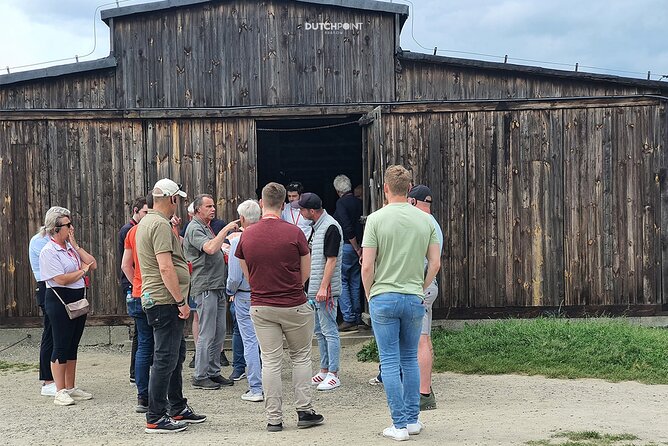
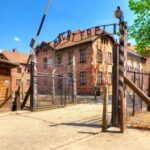
Auschwitz I (the museum site) is where the camp system is introduced. You’ll get a guided walk through former camp areas, moving through the story from the first deportations up to liberation on January 27, 1945.
The tour includes about 150 minutes at Auschwitz I, and it’s not just general commentary. You’ll see and discuss the Dutch barrack as part of the route (and Belgian guests get the Belgian barrack). This is one of the tour’s most thoughtful touches, because it anchors the experience to the fact that victims came from many places, not just one.
The visit also includes a pass through a gas chamber. That part is heavy. What helps is that the guide’s explanations are tied to what you’re standing in front of, instead of presenting it as abstract horror.
Possible drawback: Auschwitz I is the most intense “first contact” stop of the day. If you’re sensitive to emotionally demanding spaces, plan to slow your pace when you need to and use the restroom breaks (there are several planned) rather than trying to push through.
How the guide time is used here
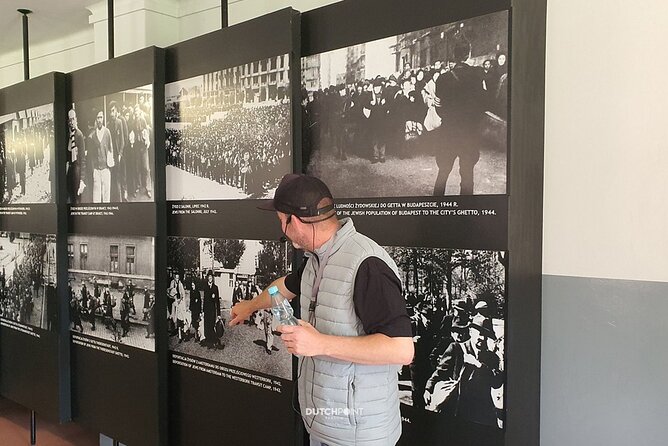
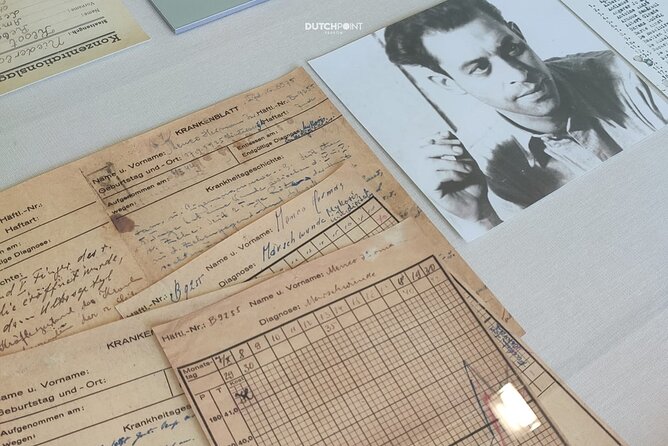
You’ll start with entry, then move through the museum areas at a careful pace. Expect a mix of large-scale context and specific details, including the kind of personal stories that bring objects and photos to life. In previous tours led by guides such as Wesley and Marijke, people noted how questions were handled respectfully and how the guide connected big history to smaller human details.
Birkenau via Judenrampe: the route people were forced to walk
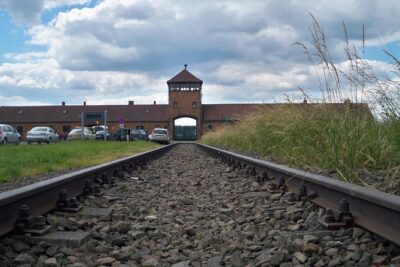
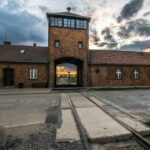
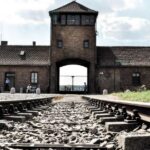
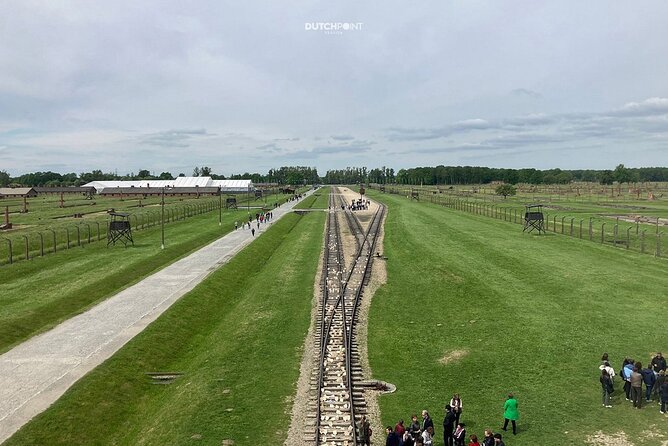
After a break, you switch locations by bus. The tour goes to Auschwitz II-Birkenau, and you’ll start at the Judenrampe—the spot between Auschwitz I and Birkenau where trains arrived and selections happened.
This is where the tour becomes very “physical.” You’re not just looking at a camp map—you’re walking along the path toward Birkenau that many deportees faced. The itinerary allows about 90 minutes at Auschwitz II-Birkenau, including time for the key areas.
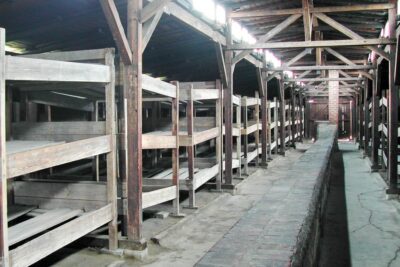
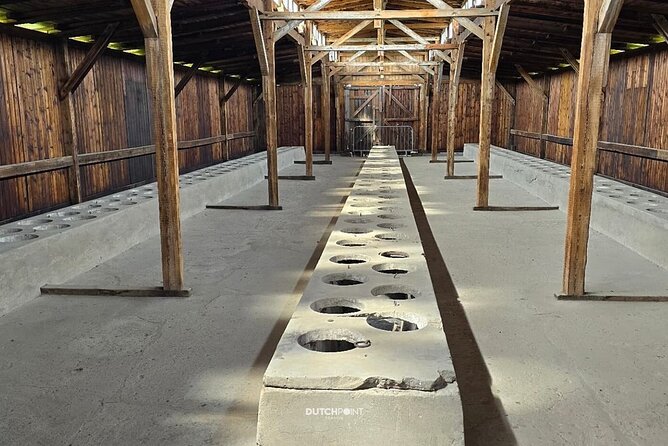
At Birkenau, you’ll visit the wooden barracks that show living conditions during the war years. You’ll also walk past the remains of gas chambers II and III. Even without entering every structure, the remains are part of the lesson: how the camp’s design supported mass murder.
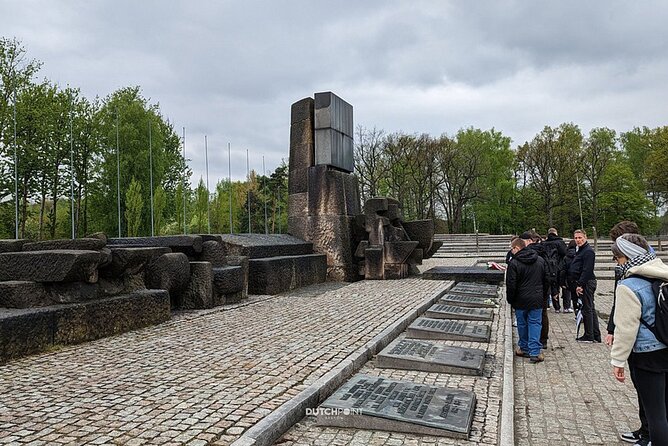
Then there’s a small but meaningful historic moment—visiting the Dutch monument. That said, Birkenau is not a place where you want to rush to feel “done.” The guide’s job here is to keep you oriented, and your job is to allow the scale to sink in.
What I like about this segment: the route ties together three layers—selection at the Judenrampe, everyday life in the barracks, and the mechanisms of extermination at the gas chamber area. That makes the overall system easier to understand.
Monowitz (Auschwitz III) and the Buna works: the industry of cruelty
Auschwitz doesn’t only happen in camps where people were warehoused. Monowitz shows another side: forced labor tied to Nazi industry.
After another break, you take the bus to Monowitz (Auschwitz III) and the Buna works. The tour includes about 45 minutes of transfer and visit, plus time to take in what remains of the factory complex and nearby memorial area. You won’t see the barracks in the same way as at Auschwitz I or Birkenau, but you will see the factory site and remnants of bunkers that remain standing.
The guide explains that Monowitz was the most grueling camp for working, located around 10 kilometers from Auschwitz I. That distance matters—it’s part of the reality that the system stretched out into industrial zones, not just one fenced place.
You’ll finish with the Monowitz monument, which is an appropriate closer for the day. It helps you connect what you saw earlier (camp layout, deportation, extermination) to what the Nazis also did through labor and production.
One practical note: the Monowitz stop has its own energy. It can feel less “museum-like” and more like ruins and industrial remnants, so if you need a moment to reset after the emotional weight of Birkenau, use it.
Timing, comfort, and what to pack for an 8–9 hour day
Even though the study tour part is described as 6 hours excluding travel, the full experience runs about 8 to 9 hours. You’re balancing museum time with bus transfers and planned breaks. There are five restroom stops, which is genuinely helpful in a day where waiting can feel unpredictable.
The day also includes short opportunities to visit bookstores. There’s a brief bookstore stop at the end of the Birkenau portion of the day, and the plan includes chances to browse along the way. This matters because quality reading materials can help you process what you saw—especially after you’ve left the site.
Moderate physical fitness is recommended. You’ll be walking outdoors and inside memorial areas, and the surfaces can vary. Wear shoes you trust. Bring a layer for early morning cold if you visit outside summer months. If you get headaches from long hours of standing and silence, plan ahead with breaks.
Meals are not included as a full meal package in the standard info. There are optional breakfast box and lunch box add-ons, so check what’s offered when you book. If you’re the type who needs food to function, consider an optional box rather than assuming you’ll find time to eat easily.
Price and value: what you really get for $102.14
At $102.14 per person, this isn’t the cheapest way to do Auschwitz from Kraków—but it also isn’t paying for “extras” you don’t need.
Here’s what your money covers:
- Guaranteed Dutch guide
- Official tickets for the Auschwitz-Birkenau State Museum
- Transfer by (mini)bus from Kraków
- Tour guide system (helps you hear in outdoor areas)
- A comprehensive study tour for about 6 hours on site (excluding travel)
Monowitz admission is listed as free, which reduces your uncertainty about ticket costs later in the day.
So the value question becomes: are you paying for convenience and structure, or for a “premium” experience? In this case, the structure is the product. Auschwitz is not a place you should treat like a casual day trip. The inclusion of tickets, transport, and Dutch-language guidance is what makes the day run smoothly.
Also, reviews often stress how guides use calm storytelling and give time for questions. That kind of guide skill is hard to duplicate if you’re trying to DIY.
Who should book this Auschwitz excursion with DutchPoint
This tour is a strong fit if:
- You want a Dutch-speaking guide instead of piecing together information
- You prefer a planned route that covers Auschwitz I, Birkenau, and Monowitz in one day
- You like context that connects what you’re seeing to what it meant historically
- You’re traveling with others who benefit from a group pace and guided explanations
It may not be the best fit if:
- You’re traveling with children under 14
- You need accessibility features not supported by this format
- You want a flexible, slow wander with no fixed route (this is a guided study day, not an open walk)
Should you book this tour?
If you’re deciding between a guided day and trying to manage Auschwitz on your own, I’d book this. Not because it makes the experience easier to handle, but because it makes the experience easier to understand. A guaranteed Dutch guide, official museum tickets, and a route that includes Judenrampe and Monowitz give you a complete structure for a place that demands clarity.
Book it if you can do the early start and you’re ready for a serious day. Skip it if you need a more flexible schedule or you’re not able to manage long walking segments and outdoor time.
If your goal is to leave with understanding—not just images—this is the kind of organized, Dutch-led trip that helps you get there.
FAQ
What time does the tour start in Kraków?
It starts at 6:00 am.
Where is the meeting point?
The meeting point is DutchPoint Kraków, Karmelicka 3, 31-133 Kraków, Poland.
How long is the tour?
The day runs about 8 to 9 hours total. The guided museum study time is listed as about 6 hours, excluding travel time.
Is a Dutch guide guaranteed?
Yes. The tour includes a guaranteed Dutch guide.
Which sites are included in the excursion?
You visit Auschwitz I, Auschwitz II-Birkenau (including the route via Judenrampe), and Auschwitz III Monowitz (including the Buna works area and the Monowitz monument).
Do Dutch and Belgian guests visit different barracks?
Yes. Dutch guests visit the Dutch barrack, and Belgian guests visit the Belgian barrack.
Are Auschwitz-Birkenau tickets included?
Yes. Official tickets for the Auschwitz-Birkenau State Museum are included.
Is Monowitz admission free?
Monowitz (Auschwitz III) admission is listed as free.
How big is the group, and are there restroom stops?
The group maximum is 29 travelers, and the plan includes five restroom stops.
Is cancellation refundable?
No. The experience is non-refundable and cannot be changed for any reason.