REVIEW · KRAKOW
Auschwitz Birkenau Transfer and Guide with Salt Mine Combo Option
Book on Viator →Operated by Legendary Krakow · Bookable on Viator
Auschwitz and Wieliczka in one long day. This combo is built for efficiency: guided Auschwitz-Birkenau (both parts) plus the Wieliczka Salt Mine underground, all timed with transport from Krakow. I like that you get a live guide for the hardest site on earth, and I also like that the salt mine visit feels like a complete change of pace rather than a rushed add-on. The main drawback is simple: it’s a long day with early timing and a lot of walking, so plan your energy accordingly.
You start at plac Jana Matejki 2 at 7:00 am and you’ll ride in an air-conditioned vehicle with a shared group (max 30). You’ll move through Auschwitz I first for a deeper introduction, then Birkenau for the full sense of scale, before heading back via Krakow for lunch and the salt mine option.
In This Review
- Key things I’d lock in before you go
- Auschwitz-Birkenau plus Wieliczka: why this combo makes sense
- Getting there from Krakow: the meeting point and the pace
- Stop 1: Auschwitz I and why headsets change everything
- Stop 2: Birkenau’s scale and the emotional workload
- Lunch break at Matejko Square: plan simple and practical
- Stop 4 (combo option): Wieliczka Salt Mine underground walkthrough
- Time on the road: what to expect from the 8 to 12 hour day
- Value for $80.24: what’s included and what you’re really buying
- Who this tour fits best (and who should reconsider)
- My booking checklist for a smooth day
- Should you book this Auschwitz-Birkenau and Salt Mine combo?
- FAQ
- How long is the tour?
- What time does it start, and where do we meet?
- Do you include hotel pickup?
- Is the Auschwitz admission included?
- Does the Salt Mine visit happen only with the combo?
- Are meals and drinks included?
Key things I’d lock in before you go
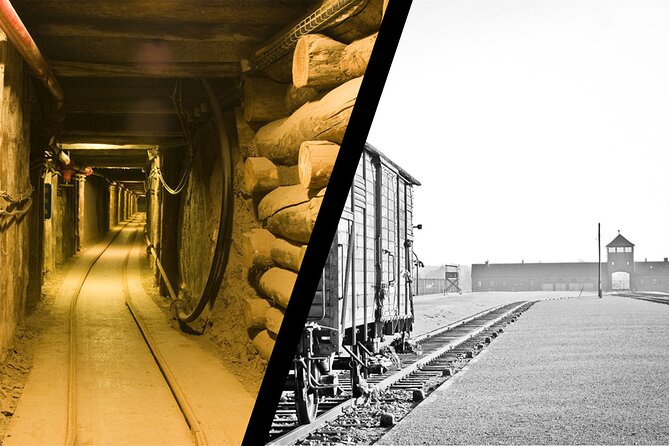
- Two UNESCO sites, one coordinated schedule: Auschwitz-Birkenau plus Wieliczka Salt Mine in the same day
- A live guide with support in Auschwitz I: headsets are provided for part I so you don’t miss key points
- Real time breaks, not just “keep moving”: short pauses during both Auschwitz sections help you regroup
- Underground stairs and sculptures in salt: expect hundreds of steps and carved works left by miners
- Driver-led smooth timing back to Krakow: the day is organized so you aren’t hunting for directions
Auschwitz-Birkenau plus Wieliczka: why this combo makes sense
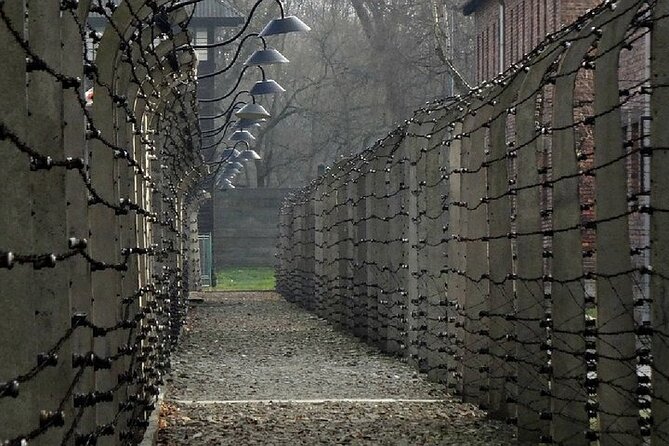
If you only have one day in Krakow, the appeal here is obvious. You’re packing in two UNESCO sites that are both world-famous, but very different in tone. Auschwitz-Birkenau is about genocide, evidence, and remembrance. Wieliczka Salt Mine is about craft, work, and a place the living kept returning to for centuries.
That contrast matters. After Auschwitz, a normal sight-seeing day can feel wrong. The salt mine gives you structure, guided time underground, and a clear finish with a lift back up. It’s not a “fun replacement” for Auschwitz, but it can help you get through the day without burning out.
Also, the price is lower than you’d often expect for this kind of full-day mix. $80.24 per person includes the Auschwitz admissions, the live guide, transport between sites, and (if you choose the combo) Wieliczka Salt Mine admission too. The value is in what’s bundled, not in a separate pile of tickets and confusing logistics.
You can also read our reviews of more guided tours in Krakow
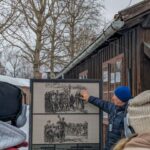
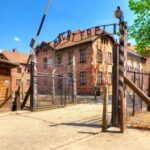
Getting there from Krakow: the meeting point and the pace
This runs as a day trip starting at 7:00 am from plac Jana Matejki 2. There’s shared two-way transport in an air-conditioned vehicle, and the group cap is 30 travelers. You’re not getting hotel pickup, so you’ll need to be at the meeting point on time.
Here’s why the logistics matter: Auschwitz-Birkenau is not a “wander when you feel like it” place. You’ll want to arrive with the group so the schedule holds, and so you don’t lose time waiting for tickets or entry flow. Starting early also helps you avoid getting squeezed by later arrivals.
Another practical point: you’re told to have moderate physical fitness. That’s not about doing a marathon, but about being ready for long days, standing, and walking on museum grounds and in the mine (with lots of steps).
And you’ll end back at the meeting point in Krakow. That’s a relief for solo travelers. No extra transfers to arrange at the end of a heavy day.
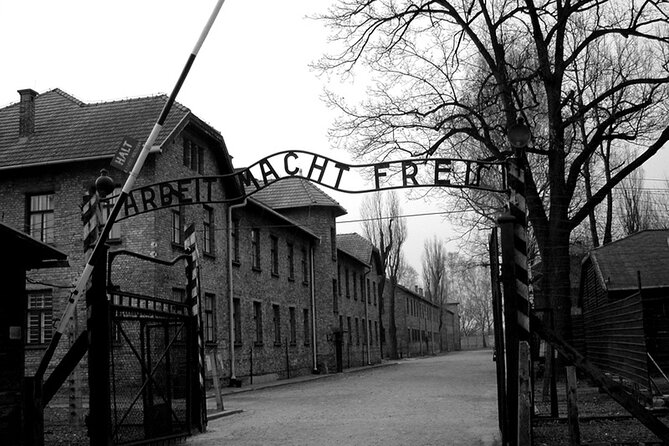
Stop 1: Auschwitz I and why headsets change everything
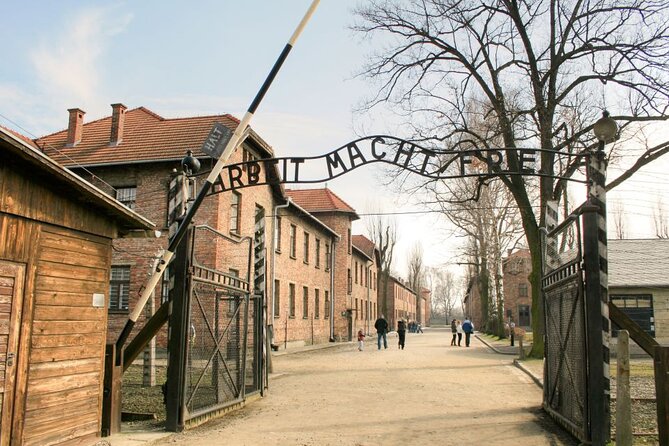
Your first Auschwitz visit is Auschwitz I (the main camp / former prisoner blocks). The schedule gives you:
- about 20 minutes break
- then around 2 hours for the permanent exhibition
- admission included
- headsets provided to hear the guide in part I
Headsets might sound like a small thing, but in a museum environment, it’s huge. You don’t want to strain to catch every detail, especially in a place where the guide is helping you understand documents, names, systems, and layout. Having the audio support in part I helps you stay present instead of searching for sound.
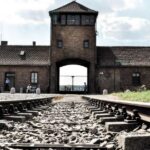
What to expect here is less about scenic highlights and more about context. Auschwitz I is where you get the framing: how the camp system worked, what the buildings represent, and how the site’s preserved evidence gives you something concrete to understand.
A short break is built in. Use it to step away, take a breath, and reset your pace. It’s easy to move too fast through your first section because you feel pressure to “see it all.” Let the guide set the rhythm.
Stop 2: Birkenau’s scale and the emotional workload
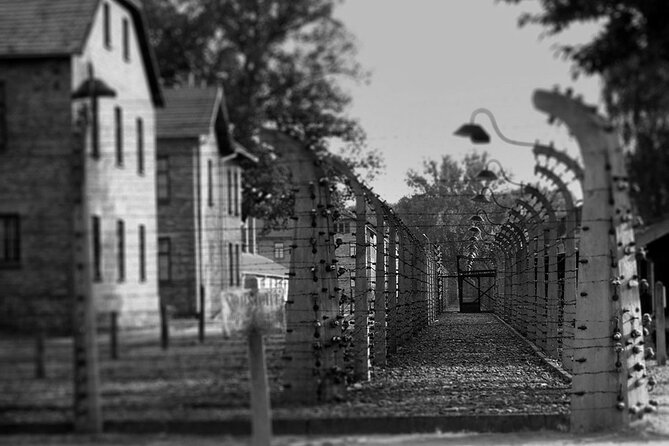
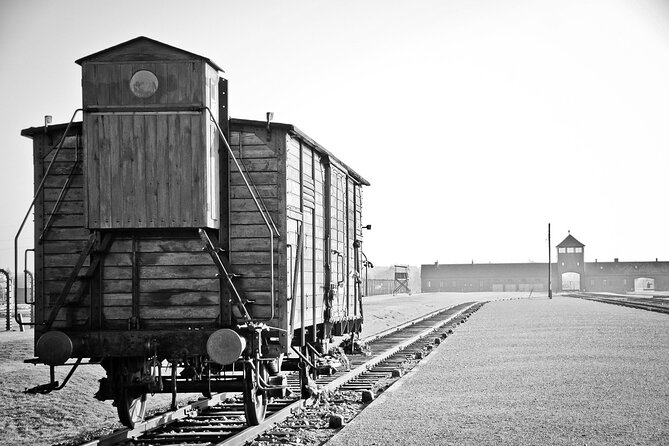
Next is Auschwitz II-Birkenau, the extermination and prisoner camp area. The time here is:
- around 1 hour 30 minutes
- plus a break of up to 20 minutes
- admission included
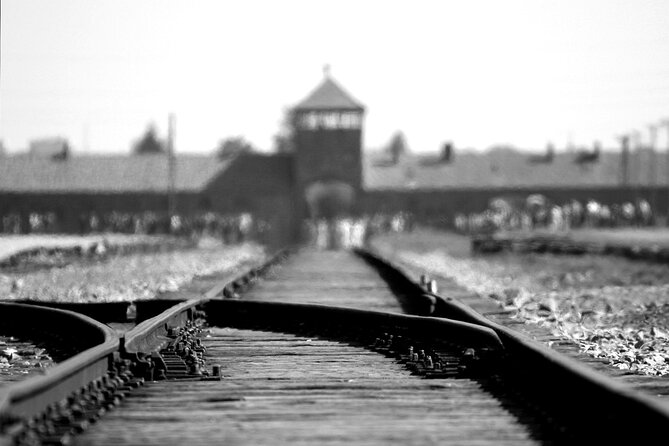
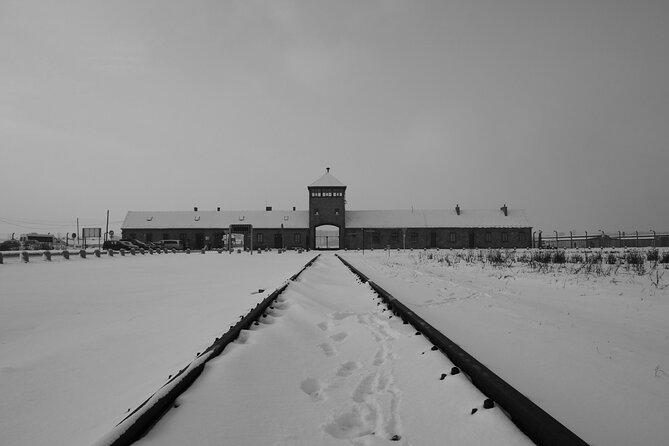
If Auschwitz I helps you understand the machinery, Birkenau is where you feel the scale. The camp grounds stretch out. That means more walking and more time spent taking in space and layout rather than just individual objects.
This is also where you’ll likely notice your body working harder than your mind expects. Even if you’re used to museums, Birkenau asks you to hold attention while moving through open areas and preserved sections.
My advice: don’t try to “finish fast.” Let your eyes settle where the guide points. If you rush, you lose the meaning of what you’re seeing. If you need a pause, take it during the planned break so you don’t end up stopping at random times and disrupting the group.
Lunch break at Matejko Square: plan simple and practical
If you choose the combo with the Salt Mine, you’ll have a 1-hour lunch break at Matejko Square. If you skip the combo, the tour still ends back at the meeting point, but the day is structured so you don’t get stranded mid-schedule.
What I’d do during this hour:
- Eat something quick that won’t sit heavy in your stomach before the mine.
- Drink water if you can.
- Take 10 minutes to rest your feet without turning it into a sightseeing detour.
A long day already asks a lot. The salt mine portion includes steps and underground walking, so you’ll feel better if lunch keeps you fueled rather than stuffed.
Also, because you’re not getting food included, it helps to have a rough idea of where you want to grab a meal near the square.
You can also read our reviews of more tours and experiences in Krakow



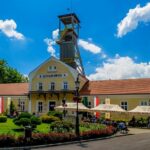
Stop 4 (combo option): Wieliczka Salt Mine underground walkthrough
The Wieliczka Salt Mine is about 20 km from Krakow Old Town, and you’ll spend about 3 hours there on the combo option. The big details:
- the guide leads you underground
- expect hundreds of downward spiraling steps
- there are 350 steps to go down at the start, and 800 steps total for the route
- you’ll come back to the surface by lift/elevator
- admission included
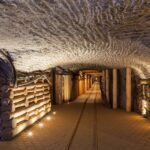
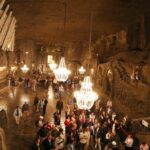
Here’s what makes it a memorable contrast after Auschwitz: the mine isn’t just a tunnel ride. It’s a working-world turned into a place where art and craft show up in the material itself. You’ll see sculptures and bas-reliefs cut out of salt, left behind by miners as a kind of creative survival—and they stayed preserved through changing generations.
And yes, steps are real here. The route is designed so you get a gradual descent and return by lift. That means you get the physical challenge without being trapped underground for hours without an exit plan.
What to watch for:
- If stairs tire you, pace yourself. You don’t want to spend your best energy halfway down.
- Wear shoes that give you traction. Salt dust and uneven surfaces can be slick in places, and you’ll be moving at a steady group pace.
Time on the road: what to expect from the 8 to 12 hour day
The overall duration is listed as 8 to 12 hours. The range makes sense: factors like travel time, entry timing, group flow, and how quickly people move through each stop can shift the day.
You’re not stuck in one location for the whole time. You’ll be driven between sites, guided in the museums, and given short breaks. That pacing matters because it prevents the day from becoming purely reactive, where you spend the entire day waiting in lines.
It’s also why the combo can feel like a lot. Even if the stops are “only” 2 hours, 1.5 hours, and 3 hours, the rest of the day is built around movement, entry, and transitions.
Value for $80.24: what’s included and what you’re really buying
For the base Auschwitz-Birkenau transfer and guide, you’re paying $80.24 per person. The included items cover the expensive parts that usually surprise you later:
- air-conditioned vehicle
- shared two-way transfers
- Auschwitz-Birkenau admission
- live in-person guide
- headsets for part I of Auschwitz
- all fees and taxes
If you choose the combo, you also get Wieliczka Salt Mine admission included.
What you’re really buying is less about transportation alone and more about reducing the mental load. You’re not coordinating ticket timing or trying to arrange your own transport across far-flung sites on a compressed schedule. That’s especially valuable because Auschwitz visits require careful timing to make entry work.
One more small but meaningful detail: the group size is capped at 30, which tends to keep the experience from feeling like a mass blur. You’ll still be with other people, but you’re not in an aircraft cabin-sized tour group.
Who this tour fits best (and who should reconsider)
This is a strong fit for:
- first-time visitors to Krakow who want Auschwitz and Birkenau plus a second UNESCO stop
- travelers who value a live guide rather than audio-only explanations
- people who want an organized day with clear transitions and no hotel pickup maze
You might want a different plan if:
- you’re not comfortable with long days starting at 7:00 am
- you have mobility limits that make steps and museum walking hard
- you prefer a shorter Auschwitz-only day with more time to pause on your own
Also, the subject matter is heavy. Even with breaks built into the schedule, Auschwitz is emotionally demanding. If you’re sensitive to that, consider whether adding the salt mine that same day will feel supportive or exhausting.
My booking checklist for a smooth day
A few practical choices can make the difference between a tolerable day and a miserable one:
- Wear good shoes for museum walking and for the mine route.
- Bring layers. Museums and underground spaces can feel cooler than street level.
- Plan for no food/drinks being included. Lunch is only a break, not a meal.
- Arrive early to the meeting point. You’re starting at 7:00 am, and the day only works if the group rolls together.
- If you book the combo, mentally prepare for a full day of transitions: Auschwitz I → Auschwitz II → lunch break → salt mine.
Also note: this experience is listed as non-refundable and can’t be changed. If your plans are even slightly uncertain, double-check your dates before paying.
Should you book this Auschwitz-Birkenau and Salt Mine combo?
If your goal is to cover Auschwitz-Birkenau thoroughly with a guide, and you also want a meaningful second UNESCO stop without spending extra time organizing transport, I think this combo is a smart booking.
I’d especially consider it if you like structured days where someone else handles the timing and transport, and you value headsets in Auschwitz I so you don’t miss the guide’s key explanations.
Just go in with realistic expectations: it’s a long, early start day with heavy content and real walking. If you can handle that, you’ll end with a day that feels complete—both in remembrance and in how Krakow can surprise you with something as unexpected as carved art inside salt.
FAQ
How long is the tour?
The duration is listed as 8 to 12 hours.
What time does it start, and where do we meet?
It starts at 7:00 am at plac Jana Matejki 2, Kraków.
Do you include hotel pickup?
No, hotel pickup is not included. You’ll meet at the scheduled meeting point.
Is the Auschwitz admission included?
Yes. Auschwitz-Birkenau admission is included in both the Auschwitz and the combo option.
Does the Salt Mine visit happen only with the combo?
Yes. Wieliczka Salt Mine is included only on the combo tour.
Are meals and drinks included?
No. Food and drinks are not included. On the combo option, there’s a 1-hour lunch break at Matejko Square.