REVIEW · KRAKOW
3-Hour E-Bike Tour In Krakow
Book on Viator →Operated by Cool Tour Company · Bookable on Viator
Three hours can set your whole Krakow plan. This Krakow e-bike tour is a smart way to stitch together the medieval center and the Jewish quarter into one ride, with plenty of short story stops. I especially like the calm, practical pace and the way the route helps you get your bearings fast.
One thing to keep in mind: you won’t be going into paid museums or castle interiors, so it’s best for seeing, learning the layout, and deciding what to explore next on your own.
In This Review
- Key highlights at a glance
- What the 3-hour Krakow e-bike format gets you
- Meeting at Sławkowska 11 and getting set up right
- Stop by stop: how the route tells the Krakow story
- Stare Miasto: Krakow’s main square and the first big landmarks
- Collegium Maius: where Copernicus studied
- Wawel Dragon and the legend that shaped the hill
- Wawel Royal Castle area: royal seat, easy framing
- Glide along the Vistula river: a breather ride
- Kazimierz: the Jewish district ride with WWII anchors
- Kazimierz highlights: squares and old street geometry
- Schindler Factory (Fabryka Emalia Oskara Schindlera): seeing the main building
- Green garden of Krakow: a quiet ride through alleys
- Finishing with fortifications and the Royal Way entry points
- Barbican and remnants of fortifications
- St. Florian’s Gate: beginning of the Royal Way
- Bikes, routes, and why the e-bike version still matters
- Price and value: what $66.37 buys you
- Who this tour suits best
- Should you book the 3-hour Krakow e-bike tour?
Key highlights at a glance
- Small-group energy: up to 15 people, so questions don’t get lost.
- Picture-ready route: quick stops at big landmarks without turning the day into a long wait.
- Local-guide storytelling: guides such as Michael, Chris, Tom, or Krzysztof often bring personal, place-based context.
- Vistula river cycle path: a smooth break between the busier historic streets.
- Kazimierz and Schindler sites: you’ll see key locations tied to Krakow’s 20th-century story.
- Weather-friendly setup: a rain poncho is included if conditions turn.
What the 3-hour Krakow e-bike format gets you
A good Krakow overview tour does two jobs at once: it shows you where things are, and it gives you a clear “what matters” map for the rest of your trip. This one delivers because it mixes major squares and monuments with a real neighborhood ride, instead of only pointing at buildings from the same street corner.
The tour lasts about three hours, and it’s built around frequent, short stops. That makes it ideal if you arrive with limited time, or if you want a first-day sweep that helps you plan later visits without guessing. The pace is also practical: even though it’s an e-bike experience, the route is designed so you’re not fighting steep climbs or testing your stamina every few minutes.
The best use of this format is simple. Start it early in your Krakow stay, then use what you learn to pick a short list of “must-return” places for the rest of the days. If you’re the kind of traveler who hates wandering in circles, this tour is the fast ticket out of the fog.
You can also read our reviews of more cycling tours in Krakow


Meeting at Sławkowska 11 and getting set up right
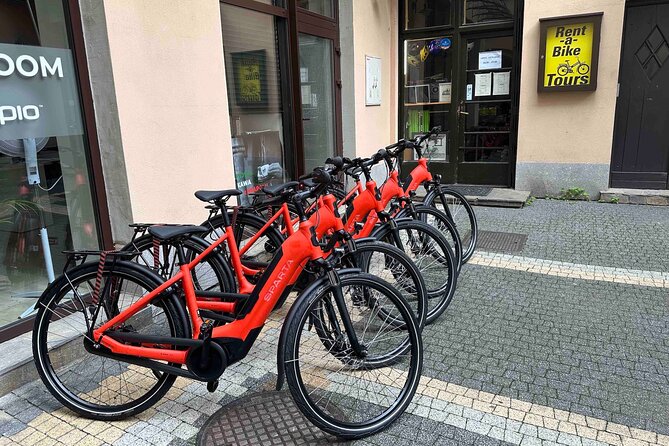
Your ride starts at Sławkowska 11, 31-016 Kraków, and the tour ends back at the same meeting point. That matters more than it sounds: you don’t lose time figuring out last-mile logistics, and you can relax knowing you’ll be dropped right where you began.
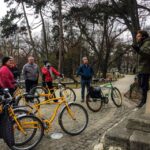
Once you meet, the staff sets you up with a bike and offers instructions if you need them. You’ll also have access to a toilet at the first stop (handy for a 3-hour day with lots of brief stops). If rain shows up, you get a rain poncho if necessary, which is exactly what you want for Krakow’s “sun now, clouds later” weather.
One detail that makes the whole day easier is the bike quality. The e-bikes are described as Sparta C-grid models, and multiple guides’ approaches emphasize comfort and control. One reviewer note you’d be wise to grab warm layers like a hat, scarf, and gloves if the day is cool, because you’ll be moving for hours.
Stop by stop: how the route tells the Krakow story
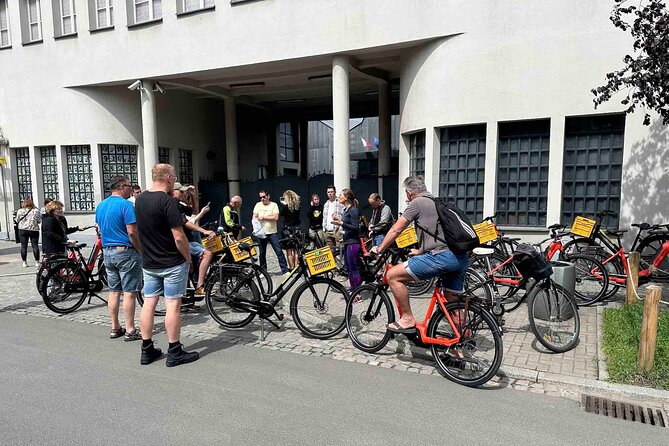
This is a highlights tour with a strong sense of geography. You’re not just collecting monuments; you’re moving through eras and communities in a logical arc—medieval Krakow, royal Wawel, the river, then Kazimierz and the sites connected to WWII.
Stare Miasto: Krakow’s main square and the first big landmarks
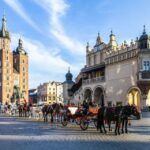
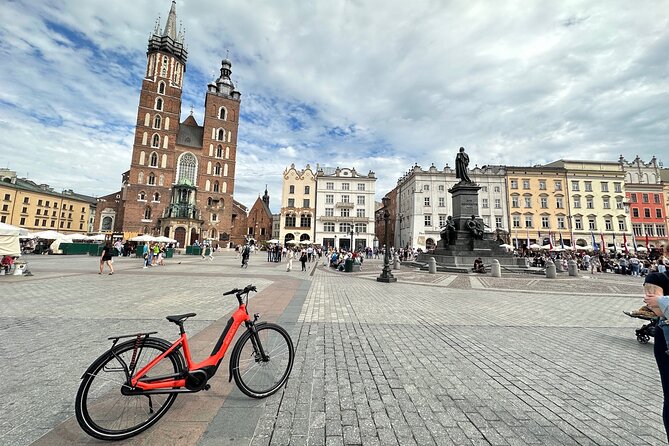
The ride begins with a short orientation and then heads into Stare Miasto, the old city’s core. You’ll start at the largest medieval main market square, where you’ll spot things like the Cloth Hall and St. Mary’s Church, plus remnants of the town hall tower.
This stop is quick, but it’s a useful kind of quick. The goal here isn’t deep museum time—it’s teaching you the “big three” landmarks of the center so you can find them again later. Cloth Hall and St. Mary’s are also visual anchors. Once you see them from the bike-and-street level, you’ll understand how the rest of the historic streets connect.
Possible snag: the center can be busy, so plan to be patient when the group clusters for photos. The upside is that you’re in the right place at the right time for orientation.
Collegium Maius: where Copernicus studied
Next up is Muzeum Uniwersytetu Jagiellonskiego Collegium Maius, the oldest building tied to the Jagiellonian University. This is one of those stops that adds a “wait, that’s real?” feeling because it’s connected to Nicolaus Copernicus, who studied there.
Even though the tour doesn’t include paid entrance fees for buildings, the quick visit is still valuable. It gives you context for why Krakow mattered for science long before it became famous for its old-world streets. If you later want to go in, you’ll already know what building to aim for.
You can also read our reviews of more tours and experiences in Krakow
Wawel Dragon and the legend that shaped the hill
Then comes the Monument of the Wawel Dragon. You’ll hear the city legend about the cobbler who defeated the dragon using a clever trick. This is a short stop, but it’s memorable because it turns one landmark into a story you can retell.
Why it works: legends like this are part of how Krakow “explains itself.” When you hear the story and see the dragon monument, Wawel hill stops being just another sight. It becomes a place with character.
Wawel Royal Castle area: royal seat, easy framing
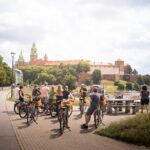
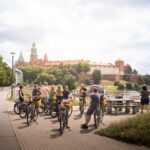
After that, you’ll get a look at Wawel Royal Castle and hear the story of Wawel hill as the seat of Polish kings. This is another stop where the tour’s format matters. You’re getting enough context to understand what the castle symbolizes without spending your whole morning stuck behind ticket lines.
If you’re deciding whether to schedule longer time at Wawel later, this stop helps you do it. You’ll see the setting and the scale, and you’ll know if you want to commit extra hours to interiors during your own time.
Glide along the Vistula river: a breather ride
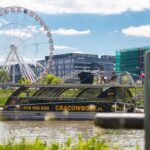
One of the nicest parts of the tour is the ride along the Vistula river cycle path. This is the “reset button” between historic streets. You’ll have a calmer stretch where riding feels smooth and the scenery gives your brain a moment to catch up.
It’s also practical. After a cluster of medieval stops, the river path helps you keep momentum and keeps the experience from turning into a stop-and-go shuffle. If you’re tired of being jammed into walking crowds, this segment can feel like an actual vacation from crowds.
Kazimierz: the Jewish district ride with WWII anchors
The tour’s arc makes a lot of sense here. You shift from Krakow’s official medieval center to Kazimierz, the former Jewish district. The streets you’ll pass are now known for cafes, bars, and small art spaces, but the tour still treats the area with care.
Kazimierz highlights: squares and old street geometry
You’ll pass through the former Jewish quarter and get a stop near the former medieval Market Square of Kazimierz, then continue on to Szeroka Street. This street is famous partly because it looks like a square, and it was used as the Ghetto Square setting in Steven Spielberg’s story of Oskar Schindler.
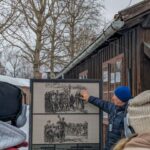
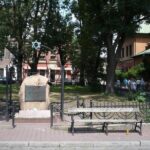
Next comes Plac Bohaterów Getta, where you’ll see the famous empty chairs monument in the former Main Ghetto Square. This is a stop that lands differently than a typical photo stop, because it connects space to memory.
Schindler Factory (Fabryka Emalia Oskara Schindlera): seeing the main building
Then you’ll reach Fabryka Emalia Oskara Schindlera, stopping at the main building of the Schindler factory. This matters because it’s not just a “WWII topic.” It’s Krakow’s specific place in that story—something you can point to on a map and recognize later in documentaries and readings.
Important practical note: you won’t be entering paid museum interiors as part of this tour. But if your priority is a clear street-level sense of where everything sits, you’ll still come away with a helpful foundation for deeper visits later.
Green garden of Krakow: a quiet ride through alleys
After the heavier WWII-related stops, the route shifts toward a green garden of Krakow and a relaxing ride through picturesque alleys. This is a thoughtful pacing change. It gives your body a chance to breathe and gives your mind a break after the concentrated emotional stops.
Finishing with fortifications and the Royal Way entry points
The last portion of the ride is more about Krakow’s protective architecture and the layout of its old-city entrances.
Barbican and remnants of fortifications
You’ll stop at Barbican, Museum of Krakow, which focuses on remnants of the medieval fortifications. The Barbican area helps you “see the city as a system.” It’s not only churches and squares; it’s also defense, gates, and the physical edges of power.
Again, you’re getting the framing more than museum depth, which is exactly the point of a 3-hour overview.
St. Florian’s Gate: beginning of the Royal Way
The ride finishes with St. Florian’s Gate, described as a medieval main entrance to the old city and the start of the Royal Way—once followed by monarchs visiting Krakow. Seeing this from the bike route helps you understand how Krakow’s grand processions likely moved through the city.
It’s a fitting close because you’re ending where the old civic story becomes visible in stone: gates, routes, and the logic of how people moved.
Bikes, routes, and why the e-bike version still matters
Even though Krakow is often described as very rideable, the e-bike experience can still be a real advantage. The motor reduces strain, letting you focus on stopping, looking, and listening rather than spending energy on hills or pacing yourself for long stretches.
That said, one useful consideration from the experience format: the city’s terrain is generally flat, with at least one bridge noted toward the end. In that case, a regular bike could be enough for many people. If you’re deciding between the two, I’d think like this: if you want maximum comfort and less effort for photos and stories, choose the e-bike. If you’re confident on a normal bike and want to keep it simpler, the route may still be manageable.
The e-bikes are also set up to be easy to control in city center conditions. That’s the real value: you’re not trying to fight for balance on cobblestones while also listening to a guide.
Price and value: what $66.37 buys you
At about $66.37 per person for a roughly 3-hour tour, the price is easiest to judge by what’s included. You get a local guide, local taxes, and use of a bike, plus a rain poncho if weather requires it. You also get a structured plan that would take you a long time to build yourself on your first day.
What you do not get is museum or castle interior time. Entrance fees are not included because you’re not going inside paid buildings. That turns the value into “orientation and storytelling,” not “one-ticket pass to everything.”
For many visitors, that’s a good trade. Paying $66.37 for a guided street-level overview saves hours of indecision. It also helps you choose which paid sites are worth your time later. If you’re spending money anyway on entries at Wawel or university-related buildings, you’ll use this tour to spend your entry tickets smarter.
Who this tour suits best
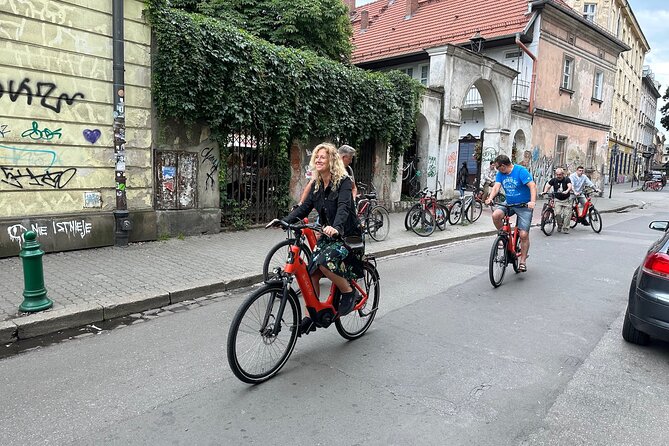
This is an excellent fit for people who:
- Want a first-day overview of Krakow’s major zones
- Like history told through places, not through a lecture
- Prefer short stops with movement between them
- Want to cover Stare Miasto and Kazimierz without spending the day on slow walking
It also works well for families, with the note that children must be accompanied by an adult. The pace is built around brief segments, and the group size cap of 15 helps keep things controlled.
If you’re an experienced cyclist who loves long rides, this won’t feel like a workout tour. But if your goal is city orientation with comfort, it’s a strong match.
Should you book the 3-hour Krakow e-bike tour?
I’d book it if you want a guided way to connect the medieval center to Kazimierz, plus the Vistula river ride that gives you a break from traffic and crowds. It’s also a smart choice if you like getting practical recommendations from your guide, such as where to eat after the tour, and if you want names and context for what you’ll see again later.
I would not book it as your only Krakow plan. Since you don’t enter ticketed buildings, you’ll still need separate time for interiors you care about, like museums or castle areas. Think of this as your “map and context” day, not your “check every site off the list” day.
If you’re ready to start your Krakow visit with a smooth, structured overview, this tour is a very solid bet. It runs with English support, keeps groups small, and earns a strong track record with a 4.9 rating and a 99% recommendation rate.