REVIEW · KRAKOW
Tour via Kazimierz Quarter by Golf Cart with Schindler’s Museum in Krakow
Book on Viator →Operated by CRACOW LOCAL TOURS · Bookable on Viator
Krakow’s WWII story moves fast on a cart. This tour links Kazimierz by golf cart with Schindler’s Factory Museum, so you see two sides of the city in just about 3 hours. You get audio-guided context outside, then a live-guided museum visit that turns history into scenes you can actually picture.
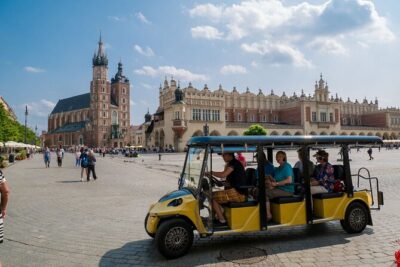
What I like most is the combo of motion and meaning. First, the golf cart makes Kazimierz easier to cover without tiring out early. Second, the museum format uses multimedia rooms and preserved spaces to help the story land, not just facts to memorize.
One thing to think about: the tour ends at the museum, and you won’t get a ride back to your hotel. If your plans depend on being close to your accommodation at the end, plan your onward transit before you book.
In This Review
- Key things to know before you go
- Golf Cart Through Kazimierz: A practical way to see the Jewish quarter
- Szeroka Street and Plac Nowy: Where Kazimierz felt like a lived-in world
- The ghetto wall fragment and Umschlagplatz at Plac Zgody: Clear WWII geography
- Fabryka Emalia Oskara Schindlera: The museum experience that connects rooms to choices
- Timing and flow: 3 hours that do two neighborhoods justice
- Price value: Why $81.88 can make sense for this combo
- Small details that make or break the day
- Should you book this tour?
- FAQ
- How long is the tour?
- What’s included in the price?
- Is the tour available in English?
- Is there walking involved?
- Where does the tour start and end?
- Do I need identification for the museum?
- Are bags allowed?
Key things to know before you go
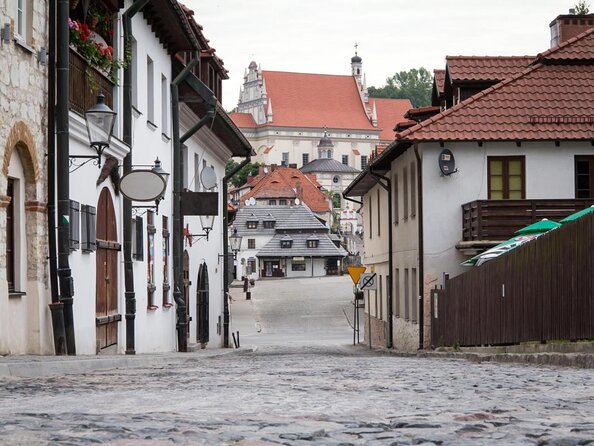
- Golf cart transport through Kazimierz keeps the pace manageable for most people with moderate fitness.
- Szeroka Street and Plac Nowy focus on the daily life that made Kazimierz feel like a real neighborhood.
- A ghetto wall fragment plus Umschlagplatz context gives a clear, sobering WWII connection between places.
- Schindler’s Factory Museum includes multimedia scenes like a tram ride, apartment, and other recreated settings.
- You need your ID details for entry because the museum uses personalized tickets.
Golf Cart Through Kazimierz: A practical way to see the Jewish quarter
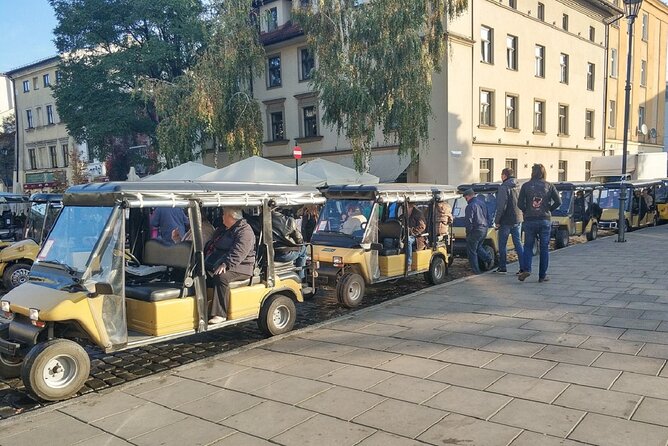
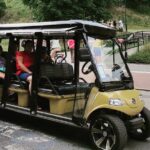
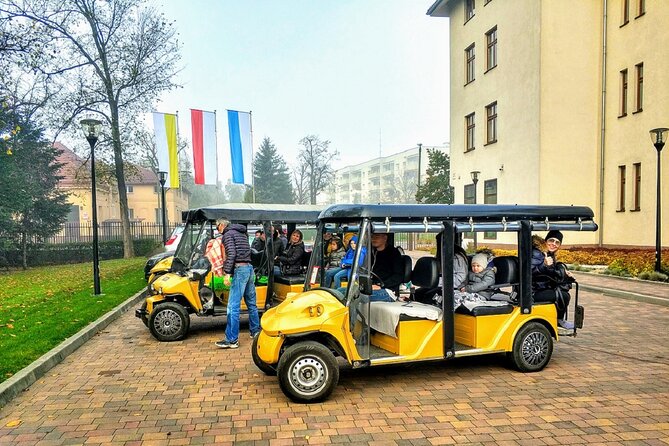
Kazimierz can be a lot of walking if you do it on your own, especially when you want to connect street names, squares, and surviving landmarks. This tour solves that with golf cart transportation through the Kazimierz district. You still get to look around and soak up the streets, but you’re not spending the whole time covering ground on foot.
I also like how the guide format matches the setting. Outside Kazimierz, you use an audio guide in the cart, so the group can keep moving at a steady pace. At the museum, you switch to a live guide, which matters because the museum visit is where the emotional weight is highest and where real interpretation helps.
The tour is group-based and capped at 24 travelers, which is a good size for hearing the guide and not feeling lost in a crowd. Still, it’s a timed start, so show up on time at the meeting point on Mikołaja Zyblikiewicza 2. If you’re late, the tour simply won’t wait.
You can also read our reviews of more museum experiences in Krakow
Szeroka Street and Plac Nowy: Where Kazimierz felt like a lived-in world
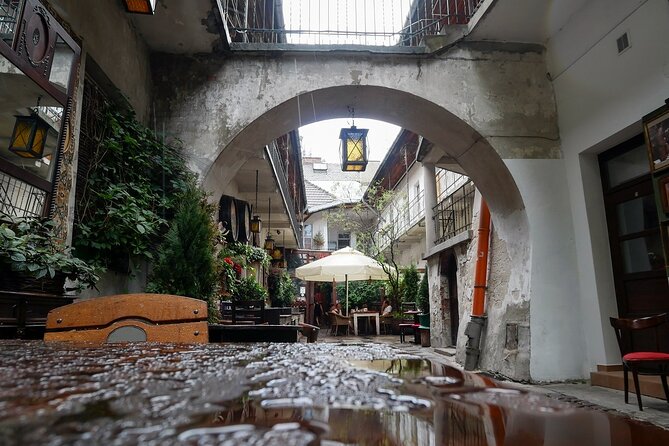
The tour’s Kazimierz portion starts by grounding you in place: the former Jewish district that shaped Krakow’s Jewish life for centuries. Today it’s one of the city’s top attractions, but what you’ll want is more than photos. This stop builds the idea that Kazimierz wasn’t just a museum of old buildings; it was a social network of streets, markets, and community spaces.
On Szeroka Street, you learn a striking fact: four synagogues used to stand on the street, something rare across Europe. That detail matters because it explains why people treated this area as the center of communal and religious life. As you stand there, you’re not just looking at architecture. You’re seeing why a street could carry so much importance at once.
A second highlight on Szeroka Street is an old synagogue building in excellent preserved condition. Even if you don’t know the dates offhand, the preservation itself is the point. It helps you understand that the past here hasn’t been wiped away. It’s still physically part of the neighborhood you’re walking through.
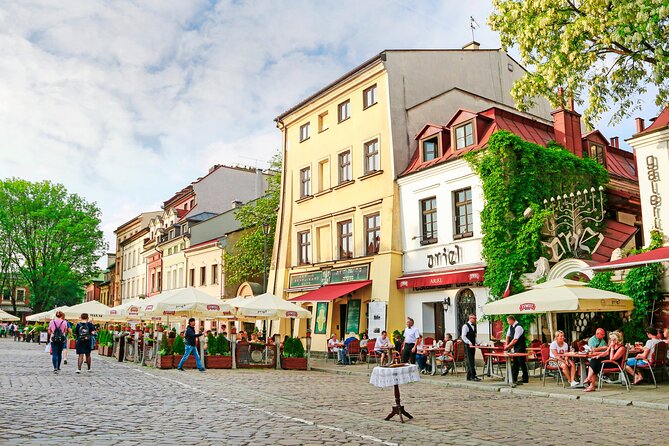
Next comes Plac Nowy, a square that now functions as a meeting spot and festival venue. The tour helps you connect “today” with “then.” Historically, it was called Plac Żydowski, the Jewish Square. In 1900, a circular pavilion was erected in the middle, with small grocery and butcher shops plus a fast-food bar that became known for casseroles still famous in Krakow today.
This is one of those small, human-scale details that makes the neighborhood feel real. And the tour also points out what’s happening now: on weekdays, you’ll see stalls selling vegetables and antiques; Sunday mornings can turn into a clothing market. In warm weather, cafés and pubs around the square spill out, and the whole place becomes one big outdoor hangout. You’re seeing how daily routines keep reappearing in new forms.
The ghetto wall fragment and Umschlagplatz at Plac Zgody: Clear WWII geography
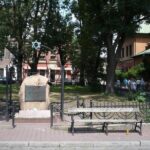
After the Kazimierz focus on community life, the tour shifts into a sharper WWII section. You’ll get a small fragment of the original wall around the former ghetto, plus a plaque marking what happened to the inhabitants. That contrast is important. It’s easy to treat WWII sites like a checklist. Here, the tour’s design nudges you to understand location as evidence.
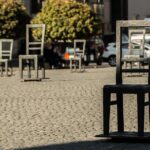
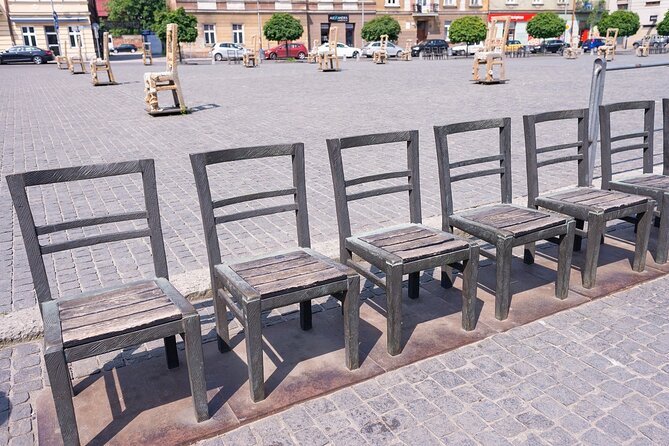
Then you move to Podgórze, the district that in 1941 became the Krakow Ghetto. The tour doesn’t keep it abstract. It names Plac Zgody (Concord Square) as the place designated Umschlagplatz under Nazi occupation, where Jews had to gather before deportations.
That phrasing can feel heavy, but that’s the real value of this stop: it helps you understand how forced movements worked. You’re not just hearing that deportations happened. You’re being shown the specific kinds of places where victims were concentrated and processed.
The emotional effect can be intense, so a practical tip: give yourself a minute at the plaques and wall fragment before you move on. Let the guide’s context land, then decide how quickly you want to continue.
Fabryka Emalia Oskara Schindlera: The museum experience that connects rooms to choices
The second half is Schindler’s Factory Museum (Fabryka Emalia Oskara Schindlera). The tour includes the ticket, and this is the part where everything becomes very visual. The goal isn’t only to name events from WWII. It’s to show how war reshaped ordinary life in multicultural Krakow, and how one entrepreneur’s actions affected the people around him.
You’ll visit the real headquarters of Deutsche Emailwarenfabrik and learn about Oskar Schindler, including his role in saving many employees from death. The tour also highlights his preserved office in the factory administration building. That’s more than set dressing. It helps you picture where decisions were made, and how a person with access and influence could still choose to act.
One of the museum’s most memorable symbols is the so-called ark of survivors, described as thousands of pots like those produced by Schindler’s workers. Seeing that idea physically in the museum space ties the industrial production of the factory to the human outcome. It’s not a vague metaphor; it’s an object-based link between labor and survival.
The museum’s multimedia installation adds structure to the experience. You don’t just look at displays behind glass. You walk through cobbled streets and then enter different recreated or interpreted spaces, such as a photographer’s atelier and a hairdresser setting. The tour also includes a tram scene, a typical apartment in the Jewish ghetto, and then a visit that brings you to Płaszów camp context.
If you’re the type who learns best by seeing scenes change, this museum format will work well for you. It’s also a reason the tour mixes audio outside with live guidance inside: the museum is where nuance matters, and a live guide can keep the story coherent as you move from room to room.
Timing and flow: 3 hours that do two neighborhoods justice
This tour is listed at about 3 hours total, split between Kazimierz by cart and the museum visit. The Kazimierz portion is roughly an hour and a half, then you get another hour and a half inside the museum with the live guide.
That timing is tight but not rushed in a stressful way, mostly because the cart handles the transit. Still, the museum visit is the time component you should plan around. Part of it involves walking inside the museum, and you should expect the schedule to follow the group.
There’s also a practical note for future planning: museum scheduling can affect exact timing, and from January 1, 2026 times are approximate. You can choose a preferred time, but the exact start may shift slightly due to museum operations. If you have a separate booking right after, give yourself buffer time.
Price value: Why $81.88 can make sense for this combo
At $81.88 per person, you’re paying for more than a generic city walk. You’re bundling cart transport, an audio guide, and the Schindler’s Factory Museum admission with a live guide inside.
To judge value, look at what you would otherwise pay for and how long it would take you to figure it out. If you tried to DIY this, you’d likely spend time coordinating transit in Kazimierz, then separately buying museum tickets, then managing timing so you don’t miss the guided flow. Here, the tour package stitches those parts together and keeps you moving.
It’s also a tour where guidance helps. The ghetto and deportation areas can be easy to misinterpret if you don’t have context for terms like Umschlagplatz, or if you’re trying to read plaques while also managing navigation. The live guide at the museum is included, which is exactly where interpretation is most useful.
The only real “cost” in terms of value is the end location. Because the tour ends at the museum and you don’t get return transport to your hotel, you may have to factor in a tram or taxi for your finish point.
Small details that make or break the day
A few rules are worth treating seriously, so you don’t lose time.
- No large bags and backpacks allowed. Travel light so you can move through the museum without hassle.
- Bring your passport or ID. The museum uses personalized tickets, and your full name must match your document. If you’re booking for a group, make sure you enter names exactly as on the ID.
- Moderate physical fitness is recommended. There’s walking inside the museum, even though the cart reduces walking outside.
- English is available. The tour is offered in English, with audio guide support and a live guide in the museum.
One more small, real-world note: a golf cart guide can strongly shape your experience. In one standout case described by a visitor, the driver had a direct postwar timeline, born just a few months after WWII ended. Even if you don’t get that same personal background every time, it signals the kind of lived perspective this format can bring.
Should you book this tour?
I’d book it if you want a clear, time-efficient way to connect Kazimierz’s community story with Schindler’s Factory’s WWII impact. The structure works well: cart for coverage, audio for context, and live guidance for the museum’s emotional and historical density.
Skip it or think twice if you strongly prefer unstructured wandering and stopping whenever you want. This is a group tour with a fixed flow, and the museum experience is scheduled around the group. Also, if you dislike the idea of ending at a museum location and handling your own ride afterward, plan your onward transport in advance.
If you want Krakow in two chapters, without turning your day into a navigation puzzle, this combo is a solid choice.
FAQ
How long is the tour?
The tour runs about 3 hours (approx.).
What’s included in the price?
Transportation by golf cart through Kazimierz, an audio guide in the cart, a live guide at the museum, and entrance to Schindler’s Factory Museum are included.
Is the tour available in English?
Yes, the tour is offered in English.
Is there walking involved?
Yes. Part of the experience includes walking inside Schindler’s Factory Museum with the live guide.
Where does the tour start and end?
It starts at Mikołaja Zyblikiewicza 2, 31-029 Kraków and ends at Lipowa 4, 32-051 Kraków. The tour ends with visiting the museum, and return transport to your hotel is not provided.
Do I need identification for the museum?
Yes. The museum requires a passport or ID for entry. Your full name on the ticket must match the name on your document.
Are bags allowed?
No large bags and backpacks are allowed.