REVIEW · KRAKOW
Nowa Huta Steel Mill Administration Buildings and Shelters with local NGO
Book on Viator →Operated by Fundacja Promocji Nowej Huty · Bookable on Viator
A visit to Nowa Huta feels like stepping into a time machine. I love seeing Socialist Realist 1950s architecture still standing, and I really like how the tour mixes above-ground offices with underground Cold War shelters. The trade-off: the building is not fully restored, so you should expect age, wear, and an exhibition setup shaped by the local NGO.
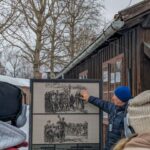
You’ll walk with a guide through the steelworks’ administrative spaces and get context on Poland’s communist past. If you want a super neutral, architect-only or economics-only angle, you might find the narrative strongly tied to communism and the state of industry after it. Still, it’s one of the most unusual, hands-on ways to understand Krakow’s history outside the postcard zone.
In This Review
- Key things you should know before you go
- Nowa Huta’s administrative buildings: the real star of the show
- Socialist Realist details you can actually spot in person
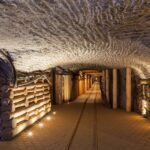
- Underground bomb shelters: the Cold War part that hits hardest
- Worker’s theater and the steelworks’ community side
- Historic radio recordings: hearing history while you walk
- Guide quality: when you’re lucky, it makes the whole thing
- Price and time: what $27.63 really buys you
- Meeting point at Ujastek 1: how to keep it easy
- Who should book this tour (and who might not)
- Quick reality check on what you’ll see inside
- Should you book? My recommendation
- FAQ
- Is the tour offered in English?
- How long does the tour last?
- Where do we meet?
- Is hotel pickup included?
- Is this tour physically demanding?
- Can I cancel for free?
Key things you should know before you go
- A small group (max 15) keeps it conversational and lets you ask questions as you move through rooms.
- One main complex, lots of stops inside it: offices, underground shelter areas, and other curious spaces tied to the steelworks.
- Cold War era bomb shelters give you a real sense of scale, not just photos.
- Historic audio from the steelworks radio station adds atmosphere and context while you’re in the buildings.
- English tours are offered, which makes it easier to follow the story if you don’t speak Polish.
Nowa Huta’s administrative buildings: the real star of the show
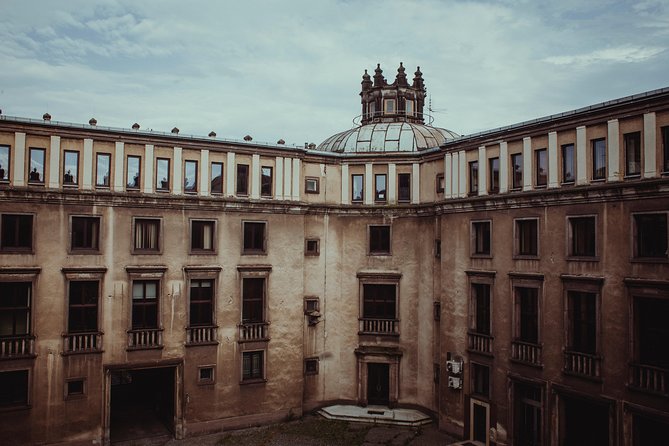
Nowa Huta is Krakow’s communist-era sibling. It was built with a clear idea of how society should work, and that plan shows up in the architecture—especially in the administrative buildings that ran the machine. What I like most here is that you’re not just looking at an exterior. You’re walking through the spaces where decisions were made, day after day, with the style and purpose still visible in the layout.
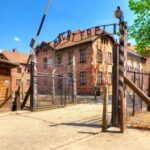
This tour centers on the administration side of the Lenin Steelworks (the “steelworks world,” not the romantic factory vibe). You’ll see offices and public-facing rooms, plus areas that connect to how the community functioned around the plant. That matters because Nowa Huta wasn’t only about steel. It was about controlling a whole system: work, culture, and daily life.
In plain terms: you’re getting an on-foot walkthrough of communist-era planning that you can feel in your legs. Even if you’re not a history nerd, the building does the talking. The scale, the corridors, the way rooms were designed for authority—it all reads fast once you’re inside.
You can also read our reviews of more tours and experiences in Krakow.
Socialist Realist details you can actually spot in person
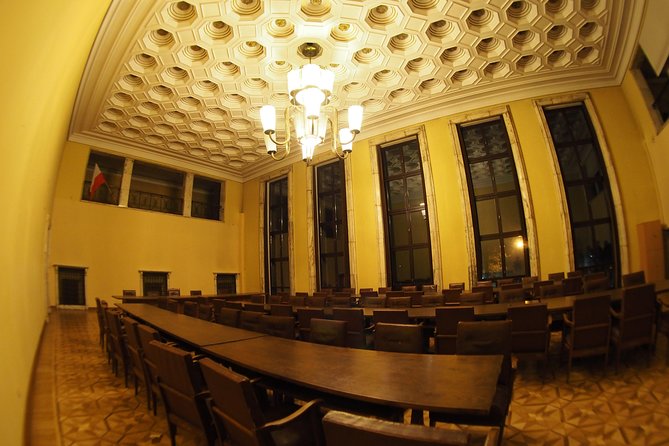
Socialist Realism isn’t just a label. Inside these buildings, it’s a visual language—how power was meant to look. The administrative spaces use bold form and a certain seriousness of design, the kind meant to project stability and importance. You’ll notice how the design tries to communicate order and control without needing a modern explanation.
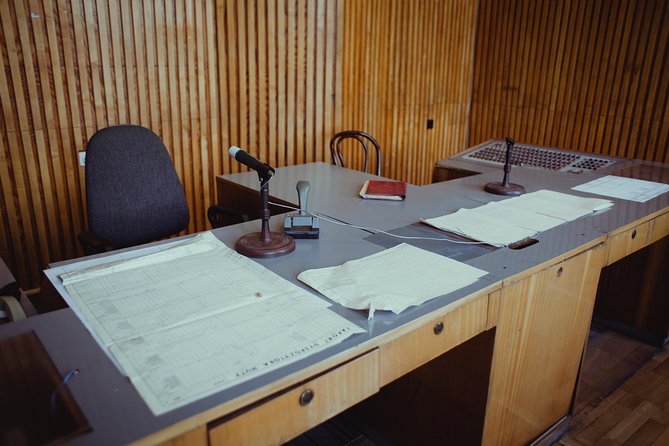
What makes this more interesting than a museum stop is that the building still feels like a working environment left mid-scene. Rooms can look staged, but the overall atmosphere is real: you’re moving through spaces that have been left and are gradually showing age. One reason people get so excited is that it feels close to an urban exploration tour, except with a guide who explains what you’re seeing and why it mattered.
One balance point: the NGO handling the site has organized items and displays. So while you’ll see artifacts and period items, you shouldn’t expect everything to look exactly like it did on a single day in the past. Some material may span multiple decades, so the rooms can feel like a timeline rather than a snapshot.
Underground bomb shelters: the Cold War part that hits hardest
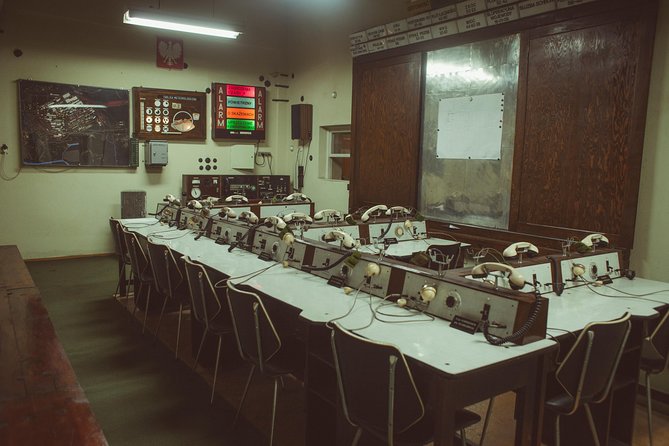
The highlight for most people is the underground shelter. It’s the part where history becomes physical. In a normal history exhibit, you see diagrams. Here, you move through the real volume—tight, utilitarian, and unmistakably built for crisis conditions. That’s where the Cold War theme stops being abstract.
You’ll also get the context for why the steelworks complex needed protection. Large industrial systems were strategic assets, and in a tense political era, that made them targets and priorities. The underground areas help you understand the psychology of the time: preparedness wasn’t a vague idea. It was baked into design.
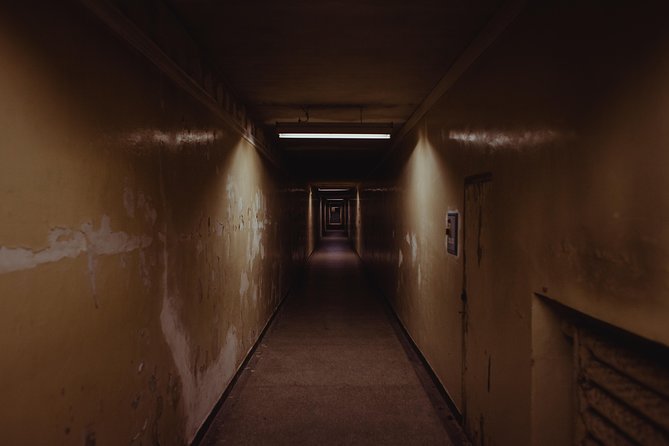
Practical tip: expect surfaces and areas that can feel cool and dim compared to what you’re used to outside. You’ll want shoes you can trust. If you have moderate physical fitness, you’re fine, but it’s still walking through older spaces that aren’t designed for mobility-friendly sightseeing today.
Worker’s theater and the steelworks’ community side
Nowa Huta wasn’t built only for producing steel. It was built for managing people. That’s why the tour includes cultural spaces tied to the worker community, including a worker’s theater. Even if you don’t know anything about Polish cultural policy, it makes sense once you see it: entertainment and collective activities were part of the system.
This isn’t just a sightseeing bonus. It changes how you interpret the administrative buildings. Instead of thinking only about paperwork and hierarchy, you start seeing the steelworks as a whole ecosystem—work plus leisure, management plus community life.
And yes, it’s strange in a compelling way. It’s not modern stadium culture. It’s functional, organized, and connected to a specific social model. If you care about the everyday mechanisms of power, this section is where the tour earns its place.
Historic radio recordings: hearing history while you walk
One of the most memorable elements is the historic tape audio tied to the steelworks radio station. Hearing period recordings while you’re inside the buildings adds a layer that photos can’t match. You’re not only observing how things looked—you’re getting a sense of how information moved and how the plant spoke to its people.
Sound changes your experience. It puts you in the moment, even when you’re not seeing faces from that era. It also helps you understand that the steelworks administration wasn’t isolated. It communicated. It instructed. It reinforced identity.
If you’re the type who likes your history with atmosphere, this is the part you’ll probably remember most clearly after you’ve left the site.
Guide quality: when you’re lucky, it makes the whole thing
The tour’s strength is heavily tied to the guide. The local guides from Fundacja Promocji Nowej Huty bring the buildings to life with context you can’t easily pick up from signs. In particular, a guide named Mateusz comes up repeatedly as a standout. People mention his enthusiasm, clear explanations, and strong connection to the site’s story.
That connection matters. A guide who knows the landscape and the timeline can help you connect architecture, politics, and daily work into one readable narrative. It’s also why the tour works even if you only have a couple hours in Krakow. You’re not wandering. You’re learning while you move.
That said, there’s one fair caution. Some framing can put extra emphasis on communism as the cause of everything that went wrong or felt flawed about the system. If you want a more comparative story (how industrial design and management might differ in other systems too), you can still get a lot out of this tour—but keep your mind open and ask questions as you go.
Price and time: what $27.63 really buys you
The price is $27.63 per person, with an English-speaking group tour format. For about 1.5 to 2 hours, you’re paying for guided access to a complex that many visitors would never see on their own. It’s not just a quick exterior stop; you’re touring administrative buildings, underground shelter areas, and cultural spaces, plus you get guide-led interpretation.
That value improves when you consider the group size. With a maximum of 15 people, the pacing feels manageable and you’re less likely to be stuck listening from the back of a long line. You also get a mobile ticket, which makes the whole thing easier than older-school printed tickets.
One more value detail: admission for the building areas included in the tour isn’t an extra add-on on top of the experience ticket you buy. If you like historical sites but hate surprise costs, this is a good fit.
Meeting point at Ujastek 1: how to keep it easy
You meet at Ujastek 1, 31-752 Kraków, right at the start point shown for the experience. The instruction notes it’s on the opposite side of the street from the map pin, so give yourself a couple extra minutes to align yourself correctly. Near public transportation, so you shouldn’t need a private taxi to get there.
Because the tour ends where it starts, you don’t have to plan a complicated pickup. Just make sure you build time for getting there and getting back into your Krakow route.
What to wear: comfortable shoes. The tour includes underground areas and older interior spaces, so avoid anything that’s slippery or hard to walk in for an hour and a half to two hours.
Who should book this tour (and who might not)
Book this if you:
- Want a real-feeling industrial history visit, not only old castles and churches
- Like architecture tied to politics and power, especially 1950s Socialist Realism
- Enjoy guided history with stories you can connect to physical spaces
- Want the standout feature: underground shelter areas
Consider skipping if you:
- Want a fully restored, museum-clean setting with no signs of age
- Prefer a strictly neutral, balanced comparative framework without any strong interpretive point of view
- Hate tours where the display is partly shaped by a local organization’s current curation and access needs
There’s also a practical match: the tour calls for moderate physical fitness. That’s not “athlete only,” but you should be comfortable walking and moving through older spaces, including underground segments.
Quick reality check on what you’ll see inside
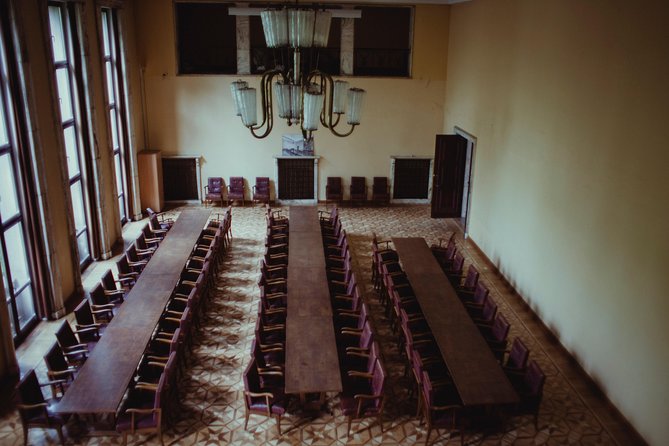
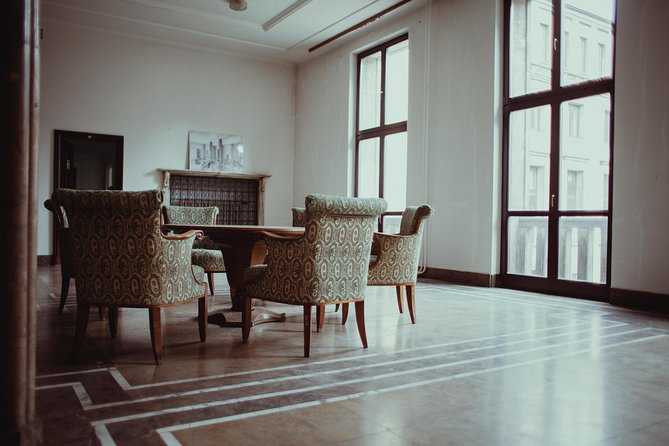
Even though you’ll be touring administrative buildings, the experience is not just a stroll through empty rooms. You’ll encounter offices and meeting rooms, plus artifacts and organized displays that help connect different eras. Because the site is handled by the NGO, you may find objects arranged in ways meant for visitor understanding rather than one exact moment in time.
One reason people love it is that it feels preserved enough to be believable and abandoned enough to be atmospheric. You might notice how items and furnishings reflect multiple periods—from early industrial years through later decades—so it can feel like history layered rather than frozen.
If you go in expecting a perfectly staged museum, you’ll be disappointed. If you go in expecting a guided walk through a working piece of communist-era space—partial restoration, real bones, clear storytelling—you’ll get a lot more out of it.
Should you book? My recommendation
If you’re choosing between another typical Krakow sightseeing slot and something that connects architecture, Cold War planning, and everyday life in communist Poland, I’d book this. It’s small-group, guided access to places you won’t stumble into by accident, and the underground shelter is the kind of experience that stays with you.
The only real reason not to book is if you hate imperfect, aging buildings or you only want a strictly comparative history lesson. If you can handle some wear, accept that the presentation is shaped by a local NGO, and enjoy learning from a guide’s point of view, this is a strong value use of two hours.
FAQ
Is the tour offered in English?
Yes. The experience is offered in English.
How long does the tour last?
Expect about 1 hour 30 minutes to 2 hours.
Where do we meet?
You meet at Ujastek 1, 31-752 Kraków, Poland, on the opposite side of the street from the Google Maps pin.
Is hotel pickup included?
No. Hotel pickup and drop-off are not included.
Is this tour physically demanding?
It’s designed for people with moderate physical fitness. You’ll be walking through older indoor spaces and underground areas.
Can I cancel for free?
Yes. You can cancel for a full refund up to 24 hours before the start time, and cancellation is free.