REVIEW · KRAKOW
Krakow Skip The Line Wawel Castle & Old Town Guided Tour
Book on Viator →Operated by Rosotravel - Wawel Castle and other Tours · Bookable on Viator
Wawel first, crowds later. I like this tour because it gets you into the Wawel Castle State Rooms with skip-the-line access, then keeps rolling through Krakow’s Old Town sights on foot. You also get an actual guide-led story you can follow—plus the kind of food-and-drink pointers I use to plan my own evenings in the city.
My other favorite part is how the pace is adjustable for the group, so you’re not stuck on one rigid plan the whole time. The trade-off: it’s a lot of stops in a 4 to 5 hour window, and some interiors are either only open at certain times or are available if the group requests entry.
In This Review
- Key highlights worth your time
- Skip-the-Line Wawel Castle State Rooms: What You Actually Gain
- Krakow Old Town on Foot: From Rynek Glówny to St. Mary’s Basilica
- Stare Miasto and the Church Stops That Make the City Feel Lived-In
- Wawel Cathedral and the Zygmunt Bell: Where the Awe Feels Personal
- Sukiennice Cloth Hall, Market Squares, and the Fun Photo Stops
- Fortifications and Views: Barbican, St. Florian’s Gate, and the Leaning Tower Story
- The Royal Way and Theater Stops: How Krakow Celebrates Its Own Memory
- Price and Value: Is $198.08 Actually Fair for 4–5 Hours?
- Who This Tour Suits Best (and Who Should Pick Something Else)
- Timing, Meeting Point, and Day-of Tips That Keep It Smooth
- Should You Book This Krakow Wawel Castle and Old Town Tour?
- FAQ
- How long is the Krakow Skip The Line Wawel Castle & Old Town Guided Tour?
- What time does the tour start?
- Where is the meeting point?
- Where does the tour end?
- Is the tour offered in English?
- Does the tour include skip-the-line entry to Wawel Castle?
- Is hotel pickup included?
Key highlights worth your time
- Skip-the-line Wawel Castle State Rooms so you spend less time waiting and more time looking closely
- Old Town orientation from Rynek Glówny across major churches, squares, and fortifications
- Practical local tips on where to eat, plus what’s worth slowing down for
- Iconic Krakow details like St. Mary’s two uneven towers and the Zygmunt bell in Wawel Cathedral
- A guide who answers questions (Javier is specifically praised as fun, well prepared, and easy to understand)
- Plenty of free stops since many listed admissions are free during opening hours
Skip-the-Line Wawel Castle State Rooms: What You Actually Gain
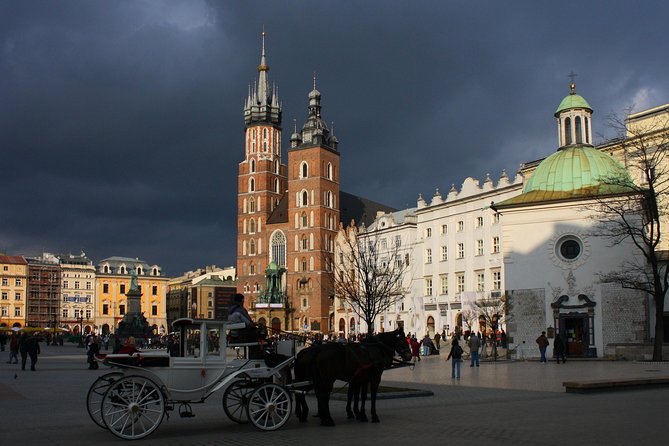
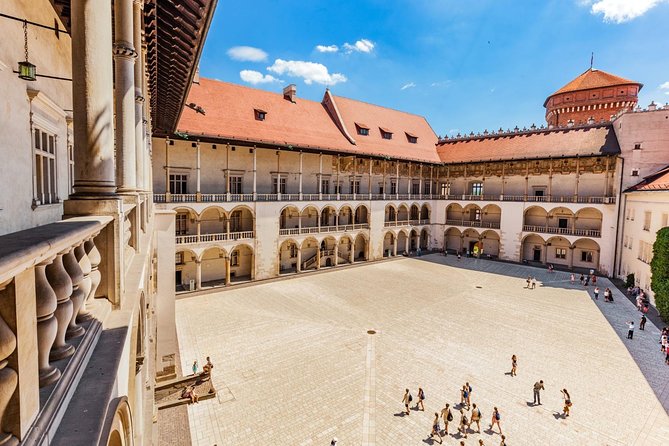
Wawel Royal Castle is the name you hear first when people talk about Krakow. The problem is that it can also be the first place where your morning gets swallowed by lines. This tour solves that by bundling in skip-the-line entry to the State Rooms, which means you can move from outside views to interior details faster.
That matters because Wawel works best when you’re not rushed. The State Rooms are where you understand what the castle was for: rulers living in power, hosting court life, and shaping Polish history over centuries. Even if you’re not a museum person, being able to step inside promptly helps you connect the dots from what you see on the outside to what’s inside the rooms and corridors.
You’ll also notice how your guide frames what you’re looking at. A good walk-through turns random walls and ceilings into a quick mental map. In the reviews, I’m seeing that same theme: guides who explain in a way that stays clear, and who happily handle questions as you go (one guide named Javier gets called out for being well researched and fun).
One small consideration: this tour is time-managed. If you love lingering in a museum, think “quick but meaningful” rather than “long and slow.” Still, you’re paying for the time-saver at Wawel, and that’s the best place to apply it.
You can also read our reviews of more guided tours in Krakow
Krakow Old Town on Foot: From Rynek Glówny to St. Mary’s Basilica
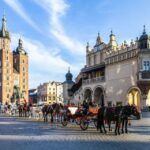
The tour’s Old Town section starts with Rynek Glówny, Krakow’s main square. This isn’t a small postcard square. It’s about 10 acres—so big it can feel like your bearings get reset the moment you arrive. The Renaissance Cloth Hall (Sukiennice) sits right inside the square’s orbit, and even if you don’t buy anything, it helps you understand why this area mattered for trade.
Then you head to St. Mary’s Basilica, one of Poland’s best-known churches. It’s Gothic, but what grabs your attention fast are the two towers with different heights. Inside, the decoration can surprise people who expect a stark medieval look. Your guide’s commentary is key here: it helps you spot the themes instead of just looking at it as scenery.
What I like about doing this early in the walk is that you get orientation before you start wandering off on your own later. You learn where the main lanes lead, how squares connect, and which view points are worth stopping for without turning your entire day into a detour marathon.
Possible drawback: churches and basilicas can have crowds and shifting visitor flow. Since this is a group format, you’ll move with the group and you may not control every minute. It’s not a private slow-meander tour. It’s a “get the highlights and understand them” plan.
Stare Miasto and the Church Stops That Make the City Feel Lived-In
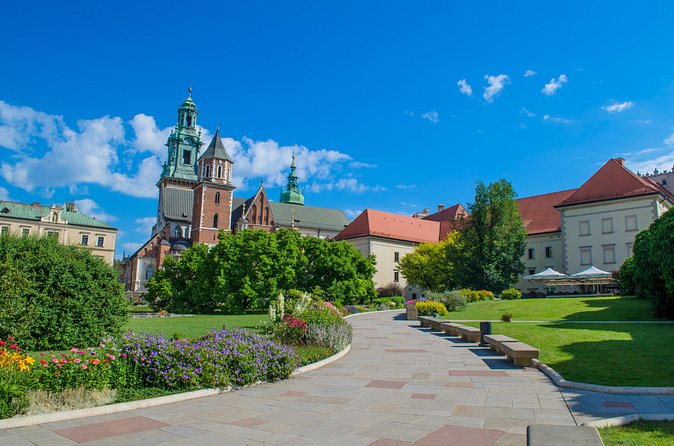
After the biggest square moments, you shift into the older merchant-town feel of Krakow—Stare Miasto. This area is known for its historical houses, palaces, and church interiors. One standout detail is the claim that it includes Europe’s largest market square, which helps explain why Krakow grew into what it is today. In other words, you’re walking through the commercial engine of the medieval city, not just a prettied-up walkway.
Along the way, you’ll hit multiple churches. Each one is a different style and a different kind of quiet. For example:
- Franciscan-style color and the famous stained glass window by Stanisław Wyspiański, God the Father, are a specific highlight.
- St. Peter and St. Paul is a beautiful stop with the added bonus of organ concerts being part of its identity.
- St. Barbara’s Church is described as peaceful and tranquil inside, which makes it a nice counterbalance to the louder squares outside.
Some interiors are listed as “possible for request,” which is tour-speak for: ask and go with what’s open and allowed. That’s normal for city-center touring, and it’s also why you’ll want a guide who keeps things moving while still trying to grant access when it’s feasible.
The other advantage of stacking these church stops is that it helps you read Krakow’s architecture like a map. Gothic here. Baroque and Roman Catholic art there. Then you start spotting patterns in façades and materials even when you’re not being pointed at them.
Wawel Cathedral and the Zygmunt Bell: Where the Awe Feels Personal
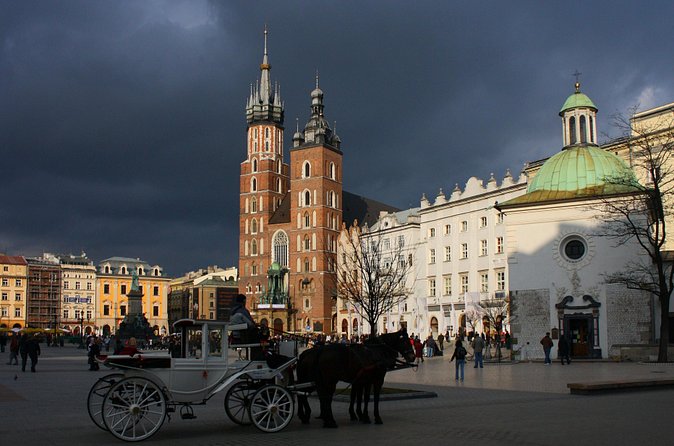
Wawel Cathedral isn’t just impressive. It’s emotional. This is where Polish rulers are tied to place—many kings and their families are buried here, and the cathedral functions as a national shrine.
A key detail you’ll want to look for is the giant bell of Zygmunt from 1520. That scale is the kind of fact that stops people mid-walk. Your guide will help you understand why it’s more than a novelty—bells in places like this were part of the public voice of power, faith, and ceremony.
You should also know timing matters. The tour describes cathedral entrance in the free parts during opening hours, and it gives you around 20 minutes at the cathedral. That’s enough to soak in the main art and burial context, but not enough to wander at leisure if you want to read every plaque.
Still, this stop is one of the reasons people remember Krakow after the trip is over. It’s where the city feels connected to real people, not just old stone.
Sukiennice Cloth Hall, Market Squares, and the Fun Photo Stops
Not every Krakow highlight is about cathedrals. Some are about the daily rhythm of the city—where you eat, browse, and snap pictures without thinking too hard.
Sukiennice (Cloth Hall) is a perfect example. It’s often called the world’s oldest shopping mall. The current Renaissance structure dates from 1555, and inside you’ll find food stalls, small shops, terrace cafés, and flower stands. Even if you skip shopping, it gives you a feel for how the square-era economy lives on today.
Then you get those smaller square moments that make the walk feel human:
- Little Market Square (Maly Rynek): compact, colorful, and ideal for a quick wander and souvenir browsing
- Szczepański Square: smaller, good for a sit-down moment
- Eros Bound: a head sculpture in a prime spot where stopping for a photo feels almost automatic
- The Wawel Dragon monument: a fun concept where you might see fire-breathing for request
I like mixing in these lighter stops because they keep the day from turning into a nonstop museum course. You get visual breaks, and your brain has time to reset between major sights.
One practical tip: if you plan to grab a snack later, Sukiennice is a natural place to do it. It’s not a “cheap” trap by default, but it’s convenient—and you’ll appreciate the convenience after a few hours of walking.
You can also read our reviews of more tours and experiences in Krakow



Fortifications and Views: Barbican, St. Florian’s Gate, and the Leaning Tower Story
Krakow isn’t just churches and palaces. It has defensive architecture too, and this tour leans into that.
One strong highlight is the Barbican, Museum of Krakow area. It’s described as styled after Arab defensive architecture, with a circular fortress form added to the city’s fortifications in the late 15th century. Even outside-looking, a structure like that makes you realize how serious medieval city defense was. You’re seeing engineering decisions, not just aesthetic ones.
St. Florian’s Gate is another fortification stop, with four towers and 14th-century roots. It also connects to the story of how much of Krakow’s walls were later destroyed in the early 1800s.
You’ll also hear about the Museum of Krakow Town Hall Tower. It’s built of stone and brick, stands about 70 meters tall, and is famous for leaning roughly 55 centimeters due to strong wind in 1703. That’s the kind of fact your guide will make easy to remember because it turns the tower into a real-world story—wind, time, and consequences.
These stops are short, but they give you a fuller picture of Krakow. Without them, many Old Town visits feel like a collection of religious buildings. With them, you understand the city’s structure: gate, wall, defense, and the route people moved through.
The Royal Way and Theater Stops: How Krakow Celebrates Its Own Memory
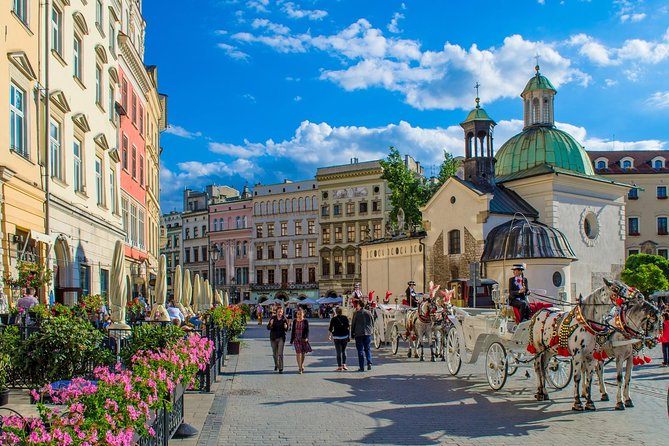
A neat detail in the route is the Royal Way (Droga Królewska). This was once the path used for royal processions and funerals, so when you walk it, you’re literally following a historic “route of ceremony.” It helps you understand why Krakow’s center isn’t random—it was planned for pageantry and power.
You’ll also pass or discuss cultural buildings like Slowacki Theatre, named after Romantic playwright Juliusz Słowacki. It was built in 1892 and still hosts regular plays and operas. Even if you don’t catch a performance, it’s a good reminder that the city isn’t only about the past. It lives in the present too.
Other monuments and statuary round out the route:
- John Paul II statue, a tribute tied to his connection to Krakow
- Adam Mickiewicz monument, a bronze statue of a poet who is honored in the city even though he never visited it
These are quick stops, but they help you see how Krakow tells its stories through names and symbols.
Price and Value: Is $198.08 Actually Fair for 4–5 Hours?
At about $198.08 per person, this is not a budget “just walk around” tour. You’re paying for three things that are hard to replicate alone:
- Skip-the-line entry to Wawel Castle State Rooms
- A guided Old Town walk led by a licensed guide
- The practical recommendations that save time in a city with lots of choices
The pricing feels more reasonable when you think about what you’d do if you weren’t on the tour. You’d still need to plan how to get to Wawel, figure out which entrances are best, and decide what you’ll prioritize in a limited morning. A guide collapses that planning into one workflow.
And yes, a lot of the listed sites have free admission, especially for church visits and exterior segments, plus free-entry parts of Wawel Cathedral during opening hours. That means your “paid” portion is mostly about access (the skip-the-line for State Rooms) and interpretation.
So the real question isn’t just price. It’s whether you want someone else to do the ordering of your time. If you enjoy structure, clear explanations, and a guided route that prevents wasted detours, this price can feel fair.
If you prefer going slow and picking your own priorities without a schedule, you might feel the time pressure.
Who This Tour Suits Best (and Who Should Pick Something Else)
This tour fits best if you are:
- Visiting Krakow for the first time and want a strong orientation
- Interested in Wawel as a core site, not a distant viewpoint
- The type who wants restaurant and drink ideas from someone who knows the city
- Comfortable with walking and a group pace for about half a day
It may not be your best match if:
- You want long museum time at every stop
- You hate group movement and strict start times
- You’re only interested in one or two major sights and would rather spend the rest of the day independently
For families or mixed groups, the structure can be helpful, but you’ll still need patience for the number of stops. This is a highlights-and-meaning package more than a slow, deep-study program.
Timing, Meeting Point, and Day-of Tips That Keep It Smooth
This tour starts at 10:30 am. Your meeting point is at Wawel 3, 31-001 Kraków. It ends at the Kraków Barbican area on Basztowa.
There’s no hotel pickup, so plan to arrive at the meeting point on your own. The tour also asks that you check your email the day before for important information, and it’s important to be on time because late arrivals can miss joining the tour.
My practical advice: wear comfortable shoes. You’ll be switching between big squares, church interiors, and quick architectural stops. Bring a small bottle of water if you tend to get thirsty on walks. And when you see an entrance described as possible for request, listen closely to your guide and be ready to decide quickly.
Should You Book This Krakow Wawel Castle and Old Town Tour?
If you want to see the big Krakow hits without spending your morning building a plan from scratch, this is a solid booking. The skip-the-line Wawel Castle State Rooms piece is the kind of value that actually changes your experience, not just your itinerary.
I’d especially recommend it if you like explanations you can use later—things like why Zygmunt’s bell matters, why the towers of St. Mary’s look the way they do, and how the Royal Way connects the city’s center to ceremonial power. The guide quality shows up in the feedback, including praise for guides like Javier for being organized, fun, and easy to follow.
If you’d rather wander with no schedule at all, you might feel boxed in by the stop density. But for most first-timers, this tour lands in the sweet spot: meaningful highlights, smart access, and food tips that help the rest of your day.
FAQ
How long is the Krakow Skip The Line Wawel Castle & Old Town Guided Tour?
It’s listed as about 4 to 5 hours.
What time does the tour start?
The start time is 10:30 am.
Where is the meeting point?
The meeting point is Wawel 3, 31-001 Kraków, Poland.
Where does the tour end?
The tour ends at Kraków Barbican, Basztowa, 30-547 Kraków, Poland.
Is the tour offered in English?
Yes, it’s offered in English.
Does the tour include skip-the-line entry to Wawel Castle?
Yes. It includes skip-the-line tickets to the Wawel Castle State Rooms.
Is hotel pickup included?
No pickup from hotels in Krakow is included. You’ll need to get to the meeting point on your own.