REVIEW · KRAKOW
Krakow: Schindler’s Factory Tour & Skip-the-Line Entry
Book on GetYourGuide →Operated by CRACOW LOCAL TOURS · Bookable on GetYourGuide
Schindler’s Factory in Krakow is one of those places where the walls do the talking. I love that this tour turns a famous setting from Schindler’s List into an honest look at life in Krakow during the Nazi occupation. You’ll also spend real time inside the former enamel factory itself, with the exhibition designed in a theatrical, cinematic style by Michał Urban and theatre director Łukasz Czuj.
What I like most is the way the guide keeps the story moving while still pointing out details you’d otherwise miss. The main thing to watch is that this isn’t a deep, stand-alone Schindler biography; you’ll get more Krakow under occupation than Oscar-focused content, so if that’s all you want, plan accordingly.
In This Review
- 5 key points you should care about before you go
- Schindler’s Factory in Krakow: what this 90-minute tour covers
- Meeting on Lipowa 4 and getting inside without wasting time
- The former enamel factory: Oscar Schindler’s office and the Survivor’s Ark
- A cinematic permanent collection: tram scenes, photos, and a Jewish apartment
- Plaszow camp artifacts and the Hall of Choices: where the tour turns intense
- What I think the guide does well (and where it can miss your preferences)
- Group pace, timing changes, and language options
- Price and value: is $49 worth it?
- Who should book this tour (and who should plan differently)
- Practical packing and rules you should know
- Should you book this Schindler’s Factory skip-the-line tour?
- FAQ
- How long is the tour?
- Where do I meet the guide?
- Does this ticket let me skip the line?
- Which languages are available for the guide?
- What should I bring for entry?
- Are food and drinks allowed during the tour?
- Can I bring luggage or large bags?
- Do I get a refund if my plans change?
- Are the start times exact?
5 key points you should care about before you go
- Skip-the-line entry so you lose less time standing around in a ticket queue
- Enamel factory storytelling that leads you from Oscar Schindler’s preserved office to the Survivor’s Ark display of enamel pots
- A guided, staged exhibition route that includes documentary material, photos, and multimedia presentations
- The Hall of Choices experience, built around the ethical dilemmas people faced during the war
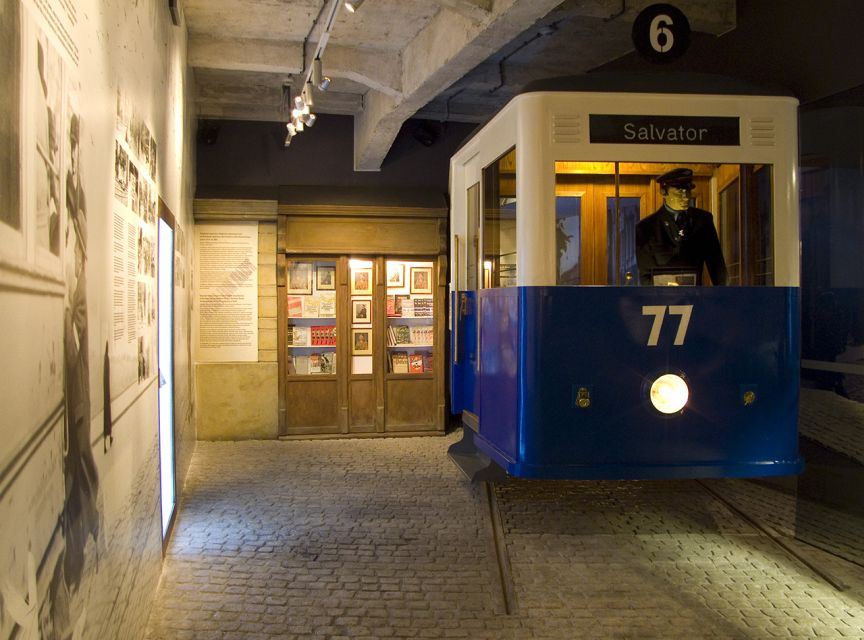
- A tram and city-space recreation element that helps connect everyday life in Krakow to what came next
Schindler’s Factory in Krakow: what this 90-minute tour covers
This is a 90-minute guided tour of the Schindler’s Factory Museum inside Oscar Schindler’s former enamel factory in Krakow. It’s built around the years 1939 to 1945, when the city’s Jewish and Polish communities were violently disrupted and reshaped by the Nazi occupation.
The tour doesn’t treat this as a single name-drop story. Instead, it frames what happened as a chain of choices, pressures, and consequences affecting ordinary people—Poles, Jews, and the occupiers—plus the systems that crushed freedom and daily life. If you’ve seen Schindler’s List, you’ll recognize the starting point. If you haven’t, the museum still gives you the context fast.
And yes, the theatrical presentation matters here. The permanent collection uses staged city-space recreations and documentary-style elements so the exhibits feel like scenes rather than only display cases. That design choice can make the experience easier to follow, especially when the subject is heavy.
You can also read our reviews of more tours and experiences in Krakow


Meeting on Lipowa 4 and getting inside without wasting time
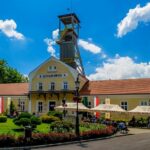
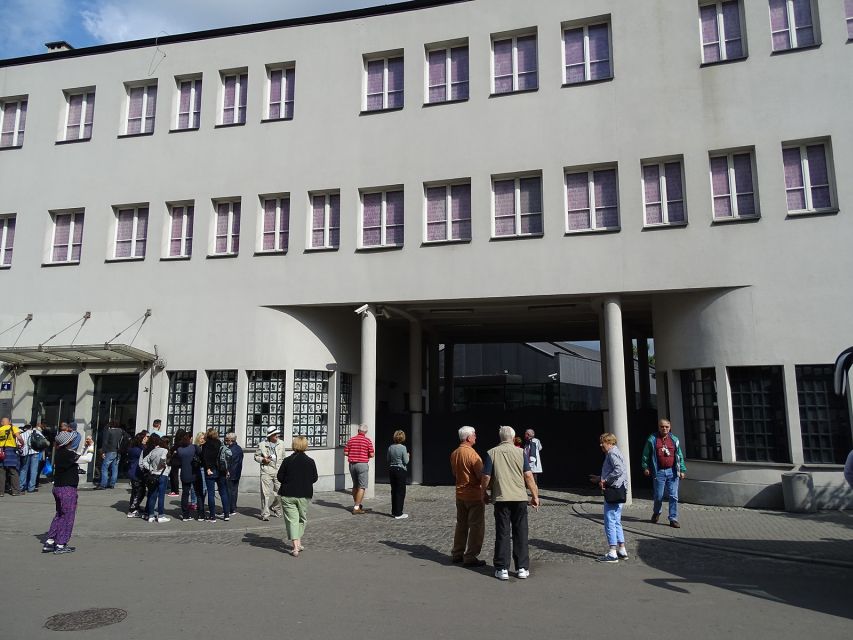
You meet at Lipowa 4, 33-332 Kraków, at the front of the main entrance of the Museum. Your guide should be holding an excursion.city sign, which makes it easier to spot the right person on a busy street corner.
Because this is a timed ticket set-up, your best move is to arrive a little early. The start times are approximate and can shift due to museum scheduling, and the museum uses personalized tickets. That means if you’re late or if your name doesn’t match your ID, you can slow the whole process down—sometimes you can’t afford that with a 1.5-hour tour.
The practical payoff of the skip-the-line offer is straightforward: you spend more time inside the museum and less time waiting to enter. When you only have 90 minutes, that difference feels big.
The former enamel factory: Oscar Schindler’s office and the Survivor’s Ark
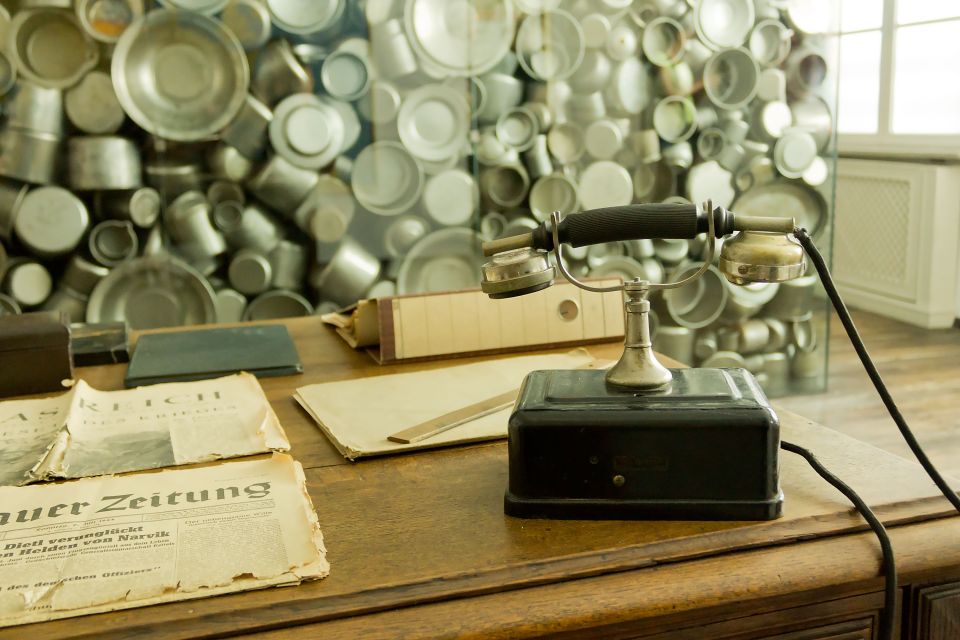
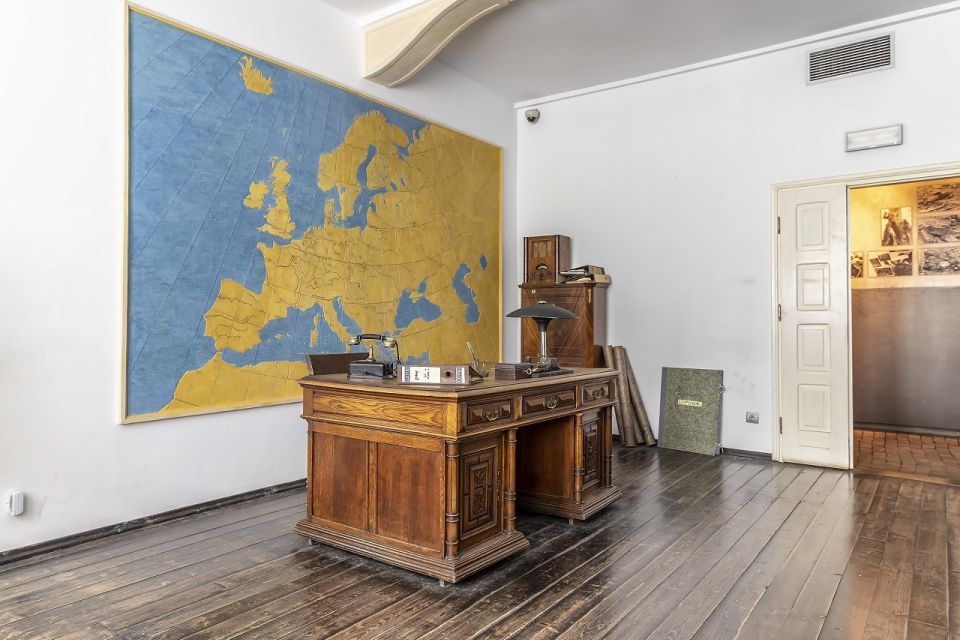
Your route begins in the museum spaces tied to Oscar Schindler. One of the first standout stops is Schindler’s office, preserved within the factory’s administrative building. Even if you’ve only seen the film reference before, standing in a space that’s been kept as an office adds a different kind of grounding. It turns the story from movie imagery into a physical place with context.
Then the tour leads you to the museum’s most striking visual display: the Survivor’s Ark, made from thousands of enamel pots similar to those produced in the factory. It’s the kind of exhibit where you immediately understand why it was designed this way: industrial output becomes a memorial object. You don’t just read about suffering and survival—you’re confronted with scale and craft.
If you like museums that use strong objects to teach you, you’ll get value here. If you prefer pure text-and-photos, you might find yourself wanting even more time to look closely at every artifact. The good news is the guide’s route helps you hit the major sections without feeling like you’re wandering.
A cinematic permanent collection: tram scenes, photos, and a Jewish apartment
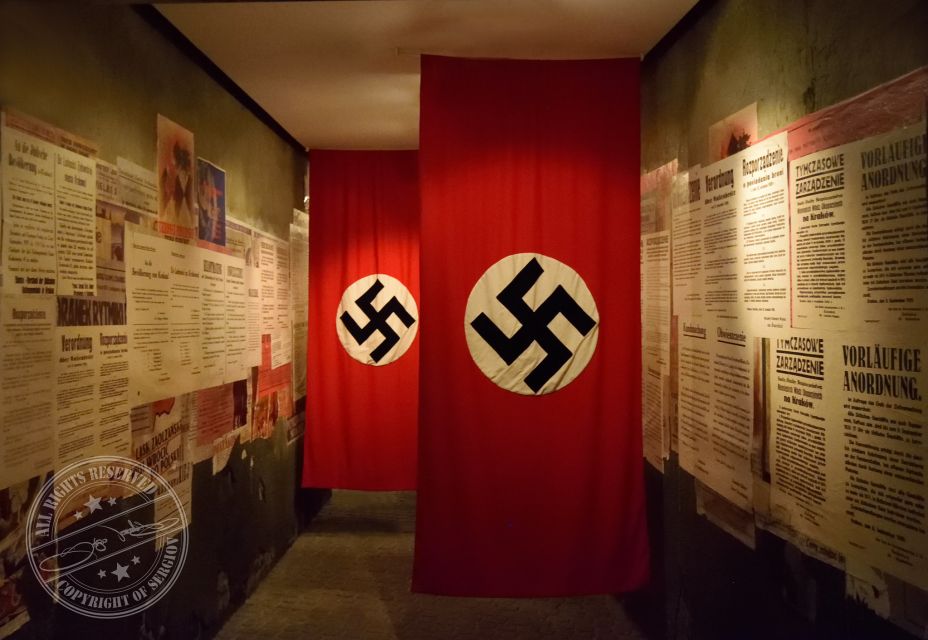
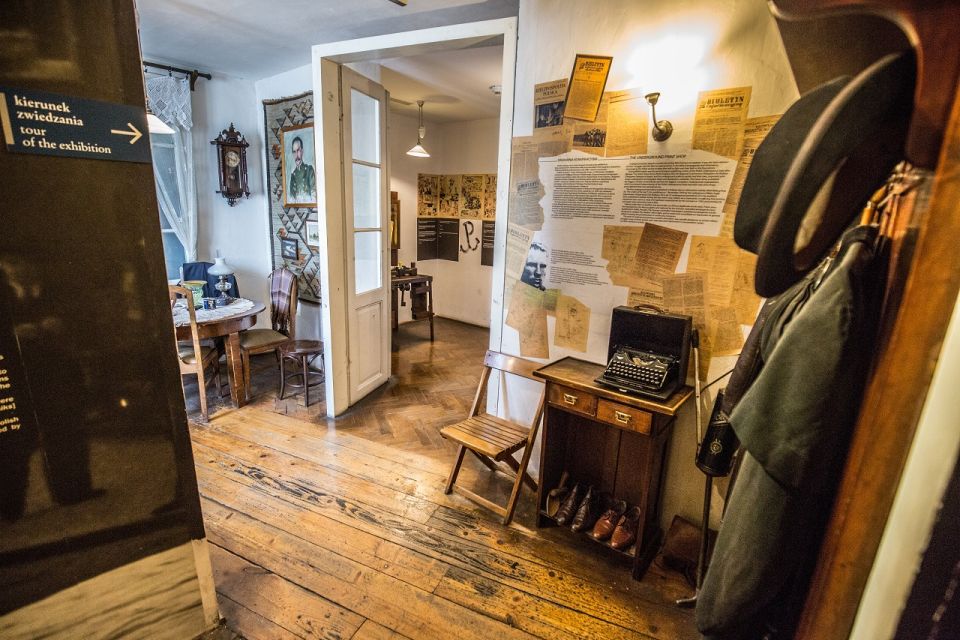
A big part of what makes this tour feel different from a typical walkthrough is the staged, cinematic approach. As you move through the permanent collection, you’ll see documentary photographs, eyewitness accounts, film documentaries, and multimedia presentations that bring Krakow’s story to life.
One element you should expect is a tram portion: you’ll board a tram as part of the museum’s recreation, and you’ll watch a documentary portraying everyday life in the city. This matters because it breaks the timeline into before-and-after, not just a single “then everything collapsed” story.
Another emotionally important stop is a typical Jewish apartment scene. You’ll see artifacts and the layout of everyday domestic life, which helps you understand what was stolen—not just lives, but routines, spaces, and normal rhythms.
A tour can’t fully recreate what was lost. Still, these kinds of rooms and city-space recreations help you avoid the trap of treating history like distant facts. Instead, it feels like people had habits, rooms, objects, and neighbors—until force arrived.
Plaszow camp artifacts and the Hall of Choices: where the tour turns intense
As the tour continues, you’ll move through exhibits that connect directly to the Plaszow camp. You should expect to see artifacts tied to the camp experience. The museum’s goal isn’t to let you look away. It keeps pulling you back to the system and its impact.
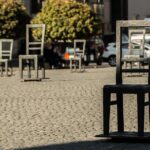
Then comes the tour’s ethical center: the Hall of Choices, a sculptural installation designed to symbolize the ethical dilemmas people faced during the war. It’s not about trivia. It’s about what happens when power is uneven, when survival can depend on cooperation, and when cruelty can become routine.
This is the part where pacing can feel especially important. You only have 90 minutes total, so the guide keeps you moving. If you prefer to stand and think for longer than the group pace allows, you may feel slightly rushed. On the other hand, the guide’s explanations can help you make sense of what you’re seeing without needing to interpret everything alone.

What I think the guide does well (and where it can miss your preferences)
A strong guide is a make-or-break factor on tours like this. I love when a guide explains why certain exhibits are placed where they are, not just what they are. This tour includes a professional guide, and the best experiences come from guides who speak clearly and answer questions with confidence.
You might also notice that the focus can lean more toward Krakow through the war years than toward Oscar Schindler himself. That’s not a flaw—it’s just a match issue. Some people walk in expecting the tour to be mostly about Schindler. The reality is that the museum uses his story as a gateway into a broader city-wide narrative.
There’s also a practical pacing note from real experiences: if you want long pauses to read every sign and plaque at your own speed, you may feel the narration keeps moving. You’ll still have time to look, but if you’re the type who reads everything word-for-word, this might not be the fastest or most relaxed way to do the museum.
Group pace, timing changes, and language options
This tour runs for 1.5 hours. Check starting times for availability, and expect that the exact start moment can shift because of museum scheduling and the personalized ticket setup.
The tour is offered with live guides in Spanish, Italian, French, English, and German, so language access is solid for most visitors. If you’re traveling as a solo English speaker or with a friend from another country, you’re likely to find a language option that works.
Group size can vary. At least some bookings have ended up small, which makes the whole thing feel less rushed and more conversational. If you’re going to ask questions, small groups are where you get the best bang for your curiosity.
One more tip: because the museum requires full names of all participants when reserving, make sure the name on your booking matches the name on your passport or ID card. If it doesn’t, entry may be denied. Bring the ID you used for the reservation.
Price and value: is $49 worth it?
At $49 per person, you’re paying for two key things: skip-the-line entry and a professional guided experience with a structured route through the most important museum sections.
Here’s why that price can feel fair. Without a guide, you can absolutely visit the museum on your own. But the Schindler’s Factory collection can be layered and emotionally dense. A guide helps you connect the exhibits without getting lost in the sheer amount of information. With only 90 minutes, guidance becomes even more valuable.
This ticket is also less about luxury and more about access and interpretation. If your goal is to spend an unhurried half-day reading everything deeply, you might prefer solo time. If your goal is to make the museum understandable and efficient—while still moving through the big set-piece areas—this format is strong.
Who should book this tour (and who should plan differently)
This tour is a great fit if you:
- want a guided, time-efficient way to experience Schindler’s Factory Museum
- like museums that use film, multimedia, and staged scenes instead of only wall text
- want context for what Krakow became from 1939 to 1945, not just a single famous figure’s story
- appreciate skip-the-line help, especially with a 90-minute time window
It may not be the best fit if you:
- only want Oscar Schindler-focused content
- want maximum freedom to stop and read at your own pace for long stretches
- prefer a longer museum visit (this tour is 1.5 hours, so you’ll see the core, not every single corner)
Practical packing and rules you should know
Keep it simple. Bring an ID card or passport for entry. The tour location doesn’t want extra clutter: food and drinks aren’t allowed, and luggage or large bags aren’t allowed.
If you normally carry a backpack for day trips, plan to travel light for this visit. It’s one less thing to manage when your time is already tightly framed.
Should you book this Schindler’s Factory skip-the-line tour?
If you want the essential museum experience with guidance—and you’d rather spend your time inside the exhibits than outside in line—book it. The skip-the-line entry and the professional guide make the biggest difference when your visit window is short.
I’d especially recommend it if you’re visiting Krakow with limited time and you want the museum’s story to make sense as you go. The Hall of Choices, the tram documentary moment, the Jewish apartment scene, and the Survivor’s Ark are the kinds of stops you’ll remember—and this route is built to hit them without chaos.
If you’re the type who likes to read every plaque in silence for as long as possible, consider a self-guided visit instead. For most people, though, this guided, 90-minute format is a strong, value-based way to experience one of Krakow’s most unforgettable historical museums.
FAQ
How long is the tour?
It lasts about 90 minutes.
Where do I meet the guide?
Meet at Lipowa 4, 33-332 Kraków at the front of the main entrance of the Museum. The guide will be holding an excursion.city sign.
Does this ticket let me skip the line?
Yes, it includes skip-the-line entry.
Which languages are available for the guide?
Spanish, Italian, French, English, and German.
What should I bring for entry?
Bring a passport or ID card.
Are food and drinks allowed during the tour?
No. Food and drinks are not allowed.
Can I bring luggage or large bags?
No. Luggage or large bags aren’t allowed.
Do I get a refund if my plans change?
Free cancellation is available up to 24 hours in advance for a full refund.
Are the start times exact?
Times are approximate and may change due to Schindler’s Factory Museum scheduling. You can choose a preferred time, but the exact time is not guaranteed.