REVIEW · KRAKOW
Krakow: Old Town Sightseeing Tour by Electric Golf Cart
Book on GetYourGuide →Operated by MyRide · Bookable on GetYourGuide
Krakow’s Old Town, powered by electricity. This quick 50-minute ride is a smart way to see the center without wearing out your feet, and I like the heated golf carts plus the multi-language audio guide that keeps you moving with context. My only caution: because it’s audio-only and grouped, you’ll get a great overview, not deep, slow time inside each landmark.
You’ll roll past the big hitters—Planty park, the Main Market Square, and Wawel Castle—while the audio guide explains what you’re seeing and why it matters. It’s also a nice pacing choice if you have limited time in Krakow, because you’re not stuck choosing between a long walking day and missing key sights.
Here’s how the experience generally feels: smooth, organized, and built for first-timers who want an easy route through the historic center. If you’re the type who likes asking on-the-spot questions, you might miss having a live guide.
In This Review
- Key things that make this tour work
- Why an electric golf cart suits Krakow’s Old Town
- Planty Park and medieval walls: starting with the city’s ring
- Main Market Square: Cloth Hall and St. Mary’s Basilica moments
- The Latin Quarter and Collegium Maius courtyard
- Church of St. Anna, Academy of Fine Arts, and St. Florian
- Franciscan Monastery and the Papal Window: a meaningful pause
- Wawel Castle and Royal Cathedral: the big finish
- Lunch taste: a practical break without losing momentum
- Languages and the heated cart comfort factor
- Value check: $20 for a guided overview—what you should expect
- Who should book this Krakow Old Town electric cart tour
- Should you book it
- FAQ
- How long is the Krakow Old Town sightseeing tour by electric golf cart?
- What’s included in the price?
- Are entrance tickets to attractions included?
- What languages are available for the audio guide?
- Where do I meet the tour?
- Is a lunch included?
Key things that make this tour work
- Audio-led route through the heart of Krakow so you learn as you pass each landmark
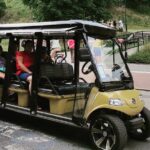
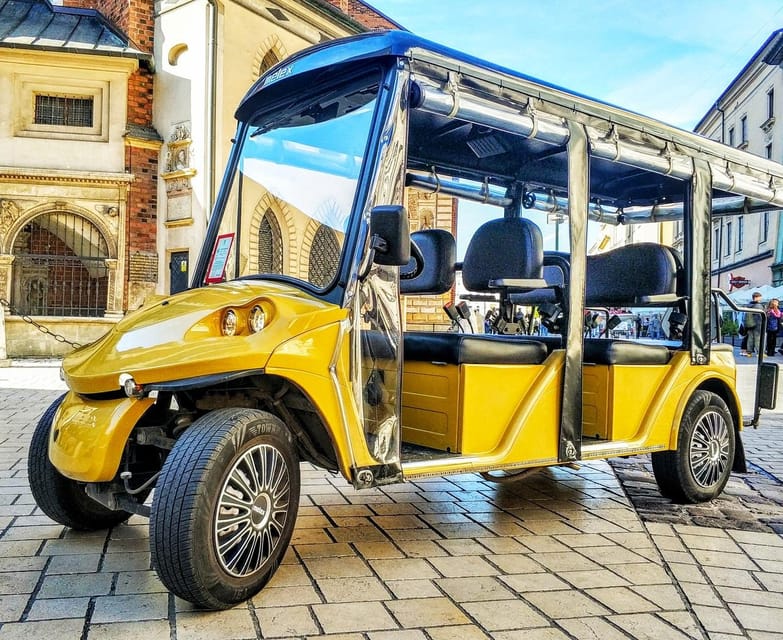
- Heated electric golf carts for comfort, especially when the weather turns
- Planty Park + Main Market Square to connect Krakow’s layout with its major institutions
- A stop-by-stop playlist of sites like Cloth Hall, St. Mary’s Basilica, and Collegium Maius courtyard
- Art-focused moments tied to the Academy of Fine Arts and nearby sights
- A Polish lunch taste included in the overall experience flow
Why an electric golf cart suits Krakow’s Old Town
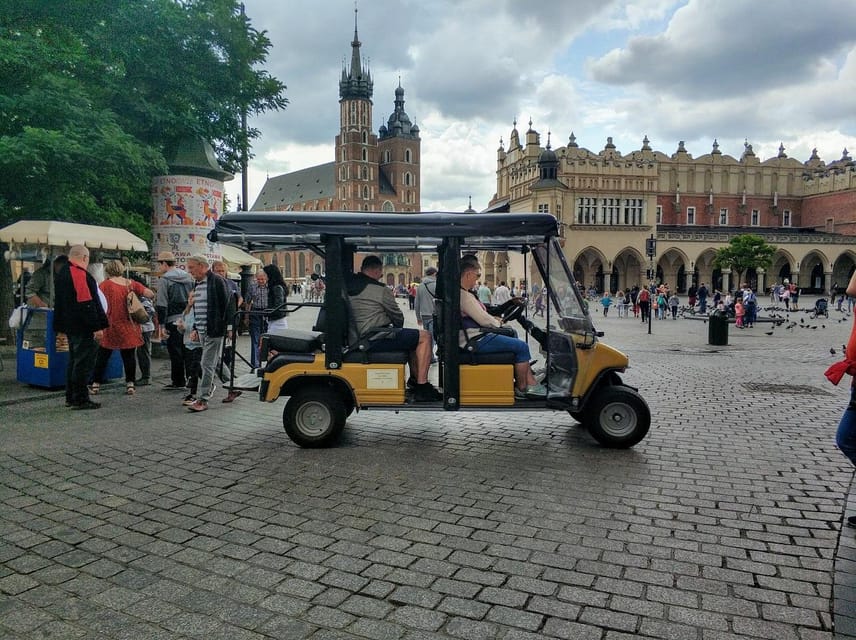
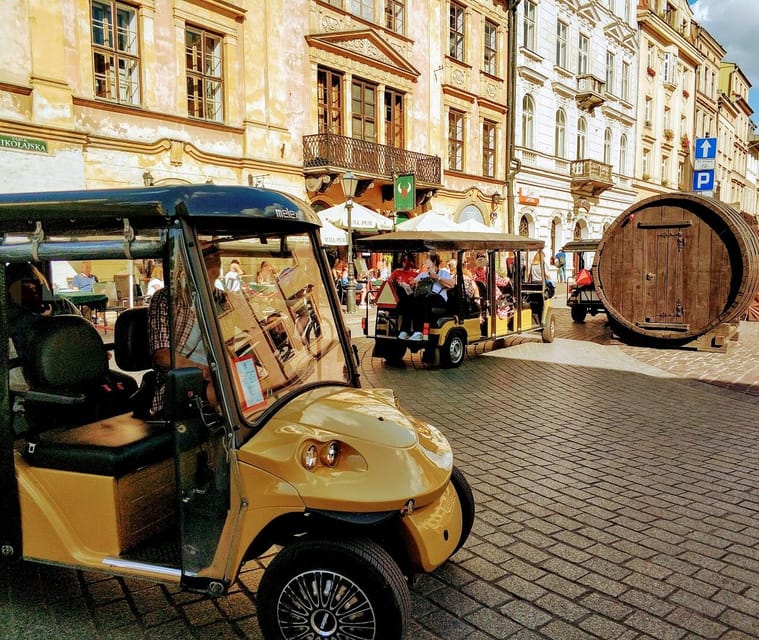
Krakow’s historic center is packed. Streets are narrow, landmarks cluster tightly, and the best way to cover a lot fast is to move efficiently. That’s where the electric golf cart shines: you’re not constantly stopping to reposition, and you still get a guided sense of direction.
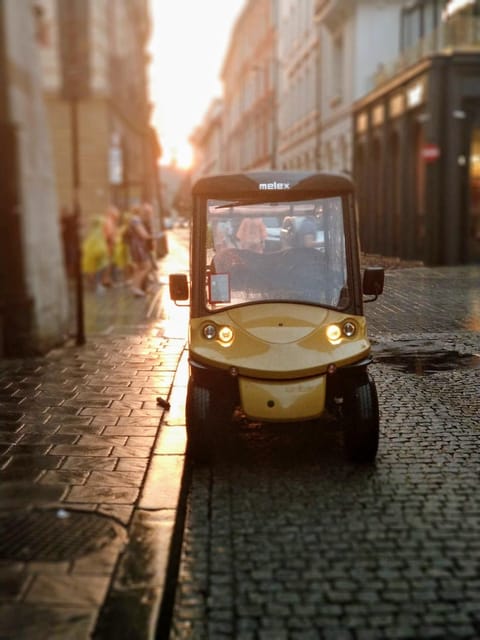
The tour runs for about 50 minutes, which is long enough to hit multiple major stops, but short enough that you’re not committing your whole day to one activity. Plus, the vehicles are heated, and the audio guide is already built in—so you start learning right away instead of hunting for information on your phone.
You also get a group format. That means the pace is consistent and predictable, and you’re unlikely to end up with chaos at every photo spot. The trade-off is simple: you’ll share the route with other people, and it won’t feel like a private, flexible crawl.
You can also read our reviews of more tours and experiences in Krakow.
Planty Park and medieval walls: starting with the city’s ring
Most first-time visits to Krakow start at the Main Square, but I like that this tour begins with Planty. It helps you understand how Krakow’s Old Town is structured—like the city’s history wraps around the center.
The audio guide highlights the remains of medieval walls and the Barbican in this area. Even if you’re not studying architecture, hearing that context as you look around makes the park feel more than a pretty green break. You can notice the layout and imagine what used to be there, which makes the later stops (square, churches, castle) click into place.
One practical advantage: Planty is a natural “transition zone.” You’re not jumping straight from modern streets into massive monuments. Instead, the tour gives you an early storyline, so you’re ready for the bigger names when they arrive.
If you’re someone who gets lost easily in historic centers, this part helps you feel the geography quickly. The audio route essentially acts like a moving map.
Main Market Square: Cloth Hall and St. Mary’s Basilica moments
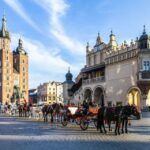
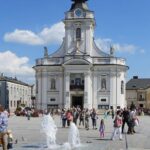
Then you hit the big stage: Main Market Square. This is where Krakow’s identity is most visible—big civic space, major religious landmarks, and the sense that people have gathered here for a long time.
In the audio narrative, you’ll learn about Cloth Hall and St. Mary’s Basilica. Even without a live guide, those names matter because they tie into the square’s role as a commercial and spiritual center. The value here is timing: you don’t just see the buildings, you see them as part of an overall system.
The square also makes photos easier. You can step off the cart, look around, and then get back on without losing the plot. If your schedule is tight, covering this area in a single loop saves you from playing catch-up later.
One caution to keep in mind: since entrance tickets aren’t included, you’ll likely do more of the outside-looking-and-learning experience rather than going deep inside everything you see. If you want long interior time, you may need a separate ticketed stop later.
The Latin Quarter and Collegium Maius courtyard
From the square, the tour moves toward the Latin Quarter, including the Collegium Maius courtyard. This is a shift in vibe: less civic hustle, more academic and historic atmosphere.
The audio guide’s role matters here. Courtyards can be visually subtle compared to a castle façade or a landmark church. But when you have the audio commentary guiding your attention—what the place represents and why it’s remembered—you notice details you’d otherwise walk past.
I also like that this stop expands the tour beyond monuments that people instantly recognize. It makes Krakow feel like a lived-in city of institutions and ideas, not only a collection of photographed buildings.
If you’re traveling with someone who thinks history equals only cathedrals and castles, this part is a helpful correction. It broadens what you see as “important.”
Church of St. Anna, Academy of Fine Arts, and St. Florian
Next, you’ll encounter a string of sights that bring different styles and functions into the route. You’ll pass the Baroque 17th-century Church of St. Anna, and the tour also includes the Academy of Fine Arts and St. Florian.
This is where the experience connects to the highlight about artworks including paintings and sculptures. While the tour description doesn’t spell out exactly where those art pieces appear, it’s still clear that your route is designed to point you toward the cultural side of Krakow—not only its older religious architecture.
I find these stops especially useful if you’ve been to other Polish cities and want to compare how Krakow expresses art and learning. The cart tour format lets you cover multiple styles in one compact segment, instead of deciding between “church time” and “museum time.”
A small thought for your expectations: since the tour is audio-guided and entry tickets aren’t included, you’ll want to treat these moments as guided viewing points. If you want ticketed access to collections or interiors, plan a follow-up day or add-on activity.
Franciscan Monastery and the Papal Window: a meaningful pause
One of the most memorable segments on this route is the visit-by-story feel of the 13th-century Gothic Franciscan Monastery and the Papal Window. The audio guide is doing important work here: these are the kinds of landmarks where the name alone doesn’t fully explain the emotional pull.
Even if you’re mostly standing in view areas rather than fully inside, you’ll still get that sense of significance. Gothic style is a visual language—shapes, height, structure—and the tour’s structure keeps you from missing it. You’re not rushing through with no explanation; the audio commentary supports the stop so it feels intentional.
This is also a good stretch for slowing down your photo pace. Since you’re on a cart, you’ll probably take fewer long walks than you would on foot. That makes this moment a natural place to stop and actually look.
Wawel Castle and Royal Cathedral: the big finish
Finally, you reach Wawel—with the Royal Cathedral and the Royal Castle in view. Wawel is one of those places where Krakow’s history becomes impossible to ignore. This is the end point that gives the tour its “big finish.”
What makes this segment valuable is how the earlier stops prepare you. After learning about the city’s central institutions (square, churches, academic courtyard), Wawel lands as the final statement—political and religious power gathered in one complex.
Since entrance tickets aren’t included, you’ll likely focus on exterior appreciation and audio-driven context. Still, the route is designed to point you at the most important parts so you’re not guessing what you’re looking at.
If you’re someone who wants to see Wawel but worries you’ll spend too long wandering, the 50-minute format keeps you from overshooting your day. You can always add more later if Wawel hooks you.
Lunch taste: a practical break without losing momentum
One highlight you should know about is the chance to get a taste of traditional Polish cuisine during lunch. On a short, guided tour, a lunch stop can be a major value add—because it saves you from having to plan food around monument-hopping.
The trade-off is that lunch stops can affect timing. The good news is that the overall duration stays around 50 minutes, so your time budget stays manageable. Just keep your expectations aligned: this is described as a taste, not an all-day meal program.
If you’re traveling in colder months or you want a break between morning sightseeing and later activities, this portion helps your day feel balanced. It also turns the tour from pure sightseeing into a cultural snapshot.
Languages and the heated cart comfort factor
A standout practical feature is the audio guide language selection. The tour lists a long set of languages including English (and many others like German, French, Spanish, Italian, Polish, Russian, Japanese, Korean, and more). If you’re worried about not understanding the commentary, this is reassuring.
Also, the vehicles are heated. That matters in Krakow because weather can swing. Even if the ride isn’t long, being warm while you take in sights makes the experience feel smoother.
And because the audio guide is part of the system, you don’t need to stop to read placards or figure out what’s where. You can look up, look around, and let the commentary do the heavy lifting.
Value check: $20 for a guided overview—what you should expect
At $20 per person for roughly 50 minutes, this tour is priced for convenience. You’re paying for transportation (electric cart) plus the audio commentary and a structured loop through central landmarks. That’s why it can feel like good value compared with spending the same time trying to arrange transit and interpret sights on your own.
The clear limits are also part of the deal:
- No live guide, so you won’t get spontaneous Q&A or customized explanations
- Entrance tickets aren’t included, so you should plan on exterior viewing and audio context unless you add ticketed visits elsewhere
If you want the best use of your day, I’d think of this as a “orientation and highlights” tour. You’ll come away with a much clearer sense of where everything sits and which sites you want to revisit longer later.
At the same time, the high rating (4.8) and strong praise for how smoothly it runs and how easy it is to follow are the kind of signals that the experience is well managed. In other words: this doesn’t feel like a chaotic cram. It’s designed to be simple to enjoy.
Who should book this Krakow Old Town electric cart tour
This tour is a good fit if you:
- Have limited time and want to see the center in one loop
- Prefer audio commentary with a clear route (instead of navigating on your own)
- Want to cover Planty, the Main Market Square, and Wawel without choosing between them
- Like art and culture enough to enjoy the route stops tied to fine arts and sculpture-focused themes
It may be less ideal if you:
- Want deep time inside buildings as part of one ticketed experience
- Strongly prefer a live guide who can answer questions as you go
- Need total flexibility to linger in one spot for a long while
Should you book it
Yes, if you want an efficient, well-organized way to see Krakow’s Old Town highlights with context attached. This is the kind of tour that helps you get your bearings fast, especially when you’re planning more sightseeing later.
I’d book it when your priority is breadth—Planty, the Main Square area, Latin Quarter, St. Anna and fine arts references, the Franciscan Monastery and Papal Window, then Wawel. And I’d be careful if you’re hoping it replaces ticketed museum or cathedral visits. It’s built for an overview plus a Polish lunch taste, not for full interior experiences.
FAQ
How long is the Krakow Old Town sightseeing tour by electric golf cart?
The tour duration is 50 minutes.
What’s included in the price?
The package includes a tour of Old Town Krakow, transportation by golf cart, and an audio guide.
Are entrance tickets to attractions included?
No. Entrance tickets are not included.
What languages are available for the audio guide?
The audio guide is available in many languages, including English and Polish, plus languages such as German, French, Spanish, Italian, and others listed for the tour.
Where do I meet the tour?
Meet at Parking Kiss&Ride at 2 Mikołaja Zyblikiewicza street, in front of the Zabka store. Look for a golf cart labeled excursions.city.
Is a lunch included?
The highlights mention getting a taste of traditional Polish cuisine during lunch as part of the experience.