REVIEW · KRAKOW
Krakow: Kazimierz District Jewish Heritage Tour
Book on GetYourGuide →Operated by Your City Guides · Bookable on GetYourGuide
Kazimierz has a way of stopping time. I love how this walk ties together Jewish-Christian co-existence with the stories shared street by street, and I love the real synagogue time you get with a ticket. One heads-up: the schedule is tight, so you might not enter every landmark you’d hoped to see in the Jewish Quarter.
Expect a mix of feelings, from sadness to nostalgia and even hope, as your guide explains how the Holocaust almost wiped out Polish Jewish culture, yet didn’t fully erase it. You’ll learn about traditions and customs, and you’ll hear about famous Poles of Jewish origin.
I also like the straightforward logistics: you meet at the Old Synagogue, walk Szeroka Street and plac Nowy, then finish at Plac Bohaterów Getta 6. It runs rain or shine, so wear comfortable shoes and plan on mostly walking.
In This Review
- Key highlights worth your attention
- Why this Kazimierz tour hits (even before you enter a synagogue)
- Meeting at the Old Synagogue: where your guide sets the story
- Old Synagogue to Remuh: timing, ticket value, and what to verify
- Szeroka Street and plac Nowy: learning Krakow’s Jewish Quarter by walking
- Corpus Christi Basilica: the neighborhood’s Christian face in the same frame
- Ghetto Heroes Square: near the ghetto wall, where hope has weight
- Price and timing: is $67 actually good value for 2 hours?
- Who should book this tour, and what to double-check first
- Should you book the Kazimierz Jewish Heritage Tour?
- FAQ
- Where do I meet for the tour?
- How long is the Jewish Heritage Tour in Kazimierz?
- How much does the tour cost?
- What’s included in the ticket price?
- Are food and drinks included?
- Is hotel pickup and drop-off included?
- What languages is the tour available in?
- Is the tour wheelchair accessible?
- Does the tour run in bad weather?
Key highlights worth your attention
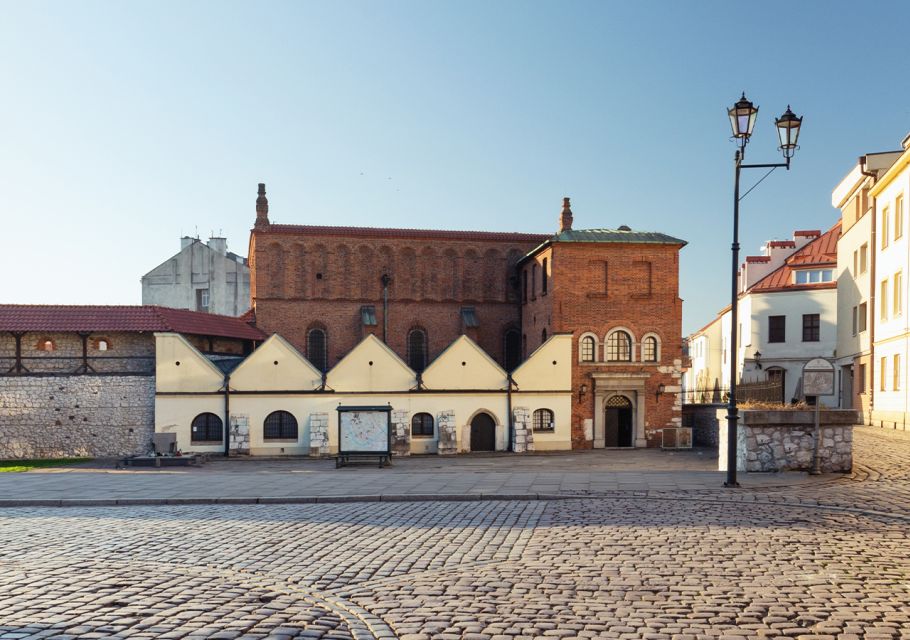
- Old Synagogue start: you begin where the district’s story becomes personal.
- Remuh Synagogue visit: a synagogue stop with a ticket included in the tour cost.
- Szeroka Street on foot: the walk helps you read the neighborhood, not just hear about it.
- Plac Nowy: a central square moment that links daily life to bigger history.
- Corpus Christi Basilica contrast: a Christian landmark that helps explain the neighborhood’s shared space.
- Guides who handle tough questions: past tour guides listed include Anya, Ela, and Jimmy, and the pattern is clear—real preparation and room for questions.
Why this Kazimierz tour hits (even before you enter a synagogue)
Krakow’s Kazimierz doesn’t feel like a museum. It feels like a living neighborhood where layered identities still show up in the streets, signage, and places of worship. This tour leans into that, starting with the idea of co-existence—how Jewish and non-Jewish life overlapped here, and how traditions shaped everyday rhythms.
Then the tone shifts to what happened next. The Holocaust almost totally destroyed the rich culture of Polish Jews. “Almost” is doing a lot of work there. Your guide helps you hold that contradiction: sadness and nostalgia for what was lost, and hope for what came back afterward. That emotional swing is not a gimmick; it’s the heart of why this area matters.
You’ll also get something that’s easy to miss if you only wander on your own: context. The tour connects what you see—synagogues, squares, and the area near the ghetto wall—to why it mattered. And you’ll hear about famous Poles of Jewish origin, which grounds the story in people, not just dates.
You can also read our reviews of more historical tours in Krakow

Meeting at the Old Synagogue: where your guide sets the story
Meeting in front of the Old Synagogue is a strong choice. It places you at the center of the Jewish Quarter’s visibility—visibly Jewish, historically charged, and still part of modern Krakow. Right away, you’re in the right mindset: you’re not just looking at old stones, you’re learning how a community lived and why it faced unimaginable change.
During the guided segment at the Old Synagogue, the guide’s job is to help you “read” the place. You’ll get explanations that connect architecture and location to Jewish traditions and communal life. It’s also the moment where you’ll start hearing how the tour treats history: not as a straight line, but as relationships—between neighborhoods, between faiths, and between the past and present.
If you like tours that answer your questions as you go, this one tends to fit that style. Guides listed for this experience (including Anya, Ela, and Jimmy) are described as energetic and focused on answering questions, even ones that make people uncomfortable. Expect that tone: respectful, thoughtful, and not afraid to be direct.
Old Synagogue to Remuh: timing, ticket value, and what to verify
The tour includes a synagogue ticket, and Remuh Synagogue is a featured stop. In practical terms, that matters because synagogue entry isn’t always free and it isn’t always automatic when you’re on your own. Having a ticket bundled into the experience can save you time and hassle.
Remuh is also a key emotional pivot point. After learning the broader context at the start, you’re now stepping into a specific place of worship. That shift—from “district story” to “site story”—is where a guided approach really earns its keep. You’ll get a guided visit there, not just a quick look from the sidewalk.
That said, there’s one consideration you should take seriously. Some people have had confusion about what was actually covered inside. The tour includes the Remuh Synagogue stop on the route, but if Remuh access is a top priority for you, double-check that the timing and ticketed entry match what you want before you go. You don’t want to spend your best time in Krakow waiting outside a door.
Bottom line: if you’re comfortable with a 2-hour structure and you value explanation alongside entry, the synagogue ticket is part of the tour’s value. If you’re expecting a long list of entries into every “important” building, you may feel the time squeeze.
Szeroka Street and plac Nowy: learning Krakow’s Jewish Quarter by walking
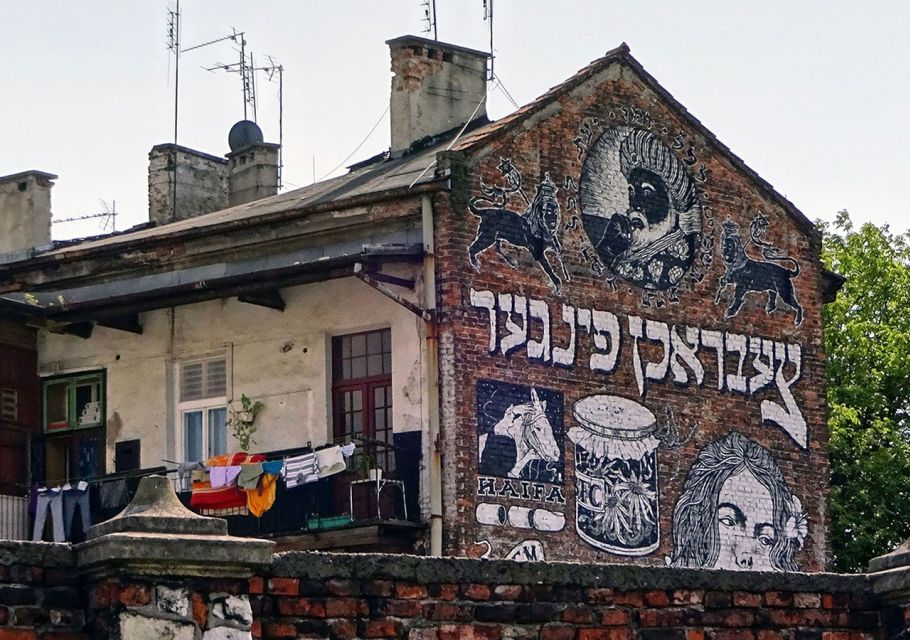
Kazimierz is the kind of place where walking is not filler—it’s the lesson. After the synagogue start, the route shifts to the streets, including Szeroka Street. This is where your guide can translate history into geography. You’re not just hearing about life “in Kazimierz.” You’re seeing the lines and intersections that shaped where people gathered, traveled, and worshipped.
Szeroka Street also helps you understand pace. In a short tour, walking is how you cover more ground while still keeping your attention on details. You’ll likely notice how the neighborhood layout supports both public life (squares, movement, gathering) and sacred life (synagogues and religious buildings).
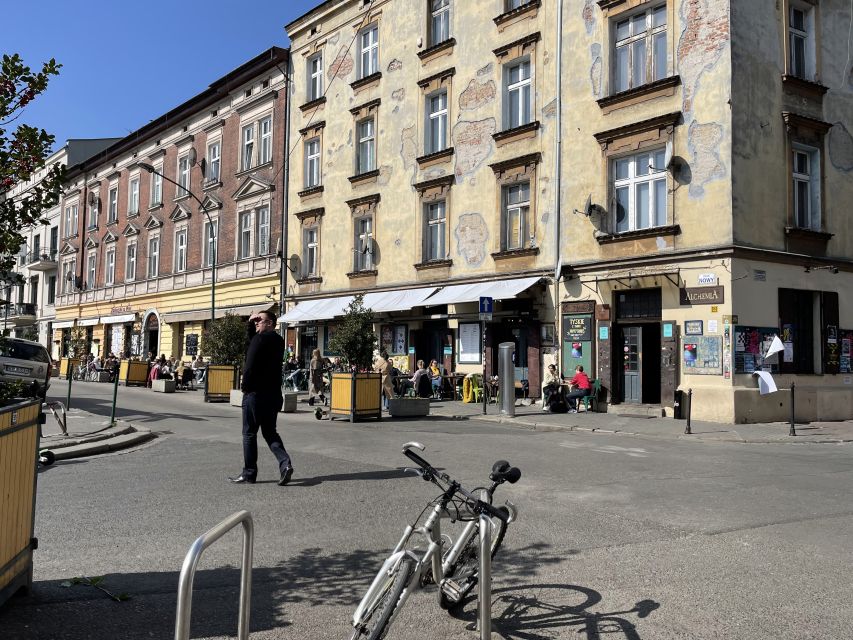
Then you move to plac Nowy. Squares like this often act as the social heart of districts. In Kazimierz, they also act like historical punctuation marks—places where your guide can connect wider community patterns to a location you can picture later when you’re back in your hotel trying to remember what you saw.
If you’re the type of traveler who likes to connect dots, this walking section is a plus. If you’re hoping for a nonstop parade of entrances and photos, keep your expectations grounded: the tour is built to balance walking, guided explanation, and a couple of focused site moments.
Corpus Christi Basilica: the neighborhood’s Christian face in the same frame
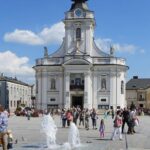
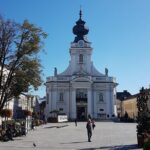
One stop that’s easy to underestimate is Corpus Christi Basilica. You might come to Kazimierz thinking mainly about Jewish landmarks, and that makes sense. But the tour’s whole theme is relationships between communities, and this basilica helps show that the neighborhood’s identity wasn’t isolated to one tradition.
This is where you learn that Kazimierz wasn’t a sealed-off world. Christian institutions existed alongside Jewish ones, shaping how the district looked and how people navigated it. Your guide uses the basilica stop to highlight that co-existence theme—not in a shallow way, but as part of the lived environment of Krakow.
In a good guided moment, this kind of stop does two things at once. It prevents you from flattening Kazimierz into a single story. And it helps you see why “Jewish heritage” here also lives in the broader urban fabric. The district isn’t just a set of attractions; it’s a place where multiple faiths and community spaces shared the same ground.
Just be aware that this is still a 2-hour tour. The basilica stop will be meaningful, but it’s not likely to become a long, architectural deep session. Think of it as context—another lens.

Ghetto Heroes Square: near the ghetto wall, where hope has weight
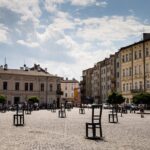
The tour culminates at Ghetto Heroes Square, finishing at Plac Bohaterów Getta 6. This is where the story becomes hardest to carry. Your guide places you on squares tied to Jewish history and culture and near the ghetto wall area, so you can’t treat the subject like distant trivia.
This final stretch is about holding the full picture: the neighborhood’s life before catastrophe, the destruction of that life, and the slow rebuilding afterward. It’s also where the tour leans into the “difficult questions” idea—questions that don’t have easy answers, and that don’t politely end when the tour ends.
For me, the most important thing here is pacing. End your tour thinking you’ll just snap a few photos and move on—and you’ll miss the point. This part works best if you give it a few quiet minutes, even if your feet are ready to rest. I’d suggest standing still for a moment, letting the location and your guide’s context connect.
If you’re sensitive to heavy topics, plan your day around this. Pairing it with something cheerful right afterward can feel jarring. Better: do a simple meal afterward, walk off the emotions, and let the neighborhood soak in.
Price and timing: is $67 actually good value for 2 hours?
At $67 per person for a 2-hour guided experience, the value depends on what you want most. If you want a smooth introduction to Kazimierz with expert guidance and at least one synagogue ticket included, this price can make sense. You’re not only paying for someone to point at buildings—you’re paying for a coherent narrative across streets and sites.
The tour includes a guide and a synagogue ticket, but it doesn’t include food, drinks, or hotel pickup/drop-off. So you’ll still plan your own timing for snacks and transport. The trade-off is you keep the tour moving and focused, rather than turning it into a half-day logistics puzzle.
Also note the practical stuff: it takes place rain or shine. That’s not a bargain gimmick; it affects your experience. You’ll want outdoor comfort—layers, shoes with traction, and a small plan for where you can pause if you need a break.
The best way to judge whether it’s worth it for you: ask yourself if you want understanding more than checklists. If you want both—some entrances and some story—this fits. If you want a long list of stops with lots of inside time for every big landmark, you may find the 2 hours leaves you wanting.
Who should book this tour, and what to double-check first
This is a great fit if you want a guided walkthrough that combines Jewish heritage with the neighborhood’s broader urban reality. The tour theme is co-existence and community traditions, plus the painful history that followed. If you’re comfortable with a serious tone and you like questions answered as you go, you’re likely to feel satisfied.
You’ll also appreciate that it runs in English and Polish, and that it’s wheelchair accessible. Meeting at the Old Synagogue and ending at Plac Bohaterów Getta 6 makes it easy to keep moving afterward, either to explore on foot or to find a meal nearby.
Two things to double-check before you lock it in:
- How many places you’ll actually enter. Some people have felt the tour doesn’t cover every major landmark inside. If inside access matters to your exact “must-see” list, consider adding extra self-guided time before or after.
- The synagogue ticket coverage for Remuh. Remuh is part of the route, and a synagogue ticket is listed as included, but there has been confusion in at least one case about entry and coverage. If Remuh entry is your priority, confirm that the Remuh stop includes ticketed entry on your date.
If you’re more photo-first than story-first, you might also want to prepare for explanation time. It’s a 2-hour tour, and that time is spent on context, not only sightseeing.
Should you book the Kazimierz Jewish Heritage Tour?
Yes, I think you should book this tour if you want a structured, respectful introduction to Kazimierz that connects places to people—especially if you care about understanding Polish Jewish life and its aftermath. The included guide time and synagogue ticket help you get beyond surface wandering.
I’d skip it or plan extra time around it if your top priority is maximizing the number of entered landmarks. The tour is built for meaning and context, not a sprint through every attraction.
My practical advice: book it as your “anchor experience.” Then spend your remaining time in Kazimierz walking a little more on your own—slow down, look at the street details, and let what you heard in the tour guide your next steps.
FAQ
Where do I meet for the tour?
Meet in front of the Old Synagogue.
How long is the Jewish Heritage Tour in Kazimierz?
The tour lasts 2 hours.
How much does the tour cost?
The price is $67 per person.
What’s included in the ticket price?
A live guide and a synagogue ticket are included.
Are food and drinks included?
No. Food and drinks are not included.
Is hotel pickup and drop-off included?
No. Hotel pickup and drop-off are not included.
What languages is the tour available in?
The live tour guide is available in English and Polish.
Is the tour wheelchair accessible?
Yes, the tour is wheelchair accessible.
Does the tour run in bad weather?
Yes. It takes place rain or shine.