REVIEW · KRAKOW
Krakow Schindler’s Factory & Ghetto & Plaszow Camp Guided Tour
Book on Viator →Operated by excursions.city · Bookable on Viator
Schindler’s Krakow isn’t just museum time. This guided route strings together Schindler’s Enamel Factory, the surviving ghetto memorial spots in Podgórze, and the former Plaszow concentration camp grounds—so you’re not just looking at plaques, you’re understanding how Nazi rule unfolded in the city from 1939 onward.
I like the professional, guided storytelling that keeps things clear and chronological, and I also like that Schindler’s Factory is built around life in occupied Krakow (1939–1945) rather than turning into a simple biography. That choice matters, because it explains the system people were trapped in, not just one man’s story.
One drawback: it’s a long 5-hour day with walking between locations. If your feet tire easily, plan for it—this is an emotionally heavy itinerary, and it also asks for physical stamina.
In This Review
- Key highlights at a glance
- Schindler’s Enamel Factory: what you’ll learn in 90 minutes
- The Ghetto Wall Fragment and Ghetto Heroes Square: short visits with heavy weight
- Stop 2: the Ghetto Wall Fragment
- Stop 3: Plac Bohaterow Getta (Ghetto Heroes Square) and the chair monument
- Admission reality check
- Plaszow Concentration Camp: what the timeline explains on-site
- The pace, group size, and the 5-hour walking math
- Why a guided tour is worth it for WWII sites
- Price and value: is $76.35 a fair deal?
- Who should book this tour in Krakow?
- Should you book the Schindler’s Factory, Ghetto & Plaszow guided tour?
- FAQ
- How long is the Krakow Schindler’s Factory, Ghetto & Plaszow guided tour?
- What is included in the price?
- Which stops are visited on the tour?
- Is admission included for Schindler’s Factory Museum and Plaszow?
- Do I need a tram ticket during the tour?
- Where does the tour start and end?
- What is the group size limit?
Key highlights at a glance
- Schindler’s Factory focuses on occupied Krakow, not a biography
- Small-group format helps you get questions answered while you move
- Ghetto Wall Fragment preserves an original wall line plus a commemorative plaque
- Ghetto Heroes Square chairs monument turns lost property into a visual memorial
- Plaszow camp visit includes key WWII timeline details and is admission-free
- Skip-the-line value comes from having a guide handle the entry at the museum
Schindler’s Enamel Factory: what you’ll learn in 90 minutes
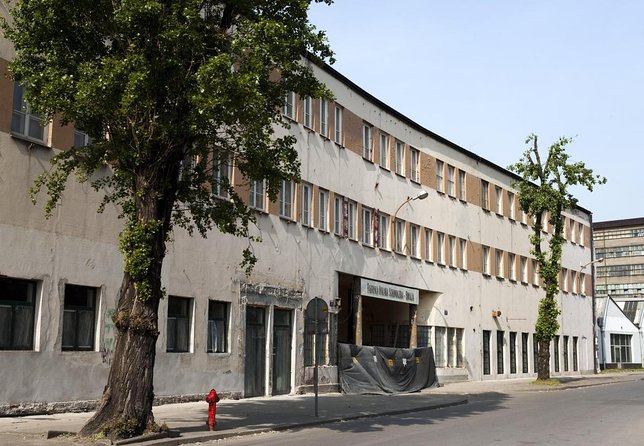
The tour’s first stop is Fabryka Emalia Oskara Schindlera, at Lipowa 4—one of Krakow’s most visited sites for good reason. The museum’s main exhibition is titled Kraków under Nazi Occupation 1939–1945, and that framing sets expectations fast: this isn’t meant to be a life story of Oskar Schindler. You’ll spend your time on how the Nazis organized, controlled, and reshaped daily existence in Krakow during the occupation.
A guided visit helps here because the museum covers a lot of ground in a way that can feel overwhelming if you’re left alone with the galleries. With a guide, you get a sense of what matters most and why—how occupation policy affected housing, work, fear, movement, and survival. Even if you’ve read a bit before, I find this kind of museum works best when someone connects the dots for you.
Practical note: the tour includes the museum entrance ticket, so you’re not juggling purchases right at the start. Expect about 1 hour 30 minutes at this stop, and don’t treat it like a quick walk-through. The point is understanding, not speed.
What to watch for while you’re there: pay attention to how the exhibits explain occupation as a system. When you notice that, the later stops make more sense—especially Plaszow, which was tied to forced labor and industry.
You can also read our reviews of more guided tours in Krakow
The Ghetto Wall Fragment and Ghetto Heroes Square: short visits with heavy weight
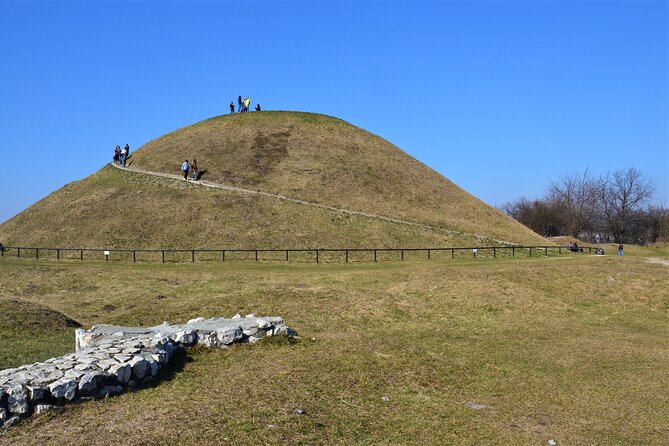
After the museum, the tour moves into Podgórze, where the ghetto’s presence is remembered through physical remnants and memorial design. These stops are brief—each one is about 15 minutes—but they land with force.
Stop 2: the Ghetto Wall Fragment
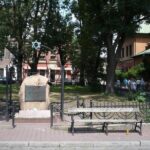
You’ll see a 12-metre stretch of the original ghetto wall. That’s not a replica. It’s the most prominent evidence of the Krakow ghetto you can view, and the guide will point out why a surviving fragment like this carries weight: it’s evidence that the boundary wasn’t imaginary. It was built, enforced, and lived with.
A commemorative plaque was raised in 1983, written in Hebrew and Polish. It includes a stark message about Jews living, suffering, and dying under German torturers, and it notes that from here, the final journey began to death camps.
Because this is a wall segment and a plaque, it’s tempting to think you can just look and move on. Try not to. Give yourself a minute to read everything, even if you think you already know what you’re seeing. The wording matters, and the guide’s commentary helps you understand what you’re actually standing in front of.
Stop 3: Plac Bohaterow Getta (Ghetto Heroes Square) and the chair monument
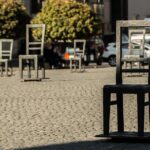
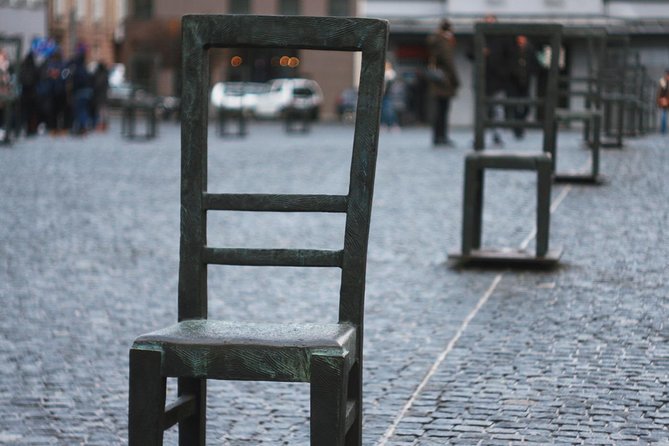
Next comes Plac Bohaterow Getta, the Ghetto Heroes Square in the Podgórze district. In 1941–1943, the area was inside the ghetto. Today, one of the most unusual elements is a memorial made of cast-iron chairs—several dozen—standing individually in the square.
The chairs are not random decoration. They symbolize property and belongings scattered after the ghetto’s liquidation. You’ll also hear how this square served as a concentration point of the Jewish population before transports to concentration camps. Again, the stop is only 15 minutes, but the symbolism is the whole point: the memorial turns absence into something you can visually grasp.
Admission reality check
Neither of these two stops requires a ticket. They’re outdoor memorial sites, so you can focus on what’s in front of you without thinking about entry rules.
How to make these short stops work for you: stand still. Don’t rush for photos. Your eyes will fill in details when you slow down, and the guide can only build meaning if you’re actually taking it in.
Plaszow Concentration Camp: what the timeline explains on-site
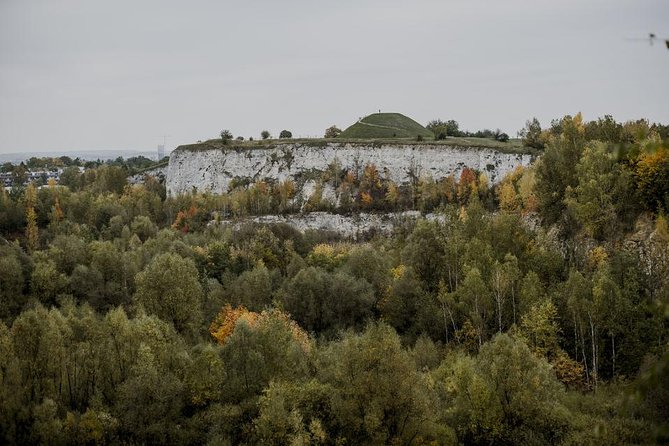
The final major stop is Plaszow, the Nazi concentration camp in the southern suburbs of Krakow. This is the longest “site” portion after Schindler’s Factory, with about 1 hour 30 minutes on the grounds.
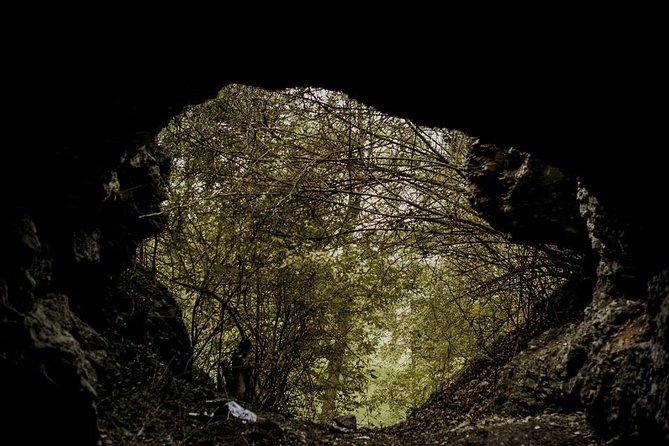
Plaszow’s story is explained with dates and purpose. You learn that the Nazis founded it shortly after the invasion of Poland. Initially, it was planned as a forced labor camp, but the camp was expanded in 1941 and converted into a concentration camp. Then the timeline tightens: from October 28, 1942, deportations of Jews from the Krakow ghetto began.
Plaszow wasn’t only about confinement. It was also tied to production—supplying labor for military factories and a quarry. That connection is part of what makes Plaszow so important to understand in the context of Krakow. It shows how occupation economies and violence fed each other.
One practical detail that helps planning: admission is free for this stop. The tour gives you the structure of a guided visit anyway, so you’re still not “on your own” even if the ticket price is zero.
What you’ll feel (and what you should expect): this part is emotionally serious. It’s also where a guide earns their pay. If you only read signs yourself, you might miss the broader system at work. A good guide keeps the explanation grounded and factual while helping you connect what you saw earlier—especially the ghetto sites—to what happened afterward.
The pace, group size, and the 5-hour walking math
This is designed as a small-group experience—in the tour highlights, it’s capped at 15 travelers, and elsewhere it’s listed with a maximum of 25 travelers. Either way, it’s not a giant crowd. You typically get enough space for questions and enough movement that you’re not stuck waiting forever.
The total duration is about 5 hours, which sounds straightforward until you remember the itinerary is serious and you’ll want to pause for details. One of the most consistent lessons from people who do this kind of day is simple: wear shoes you trust. The subject matter is heavy; the body still has to do the work.
The itinerary also has a start and end point that differ:
- Start: Lipowa 4
- End: Henryka Kamieńskiego 57
That matters for your plans afterward. You may not end exactly where you started, and you might want to plan dinner and transport accordingly.
Also, tram tickets are not included (listed as 4 PLN). The tour is near public transportation, so you’re not stuck far from transit—but you should budget for a transit ticket if your next stop isn’t walkable.
My practical tip for your schedule: if you’re stacking multiple Jewish history or WWII-focused tours in one day, consider starting earlier. A 5-hour route can swallow an entire half day, and you’ll want time to decompress afterward without rushing.
Why a guided tour is worth it for WWII sites
You can visit Schindler’s Factory and the memorial sites on your own. But the reason to choose this guided format is the same reason guides exist in places like this: you’re dealing with systems, not just stories.
At Schindler’s Factory, the museum’s theme is occupied Krakow from 1939–1945. Without context, it’s easy to wander from one exhibit to another and only half-register the bigger picture. With a guide, you get a clearer storyline and better signposting for what to focus on.
The ghetto sites are similar. A wall fragment and a chair memorial are powerful, but they become even more meaningful when you understand how the ghetto functioned, where people gathered, and how transports connected to later camps. A guide helps you avoid the common trap of turning memorials into quick photo stops.
Then Plaszow ties it together. Because Plaszow involved forced labor, deportations, and industrial connections (military factories and a quarry), it’s not just a “camp scene.” It’s part of the Nazi machinery in Krakow. Guided commentary is what helps those pieces click into place.
In short: the guide doesn’t change what happened. They help you read what you’re seeing.
Price and value: is $76.35 a fair deal?
The listed price is $76.35 per person for about 5 hours. That number can feel high until you look at what’s included.
Here’s the value math that matters:
- Schindler’s Factory museum ticket is included
- You’re getting a professional guide
- Other stops don’t require paid admission (the ghetto memorial sites are outdoor, and Plaszow admission is listed as free)
- The guided format saves time from figuring out entry logistics and allows you to stay focused on interpretation
You’re also paying for time management. Holocaust history sites can be slow on purpose, because it takes longer to understand them properly. A guided route helps keep you from losing the day to confusion or missed context.
One more value hint: this tour is often booked well ahead (the average booking window listed is 103 days). If you’re traveling in peak season, locking in your date earlier tends to reduce stress.
Who should book this tour in Krakow?
I’d point you toward this tour if you want a structured, guided way to understand how Nazi occupation played out across multiple locations in Krakow: the occupied-life museum, the ghetto memorial spaces, and Plaszow as the later site tied to deportation and labor.
It’s also a strong choice if you’ve seen Holocaust material elsewhere—like a major film or another WWII site—and you want Krakow-specific details that show how the story local to this city developed.
A quick suitability note based on what’s stated: the tour says most travelers can participate. Still, because it’s a 5-hour walk-heavy day, it may not be ideal if you need frequent breaks or have limited mobility. If that’s you, consider contacting the operator to ask what the walking demands look like for your specific needs.
Should you book the Schindler’s Factory, Ghetto & Plaszow guided tour?
If you want one focused day that connects the dots between Schindler’s Factory, Krakow Ghetto memorial sites, and Plaszow, this is a good pick. The included museum ticket and the guided context are the big reasons I’d book rather than self-tour.
I’d only skip it if:
- you’re determined to do everything independently at your own pace without a guide’s interpretation, or
- you know a 5-hour itinerary with walking will be hard for your body on a heavy topic day.
Otherwise, it’s the kind of tour that helps the places stop being separate stops and start feeling like one connected chapter of history—clear, sobering, and worth your time.
FAQ
How long is the Krakow Schindler’s Factory, Ghetto & Plaszow guided tour?
It lasts about 5 hours.
What is included in the price?
The tour includes a professional guide and the entrance ticket to Schindler’s Factory Museum.
Which stops are visited on the tour?
You’ll visit Schindler’s Enamel Factory (Fabryka Emalia Oskara Schindlera), the Ghetto Wall Fragment, Ghetto Heroes Square (Plac Bohaterow Getta), and the site of Plaszow concentration camp.
Is admission included for Schindler’s Factory Museum and Plaszow?
Yes. Schindler’s Factory Museum admission is included. Plaszow admission is free.
Do I need a tram ticket during the tour?
Tram tickets are not included. The information provided lists 4 PLN for tram tickets.
Where does the tour start and end?
It starts at Lipowa 4, 32-051 Kraków, Poland and ends at Henryka Kamieńskiego 57, 30-644 Kraków, Poland.
What is the group size limit?
The tour is described as small-group, capped at 15 travelers, and it also lists a maximum of 25 travelers.