REVIEW · KRAKOW
Krakow: City Sightseeing Tour by Shared or Private Golf Cart
Book on GetYourGuide →Operated by AiWTravel Aneta Czopek · Bookable on GetYourGuide
Krakow in 90 minutes, minus the walking pain. I like the way an electric golf cart keeps you moving through medieval lanes without shredding your feet, and I love that the route links the Old Town with Kazimierz/Jewish Quarter landmarks in one efficient loop. You get live narration in English and Polish, plus an audio guide that lets you follow along in many languages.
There is one catch to keep in mind: this is a small-group meet-and-go tour, so timing at the meeting point matters. If you’re late or unsure where to stand, the cart won’t wait forever, and you’ll feel that pinch.
In This Review
- Key highlights at a glance
- Why this electric golf cart works in Krakow
- Getting your bearings: Planty Park and the medieval city feel
- Kazimierz and the Jewish Quarter: the heart of the ride
- The “named stops” that turn into real places
- Ciemna Street and the old shops: why the small streets matter
- Into the former ghetto: Podgórze, memorial squares, and the wall
- Schindler’s story, the pharmacy under the eagle, and Tadeusz Pankiewicz
- Your guide setup: live English/Polish plus a multilingual audio track
- Price and value: is $55 worth 1.5 hours in a small group?
- Who should book this Krakow golf cart tour
- Practical notes so your experience runs smoothly
- Should you book it?
- FAQ
- How long is the Krakow city sightseeing golf cart tour?
- How much does the tour cost?
- Is this tour shared or private?
- Where do I start, and is hotel pickup included?
- What languages are available for the live guide?
- Is an audio guide included, and in how many languages?
- What group size should I expect?
- Is the tour wheelchair accessible?
- Can I bring luggage or large bags?
- FAQ (quick booking questions)
- Is there free cancellation?
- Does the tour provide transportation?
Key highlights at a glance
- 24+ stops in 1.5 hours so you see far more than a typical walking tour
- Old Town to Kazimierz to Podgórze in one continuous ride
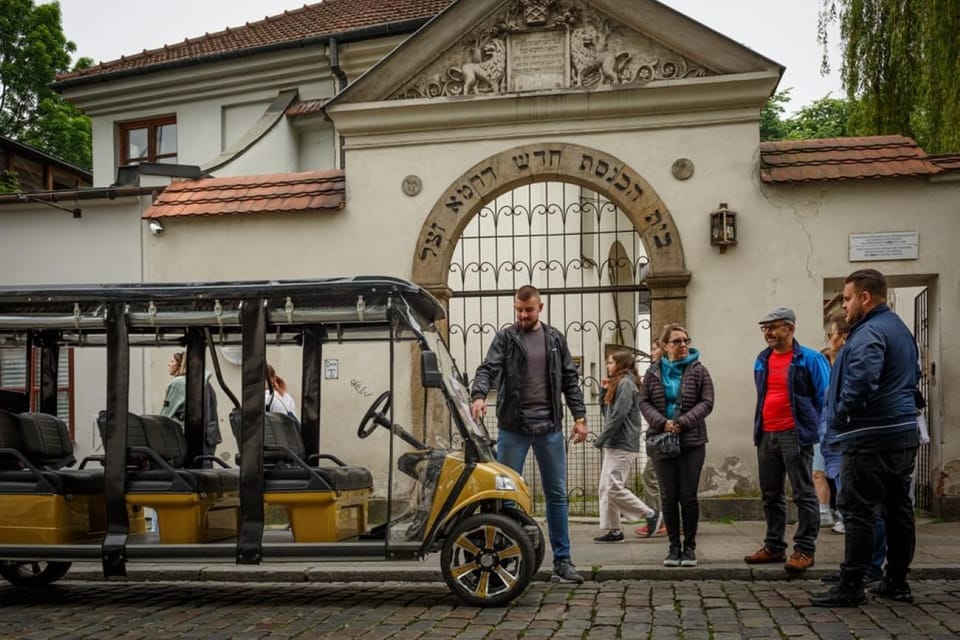
- Multiple synagogues and Jewish-quarter streets with context from the guide
- Former ghetto area stops including Ghetto Heroes Square and the Ghetto Wall
- Live guide in English/Polish plus a multilingual audio guide
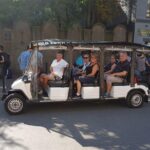
- Small group (up to 10) for a calmer, less chaotic pace
Why this electric golf cart works in Krakow
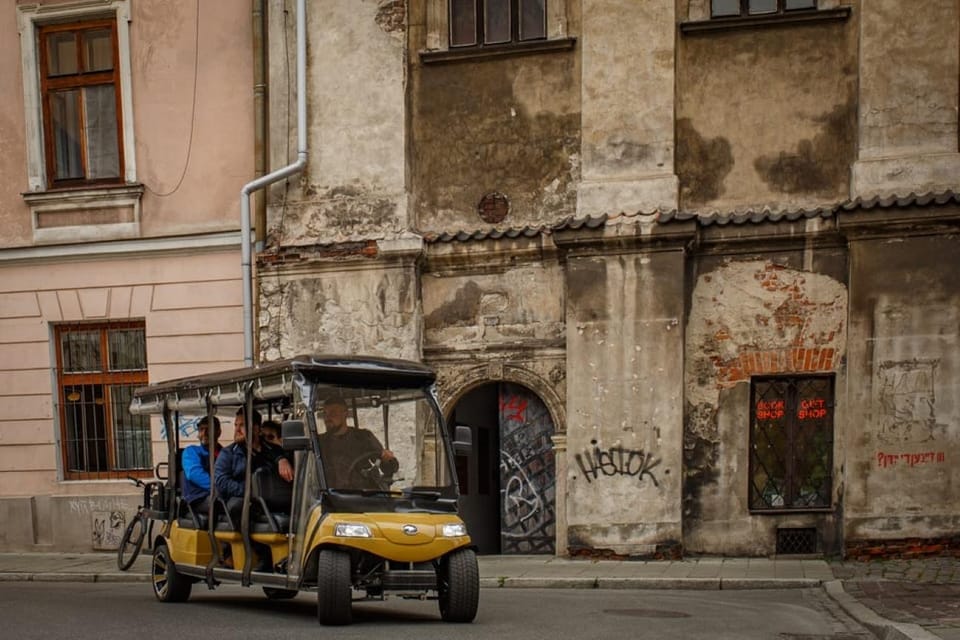
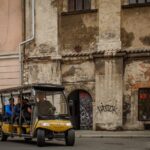
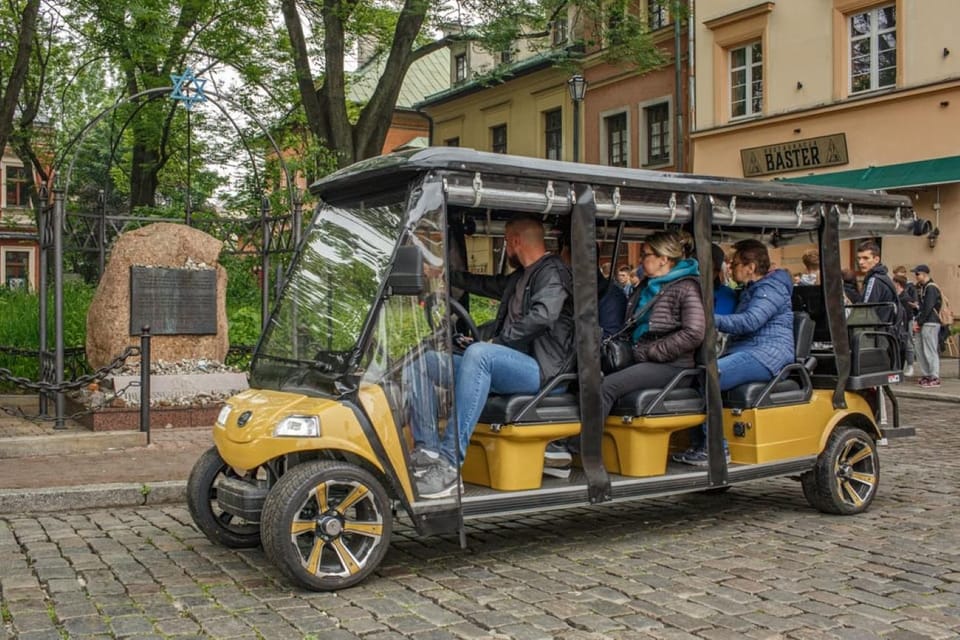
Krakow is a city that rewards wandering, but it can also wear you out. This electric golf cart tour is designed for the “I want to see a lot” crowd who still want a guided experience. Instead of long detours on foot, you glide between neighborhoods and then zoom in on the details as you pause.
The format also helps with concentration. When you’re not stopping every few minutes to navigate crowds or uneven sidewalks, it’s easier to actually absorb what your guide is saying. And because the tour focuses on Jewish history sites and former ghetto memorial locations, you’ll want that mental steadiness.
The pace is brisk by design. That’s a plus when you’re short on time, but it means you should come ready to take notes or let the audio guide do some of the heavy lifting while you absorb the views.
You can also read our reviews of more city tours in Krakow
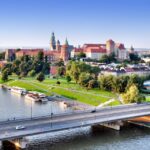
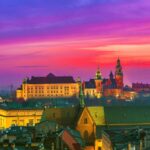
Getting your bearings: Planty Park and the medieval city feel
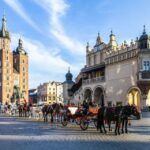
The tour starts by moving you from the Old Town edge toward the Medieval City core. Planty Park is one of those Krakow “you’re here now” places—part park belt, part transition zone—so it’s a practical first stop. You get a quick sense of the city’s layout before the guide starts connecting history to geography.
From there, the tour leans into storytelling. You’ll hear about medieval Krakow and how the city’s layout influenced where communities lived, worshipped, traded, and later—because history has a cruel twist—how those patterns changed.
I like this approach for first-timers. It takes the chaos out of “what am I looking at?” You’re not just watching buildings slide by; you’re building a mental map.
Kazimierz and the Jewish Quarter: the heart of the ride
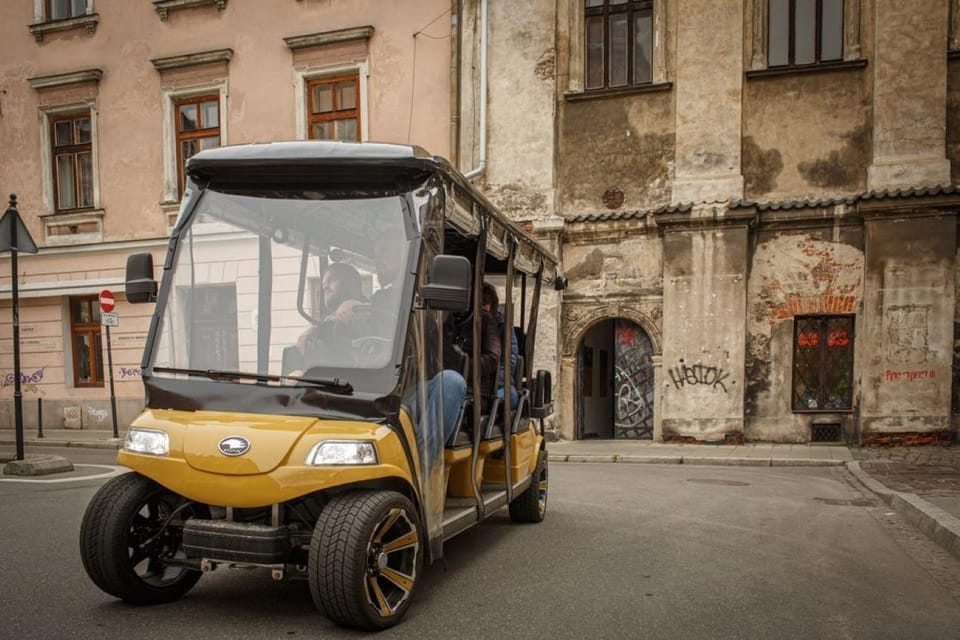
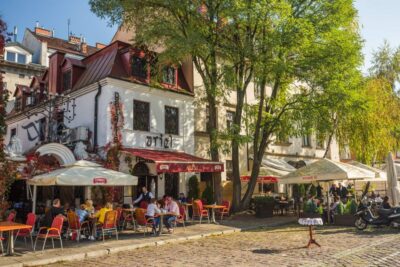
Kazimierz (the historic Jewish district) is where this tour becomes most meaningful. Instead of treating the Jewish Quarter as one generic zone, you cover a chain of named landmarks. That makes the history feel less like a lecture and more like a route through real places.
The guide also helps you connect Kazimierz with Podgórze, where you encounter former ghetto territory. That matters because Krakow’s Jewish story isn’t isolated to one pocket of the map. You get the sense of movement across the city—spatially and historically.
If you’re the kind of traveler who likes structure, you’ll appreciate that the tour doesn’t just drop you at one or two photo stops. You pass through areas tied to community life: synagogues, squares, streets, and memorial points.
The “named stops” that turn into real places
One reason this tour earns strong marks is how many specific sites are packed into 1.5 hours—think Skałka Church, Church of St. Catherine, and Wolnica Square (with Wolnica Square Jewish City Hall as a named point). Even if you don’t catch every fact perfectly, the naming helps your brain anchor what you’re seeing.
Then the tour shifts from general landmarks into the Jewish-quarter specifics. You’ll pass or stop at a sequence of synagogues and streets, including:
- Tempel Synagogue
- Kupa Synagogue
- Isaac Synagogue
- Ciemna Street
- Old Synagogue
- Popper Synagogue
- Remuh Synagogue and old cemetery
- Family House of Helena Rubinstein
- Memorial Stone of the Nissembaum Family Foundation
- Old Jewish Shops
Here’s what’s valuable for you: synagogues aren’t just “pretty buildings.” On this kind of tour, they become signposts for different community eras, traditions, and neighborhoods. Even when the details are brief, you leave with a list of names you can later look up at your own pace.
Also, note the tone. One reviewer wanted more humor, and other feedback praised guides who keep things clear without being overly talkative. So plan on guided history first, jokes second.
Ciemna Street and the old shops: why the small streets matter
It’s easy to miss the power of a street like Ciemna Street when you’re moving quickly. But smaller streets often explain how daily life actually worked. When your guide points out these named lanes and nearby Old Jewish Shops, you start to see the district as more than monuments.
This is also where the audio guide can be your friend. The tour includes audio in many languages, and it’s helpful when you want to catch up while the cart rolls forward between stops.
Practical tip: if you tend to travel with your phone, be ready to switch between the guide and your audio track. The pace can be fast, and the audio helps you fill in anything you missed while taking photos or adjusting position.
You can also read our reviews of more private tours in Krakow




Into the former ghetto: Podgórze, memorial squares, and the wall
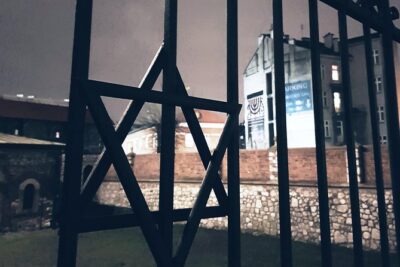
The emotional weight of this part of the tour is the point, and it’s handled through named sites tied to the former ghetto territory. You’ll move through the area connected with the Krakow ghetto story and learn about Podgórze as former territory of the ghetto.
Key stops include:
- Former Ghetto description
- Ghetto Heroes Square
- Life in Ghetto description
- Ghetto Wall
- Church of St. Joseph (as part of the surrounding neighborhood context)
What I like about this design is that it doesn’t ask you to make leaps. Instead, it follows a route where memorial points and explanatory moments are placed close enough together that you can keep the timeline coherent.
Still, keep expectations realistic. In 1.5 hours, you won’t get every detail about every site. But you will leave with a guided framework: where to look, what to remember, and which names deserve more reading later.
If you want a deeper experience after the cart ride, this tour is a good “orientation layer.” It gives you enough structure to choose what you want to study more on your own.
Schindler’s story, the pharmacy under the eagle, and Tadeusz Pankiewicz
A standout portion of the route focuses on the human story threads tied to Oskar Schindler and Pharmacy under the Eagle, which is identified here as the residence of Tadeusz Pankiewicz.
Even without long on-site detours, these named stops help your brain connect history to specific people. The guide’s narration is doing the work of turning names into context, and that can be surprisingly powerful—especially when you’re seeing the former ghetto area in the same session.
One more detail that helps you appreciate the stop sequence: the tour isn’t only “memorial stops.” You also pass through places like Church of Corpus Christi and other religious landmarks as you transition between neighborhoods. That contrast can make the historical map feel more complete, not just “dark stops in a row.”
Your guide setup: live English/Polish plus a multilingual audio track
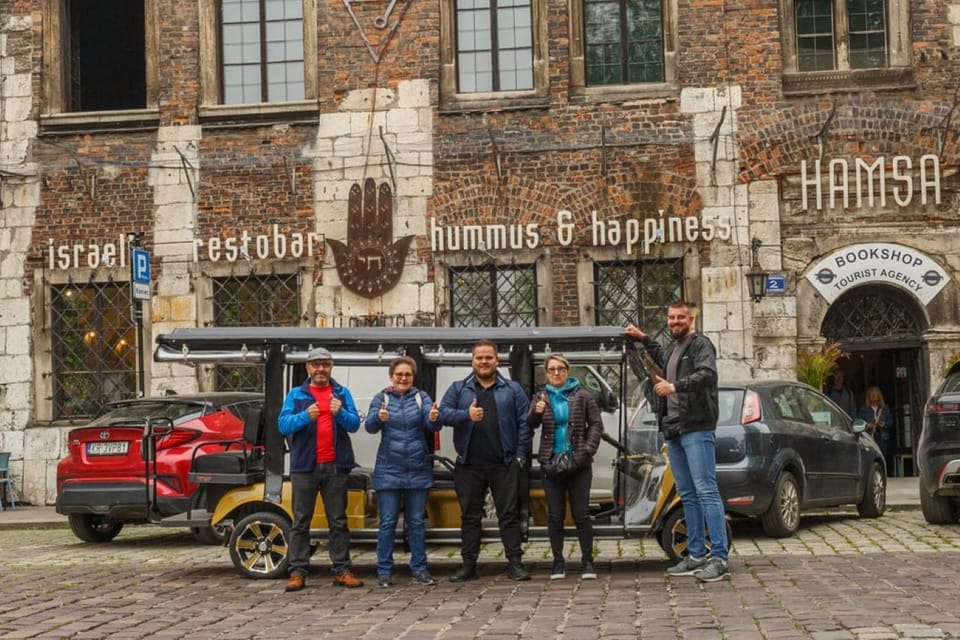
You get a live tour guide speaking Polish and English, and you also get an audio guide included. The audio languages listed are extensive, including English, French, German, Spanish, Italian, Russian, Japanese, Arabic, and many more.
This matters because it gives you options:
- If you’re tired or distracted, the audio can backfill details.
- If you’re following in English, the audio can help confirm you didn’t miss a date or name the guide mentioned quickly.
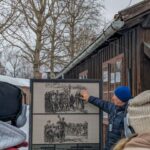
Reviews specifically praised guides who explain the Jewish Quarter and ghetto history in an engaging way—one guide was named Oliwia/Olivia, described as very interesting and kind. That’s exactly the kind of guide you want for this subject matter: clear, respectful, and willing to answer questions.
One caveat: if humor is part of your ideal tour experience, don’t count on it. One comment specifically asked for a bit more humor, which suggests the overall tone is more informative than comedic.
Price and value: is $55 worth 1.5 hours in a small group?
At $55 per person for about 1.5 hours, you’re paying for three things:
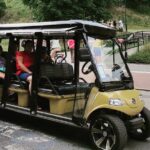
- Transportation by golf cart (electric, with a driver)
- A guided narrative that connects multiple neighborhoods and named sites
- Audio guide access included in the cost
So the value isn’t just convenience. It’s about content density. In a short time window, you cover Old Town transitions, Kazimierz, and former ghetto territory with a named-stop approach.
If you’re comparing it to a walking-only guided tour, this one can be a better deal for comfort and time. You’re not paying extra to avoid steps only—you’re paying for a route that makes it practical to see a lot without losing the thread of the story.
Where you might question value is if you’re the type who prefers deep, slow museum study. This cart tour is built for orientation and landmark coverage, not hours inside venues.
Who should book this Krakow golf cart tour
This tour is a strong fit if you:
- Want a first-time orientation that includes Kazimierz and former ghetto territory
- Prefer guided history with limited walking
- Like named landmarks (not just general area descriptions)
- Want a smaller group pace (limited to 10 participants)
It may be less ideal if you:
- Want a long, slow, museum-style experience
- Need plenty of time at each synagogue or memorial point (this is built for coverage, not lingering)
If you’re traveling with older family members or anyone who doesn’t handle long walking well, the cart format makes a big difference in how much you can actually see in 90 minutes.
Practical notes so your experience runs smoothly
A few details can shape how smooth the tour feels:
- Hotel pickup and drop-off are not included, so you’ll meet the group at the designated meeting point.
- Luggage or large bags are not allowed, so travel light.
- The tour is wheelchair accessible, which is great if you want the guided route without stairs or heavy walking.
- You’ll get audio guide support and the guide operates in English and Polish.
Also, because this is a small-group format, I recommend arriving a bit early and confirming you’re at the right spot. When tours run on tight timing, missing the group can turn into a long wait.
Should you book it?
If your goal is to understand Krakow’s layout and Jewish history landmarks—especially Kazimierz and former ghetto sites—without spending most of your day walking, I think this Krakow electric golf cart tour is a solid booking. The combination of a small group, live guide in English/Polish, and a stop list with many named places makes it a good value for 1.5 hours.
I’d only hesitate if you want comedy-heavy guiding, or if you prefer slow, immersive time at fewer locations. For that style, you’d pair your visit with longer on-foot exploration after the cart gives you your bearings.
FAQ
How long is the Krakow city sightseeing golf cart tour?
The tour duration is 1.5 hours.
How much does the tour cost?
The price is listed as $55 per person.
Is this tour shared or private?
The experience is offered as City Sightseeing Tour by shared or private golf cart options.
Where do I start, and is hotel pickup included?
Hotel pickup and drop-off are not included, so you’ll meet at the tour’s meeting place.
What languages are available for the live guide?
The live tour guide is available in Polish and English.
Is an audio guide included, and in how many languages?
Yes, an audio guide is included, with multiple languages listed such as Arabic, Chinese, English, French, German, Hebrew, Italian, Japanese, Polish, Russian, Spanish, Turkish, and many others.
What group size should I expect?
This tour is a small group limited to 10 participants.
Is the tour wheelchair accessible?
Yes, the tour is wheelchair accessible.
Can I bring luggage or large bags?
No. Luggage or large bags are not allowed.
FAQ (quick booking questions)
Is there free cancellation?
Yes. Free cancellation is available up to 24 hours in advance for a full refund.
Does the tour provide transportation?
Yes. Transportation is provided by golf cart, along with a driver.