REVIEW · KRAKOW
Krakow: Old Town, Jewish Kazimierz and Ghetto Sightseeing by Electric Golf Cart
Book on Viator →Operated by excursions.city · Bookable on Viator
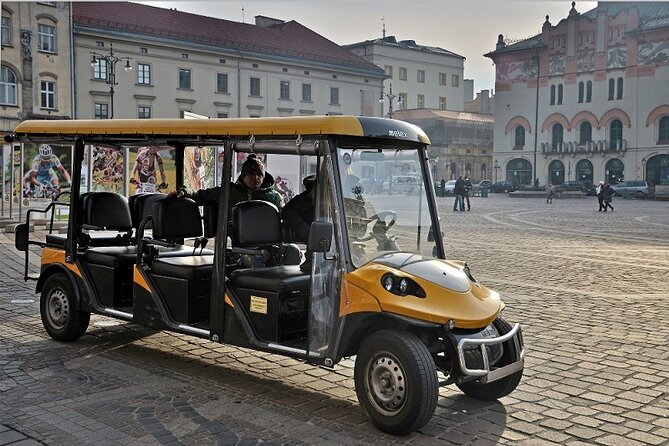
Cobbles can eat your time—so this cart tour helps. In about 2 hours 30 minutes, you cover Krakow’s big-name sights in the Old Town plus the Jewish neighborhoods of Kazimierz and the former ghetto area, all with an easy electric ride and an audio system in English. It’s a smart fix for a short stay.
Two things I really like: the small group (max 8), which keeps the pace human, and the tour’s mix of top landmarks and place-based storytelling. Many of the guides called out by name—people like Radic, Filip W, Michael, Tom, and Peter—are praised for clear explanations and an attentive style that makes the quick stops feel more meaningful.
One possible drawback: time at each stop is brief, so if you want long photo sessions at every landmark, you’ll feel a little rushed—especially around the busiest parts of the Old Town where other carts and groups can block views.
In This Review
- Key Highlights You’ll Feel Right Away
- Electric Golf Carts for Old Town and Kazimierz in 2.5 Hours
- Before You Go: Meeting Points, Seats, and What to Bring
- Market Square and Cloth Hall: Medieval Krakow at Street Level
- Town Hall Tower and St. Mary’s Basilica: From Views to Awe
- Juliusz Słowacki Theatre and the Barbican: Theatre Grandeur Meets Defense
- Kazimierz Synagogues: Tempel, Szeroka Street, and Remuh
- Podgórze and the Ghetto Walk: Preserved Wall and Umschlagplatz
- How the Guide Makes It Worth It (Names You May Hear)
- Price and Value: Is $56.47 a Good Deal?
- Who This Tour Fits Best
- Should You Book This Krakow Electric Cart Tour?
- FAQ
- How long is the electric golf cart sightseeing tour in Krakow?
- How much does the tour cost?
- Is the tour in English?
- What’s the group size?
- Is the ticket mobile?
- Where do I meet the tour?
- Do I need to carry luggage on the cart?
- Is there confirmation after booking?
- Is it near public transportation?
- Can I get a full refund if I cancel?
Key Highlights You’ll Feel Right Away
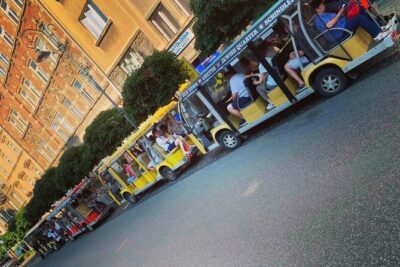
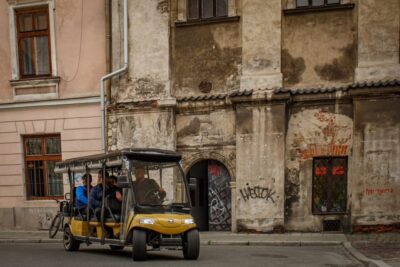
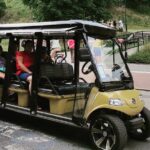
Electric golf cart rides keep you moving without exhausting long walks across Krakow’s most central streets.
Old Town + Kazimierz + ghetto sites all in one outing, so you don’t have to piece the neighborhoods together yourself.
English audio system plus on-the-ground guidance makes the history easier to follow while you’re rolling between stops.
Small group cap (8 people) helps the guide manage pacing and questions.
Frequent, major-picture stops let you see what most first-timers want: Market Square, Cloth Hall, St. Mary’s, Barbican, synagogues, and preserved ghetto remnants.
Electric Golf Carts for Old Town and Kazimierz in 2.5 Hours
This tour is built for one thing: getting the highlights without wasting half your day in transit. Krakow’s historic center is walkable, yes—but it’s also crowded, uneven, and spread across areas you’ll want to compare: Renaissance and medieval Old Town next to the Jewish quarter, and then into the darker layers of World War II history.
The electric golf cart setup matters. It’s not just about comfort. It’s about time. When you’re moving continuously, your morning (or afternoon) stays intact, and you can actually connect the neighborhoods instead of treating them like separate checklists.
You can also read our reviews of more tours and experiences in Krakow.
Before You Go: Meeting Points, Seats, and What to Bring
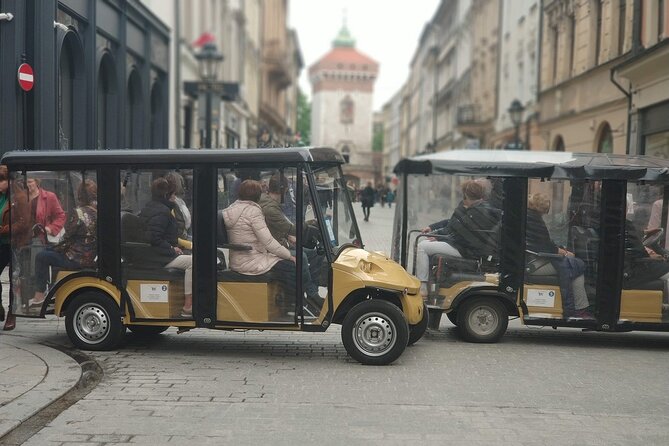
You’ll start at Mikołaja Zyblikiewicza 2 and end at Mikołaja Kopernika 3. That end point is useful for planning—after the tour, you may be closer to more central options for lunch or a last walk.
Bring light luggage only. The vehicles have enough room for passengers to sit, but they’re not meant for bulky bags. If you’re traveling with a big backpack, plan to keep it compact or wear it so you can keep the shared space free.
The tour runs with a defined start time, and the operator asks you to be on time at the meeting point. Also, it’s offered in English, with an audio system that guides you through stops as you drive.
Market Square and Cloth Hall: Medieval Krakow at Street Level
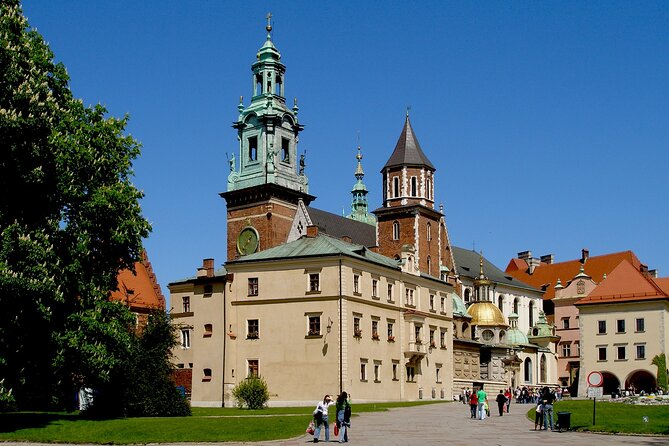
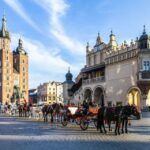
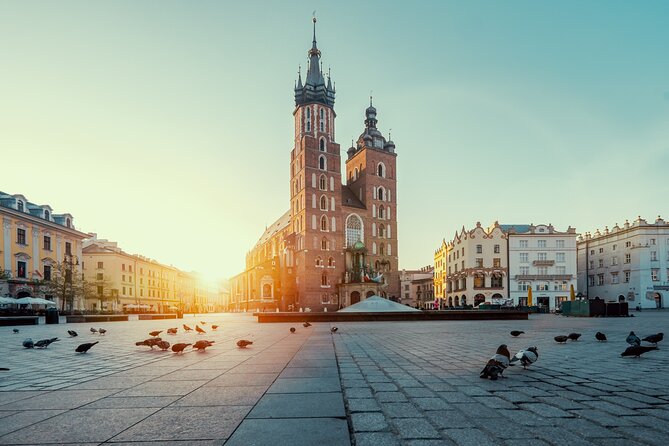
Your first big wow moment is Krakow’s Main Market Square (Rynek Główny)—the expansive public space that anchors the Old Town. This is where the city’s medieval character is easiest to feel. It’s not a museum room; it’s a working square that still functions the way a civic heart does.
Right after, you get the Cloth Hall (Sukiennice), described as Krakow’s oldest commercial center—basically, a Renaissance-style landmark wrapped around centuries of trade and craft. Even if you only see it from the street and pass its main features, it’s the kind of stop that helps you understand why the square mattered.
One practical note: the Market Square is often busy. If your priority is photos, aim to capture key views during brief pauses and be ready for the reality of shared space with other tours nearby.
Town Hall Tower and St. Mary’s Basilica: From Views to Awe
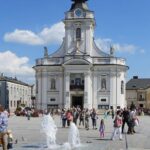
Next you move to the Town Hall Tower, known for its height and classic medieval authority: stone steps, a history tied to city governance, and the tower’s long presence as a visual landmark over the Main Market Square. Even without climbing, this stop helps you picture how power sat in the center of daily life.
Then comes St. Mary’s Basilica, and this is one of the best examples of why a cart tour can still feel like more than a drive-by. You’ll hear about the high altar by Veit Stoss (Wit Stwosz), along with other famous interior details like the bugle call tradition and the star-strewn murals by Jan Matejko covering the vaulting. That combination—famous art, recognizable rituals, and a prime location—explains why this church is a centerpiece for Krakow’s identity.
A consideration: church stops can be quick, and you may have only short time on-site. If you want to linger in silence or really study the interior, you’ll likely need to plan a separate return visit later.
Juliusz Słowacki Theatre and the Barbican: Theatre Grandeur Meets Defense
The route then leans into contrasts. You’ll see the Juliusz Słowacki Theatre, operating continuously since 1893. It’s also highlighted as one of the prized theatre architecture examples in Europe. This is a useful stop because it shows Krakow wasn’t only medieval and religious—there’s a confident cultural life here too.
From there you move to the Barbican, a pearl of Krakow’s fortifications. What makes it memorable is the story element: it’s said the defenders repulsed attackers with a single shot, and the structure’s legend has survived because it was never captured in a siege. Medieval military architecture can feel dry when you just look at stone. But when you’re told the how and why, it starts to click—this isn’t decoration; it’s survival design.
If you care about photos, the Barbican area is often easier to frame than the densest Old Town corners, but you’ll still share the space with other walking groups.
Kazimierz Synagogues: Tempel, Szeroka Street, and Remuh
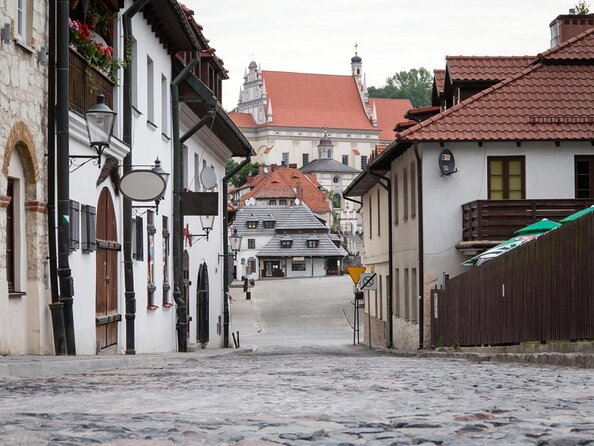
Now you shift into Kazimierz, Krakow’s Jewish quarter. This section is where the tour’s personality really shows—because synagogues aren’t just buildings here. They’re evidence of continuity, community life, and the cultural layers that survived.
You’ll start with the Tempel Synagogue, worth visiting for two reasons highlighted on the route: its stained glass windows (noted as among the best preserved in Poland), and its non-orthodox character. That second point helps you understand something important: Jewish life here wasn’t one single uniform tradition. It included different expressions and approaches.
From there you reach Szeroka Street, described as the heart of Kazimierz. The tour also points out something striking: historically, four synagogues stood on Szeroka Street, which was unusual across Europe. That detail turns a street walk into a map of community gravity—you can almost feel how central the religious and social life was.
Finally, you’ll connect to Remuh Synagogue, often contrasted with the others for its more modest décor. It also became the main place of prayer for the Jewish community after renovations completed in April 2016. Even if you don’t go inside every stop (time limits apply), the tour helps you know what you’re looking at, not just where you are.
Podgórze and the Ghetto Walk: Preserved Wall and Umschlagplatz
The emotional tone changes as the route reaches Podgórze, where in 1941 the Kraków Ghetto was established. This is where the tour becomes more than sightseeing and into historical place-reading—how everyday streets were repurposed into confinement.
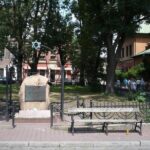
You’ll see the preserved fragment of the original wall with a plaque commemorating the fate of inhabitants. That small physical remnant matters because it’s something you can point to and say: this existed at the time, and it’s still here.
Then you reach Plac Zgody, also identified as Umschlagplatz, the collection point under Nazi occupation where Jews had to gather before deportations. The way this is explained—turning a square’s name into a moment in history—is the kind of translation you’ll appreciate. You might walk past many plaques in Krakow. Here, the route helps you connect the location to the human story tied to it.
One more local thread you’ll hear about is Tadeusz Pankiewicz, tied to the story of a pharmacy and courageous choices made under pressure. It’s a reminder that history isn’t only dates and buildings. It’s also individuals caught in impossible conditions.
How the Guide Makes It Worth It (Names You May Hear)
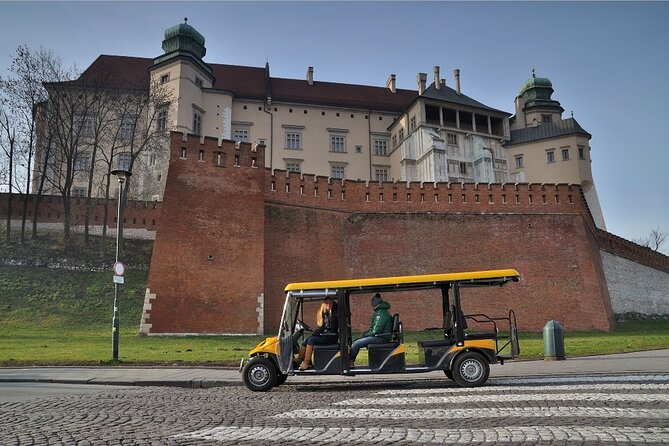
This tour lives or dies by the guiding. The set of names that have come up—Radic, Filip W, Michael, Tom, and Peter—all share a pattern: people praising them for being attentive, professional, and informative, often adding extra context beyond the audio.
In practical terms, a good guide helps you do two things fast:
1) Understand what you’re seeing while you’re still moving (so it doesn’t feel like random stops).
2) Manage timing, so you know when to step off for photos or quick entrances and when to stay with the group.
If you’re the kind of traveler who likes asking questions, this small-group format gives you a real chance to get answers. Just keep expectations realistic: the tour moves on schedule.
Price and Value: Is $56.47 a Good Deal?
At $56.47 per person for about 2.5 hours, this is priced for convenience and structure. You’re paying for:
- Electric cart transport that replaces a chunk of walking
- An audio system in English
- A route that stitches together Old Town, Kazimierz, and ghetto-area history
- A small group size (max 8), which usually means less chaos than big buses
When this feels like good value: if you’re short on time, if you don’t want to plan transfers between neighborhoods, or if you want to see a lot before deciding what to revisit on your own.
When it might not feel like value: if you prefer slow, museum-style pacing or you want lots of time at each interior stop. With a tour this time-packed, you’ll get highlights and context, not an all-day deep dive.
Who This Tour Fits Best
This is a strong choice if you:
- Have limited time and want the big Krakow picture in one outing
- Want Jewish Kazimierz and Old Town together, without stitching together multiple trips
- Like history explained clearly while you’re on the move
- Would rather ride in comfort than spend the day navigating streets on foot
It can be less ideal if you’re hoping for long free time at every stop. The best strategy is to treat this as your orientation lap: learn the lay of the land, then return later for anything that pulls you in.
Should You Book This Krakow Electric Cart Tour?
I’d book it if you want efficient coverage with thoughtful context, especially the Old Town-to-Kazimierz shift and the careful inclusion of ghetto-area sites. The small group and the repeated praise for guides named in the local experience make it more likely you’ll get real meaning, not just motion.
Skip it (or plan a different approach) if your main goal is lingering inside churches and synagogues for long stretches or if you’re very photo-driven at every stop. In that case, use this tour to decide what deserves your return visit—and then schedule those deeper stops separately.
FAQ
How long is the electric golf cart sightseeing tour in Krakow?
It runs for about 2 hours 30 minutes (approx.).
How much does the tour cost?
The price is $56.47 per person.
Is the tour in English?
Yes, it’s offered in English, and there’s an audio system.
What’s the group size?
The tour has a maximum of 8 travelers.
Is the ticket mobile?
Yes, you get a mobile ticket.
Where do I meet the tour?
The start is at Mikołaja Zyblikiewicza 2, 31-029 Kraków and the tour ends at Mikołaja Kopernika 3, 31-034 Kraków.
Do I need to carry luggage on the cart?
Try not to bring large baggage, since the vehicles are designed for passengers to sit.
Is there confirmation after booking?
You should receive confirmation at the time of booking.
Is it near public transportation?
Yes, the meeting area is listed as near public transportation.
Can I get a full refund if I cancel?
Yes—free cancellation is available up to 24 hours in advance for a full refund.