REVIEW · KRAKOW
Krakow’s Essential Tour of the Old Town and Wawel Castle
Book on Viator →Operated by Krakow Explorers · Bookable on Viator
Krakow clicks into place fast on this route. This private guided tour strings together Krakow’s Old Town highlights and Wawel, with a guide handling the walking directions and the storytelling. You’ll get the St. Mary’s Basilica tower cue too: why an hourly trumpeter plays its tune.
I especially like the way the guide gives you a big-picture sense of Krakow’s past, not just dates. Expect clear context for major places like Rynek Główny, the Cloth Hall, and Jagiellonian University, plus memorable WWII-era explanations tied to specific stops.
One thing to plan for: several sights along the way require separate admission tickets, so your final cost may go a bit higher than the booking fee.
In This Review
- Key highlights to look forward to
- Krakow’s Old Town plus Wawel: a smart orientation in 2.5 hours
- St. Mary’s Basilica: unequal towers and the hourly trumpeter tune
- Rynek Główny Central Square: medieval Krakow at full size
- Slowacki Theatre and the city’s priorities (clean water included)
- Barbican and the Museum of Krakow: history through walls and craft
- The 500-year-old medieval entrance: where the Old Town begins to feel real
- Sukiennice (Cloth Hall): the medieval shopping mall, with secrets underneath
- Town Hall Tower and the part of history that didn’t survive
- Jagiellonian University stops: Collegium Iuridicum and Collegium Novum
- Bishop’s Palace: the famous window and Poland under communism (free admission)
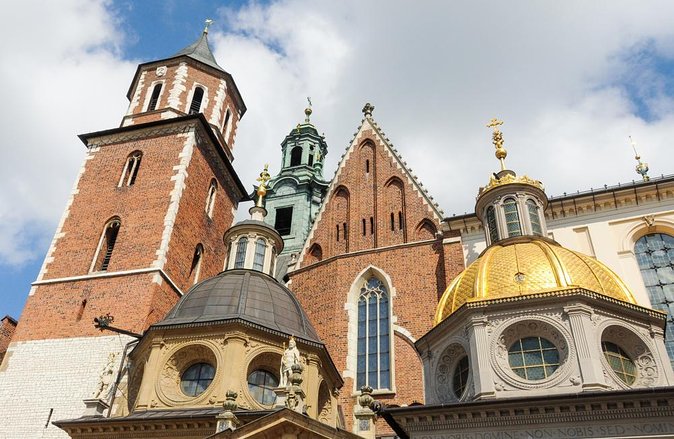
- Wawel Cathedral: coronations, burials, and royal life
- Price and value: booking fee vs donation-based pay
- Group size and pacing: how to get the most out of the schedule
- Who this Krakow Old Town + Wawel tour suits best
- Should you book this tour?
- FAQ
- How long is the Krakow Old Town and Wawel tour?
- Where does the tour start and where does it end?
- What’s included in the tour price?
- Are museum or site entrance fees included?
- Do I need a mobile ticket?
- What’s the group size limit?
- Is the tour near public transportation?
- Can I bring a service animal?
- Is free cancellation available?
Key highlights to look forward to
- Hourly trumpeter at St. Mary’s Basilica and why the towers look different
- Old Town orientation fast, including Rynek Główny and the Cloth Hall area
- WWII and communism stories connected to real locations you see in person
- Licensed, small-group guidance (max 30) so you don’t drift off course
- Wawel Cathedral and royal sites, including coronations and burials
Krakow’s Old Town plus Wawel: a smart orientation in 2.5 hours
This is the kind of tour I recommend when you want to understand Krakow quickly, without trying to piece everything together from a map. In about 2 hours 30 minutes, you cover the heart of the Old Town and reach Wawel—so the rest of your stay makes more sense. You’re not stuck studying guidebooks while other people are snapping photos.
What makes it work is the rhythm: you hit major landmarks in a logical route, and the guide’s commentary turns each one from a name on a postcard into something you can place in the story of the city. The itinerary is built around “see it, then understand it,” which is exactly what you want on day one.
There’s also a practical payoff. The tour ends at Wawel Royal Castle-State Art Collection, and that’s only about 10 minutes from Main Market Square, so it’s not like you’re stranded at the far end of Krakow.
You can also read our reviews of more tours and experiences in Krakow.
St. Mary’s Basilica: unequal towers and the hourly trumpeter tune
You start at St. Mary’s Basilica, and the guide doesn’t waste your time with generic facts. You’ll hear why the basilica has two unequal towers, and what’s up with the sound that happens every hour.
That hourly trumpeter detail is more than a neat trick. It’s the kind of tradition that shows how Krakow treated public life like a shared rhythm—religion, timekeeping, and civic identity all mixed together. Even if you’re not the type to read every plaque, you’ll understand why the building and the schedule are linked.
Keep in mind the ticket piece: admission isn’t included here, so you’ll want to plan for separate entry.
Rynek Główny Central Square: medieval Krakow at full size
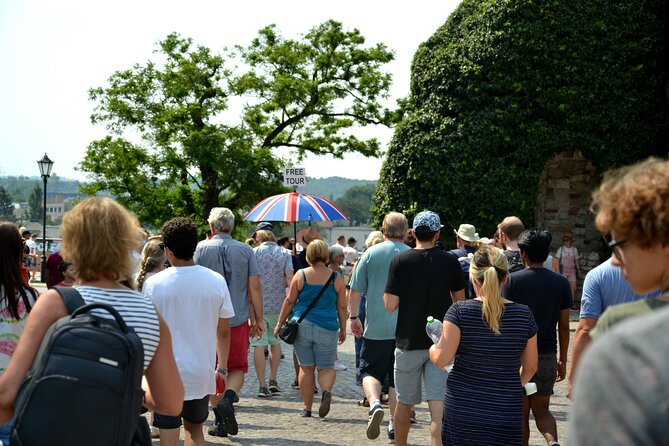
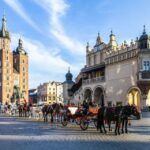
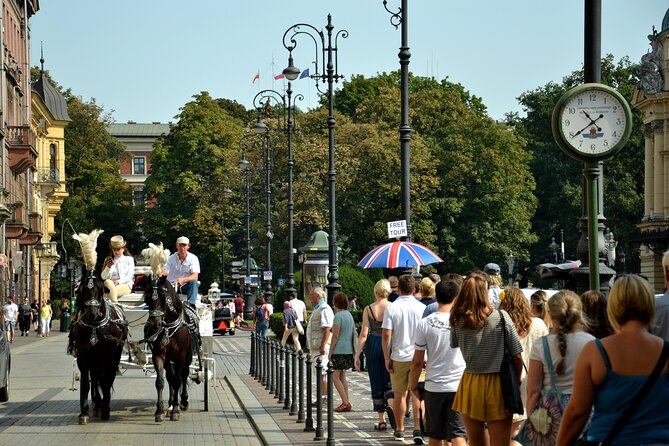
From the basilica, you head to Rynek Główny (Central Square)—the big medieval heart of the city. This is where the scale hits you. It’s the kind of square that makes you realize why Krakow mattered as a trading and political center.
You’ll get a guided look at the square’s top attractions, but the bigger value is how the guide connects the buildings around you to the city’s evolution. Once you’ve walked through Rynek with context, your later self-guided wandering feels easier because you know what you’re actually looking at.
Again, no site ticket is included here, but simply standing in the square with the right explanations makes it worth the stop.
Slowacki Theatre and the city’s priorities (clean water included)
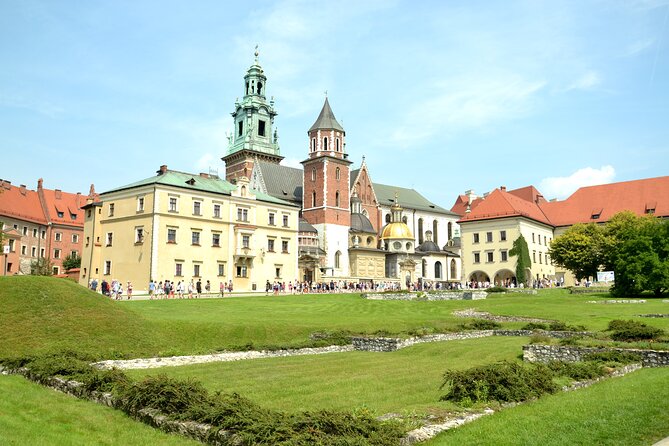
Next up is Slowacki Theatre, and this stop has a memorable angle. The guide explains how it’s possible that the theatre was not built in Poland, and why for local people it was more important than something as basic as clean water.
That contrast matters. It’s an easy way to understand how Krakow’s identity wasn’t only about survival needs, but also about culture, status, and national expression. You’ll leave this part of the route thinking beyond monuments as decoration.
This stop is short, so if you want to spend extra time inside the theatre, you’ll likely need to add it separately on your own.
Barbican and the Museum of Krakow: history through walls and craft
Then you shift to defensive architecture with Barbican, plus a look at a museum segment tied to a 15th-century masterpiece of martial art. The point here isn’t just to say, “Krakow has history.” It’s to show how practical skills and protection shaped the city—up close, through what’s preserved.
Barbican is one of those structures that instantly gives you context for the street layout. Once you’ve seen it, you start noticing angles and access points when you walk the Old Town again.
This portion includes an attraction stop, but museum admission is not included, so factor that into your budgeting if you want to go in deeper.
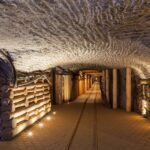
The 500-year-old medieval entrance: where the Old Town begins to feel real
There’s a passage where you go through an entrance into medieval Krakow that dates back about 500 years. It’s not just a photo moment. When you enter through something that old, the rest of the walk stops feeling like sightseeing and starts feeling like you’re moving through layers of time.
If you enjoy architecture and city planning, this quick transition is the kind of detail that makes the tour feel “tight” instead of random.
Sukiennice (Cloth Hall): the medieval shopping mall, with secrets underneath
At Sukiennice (Cloth Hall), the guide treats the building like a map. You’ll see it as the medieval shopping hub people once used daily, and you’ll get explanations about secrets of the structure—especially what’s underneath.
This is one of the places where the guide’s commentary adds value fast. The Cloth Hall can look like a single pretty frontage unless you’re told what it used to do and how it functioned. With the right explanation, it turns into a story about commerce, class, and how a city funded itself.
If you want to spend more time here than the tour allows, it’s a perfect “repeat visit” spot after you’ve got your bearings.
Town Hall Tower and the part of history that didn’t survive
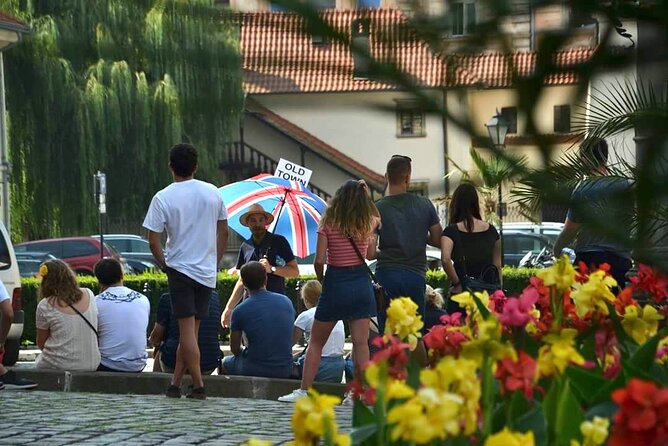
Next is the Museum of Krakow Town Hall Tower stop, built around a specific mystery: why only a small part of the Town Hall remains and what this place was famous for in earlier times. That’s a smart approach for a tour stop because it gives you a question while you look.
You don’t need to be a history buff to enjoy it. The guide frames the ruins and leftovers as evidence—like you’re reading the city’s past through what endured and what didn’t.
As with other museum elements, admission isn’t included.
Jagiellonian University stops: Collegium Iuridicum and Collegium Novum
The tour then moves into education and WWII-era storytelling with two university-linked stops: Collegium Iuridicum and later Collegium Novum.
At Collegium Iuridicum, the guide focuses on why this is such a prestigious institution and one of the oldest in the world. Even if you don’t picture yourself going into a classroom, it helps you understand Krakow’s long-term role as more than a historic trading city—it was also an intellectual center.
Then Collegium Novum brings you to the start of WWII, with the guide explaining what happened to a professor there and addressing whether Krakow was destroyed. The value isn’t just the subject matter; it’s that you’re hearing it in the same spaces where the story connects to real geography.
No entrance fees are included for these university stops, so you’ll want to follow the guide’s lead and plan for what you can see on-site without additional tickets.
Bishop’s Palace: the famous window and Poland under communism (free admission)
One of the strongest “value moments” on the route is Bishop’s Palace, because it’s flagged as free. Here the guide points out the most famous window in the world and shares the dramatic history of Poland during communism.
This stop works especially well because it’s not only about the architecture. The window becomes a symbol the guide helps you interpret, so you understand why it carries weight far beyond its physical size.
If you’re trying to keep costs down, this free stop is a nice cushion. It also gives you a break in the tour flow without losing emotional impact.
Wawel Cathedral: coronations, burials, and royal life
The tour finishes at Wawel, with major time spent in and around Wawel Cathedral. This is where the tour stops being a walking overview and becomes a concentrated experience of Poland’s national memory.
You’ll learn how Wawel Cathedral functions as a kind of national pantheon—linked to coronations and burials of Polish rulers. Even if you’ve seen palaces elsewhere in Europe, this one carries a different weight because the stories are tied to political legitimacy and national continuity.
Then you’ll get a second Cathedral-focused stop where the guide explains where Polish rulers lived, why one part of the castle differs from the rest, and other details. It’s the kind of explanation that makes you look upward and outward instead of rushing through.
Tickets aren’t included for these Wawel Cathedral elements, so budget for separate admission if you want to see everything the tour highlights.
Price and value: booking fee vs donation-based pay
The tour price is listed as $3, but that’s essentially a booking fee. The tour itself is donation-based, meaning you’re meant to pay what you feel is appropriate at the end, rather than a fixed per-person tour price.
That model can be great if the guide earns your tip. The route is short, the stops are tightly selected, and the guide takes care of navigating while explaining why the sights matter. With a licensed guide and sanitizers included, you’re buying organization and interpretation, not just footsteps.
Just be realistic: because multiple stops have separate admission tickets, your total out-of-pocket cost can climb. Still, you’re not paying for museums that are listed as not included—so you stay in control of how deep you go at each site.
Group size and pacing: how to get the most out of the schedule
This tour caps at 30 travelers, and that’s a good size for a guided walk. It’s large enough that you’ll meet other people, but small enough that a guide can still steer you and keep the explanations connected to what you’re seeing.
Also, the tour is only about 2 hours 30 minutes. That’s a blessing if you want an orientation. It’s a drawback if you prefer slow museum time and long interior stays. The best strategy is to use this tour to learn the structure of Krakow and then return on your own to the places you care about most.
If you’re traveling with teens or you want a fast, sensible first day, this fits well because the stops vary—cathedral, square, university buildings, palace symbolism—so attention stays high.
Who this Krakow Old Town + Wawel tour suits best
This is ideal if you:
- want a first-day orientation that connects key landmarks to bigger stories
- enjoy guides who link buildings to real events, including WWII and communism
- like history explanations that are practical and tied to what you can see right now
- want help navigating a dense Old Town without getting turned around
It might be less ideal if you:
- want to spend long periods inside museums or theaters
- hate paying separate admission fees at multiple major stops
- prefer completely self-guided travel with no scheduled route
Should you book this tour?
Yes, I’d book it if you want Krakow to start making sense quickly. The route hits the biggest names—St. Mary’s Basilica, Rynek Główny, Sukiennice, university buildings, and Wawel Cathedral—but the real value is how the guide explains what those places mean, including traditions like the hourly trumpeter and the city’s WWII-era connections.
My practical advice: treat it as a guided outline. Plan to budget for separate tickets at the sites that require them, and decide beforehand which places you’ll want to revisit after the tour. If you do that, you’ll get the best of both worlds: clarity now, freedom later.
FAQ
How long is the Krakow Old Town and Wawel tour?
The tour is approximately 2 hours 30 minutes.
Where does the tour start and where does it end?
It starts at Rynek Główny 4, 33-332 Kraków and ends at Wawel Royal Castle-State Art Collection, Wawel 5, Kraków.
What’s included in the tour price?
You get a licensed tour guide and sanitizers. The tour price is a booking fee, and the experience is donation-based.
Are museum or site entrance fees included?
No. Museum and monument entrance fees are not included, and some stops specify tickets are not included. Bishop’s Palace is listed as free.
Do I need a mobile ticket?
Yes, the tour uses a mobile ticket.
What’s the group size limit?
The tour has a maximum of 30 travelers.
Is the tour near public transportation?
Yes, it is noted as being near public transportation.
Can I bring a service animal?
Yes. Service animals are allowed.
Is free cancellation available?
Yes. You can cancel up to 24 hours in advance for a full refund. Cancellation within 24 hours does not receive a refund.