REVIEW · KRAKOW
Auschwitz-Birkenau Museum Tour from Krakow
Book on Viator →Operated by Poland Active · Bookable on Viator
Auschwitz is heavy. This tour makes it easier to follow and process. You get round-trip transport from Krakow plus an organized day trip that lands you at the right places on the right schedule. It also includes audio headsets, so the guide’s explanations stay clear even when the group stretches out.
What I like most is that you’re not left to piece together context on your own. A real guide leads you through Auschwitz I and then on to Birkenau, helping you understand what you’re seeing instead of just watching history unfold. One drawback to keep in mind: it is a long, structured day, and at Birkenau you’ll want to keep up closely, since weather and crowd movement can make everything feel rushed.
In This Review
- Key highlights I’d plan around
- Krakow to Auschwitz and Birkenau: how the route actually works
- Why the included guide and headsets change the experience
- Auschwitz I: entering through the gate and walking with context
- Birkenau (Auschwitz II): fences, crematoria, and the scale of it
- Transport and timing: what $82.90 buys you (and what it doesn’t)
- Practical notes that can save your day
- Who this tour suits best
- The big question: should you book this Auschwitz-Birkenau tour from Krakow?
- FAQ
- Is the tour in English?
- How long is the Auschwitz-Birkenau tour from Krakow?
- Does the price include admission tickets?
- What’s included besides the guide and admission?
- Do I need to bring my passport or ID?
- Are large bags allowed inside the museum?
- Where do I meet the group if I don’t choose pickup?
- Where will I be dropped off at the end?
- Is food included?
- Can I cancel for a refund?
Key highlights I’d plan around
- Round-trip Krakow transport included, so you can focus on the visit, not logistics
- English guide plus audio headsets, built for clear commentary across two large sites
- Auschwitz I to Birkenau route, with the short bus transfer that keeps the day on track
- Admission ticket included, which removes one more task before you go
- Max group size of 30, usually easier to manage than huge public tours
- Some days start small and connect with a bigger group, so expect a mix of group sizes
Krakow to Auschwitz and Birkenau: how the route actually works
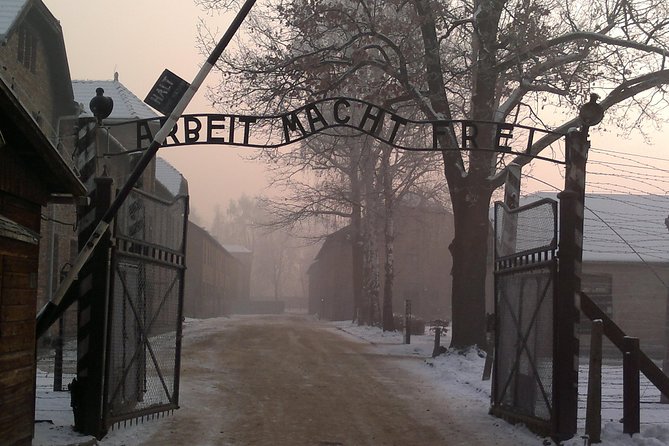
This is a classic one-day Auschwitz-Birkenau tour from Krakow built around a simple flow: get picked up, ride to Oświęcim, tour Auschwitz I first, then continue to Birkenau (Auschwitz II). The drive from Krakow is about 1.5 hours, which matters because it sets your day’s rhythm and helps you avoid wasting time figuring things out.
Plan on an overall duration of around 7 hours. That includes time for the transfers plus the guided walk through the main areas. You’ll have 3 hours at Auschwitz I with the admission ticket included, so you’re not doing the stops at a “quick peek and go” pace.
Pickup is either from your accommodation in Krakow or from the main meeting point at Przystanek Turystyczny Kiss&Ride, Wielopole 2. The exact pickup time depends on the tour day, and you’ll receive it by message. Everyone ends back in central Krakow, dropped near 2 Wielopole Street.
You can also read our reviews of more museum experiences in Krakow
Why the included guide and headsets change the experience
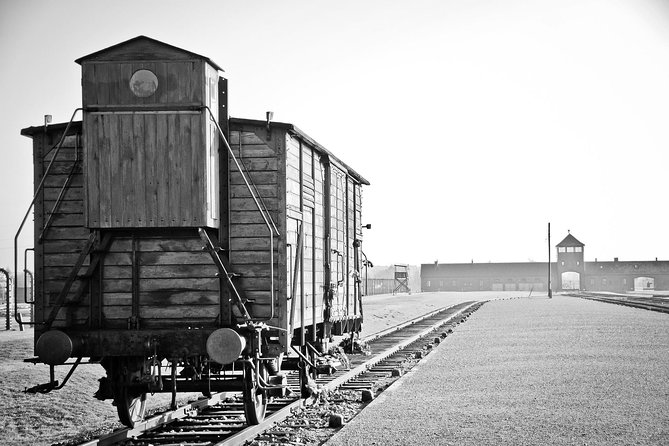
At Auschwitz-Birkenau, the hard part is not seeing things. The hard part is understanding what you’re seeing while staying respectful and steady. That’s where this tour style helps: you get a guide at Auschwitz I and continuing commentary through Birkenau, plus headphones so you can hear clearly.
In practice, this means you’re less likely to fall behind or miss key context. Even when you can’t always see the guide (or when weather shifts the sound), the audio system keeps the explanation in sync with what’s in front of you. One review noted that headsets were especially useful when the guide wasn’t always visible, and that’s exactly when this kind of setup earns its place.
The guide also helps you follow the site layout. Auschwitz is not designed for casual wandering. Without someone to orient you, it’s easy to end up looking at buildings and fences without connecting them to the broader story you came for.
Auschwitz I: entering through the gate and walking with context
Your day begins at Auschwitz I, the original camp complex. You’ll travel there by bus from Krakow with your driver, then meet your professional guide on arrival and enter the site.
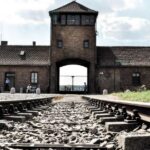
You start by walking through the famous camp gate with the inscription Arbeit macht frei, which translates as Work sets one free. That moment sets the tone. It’s also one of the places where a guide’s framing matters, because the words are a cruel historical distortion, not a slogan.
From there, you’ll follow the route that prisoners were forced to take when they arrived. You’ll spend about 3 hours with admission included, which gives you enough time to see the main areas rather than just reaching a few photo stops.
What many people want from Auschwitz I is the structure: where you are, what each part relates to, and why certain details are shown or preserved. Reviews praising guides often mention that the commentary covers what to look for and what those objects and spaces mean. One guide name that came up in feedback was Michal, who was described as providing clear timing and keeping people informed as the day moved.
A fair caution: Auschwitz I is emotionally intense. Some guides focus on facts and explanation, while others add more feeling in their delivery. If you’re hoping for a particular emotional tone, you might want to look for a departure with strong review feedback on guide communication.
Birkenau (Auschwitz II): fences, crematoria, and the scale of it
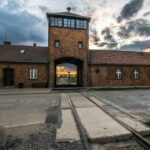
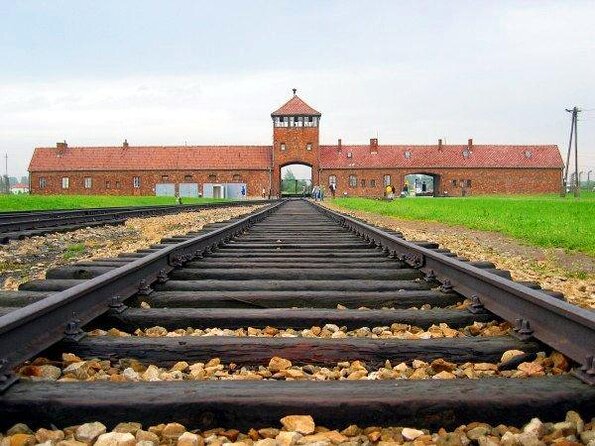
After Auschwitz I, your driver meets you again and you transfer by bus to Birkenau, a short ride to the nearby Auschwitz II site. This is where the scale hits you.
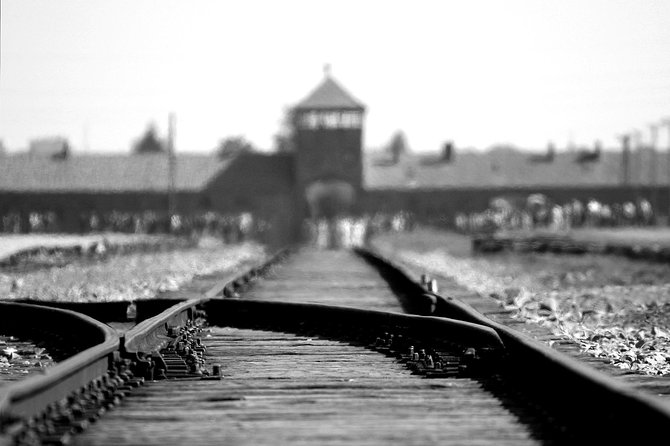
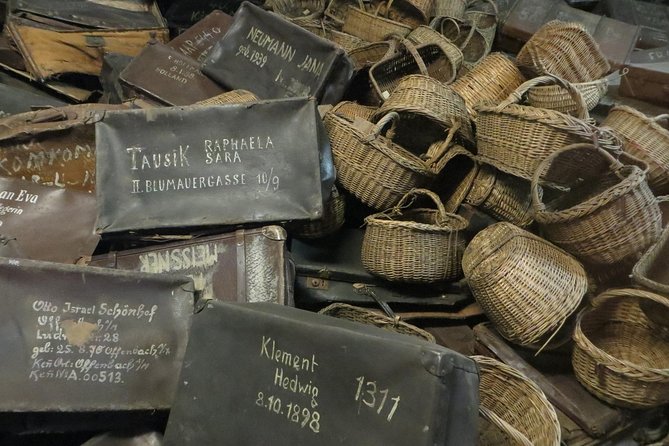
Birkenau is described as having original fences, crematoriums, and the remains of the gas chambers. You’re not just seeing buildings; you’re seeing how the site’s size and layout were used. It’s often harder to take in than Auschwitz I, partly because Birkenau is larger and the paths can create more distance between you and the guide.
That’s also why the audio headsets matter more here. One review specifically called out that at Birkenau, weather made it harder to hear the guide, and when that happens, headsets can be the difference between staying oriented and feeling lost.
Time is also tighter at Birkenau on days with poor weather. One review mentioned that appalling weather shortened the visit and made the experience feel rushed. The tour still aims to cover the main areas, but you should assume the schedule can flex depending on conditions.
If you’re the kind of person who likes to take everything in slowly, you might feel the pressure of a set route. If you can accept that and focus on listening to the guide as you walk, this tour style is a strong fit.
Transport and timing: what $82.90 buys you (and what it doesn’t)
The price is $82.90 per person, and in this case the value is in the package: transport by air-conditioned van, a driver/guide component, a local guide, audio headsets, and the admission ticket.
What’s not included is food and drinks, and tips are optional. That’s important for practical planning. Plan to either buy something before you go or bring snacks if you’re able to (though you can’t bring large bags into the museum).
Also note the physical requirement: you’ll need moderate physical fitness. Auschwitz-Birkenau involves walking, standing, and moving with your group. The sites are not designed for wheelchairs and long rest cycles, and even without heavy hills, the pacing and crowds make it demanding.
Your group size is capped at 30 travelers, which is usually more manageable for this kind of visit than a giant bus situation. One review praised a setup where the group started in a small minivan, then joined a larger group at the second site. So expect the day to feel like it has two “phases” in terms of group size.
Practical notes that can save your day
A few details can make or break a smooth visit.
1) Bring the ID/passport you’ll need for the tour. The tour states that ID/passport is necessary. Don’t rely on a photo on your phone. Bring the real thing.
2) Keep bags small. The museum has rules: large bags cannot be brought inside. If you’re traveling with a big daypack or luggage, plan ahead so you don’t get stopped or delayed at the entrance.
3) Watch your timing for pickup. Pickup time depends on the day, and the exact time is sent by message. If you’re staying out of central Krakow or have a hotel with a tricky lobby setup, give yourself extra buffer so you’re not rushing.
4) Know where you end up. The tour drops you back at the center of Krakow near 2 Wielopole Street. That helps you plan dinner afterward without guessing how far you’ll be from your next stop.
On the guide side, reviews mention a range of styles and strengths. Some guides were described as compassionate and respectful; others were praised for being very informed and respectful while still keeping the basics clear. Names that showed up include Anya, Wanda, and again Michal, plus a driver named Matt who was described as knowledgeable and on time.
Who this tour suits best
This is a good match if you want structure. If you prefer listening to explanations rather than reading every label yourself, the audio headsets and guided pacing are exactly the point.
It also suits first-timers to Auschwitz-Birkenau who want to see both major sites in a single day from Krakow, without coordinating transport across multiple locations.
If you’re going with friends and you tend to wander off when something catches your eye, be aware that you’ll need to stay with your group. One review warned that it’s easy to get lost among other tours without the guiding structure.
And if you’re sensitive to hearing style: one review criticized a guide who was difficult to hear at Birkenau, and noted that audio recording wasn’t present there for that specific experience. The tour you’re considering does include headphones, but day conditions can still affect how easily you follow sound. If you need high clarity, it’s worth planning to sit where you can hear best and not assume perfect acoustics outside.
The big question: should you book this Auschwitz-Birkenau tour from Krakow?
I’d book it if you want round-trip transport, admission, an English-speaking guide, and audio headsets in one organized day. For the price, you’re paying for saved time and fewer decisions: someone handles the bus ride, meeting up, the order of sites, and the “what you’re looking at” explanations.
I would think twice if you’re hoping for maximum flexibility inside the sites, or if you’re traveling with a large bag you don’t want to manage. The visit is structured, and conditions like weather can shorten Birkenau and make the day feel tighter.
If your goal is to see Auschwitz I and Birkenau from Krakow with clear guidance and minimal hassle, this is a solid, practical way to do it.
FAQ
Is the tour in English?
Yes. The tour is offered in English.
How long is the Auschwitz-Birkenau tour from Krakow?
It’s about 7 hours (approx.).
Does the price include admission tickets?
Yes. The admission ticket is included.
What’s included besides the guide and admission?
The tour includes a driver/guide, local guide, transport by air-conditioned van, and headphones so you can hear the guide clearly.
Do I need to bring my passport or ID?
Yes. ID/passport is necessary for that tour.
Are large bags allowed inside the museum?
No. Large bags cannot be brought inside the museum.
Where do I meet the group if I don’t choose pickup?
The main meeting point is Przystanek Turystyczny Kiss&Ride, Wielopole 2, 31-072 Kraków, Poland.
Where will I be dropped off at the end?
You’ll be dropped off back in central Krakow at 2 Wielopole Street.
Is food included?
No. Food and drinks are not included.
Can I cancel for a refund?
Yes. You can cancel for a full refund up to 24 hours in advance of the experience start time.