REVIEW · KRAKOW
Schindler’s Factory Visit & Skip-the-Line Entry
Book on Viator →Operated by CRACOW LOCAL TOURS · Bookable on Viator
WWII history with a guided path. In Schindler’s Factory Museum, you get a skip-the-line entry plus a structured 1.5-hour tour that turns the war story into something you can actually follow—through rooms, streets, and scenes shaped by real Krakow. It’s the kind of visit that helps you connect what you’ve seen on screen to what happened to people in this city.
My favorite part is how the tour is built around a real guided narrative, not just a walk through exhibits. I’ve seen guide names like Helen and Barbara pop up in feedback, and the common thread is clear: you’re meant to understand the timeline and the stakes, with commentary and audio that stay easy to follow. I also love that the experience leans on multimedia moments (photos, film, interactive-style displays), including a photoplasticon stop and even a tram segment.
One thing to consider: this can feel crowded. Some groups run large enough to make tight spaces feel rushed, and a few people noted the pacing didn’t leave much time to read everything slowly.
In This Review
- Key highlights worth planning for
- Skip-the-Line Entry: What It Actually Buys You in Krakow
- The Factory Museum Experience: More Than a Schindler Biography
- Entering Occupied Krakow: Hairdresser, Photographer, and a Photoplasticon Stop
- Guided Storytelling with Headsets: How the Tour Stays Understandable
- The Ghetto Walk and the Płaszów Timeline: Where the Visit Gets Heavy
- How Much Time You’ll Really Get (and How to Manage It)
- Price and Value: Is $50.46 Worth It?
- Logistics That Matter: Names on Tickets and ID at Entry
- Who This Tour Fits Best (and Who Might Want a Different Style)
- Should You Book This Schindler’s Factory Tour?
- FAQ
- Is the museum entry actually skip-the-line?
- How long is the tour?
- What language is the tour in?
- What’s included in the price?
- What do I need to bring for entry?
- Are the start times fixed?
- Is it suitable for most people?
Key highlights worth planning for
- Guaranteed skip-the-line entry to the Schindler’s Factory Museum (fewer headaches on arrival)
- Guided storytelling that connects Krakow under Nazi occupation to Oskar Schindler’s story
- Multimedia stops including rare photographs, films, and eyewitness accounts
- Hands-on-feeling rooms like a hairdresser, photographer, and an authentic photoplasticon
- A ghetto-focused walk that leads into the timeline ending at Płaszów
- Headsets included, with sound quality that has been reported as reliable
Skip-the-Line Entry: What It Actually Buys You in Krakow
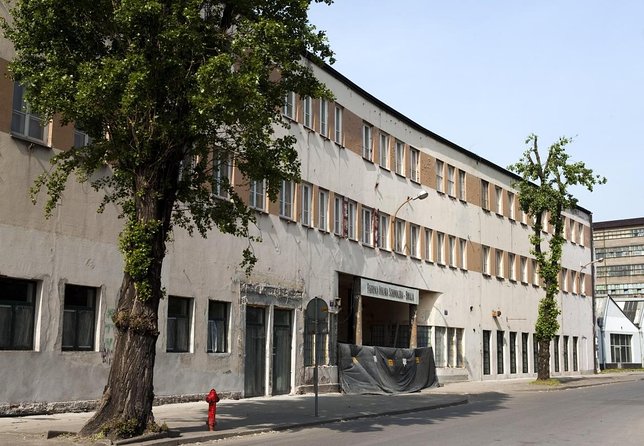
This tour is built around one practical win: skip-the-line entry. That matters at Schindler’s Factory, because you don’t want your first experience with the museum to be spent standing around, trying to figure out where your group fits into a crowd.
You also get an organized start point: the tour runs about 1 hour 30 minutes and is conducted in English. On top of that, you’ll be listening through headsets, and in at least one account they worked smoothly with good audio—so you’re not stuck trying to hear over other groups.
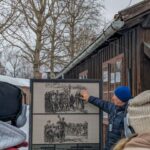
One small heads-up. If you arrive and the outside sign seems to list a slightly earlier start time than what you booked, don’t panic. Check that you’re joining the right group before moving inside. Arriving a bit early helps you avoid that awkward moment of wondering if you’re in the right place.
You can also read our reviews of more tours and experiences in Krakow


The Factory Museum Experience: More Than a Schindler Biography
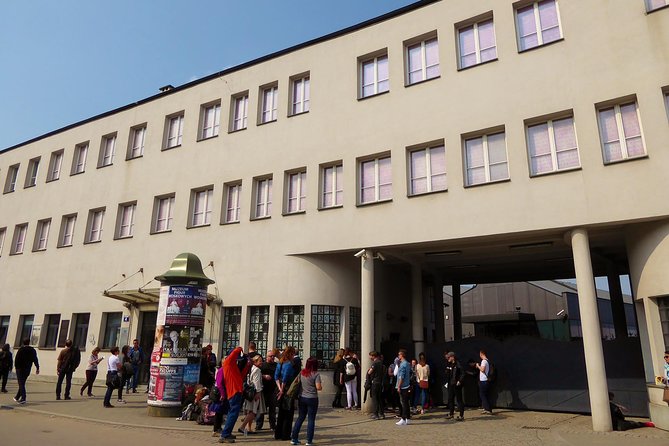
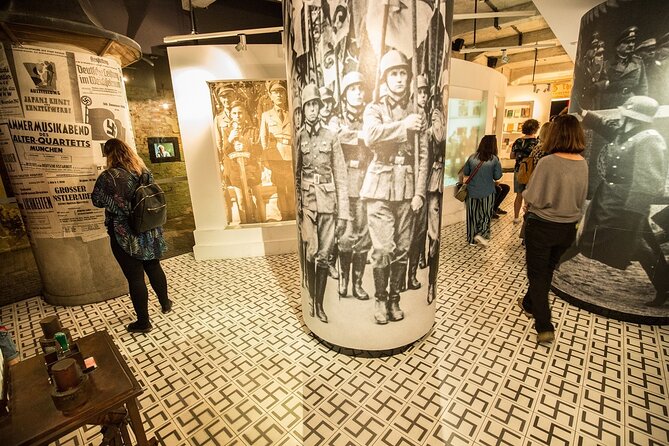
The museum experience here isn’t just a portrait of one man. The tour frames Schindler’s story inside the larger reality of occupied Krakow—including what happened to Polish and Jewish residents, how Germans operated the occupation system, and where Schindler fits in the timeline.
That approach is useful for you if you’ve watched Schindler’s List. The film is a starting point, but the museum visit is what gives you the texture: the way daily life broke apart, the way persecution spread, and the way the city’s residents were forced into impossible choices. A few guide-led tours also explicitly mention that it’s not only about Schindler himself, but about the wider chronology before and after the key war periods.
You’ll also notice something practical: a lot of the “factory” identity is presented through exhibits and reconstruction-style scenes. One comment noted the actual factory was moved elsewhere later, and that what you see is now an art/museum setting. Even with that, the storytelling style makes the setting feel like more than a room of information cards.
Entering Occupied Krakow: Hairdresser, Photographer, and a Photoplasticon Stop
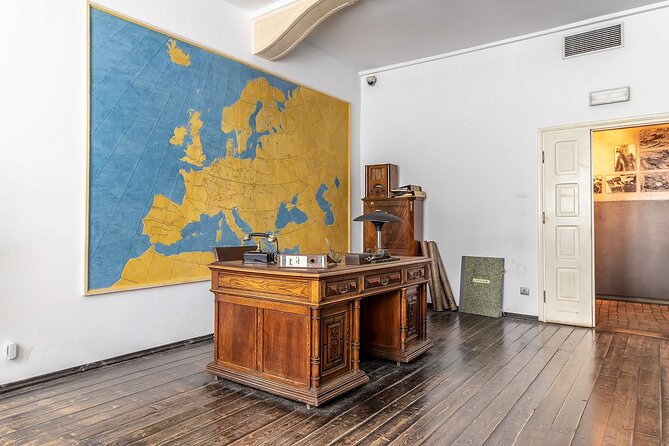
When the tour gets going, the route is designed to keep you moving while still giving you context. One of the standout parts is walking through a sequence of immersive stops that mirror different parts of life—then twisting those scenes into the war-era reality unfolding around them.
You’ll go into areas that feel like you’re stepping into old Krakow life, including a hairdresser and a photographer. Those details aren’t random decoration. They’re a way to show what kinds of normal routines existed before the occupation tightened its grip.
Then you reach the authentic photoplasticon. This is a moment where the museum uses images and presentation styles to make history feel immediate rather than distant. If you like museum experiences that tell a story using visuals and sound, this is the kind of stop that keeps your attention.
And yes, there’s a tram moment too. Through tram windows you’ll view a film about the life of the city—another clever bridge between everyday Krakow and the war timeline. It’s not just “here’s a museum.” It’s “here’s the city, then here’s how the city gets reshaped.”
Guided Storytelling with Headsets: How the Tour Stays Understandable
A museum like this can overwhelm you fast—there are many exhibits, and emotions run high. That’s why the guidance is the core value here, not just the ticket.
You’ll have a professional guide walking you along the way, giving commentary so you understand what you’re seeing as you see it. Multiple feedback notes highlight that guides are friendly, prompt, and clear in English. One person even praised how the guide answered questions after the tour, which is a good sign if you tend to leave museums with follow-up thoughts.
The headset audio also helps you keep your place in the story. Instead of relying on reading every label (which is hard when the group is moving), you’re hearing the key points while the exhibits do the showing.
If you’re the kind of person who likes to slow down and read everything line by line, the structure can feel like a trade-off. Some feedback calls the visit a bit rushed, especially in sections with crowds or limited time.
The Ghetto Walk and the Płaszów Timeline: Where the Visit Gets Heavy
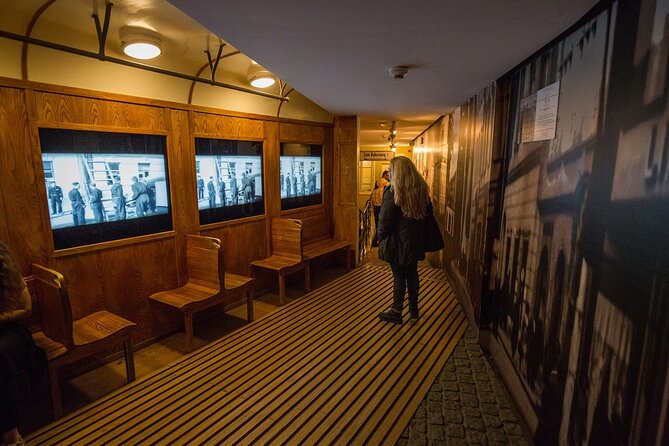
This is the part where you should mentally prepare. The tour includes the narrow labyrinth of the ghetto, including a Jewish apartment scene. It’s presented as a walk through the cramped reality of space and control during the occupation.
This section matters because it makes the persecution feel less abstract. You don’t just learn terms—you experience the setting the tour creates: close quarters, constrained movement, and a sense of how ordinary life was broken down and managed.
From there, the timeline continues with the inhabitants to the camp in Płaszów. The museum’s goal is not subtle. It’s about showing how the situation escalated—from occupation policies to mass suffering—until you reach the camp stage of the story.
If you come for the Schindler angle, keep in mind this route is built to explain the broader environment that made Schindler’s actions meaningful. The tour doesn’t treat his story like an isolated hero moment. It places it inside the machinery of persecution.


How Much Time You’ll Really Get (and How to Manage It)
You’re scheduled for about 1 hour 30 minutes, and that is both a strength and a limitation.
It’s a strength because the tour keeps momentum. The museum can be emotionally draining, and moving at a guided pace helps you stay oriented. It also means you see a lot of key rooms and scenes rather than getting stuck in one corner.
It can be a limitation because a few people felt there wasn’t enough time to absorb everything, especially the photo displays and areas where reading would normally take longer. If you’re the type who wants to linger with exhibits, you’ll probably need to do that later, on a return visit, or accept that this tour is the “story version,” not the “slow museum day” version.
Crowds affect this too. Some accounts describe group size feeling too large for tight indoor spaces, which can reduce your time to stop and really study details.
Practical advice: wear comfortable shoes and treat this as a structured visit. If you want more reading time, plan to add extra time after the tour on your own.
Price and Value: Is $50.46 Worth It?
At $50.46 per person, you’re paying for three things in one package:
1) Admission ticket included
2) A guided English narrative
3) Skip-the-line entry plus headset support
The value here isn’t just the museum access. It’s that the guide helps you interpret what you’re seeing, especially in sections that could feel confusing without context—like reconstructed rooms and multimedia presentations that connect across multiple themes.
If you were to do Schindler’s Factory without a guide, you’d likely spend more time figuring out the structure yourself. For many first-time visitors, that “translation layer” is the difference between a visit that feels emotional but fuzzy, and one that feels clear and memorable.
Is it pricey compared to a basic entry ticket? Possibly. But as a guided, audio-supported story tour that includes admission, the price aligns with the type of experience you’re buying: an organized, narrative walk through WWII Krakow.
Logistics That Matter: Names on Tickets and ID at Entry
This is one of those tours where small paperwork details can matter more than you expect.
You must provide full names of all participants when reserving because the museum uses personalized tickets. Bring your passport or ID for entry. Also, the name on the ticket must match the name on your document.
Don’t assume you can fix this on the spot. If your name has a spelling mismatch, or you forgot ID, entry may be denied. It’s worth double-checking that what you typed while booking matches what’s on your document.
Timing can also be a bit flexible. Starting January 1, 2026, times are approximate and may change based on museum scheduling, even though you can pick a preferred time. That means you should plan to arrive with some buffer.
Who This Tour Fits Best (and Who Might Want a Different Style)
This works really well if you want:
- A clear storyline through occupied Krakow and the war timeline
- A guided approach with headset audio
- An experience that includes multimedia, photos, and recreated scenes (hairdresser, photographer, photoplasticon, tram, ghetto walk)
It may not be the best fit if you:
- Need lots of quiet time to read slowly at every exhibit
- Get uncomfortable in large groups or tight indoor corridors
- Prefer a museum visit with minimal pacing
If you’re visiting with teens, this can still be a strong pick. One account specifically said they took two teenagers and it landed well, likely because the tour provides structure and explanation rather than leaving young visitors to interpret everything on their own.
Should You Book This Schindler’s Factory Tour?
I’d book it if you want a guided, skip-the-line version of Schindler’s Factory that helps you understand what you’re seeing without having to stitch the story together yourself. The headsets, the sequence of scenes, and the guide’s narration are the difference between a “museum visit” and a “history you can follow.”
Skip it (or switch to another format) if you’re the type who gets frustrated by crowds and rushed pacing. In that case, you might feel pushed instead of informed.
If you do book, come ready for a serious emotional visit. Wear comfortable shoes, bring your ID, and give the tour your full attention. This is one of those experiences where being present pays off.
FAQ
Is the museum entry actually skip-the-line?
The tour includes a guarantee of skip-the-line entry to Schindler’s Factory Museum.
How long is the tour?
The duration is about 1 hour 30 minutes (approx.).
What language is the tour in?
English is offered for the guided tour.
What’s included in the price?
The admission ticket is included along with the guided tour and headset audio.
What do I need to bring for entry?
You need passport or ID for entry, and the name on the ticket must match your document. You’ll also need to provide full names when reserving.
Are the start times fixed?
Confirmation includes a booked time, but from January 1, 2026, times are approximate and may change due to museum scheduling. You can choose a preferred time, but it isn’t guaranteed.
Is it suitable for most people?
The experience notes that most travelers can participate.
If you want, tell me your travel dates and whether you prefer early or late slots, and I’ll help you choose a good time to reduce crowd stress.