REVIEW · KRAKOW
Krakow: Zalipie Village Tour
Book on GetYourGuide →Operated by Cracow Holidays · Bookable on GetYourGuide
One painted village can change how you look at the world. Zalipie is famous for 100+ years of floral decoration on everyday homes, and a guided day makes the symbolism and craft history click fast. I like that you get real context, not just photos, and I especially enjoy the way the tour connects art to village life. One drawback to plan for: you only have about 3 hours on-site, so it helps to arrive ready to walk and look closely.
What I really love is the chance to see the tradition up close—on houses, fences, wells, stables, and even smaller community buildings. I also like the focus on the people behind the style, with visits to the House of the Female Painters (Dom Malarek) and Felicja Curyłowa’s Cottage. A consideration: the experience is very photo-friendly, but you’ll want comfortable shoes because it’s easiest to appreciate Zalipie when you’re moving around.
In This Review
- Key Points Before You Go
- From Kraków Pickup to Zalipie’s Painted Village Feel
- Your 3-Hour Zalipie Window: How to See More for Less Time
- Dom Malarek: House of the Female Painters
- Felicja Curyłowa Cottage: The Artist Behind the Flowers
- Painted Everyday Objects: Fences, Wells, Stables, and More
- Church of St. Joseph the Betrothed: Folklore Meets Faith
- The Guide, the Pace, and Why Private Feels Better Here
- Price and Value: Is $128 Fair for a 6-Hour Tour?
- Photo Tips That Actually Work in Zalipie
- Who This Zalipie Tour Fits Best
- Should You Book the Zalipie Village Tour?
- FAQ
- How long is the Zalipie Village Tour?
- Where does the tour start?
- Is transportation included?
- What’s included in the ticket price?
- What language is the tour guide?
- Do I need to buy tickets in advance?
- Is this a private tour?
- What should I wear and bring?
- How much does it cost?
- What are the cancellation options?
Key Points Before You Go
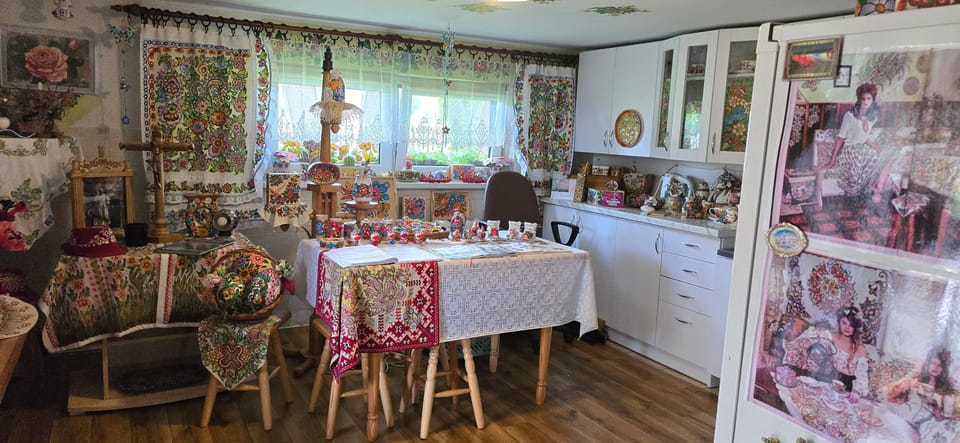
- Dom Malarek shows how this floral tradition was preserved and taught.
- Felicja Curyłowa Cottage connects the village’s look to one key artist’s influence.
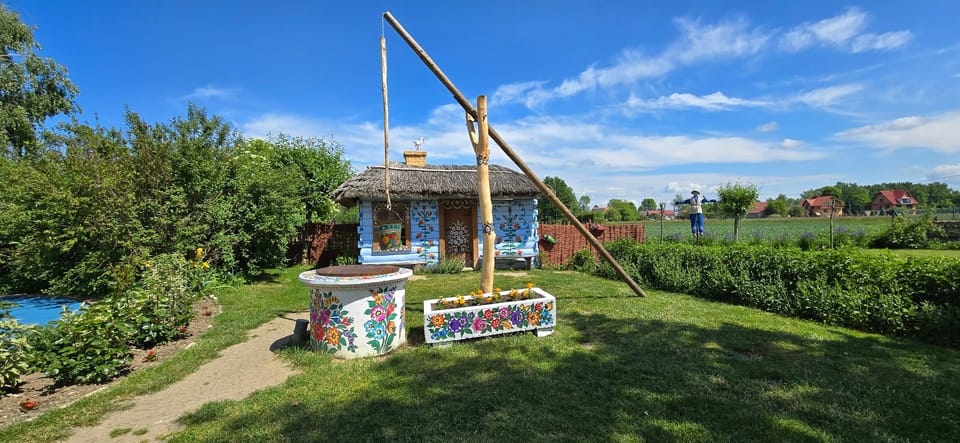
- You’ll spot flowers on more than houses—fences, wells, stables, and other village features.
- Church of St. Joseph the Betrothed adds a spiritual layer to the folklore art.
- A licensed English-speaking guide (LinkPoland) helps you understand what you’re seeing.
- The tour is private, so the pacing can match your interests.
From Kraków Pickup to Zalipie’s Painted Village Feel
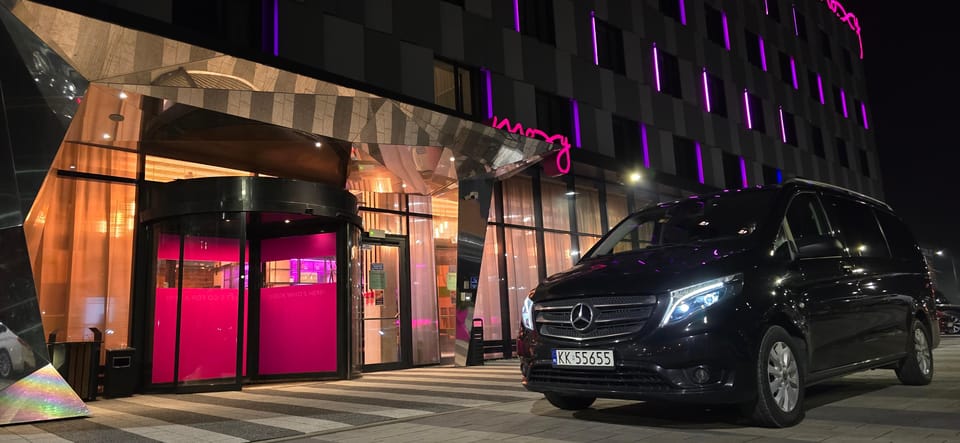
This is a straightforward day trip that starts with hotel pickup in Kraków, using an air-conditioned car with an English-speaking driver. The big value here is time: you don’t have to figure out transport on your own, and you spend your energy on the village rather than logistics.
The drive is part of the experience because you’re heading east into Lesser Poland, where folk traditions tend to feel more personal and less staged. When you arrive in Zalipie, your guide will set you up with what to notice—how the floral motif shows up in different places and why it matters.
For a 6-hour total outing, you should think of this as half-day immersion, not a long museum-style visit. That’s why having a guide who can point out the details helps so much—otherwise you can easily miss what makes Zalipie more than pretty decoration.
You can also read our reviews of more tours and experiences in Krakow.
Your 3-Hour Zalipie Window: How to See More for Less Time
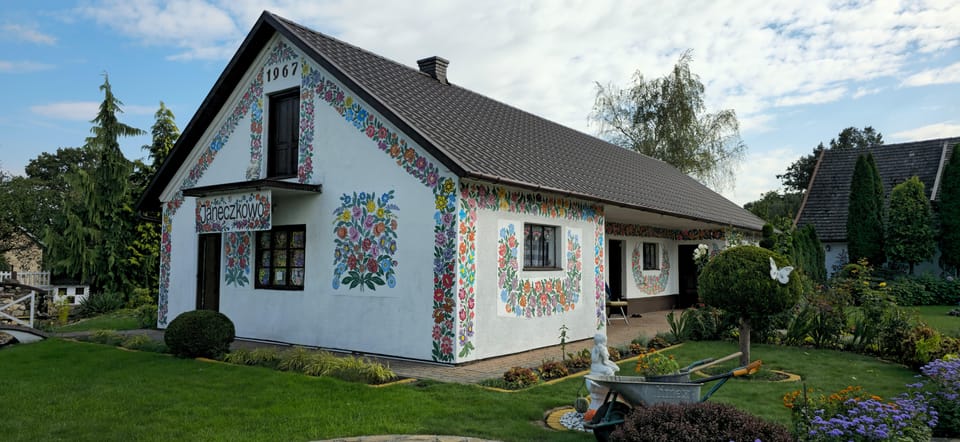
Inside Zalipie, you’ll have about 3 hours of sightseeing. That’s not a lot if you’re the type who likes to stop at every door and window. But it’s a good length if you want the story, the key landmarks, and enough time for photos without feeling rushed into a fast “hit-and-run.”
Your route is built around the village’s most interesting “painted surfaces.” Plan to look for flowers on:
- fences and gates
- wells and outdoor structures
- stables and other practical farm buildings
- houses that carry the floral style across generations
One smart approach: don’t only photograph the obvious main facade. Flowers often appear in smaller patterns on functional objects too. Those are the details that make Zalipie feel lived-in, not like a theme park.
Dom Malarek: House of the Female Painters
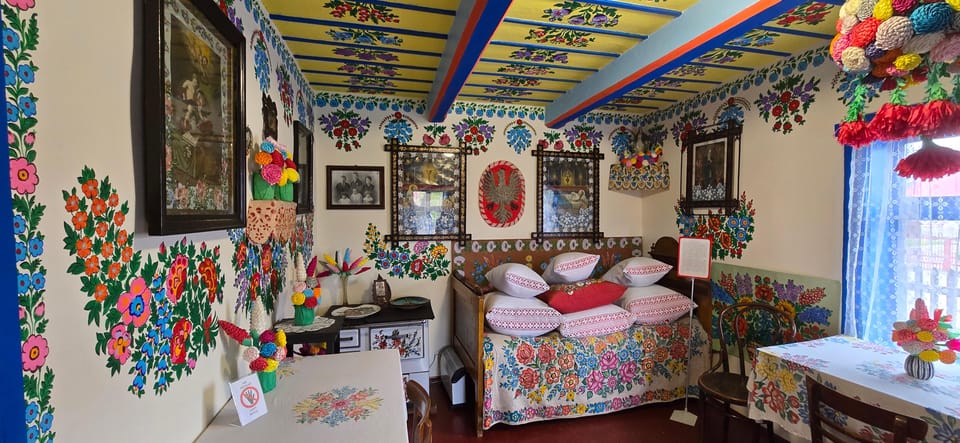
The House of the Female Painters, or Dom Malarek, is where Zalipie’s floral tradition becomes more than sightseeing. It’s meant to preserve and explain the craft, so you walk in with a clearer sense of what you’re looking at—and why the motif shows up where it does.
What you can expect is a focused introduction to the art and its role in village culture. A guide will help connect the dots between decorative choices and local tradition. This is also the kind of stop that makes your photos better later, because you start recognizing patterns as part of a bigger idea, not just pretty blooms.
If you’re wondering why this place is called out so often in Zalipie tours, here’s the practical answer: it provides context so the rest of the village doesn’t feel like one long exterior photo session. Instead, you get a story you can carry through the streets.
Felicja Curyłowa Cottage: The Artist Behind the Flowers
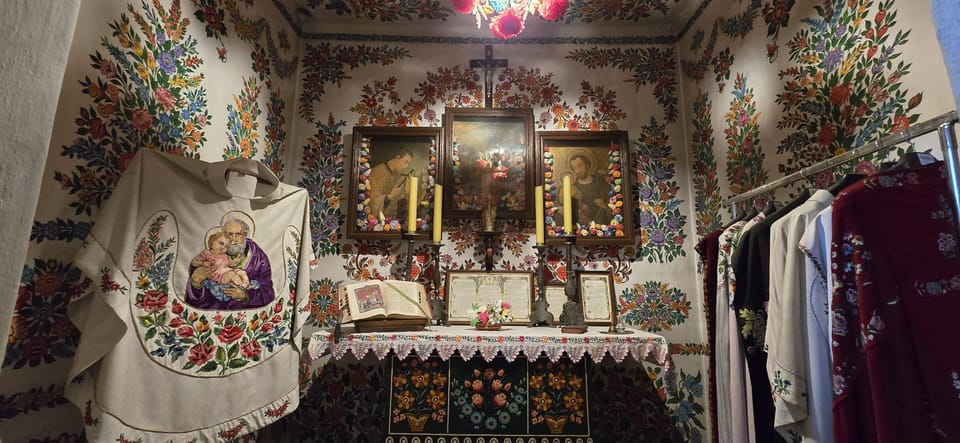
Then you’ll head to Felicja Curyłowa’s cottage, a home tied to the person who played a major role in popularizing Zalipie’s floral paintings. This stop matters because it turns the village’s style into a human story.
When you visit, you’re not just seeing decoration—you’re seeing how one artist’s work helped give the tradition visibility beyond the village. That’s part of why Zalipie became known both in Poland and internationally as folk heritage, not just local craft.
Even if you’re not an art specialist, this is where you’ll likely find yourself slowing down. You start asking questions like: What did she do differently? How did her approach influence other villagers? The guide’s job is to keep those questions connected to what you see around you.
Painted Everyday Objects: Fences, Wells, Stables, and More
One of the best parts of Zalipie is the “why didn’t I think of that?” effect. Flowers aren’t only on house fronts. They show up on utilitarian surfaces too—things you’d normally ignore because they’re not meant for decoration.
In Zalipie, you’re likely to spot floral-painted:
- fences and boundary edges
- wells and outdoor village fixtures
- stables and agricultural buildings
- charming village houses with the style carried across rooms and exteriors
This is where a good guide earns their fee. Without explanation, you might assume it’s just decoration. With explanation, you understand it as a tradition that turns daily life into a canvas.
Also, keep your eyes open for community buildings. On tours like this, you may see painted local details in places that feel unexpected for such a small village—part of what makes Zalipie so memorable.

Church of St. Joseph the Betrothed: Folklore Meets Faith
The Church of St. Joseph the Betrothed is small, but it’s an important stop because it adds a different angle on the same floral language. You’re not just looking at flowers as folk craft; you’re seeing them connected to spiritual space too.
The standout is the church interior, which features traditional floral decoration that reflects the local artistic heritage. This helps you understand Zalipie as a place where art, religion, and community identity overlap.
It’s also the kind of stop where you’ll want to be a bit more respectful and quieter with your camera habits. The interior is the main feature, and your guide will help you focus on the details that tie the church’s look to the broader village tradition.
The Guide, the Pace, and Why Private Feels Better Here
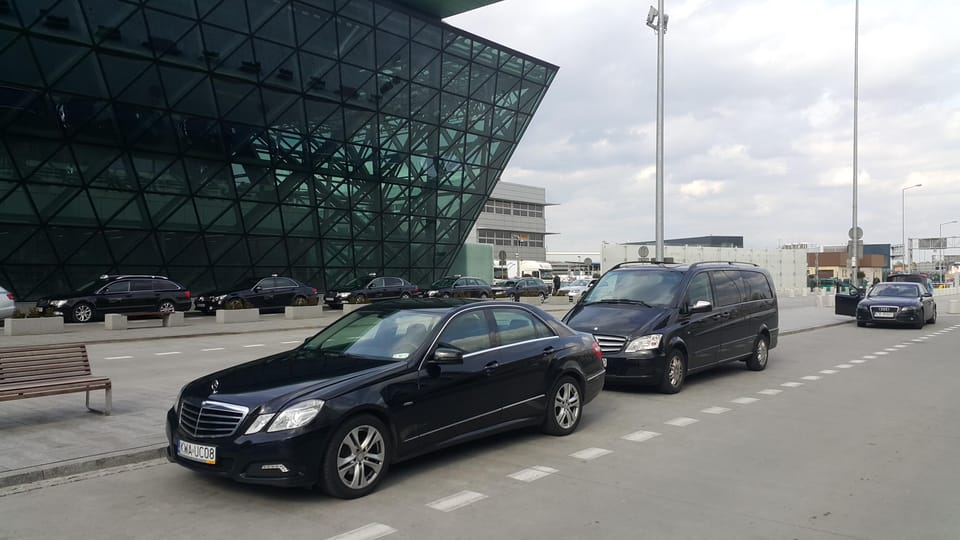
This is a private-group experience, and that’s a big deal for a village like Zalipie. When you’re not stuck behind a large crowd, you can pause for the details that catch your eye, and you don’t feel like you have to sprint to keep up.
You’ll also have a licensed English-speaking guide, and the tour is connected to LinkPoland. The value of this setup shows up in the “between-the-lines” information: what the floral motifs represent, why certain places are decorated, and what the history means for the village today.
One name you might hear is Damian—described as kind and polite, with helpful translation and the ability to show spots you might miss without him. That’s exactly what you want from a guide in Zalipie: not just reading facts, but choosing where to look so the village feels understandable.
Price and Value: Is $128 Fair for a 6-Hour Tour?
At $128 per person for a 6-hour outing, the price is best understood as a bundle: transport, guidance, and entry access, not just “a ride to the village.”
Here’s what your money covers:
- hotel pickup and drop-off in Kraków
- transfer by air-conditioned car
- entrance tickets
- a licensed English-speaking guide (English and Polish support)
- an English-speaking driver
- skip-the-ticket-line handling
If you were to do Zalipie on your own, you’d still spend time solving transport and figuring out what’s worth seeing in your limited window. With this tour, that thinking is done for you. You’re buying speed, clarity, and guidance—three things that matter a lot when you have only a half-day in a village spread across different points.
For me, the deciding factor is the combination of Dom Malarek plus Felicja Curyłowa’s Cottage plus the church. That’s a strong “story arc” in a short time, and it’s exactly what you want for folk art where context changes everything.
Photo Tips That Actually Work in Zalipie
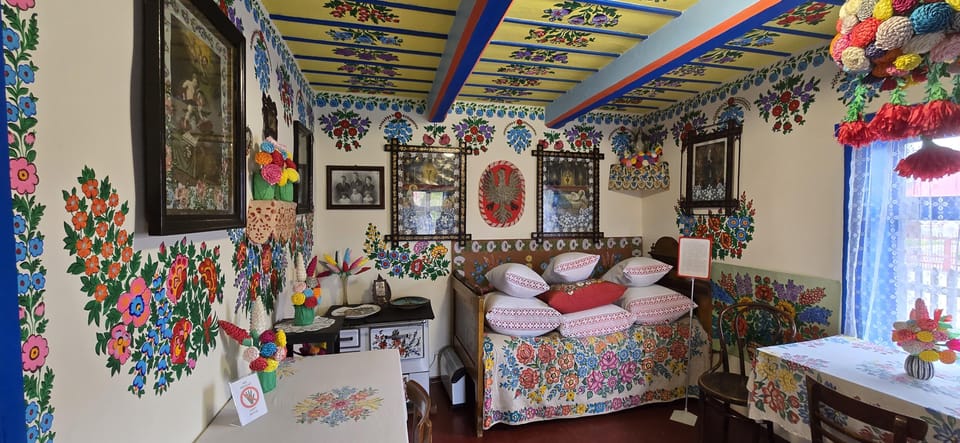
Zalipie is photo-friendly, but you’ll get better results if you think like a guide for a minute. Look for patterns on practical objects (wells, fences, stables), not only house fronts. Those are the details that make your album feel specific to Zalipie instead of generic “Poland in the countryside.”
A few practical habits:
- Wear comfortable shoes because you’ll move around more than you might expect in a 3-hour sightseeing block.
- Bring comfortable clothes for walking and outdoor viewpoints.
- Use your guide’s timing—don’t wander off when explanations are tied to what you’re about to see next.
- Aim to photograph small motifs in addition to big facades. The charm is in the repetition and variation.
And if your focus is photography, private pacing helps. You can wait for a clear moment, then shoot without feeling pushed by a bigger group.
Who This Zalipie Tour Fits Best
This is a great choice if you like folk art, local tradition, and small-scale places where “everyday objects” become cultural statements. It also works well if you want a guided experience that makes a short trip feel meaningful.
You’ll likely enjoy it if you:
- want a structured route rather than self-guided guesswork
- care about understanding what you see (not only taking photos)
- prefer a private group for easier pacing
It might feel less ideal if you’re hoping for a slow, long, deep walk with lots of free roaming. The village time is set to about 3 hours, so you’ll want to engage actively while you’re there.
Should You Book the Zalipie Village Tour?
If you’re spending time in Kraków and you want a trip that feels distinctive and grounded in local culture, I think this one is an easy yes. The price makes sense because you’re getting transport, tickets, and real guiding for the key stops—Dom Malarek, Felicja Curyłowa’s Cottage, and the Church of St. Joseph the Betrothed—plus time to see the floral-painted village features that make Zalipie what it is.
Book it when you can use a guide to help you look closely. You’ll leave with a village you understand, not just a folder of pretty images.
FAQ
How long is the Zalipie Village Tour?
The tour duration is 6 hours total, with about 3 hours spent sightseeing in Zalipie.
Where does the tour start?
It starts with pickup in Kraków. The driver finds you at your hotel lobby or at your building front for apartment pickups.
Is transportation included?
Yes. You travel by air-conditioned car with an English-speaking driver.
What’s included in the ticket price?
Included are hotel pickup and drop-off, transfer, entrance tickets, and a licensed English-speaking guide.
What language is the tour guide?
The guide provides live tour in English, with Polish also mentioned as available (English and Polish support).
Do I need to buy tickets in advance?
Entrance tickets are included, and the tour mentions skip the ticket line.
Is this a private tour?
Yes, it’s a private group experience.
What should I wear and bring?
Wear comfortable shoes and comfortable clothes. You’ll be walking around the village.
How much does it cost?
The price is listed as $128 per person.
What are the cancellation options?
Free cancellation is offered up to 24 hours in advance for a full refund.