REVIEW · KRAKOW
Krakow: Sightseeing Tour by Electric Golf Cart
Book on GetYourGuide →Operated by FHU PATART PATRYK TLAŁKA · Bookable on GetYourGuide
Krakow glides by, not stomps by. This electric golf cart tour packs medieval sights fast while telling the story behind Kazimierz and Podgórze, the areas tied to Krakow’s Jewish history. I like the mix of moving views and actual landmarks, and I especially like how the Jewish Quarter stops are explained in a way that gives you something to picture as you ride. One possible drawback: the subject matter gets heavy, so if that’s not your thing, you’ll want to mentally pace yourself and keep an eye on how you feel.
You get a driver who works in Polish and English, plus an audio guide in a long list of languages (English is included). The big win is seeing over 24 places in just 90 minutes, but the rules mean you’ll travel light—no large bags, and you can’t bring certain items into the vehicle.
In This Review
- Key highlights worth your attention
- Where This 90-Minute Ride Fits in Your Krakow Plan
- Starting Area: Planty Park and the Quick Orientation Loop
- Medieval Krakow in Context: Why You’re Riding at All
- Kazimierz and the Jewish Quarter Stops That Build a Real Mental Map
- Skałka Church and nearby landmarks
- Wolnica Square: a key civic corner
- Synagogues you can actually name afterward
- Helena Rubinstein’s family house
- Old Jewish Shops
- Podgórze and the Former Ghetto: Places to Watch the Story Land
- Schindler’s Krakow: Pharmacy Under the Eagle and the Legacy Sites
- Finishing With Church of St. Joseph: A Sense of the City’s Continuation
- How the Tour Works: Golf Cart Comfort and Audio Guide Reality
- Price and Value: Is $33 Worth 24+ Stops?
- The Guide Makes It: What You Should Look For
- Who This Tour Suits Best (And Who Might Skip It)
- Should You Book the Electric Golf Cart Tour of Krakow?
- FAQ
- How long is the Krakow Sightseeing Tour by Electric Golf Cart?
- Where do I meet the tour?
- What’s included in the tour price?
- Do I get an audio guide, and what languages are available?
- What should I bring?
- Are large bags or luggage allowed on the tour?
- Is the tour refundable if I change my plans?
Key highlights worth your attention
- Electric golf cart touring: easier on your legs while still covering a lot of ground
- Kazimierz + Podgórze focus: the tour is built around the Jewish Quarter story, not a random checklist
- Landmarks with names you’ll remember: Wolnica Square, Remuh Synagogue, and the Ghetto Heroes Square area
- Schindler’s Krakow stops: you’ll be guided through sites tied to Oskar Schindler’s legacy
- Do-able in a short visit: 90 minutes is enough to get oriented and decide what to revisit
Where This 90-Minute Ride Fits in Your Krakow Plan
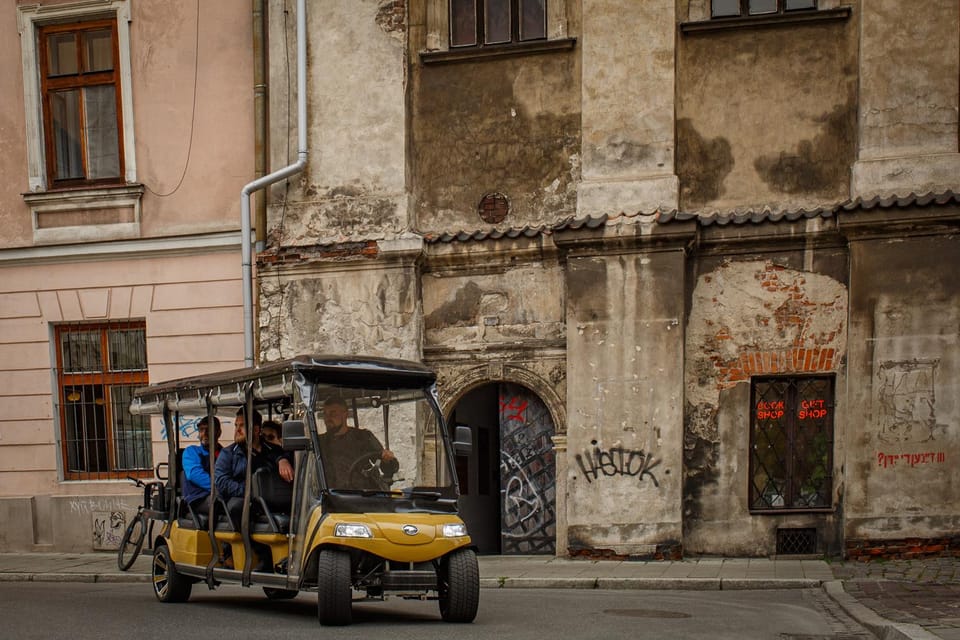
If Krakow is your first stop in Poland, you’ll want to get oriented quickly. This tour is designed for exactly that: you start moving from a green ring area near the Old Town and then you shift into the Jewish Quarter, including Kazimierz and Podgórze, tied to the former Krakow ghetto. In practical terms, it’s a shortcut to understanding how the city is laid out—and why certain streets and buildings mattered.
I like the structure because it doesn’t feel like you’re being rushed from one photo spot to the next. You’re covering lots of ground, but the route keeps steering you back to the same themes: medieval Krakow, the Jewish Quarter, and the darker chapters that shaped the city. If you’re short on time, that focus is a big value.
One more thing: this isn’t a quiet “float by the sights” experience. It’s an active sightseeing ride with rules that keep it orderly—no smoking, no alcohol, no loud behavior in the vehicle—so you can actually hear your audio guide as you go.
You can also read our reviews of more tours and experiences in Krakow.
Starting Area: Planty Park and the Quick Orientation Loop
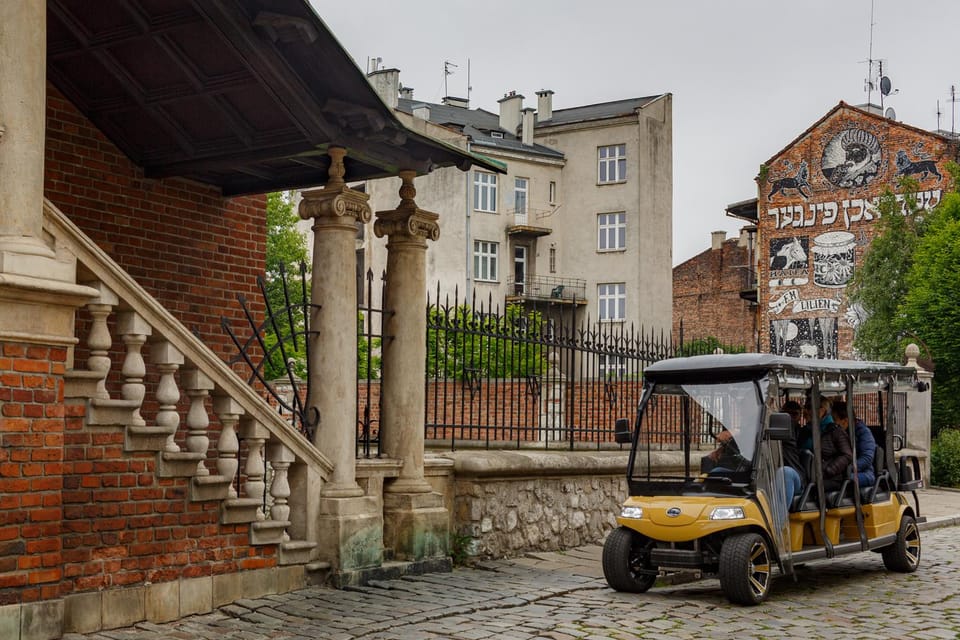
The ride begins at the Kiss&Ride parking across from Żabka, then you roll out from the Planty Park area. Planty matters because it’s a living border around the Old Town—green space that helps you understand Krakow’s shape without the effort of walking long distances.
You’ll also get early context about what you’re seeing in medieval Krakow. That framing is useful. Even if you don’t know the city’s timeline yet, you’ll start to connect the dots between the Old Town vibe and the later Jewish Quarter neighborhoods. Think of it as a “map in motion,” not a lecture with wheels.
This is also where the electric cart makes a real difference. Many Krakow attractions are reachable by foot, but the walking can add up fast—especially if you’re mixing sightseeing with meals, museum time, and day trips. On this tour, you can keep your energy for later.
Medieval Krakow in Context: Why You’re Riding at All
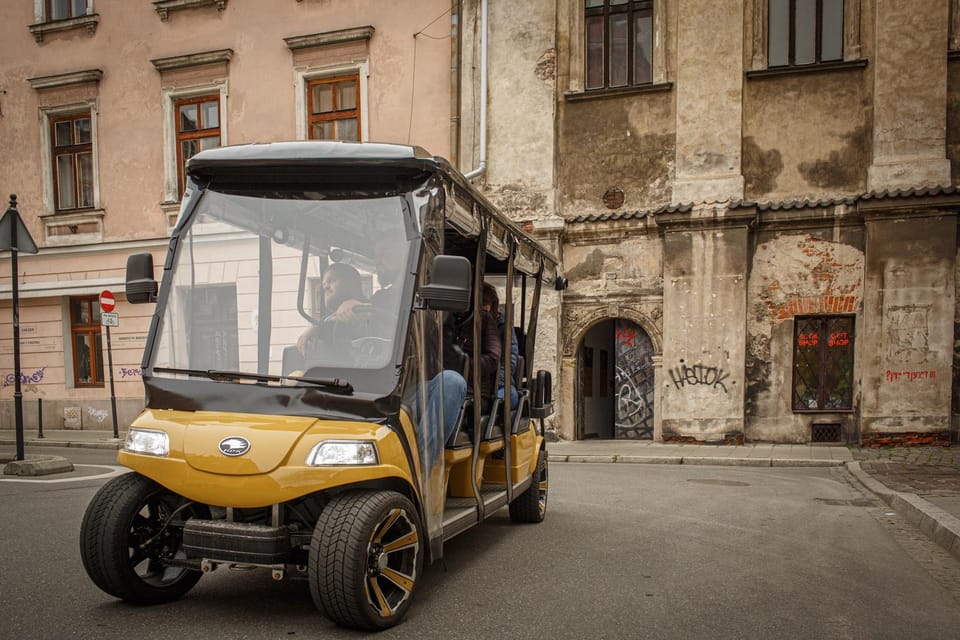
One of the smarter parts of this tour is that it starts with background—then keeps returning to places that match that background. You’ll learn about medieval Krakow as you pass key areas, and you’ll be directed toward the sites connected to the city’s Jewish history.
I like this approach because it helps you do something most people forget: you notice connections. A church isn’t just a church. A square isn’t just a place to take a picture. The stories around Wolnica Square, the synagogue area, and the ghetto-adjacent sites give you a reason to care about the stone and street plan.
The downside is pacing is everything. With this much information tied to so many stops, you may want to take a breath when the topic turns more painful. You’re not required to stay in “fast history mode” the whole time.
Kazimierz and the Jewish Quarter Stops That Build a Real Mental Map
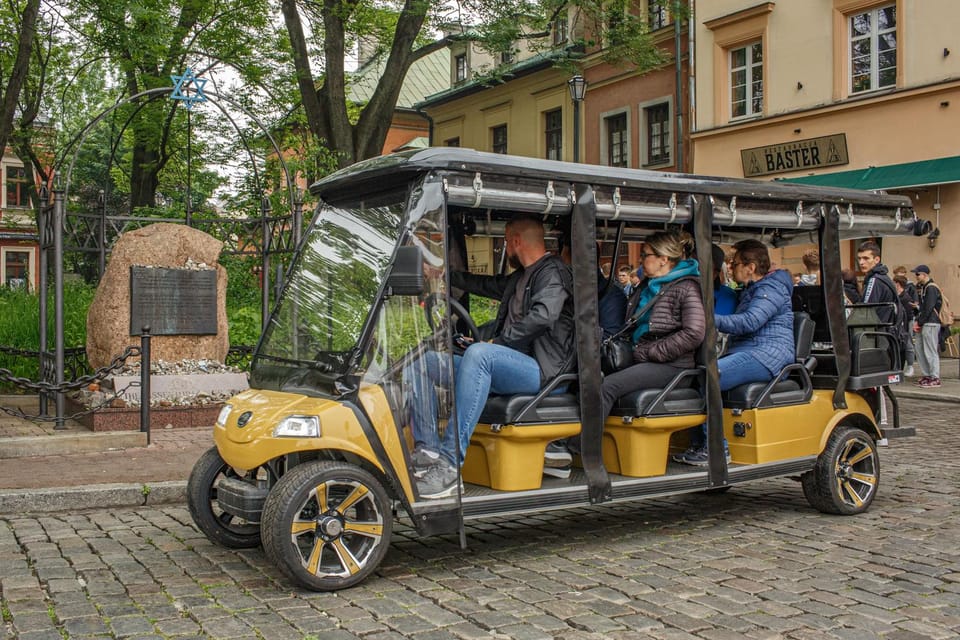
Kazimierz is where the tour becomes most “you can feel it.” The cart route brings you into the Jewish Quarter with stops that are both recognizable and specific—so you can come back later and say, I’ve been here before.
Skałka Church and nearby landmarks
You’ll pass by Skałka Church, which helps set the tone for the area around Krakow’s older religious sites. Right away, you’re seeing Krakow as layered: different communities, different periods, and a city that changed over time.
Then the route continues toward other churches in the neighborhood orbit, including Church of St. Catherine and the Church of Corpus Christi. These stops work best if you’re paying attention to how religious architecture signals community identity across centuries.
Wolnica Square: a key civic corner
Wolnica Square is one of the stops that’s clearly meant to ground you. It’s not only about the buildings; it’s about what kind of place this square used to be and why it mattered to Jewish life. When a tour includes a square like this, it usually means you’re getting more than random viewpoints—you’re getting urban context.
Synagogues you can actually name afterward
The route then moves into a cluster of famous synagogues and related sites. You’ll see and learn about:
- Tempel Synagogue
- Kupa Synagogue
- Isaac Synagogue
- Ciemna Street
- Old Synagogue
- Popper Synagogue
- Remuh Synagogue and the old cemetery
- Memorial Stone of the Nissembaum Family Foundation
The value here is recall. After a tour like this, you’re more likely to remember what you saw because the synagogue list is concrete and the story is tied to each place. If you later visit these sites again on your own, your experience will feel sharper because you know what you’re looking at.
Helena Rubinstein’s family house
You’ll also pass the Family House of Helena Rubinstein. This is a nice break from only focusing on religious buildings, because it adds a human scale—people connected to the city and its Jewish community. It helps the tour feel like a lived neighborhood, not only a chapter in tragedy.
Old Jewish Shops
The tour includes Old Jewish Shops, which is a reminder that community life isn’t only worship and memorials. When a route includes commerce and daily life, it balances the heavier parts later. This matters if you want the tour to be more than a history slideshow.
Podgórze and the Former Ghetto: Places to Watch the Story Land
As you shift into Podgórze, the tone changes. You’ll get an explanation tied to the former Krakow ghetto, and you’ll visit areas that are part of how the story is anchored in the city today.
You’ll see:
- The former ghetto area explanation
- Ghetto Heroes Square
- Life in Ghetto description moments
- A Ghetto Wall segment
I appreciated how the tour uses place-based prompts like these. You’re not just hearing facts—you’re seeing where those facts connect to the city’s layout. The ghetto wall reference, in particular, gives your brain a physical boundary to attach to the history.
If you’re sensitive to Holocaust-related content, be honest with yourself. One comment I took seriously from recent experiences is that the tone can feel very heavy. That doesn’t mean it’s wrong—it just means you should be prepared. If you’re going to do this tour, plan to follow it with lighter time on your own afterward.
Schindler’s Krakow: Pharmacy Under the Eagle and the Legacy Sites
One of the most memorable sections is the stretch tied to Tadeusz Pankiewicz and Schindler’s story. You’ll visit the Pharmacy under the Eagle (Residence of Tadeusz Pankiewicz) and then move into the Oskar Schindler’s history portion, along with additional “life in ghetto” description.
This is where the tour can feel both personal and complicated. You get names and places, and you start understanding why Krakow today holds onto these references so carefully. It also helps you place Schindler’s narrative into a geography rather than treating it like an abstract film story.
In my view, the best way to get value here is simple: slow down in your head, even if the cart is moving. You’ll remember more if you treat the stops like signposts.
Finishing With Church of St. Joseph: A Sense of the City’s Continuation
The tour wraps with Church of St. Joseph. That ending matters because it reminds you Krakow didn’t stop at the darkest chapters you learned about. The city continues, communities changed, and the streets remain—layered with meaning.
If you’re planning your next steps, this ending is useful. You’ll be in a better position to choose what to revisit later on foot, because you’ll know which areas you want to linger in.
How the Tour Works: Golf Cart Comfort and Audio Guide Reality
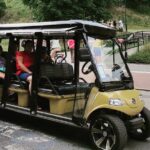
Let’s talk about the actual “doing” of the experience. You’re riding in an electric golf cart for about 90 minutes, and you’re expected to be able to follow the group rules. You’ll want water, because it’s a city ride and you’ll likely be out in the day’s weather.
The audio guide is a key part of making the tour feel coherent. It’s available in multiple languages, including English, Polish, Hebrew, French, Spanish, German, Italian, and more. That means you can focus on the stops without needing to catch every spoken detail from the driver.
A practical tip: since you’ll be learning about many sites in a short window, take two minutes after the tour to write down the names that stuck. Synagogues, squares, and memorials are easier to revisit when you can remember the exact labels.
Price and Value: Is $33 Worth 24+ Stops?
At about $33 per person for 90 minutes, this is priced for the “see more with less fatigue” traveler. If you’re comparing alternatives—like doing long walks through multiple neighborhoods—this tour can be a strong value because it removes friction. Your feet get a break, and you still get an organized path with storytelling.
The strongest value here is the blend of:
- Many named stops in Kazimierz and Podgórze
- Audio support so you aren’t dependent on one person speaking clearly for every detail
- A short total time that works during a first-time visit
The one caveat is you’re paying for structure. If you prefer wandering without any guided historical framing, you might find the subject matter intense and the timeline tightly managed. For many people, though, that structure is exactly what makes the price feel fair.
The Guide Makes It: What You Should Look For
The best versions of this tour ride on the guide’s tone and clarity. One experience I found especially telling is when the guide offered flexibility after the tour and helped you get dropped somewhere convenient. A friendly, well-prepared guide can turn a route of stops into a story you actually carry with you.
In one case, the guide named Natalie was described as fantastic—friendly, knowledgeable in a practical way, and good company. That lines up with what matters most on a history-heavy tour: you want someone who explains clearly and keeps you comfortable while you learn.
Who This Tour Suits Best (And Who Might Skip It)
This is best for you if:
- You want a short, high-coverage tour in a compact time window
- You want a guided way to understand Kazimierz and Podgórze
- You’d rather ride than walk a lot, especially on an active first day
It may be less suitable if:
- You need very quiet, unstructured sightseeing (this tour includes a lot of context)
- You’re very sensitive to heavy historical topics and want lighter pacing
- You fall into the tour’s listed limits (there are age and physical constraints, plus bans on certain items like large bags and electric wheelchairs)
If you’re unsure, it’s worth checking your personal comfort with the cart format and the rules about bags and onboard conduct.
Should You Book the Electric Golf Cart Tour of Krakow?
I’d book this tour if you want a fast way to understand the city’s medieval roots and then connect that to the Jewish Quarter and former ghetto area. You’ll come away with names you can remember—synagogues, squares, memorials—and a clearer sense of where things are, which makes independent exploring afterward much easier.
Skip it if you’re only looking for relaxed Old Town strolling, or if you strongly prefer lighter, purely positive city themes. This route tells a story that includes painful history. For the right mindset, though, it’s one of the more efficient ways to get context in Krakow without wiping out your legs.
FAQ
How long is the Krakow Sightseeing Tour by Electric Golf Cart?
The tour duration is 90 minutes.
Where do I meet the tour?
Meet at the Kiss&Ride parking opposite the Żabka store.
What’s included in the tour price?
Transportation by golf cart, an audio guide, and a driver are included.
Do I get an audio guide, and what languages are available?
Yes. The audio guide is available in many languages, including English and Polish, plus options such as Hebrew, French, German, Spanish, Italian, and more.
What should I bring?
Bring water.
Are large bags or luggage allowed on the tour?
No. Luggage or large bags, as well as bags in general, are not allowed.
Is the tour refundable if I change my plans?
Yes. You can cancel up to 24 hours in advance for a full refund.