REVIEW · KRAKOW
Krakow: City Sightseeing Tour Eco Electric Buggy Golf Cart
Book on Viator →Operated by citytourkrakow.com · Bookable on Viator
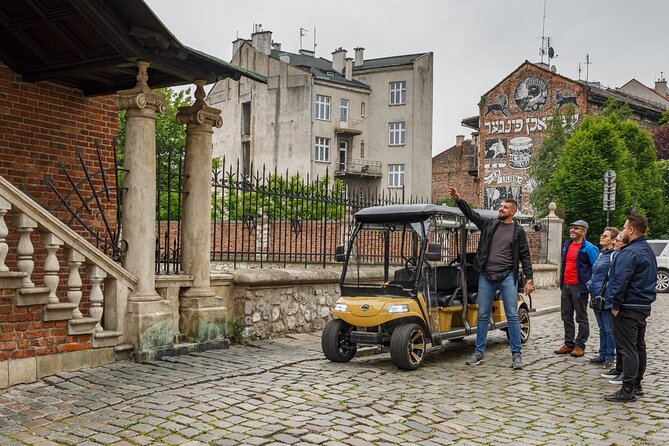
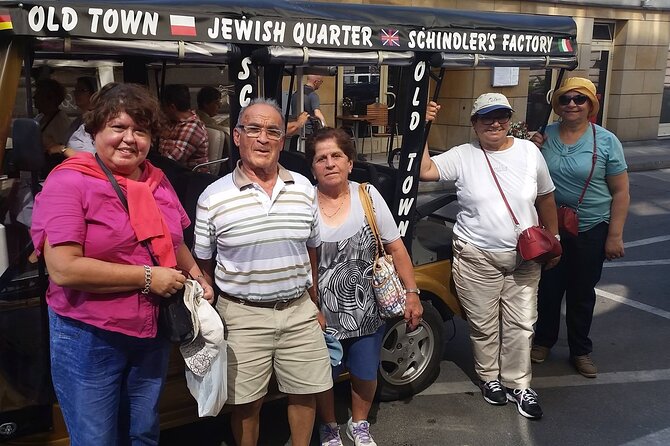
Krakow’s Jewish quarter, without the long walks. This eco-electric buggy tour strings together about 24 sights in roughly 90 minutes, so you can see a lot without turning your visit into a marathon. I like that the meeting point is straightforward and the route is built for quick orientation, though you’ll still want to be realistic: you won’t have unlimited time at every single stop.
What I really like is the way it frames Krakow in two chunks: Kazimierz (synagogues, squares, and monastery churches) and Podgórze (the ghetto sites). On cold or wet days, the buggy setup helps a lot, with blankets and heating mentioned in recent experiences, so your comfort doesn’t fall apart halfway through.
In This Review
- Key things that make this Kraków eco buggy tour worth your time
- A 90-minute orientation that hits Kazimierz and Podgórze
- Eco-electric buggy comfort: warm, low-stress, and practical
- Price and value: what $28.88 buys you in real time
- Finding the meeting point near Mikołaja Zyblikiewicza
- Church on the Rock (Skałka): the story starts with a dramatic site
- Kazimierz market life: Plac Wolnica and the old trading square
- From monastery churches to Jewish quarter edges along the walls
- The Kazimierz synagogue run: seeing the city’s layered faith
- Temple Synagogue (Synagoga Tempel)
- Kupa Synagogue (Synagoga Kupa)
- Izaak Synagogue (Synagoga Izaaka)
- High Synagogue (Tall Synagogue)
- Old Synagogue (Synagoga Stara / Alta Shul)
- Wolf Popper Synagogue (Synagoga Poppera / Bociana)
- Remah Synagogue (Synagoga Remu)
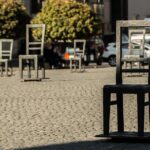
- Ghetto Heroes Square: where the route turns from architecture to survival
- Eagle Pharmacy Museum: how a single storefront became life support
- Schindler’s Enamel Factory and the old ghetto wall stops
- When to do this tour: day vs night and winter-proofing
- Who should book this buggy tour (and who might want something else)
- My recommendation: should you book it?
- FAQ
- How long is the Krakow City Sightseeing Tour Eco Electric Buggy Golf Cart?
- How many sights will we see?
- Is pickup included?
- Is the tour in English?
- Do I need a printed ticket?
- Is there a group size limit?
- Can I cancel for free?
- Are service animals allowed?
Key things that make this Kraków eco buggy tour worth your time
- A fast way to get your bearings across multiple districts in about 1.5 hours
- Dozens of meaningful stops, including many historic synagogues in Kazimierz
- Built for winter and bad weather, with warm blankets and heating on the buggy
- Small-ish group feel, with a maximum of 50 people
- Easy logistics, including a clear meeting point and mobile ticket
- English narration, with a guide plus audio support on the ride
A 90-minute orientation that hits Kazimierz and Podgórze
This isn’t a single-monument tour. It’s more like a guided route map you can ride on. The big win is time. With only about 1 hour 30 minutes, you cover far more than you could on foot without burning your whole day.
The tour’s focus makes it especially useful for first-timers. You get the Kazimierz side—where you’ll see the synagogue cluster, old squares, and church buildings tied to the district’s religious life. Then you move to Podgórze for the ghetto story, including places connected to imprisonment, transport, and medical life inside the ghetto.
If you’re trying to understand Krakow beyond the Old Town postcard scenes, this format works. It gives you the geography first, and that makes later self-guided exploring much easier.
You can also read our reviews of more city tours in Krakow
Eco-electric buggy comfort: warm, low-stress, and practical
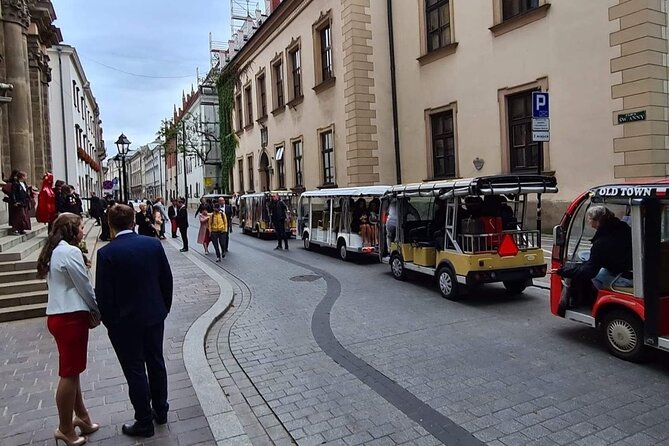
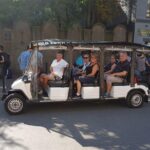
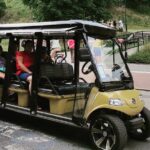
The vehicle is an eco-electric buggy / golf-cart style ride. That matters because the tour is long enough to feel like a proper city tour, but short enough that you still want your legs to be fresh.
A recurring practical detail: the buggy is described as warm with blankets, and also with heating. So if you’re going in winter, you’re not stuck freezing through slow traffic or repeated walking.
One more comfort factor is route efficiency. The buggy format helps you move between neighborhoods quickly, so you spend more time looking at buildings and squares and less time crossing streets.
Small consideration: a ride like this can be a bit bumpy, since you’re dealing with real roads and turns. If you’re sensitive to motion, dress in layers and take it slow once you’re on the vehicle so you’re comfortable.
Price and value: what $28.88 buys you in real time
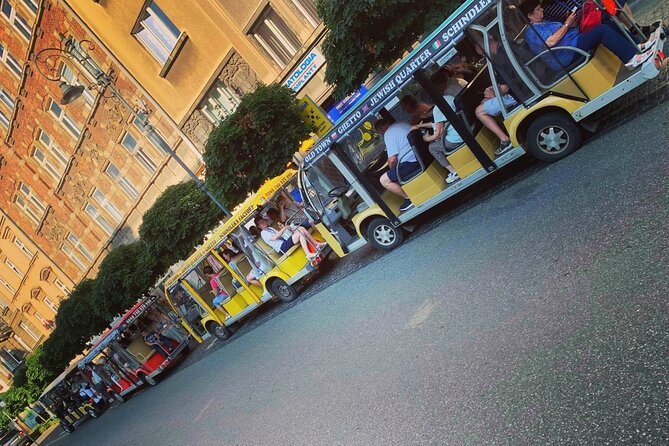
At $28.88 per person, the value comes from packing three things together:
- Coverage: you’re near a big set of sights—nearly 24 stops—within about 90 minutes.
- Support: English narration plus a live driver/guide element (and audio on board is mentioned).
- Comfort on the go: warm buggy setup, so you’re not paying with misery if the weather turns.
If you’ve priced private guides or full-day transportation, you’ll see why this style can feel like a smart deal. It’s not trying to replace deep museum time. It’s trying to give you structure fast: the “where am I, why is it here, what should I notice” layer.
If you’re traveling solo, this is also a good way to avoid the awkward “I’ll just walk around and hope I pick the right places” problem.
Finding the meeting point near Mikołaja Zyblikiewicza
You start and end at the same location: Parking 24H Kraków old town car park at Mikołaja Zyblikiewicza 2.
This matters because it reduces stress at the end of the day. No complicated transfers, no “where do I find the pickup again” scramble.
A practical tip from prior experiences: the pickup is near the wider main street (Westerplatte / Zyblikiewicza area), and the parking point is across from a Zabka shop. Even if you don’t use that exact reference, it’s a helpful kind of landmark to aim for.
Bring your phone for the mobile ticket. Service animals are allowed, and it’s near public transportation.
Church on the Rock (Skałka): the story starts with a dramatic site
The tour begins at Church on the Rock (Kosciol na Skalce / Skałka), associated with Saint Michael the Archangel and Saint Stanislaus the Bishop and Martyr.
Why it’s a great first stop: it’s not just a pretty church. It connects to a specific historic moment tied to Bishop Stanislaus’s death in 1079, ordered by King Bolesław II the Bold. That story sets the tone for the rest of your route—religion, power, and community history all matter here.
The stop is short (about 10 minutes) and admission is listed as free. That’s ideal for easing into the tour without time pressure.
Kazimierz market life: Plac Wolnica and the old trading square
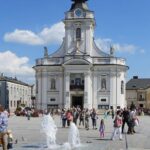
Next you’ll move into Kazimierz’s historic core with a stop near Plac Wolnica.
This square is part of the older market system of Kazimierz, founded in 1335. It’s described as having once been as large as Krakow’s main market square and used for trade, with civic functions like a town hall and judicial/administrative seating. Even the name tells you it once linked to rights for trade—Plac Wolnica traces back to Latin wording connected to free trade in meat outside regular stalls.
Practical value for you: once you stand in the right space, it’s easier to understand why the Jewish quarter developed where it did. Squares like this weren’t just scenery. They were where daily life happened.
From monastery churches to Jewish quarter edges along the walls
You’ll also see a stop tied to a basilica erected in stages beginning in 1340 to the mid-15th century. It was intended as a monastery church and has a monastic cemetery next to it. In 1404, King Władysław II Jagiełło gave it to the Canons Regular of the Lateran.
There’s also a stop that highlights the shift from streets and buildings into the current street pattern, and it mentions houses that used to belong to the Jewish hospital at the Kupa synagogue.
This is one of those “background details” stops that actually helps you understand the district. Hospitals, monastery grounds, defensive walls—these are the structures that shaped who could live where and what the community had access to.
The Kazimierz synagogue run: seeing the city’s layered faith
Kazimierz is the star for architecture and variety. You’ll pass or stop at multiple synagogues, including the major ones many visitors come to Krakow hoping to see.
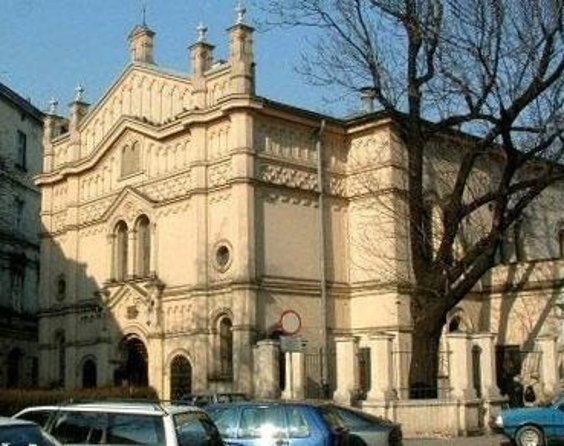
Temple Synagogue (Synagoga Tempel)
This synagogue is described as a major worship site and also a center for Jewish culture, hosting concerts and meetings, especially during festivals. If you want a modern-feeling connection (not only history), this is the kind of stop that signals continuity.
Kupa Synagogue (Synagoga Kupa)
Built in the 17th century, it served the Krakow Jewish community as a religious and cultural venue and is linked to the Kazimierz Jewish quarter. The area was earmarked in 1495 for the Jewish community after their transfer from the Old Town.
Izaak Synagogue (Synagoga Izaaka)
This one is Orthodox, from 1644, named for donor Izaak Jakubowicz (also called Isaac the Rich), a banker tied to King Ladislaus IV. The design is credited to Italian-born architect Francesco Olivierri.
High Synagogue (Tall Synagogue)
This synagogue is described as inactive, dating to the 16th century, and noted as the tallest synagogue in Krakow. It also reflects Late Renaissance architecture, and it’s called Tall due to height and possibly because the prayer hall was upstairs.
Old Synagogue (Synagoga Stara / Alta Shul)
The Old Synagogue is described as the oldest synagogue building still standing in Poland and a precious landmark of Jewish architecture in Europe. It served as a major center of community life up until the Second World War in 1939.
Wolf Popper Synagogue (Synagoga Poppera / Bociana)
This stop adds an extra layer because the synagogue now serves as a bookshop and an art gallery in the women’s area upstairs. Earlier descriptions mention ornate entrance doors depicting animals—an emblem-style set linked to traits of a devout man.
Remah Synagogue (Synagoga Remu)
The Remah Synagogue is described as the smallest of the historic Kazimierz synagogues and named after Rabbi Moses Isserles. It’s currently one of two active synagogues in the city, which helps you understand which places still function today.
What to watch for: since you’re moving between many synagogues, don’t try to memorize architectural details like a textbook. Instead, focus on contrasts: which buildings feel more fortress-like, which feel more ceremonial, and which ones now serve cultural functions. Those patterns tell you a lot about how communities changed over time.
Possible consideration: because this is a fast route with many stops, some locations may be photo-focused rather than time inside. Plan to treat the tour as orientation plus context, not as a slow-paced museum pass.
Ghetto Heroes Square: where the route turns from architecture to survival
Next comes Ghetto Heroes Square (Bohaterów Getta Square) in Podgórze.
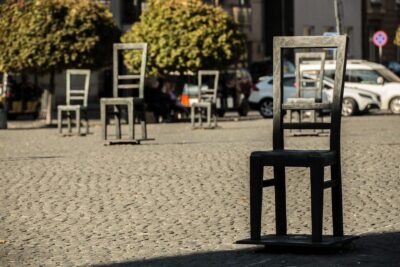
This is one of the most important stops on the tour. It was within the Kraków ghetto during 1941–1943 and functioned as a concentration space before transport to concentration camps. The stop also points out a specific site: Pharmacy Under the Eagle (at number 18), connected to Tadeusz Pankiewicz and the fact that it’s listed as the only non-Jewish inhabitant of the ghetto in that address context.
You don’t need to rush past this. If your goal is to connect dots later at Auschwitz or other sites, this is where the city geography begins to make moral sense. The tour’s pace keeps you moving, but the information focus here is heavy.
Eagle Pharmacy Museum: how a single storefront became life support
Right near Ghetto Heroes Square is the Eagle Pharmacy Museum, at number 18.
The details matter. The proprietor history is listed: Jozef Pankiewicz (since 1910) and later his son Tadeusz Pankiewicz (running it since 1933). Before World War II, it served as one of the pharmacies in Podgórze, for both Polish and Jewish residents.
During the ghetto period, the Germans established a ghetto in Podgórze, and the pharmacy is described as the only one within the ghetto borders. It also notes that the proprietor was the only Pole with rights to stay.
For you, this stop is valuable because it’s human-sized. Not abstract. Not only about camps. It’s about what day-to-day access meant when an entire community was trapped.
Schindler’s Enamel Factory and the old ghetto wall stops
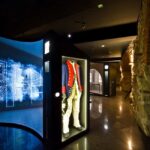
The tour includes Oskar Schindler’s Enamel Factory (Fabryka Emalia Oskara Schindlera). The building now hosts two museums: one described as Museum of Contemporary Art in Kraków in former workshops, and another branch of the Historical Museum of the City of Kraków located at ul. Lipowa 4 within the former enamel factory complex.
Even if you’ve seen the famous film, being here in the real place helps you connect the scale—work, industry, survival, and paperwork all tied together in one structure.
After that, there’s a stop at the Old ghetto wall, which is exactly the kind of physical reminder that turns history from narration into something you can point at.
Finally, the route ends with St. Joseph’s Church (Kościół św. Józefa) in Podgórze, listed as a historic Catholic church near Podgórski Square on the Krzemionki foothills.
When to do this tour: day vs night and winter-proofing
If you want the most visual clarity, do this in daylight. Dark can make it harder to see details, especially on architecture-heavy routes.
That said, the tour is also described as working for “Kraków at night,” so don’t stress if your schedule only fits evenings. Just go in knowing that the feeling shifts: less reading of stone carvings, more mood and street context.
For winter, plan for cold and wet conditions. Dress in layers, and treat the buggy blankets and heating as a bonus rather than your only protection.
My timing advice: if this is your first day or early in your trip, do it earlier. The “where everything is” benefit makes the rest of Krakow easier.
Who should book this buggy tour (and who might want something else)
This tour fits best if you want:
- A quick orientation through Kazimierz and Podgórze in about 90 minutes
- A comfortable ride when walking long distances doesn’t sound fun
- A route that connects synagogues, squares, and ghetto sites in one plan
- Clear English narration and audio support while you move between stops
You might want a different option if you prefer deep time in a single museum or you’re expecting long indoor visits at each location. This is designed to move.
My recommendation: should you book it?
Yes, I’d book this if you want a practical first-pass through Krakow’s Jewish quarter and ghetto geography. The value is strong because you get a dense route—synagogues, key squares, Eagle Pharmacy Museum area, Schindler’s factory, and more—without spending your whole day walking.
Before you go, set expectations: think orientation and context rather than hours inside every building. If you do that, you’ll come away with a clearer map in your head and better instincts for what to revisit on your own.
If you tell me your travel dates and whether you’re going day or night, I can also suggest the best order for matching this with your later self-guided stops.
FAQ
How long is the Krakow City Sightseeing Tour Eco Electric Buggy Golf Cart?
The tour runs for about 1 hour 30 minutes.
How many sights will we see?
The highlights describe stops at nearly 24 different sights.
Is pickup included?
Pickup is offered.
Is the tour in English?
Yes, it’s offered in English.
Do I need a printed ticket?
You’ll have a mobile ticket.
Is there a group size limit?
Yes, the maximum is 50 travelers.
Can I cancel for free?
Free cancellation is available up to 24 hours in advance for a full refund.
Are service animals allowed?
Yes, service animals are allowed.